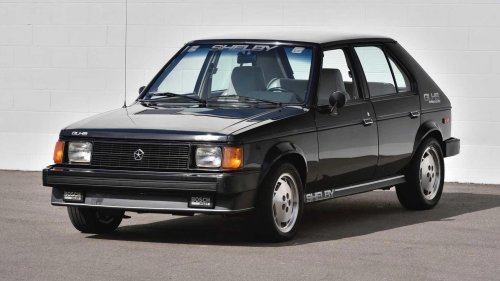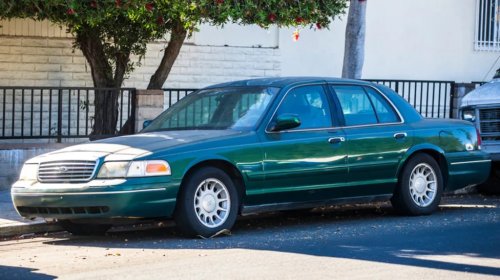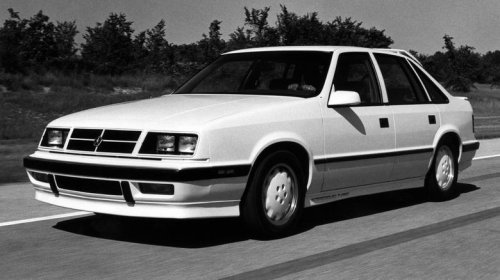
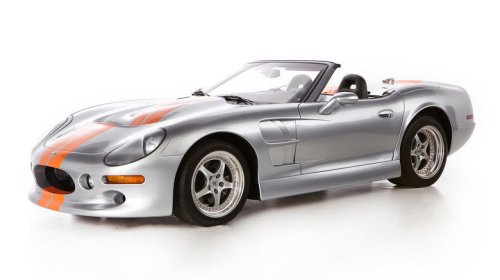
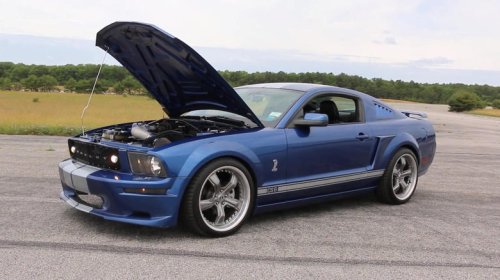
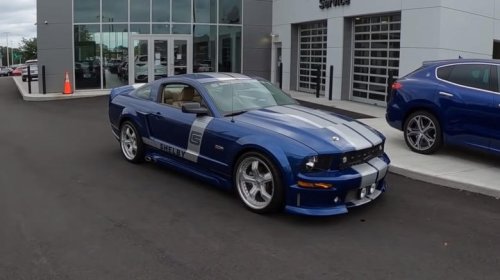















Dodge Shelby LancerAmerican manufacturers didn't really have an answer to the European performance sedans of the mid-'80s, and so Lee Iacocca tasked Carroll Shelby with turning the Lancer into something that could compete with the likes of BMW. The 1987 Shelby Lancer was the result, with all 800 examples of the car built at Shelby's facility in California. The headline upgrade was the Shelby "Turbo II" engine, which produced 175 horsepower and 175 lb-ft of torque, but other extras included uprated sway bars and a Pioneer CD player.After 1987, Dodge continued making a top-spec Lancer with the Shelby name, but production moved to the company's main facility in Michigan and fewer trim-specific performance parts were used. 1989 was the last year that the Shelby name was used on Dodges, with the Lancer being one of the last models of this long-running collaboration. While the Shelby Lancer never managed to mount a real challenge to the dominance of the German manufacturers, it was genuinely impressive for an American sedan at the time. Today, it's one of the least well-remembered Shelby models, and it's not clear how many of the original run still remain on the road.Shelby Series IThe only Shelby ever designed from scratch by the man himself is also one of his least well-remembered cars. The Series I was the realization of a lifelong ambition to design and build a car starting with a completely blank slate, but production issues and internal fighting at Shelby's suppliers saw the project stall. It didn't help that Carroll Shelby promised more than he could deliver, initially claiming the car would have an Oldsmobile IndyCar racing V8 under the hood. After failing to get the engine to meet legal requirements, he had to settle for the related V8 from the Aurora family sedan instead.Even so, the finished product was still very potent, with at least 320 horsepower on offer in naturally-aspirated cars, and 450 horses in turbo versions (some sources claim that certain examples of the car made up to 600 horsepower). The design was, as promised, all-new, although spiraling development costs meant that the car's price tag shot up to nearly double what Shelby had initially targeted. GM supplied most of the interior parts, making the car look cheaper inside than its Ferrari-rivaling price would suggest, and to make matters worse, Shelby's small factory massively overran its planned schedule, in some cases finishing cars two years after they were ordered. The Series I might be a supercar designed by one of the most famous faces in the industry, but the many missteps during production mean it's largely forgotten today.Ford Mustang Shelby CS6After the botched launch of the Series I, the last stint of Shelby's automotive career saw him reunite with Ford to produce limited edition versions of the Mustang. One of the most obscure Shelby Mustangs is the CS6, of which only 17 are thought to have been made. The car was first unveiled at the SEMA show in 2005, sporting a supercharged 4.0L V6 engine with 370 horsepower and 377 lb-ft of torque.Unique wheels, badges, and uprated brakes made the CS6 stand out from the crowd, but the price for the car was equally head-turning. With a few optional extras thrown in, CS6 Mustangs could reach north of $75,000 — and keep in mind, this is for a V6 Mustang, not a V8. Few buyers were willing to pay that much for a six-cylinder, making this one of the rarest Shelby Mustangs, as well as one of the least well-known.Ford Mustang Shelby CS8Alongside the CS6, the CS8 served as the Mustang for buyers who wanted something more potent than a regular Mustang but didn't want to shell out the big bucks for a top-spec Shelby GT500. The car's 4.6L V8 churned out a little under 500 horsepower and, like the CS6, it featured a number of other upgrades to compliment its increased power. The suspension, brakes, wheels, and a number of other components were all upgraded by Shelby, with several parts shared with the GT500.A mid-range Shelby Mustang might not have turned heads in the same way as a top-of-the-line car would, but it still delivered the driving experience buyers expected from a Shelby for a lesser price. Examples don't often change hands today, but when they do, prices sit around the $30,000 mark. That seems like a very fair price for a Shelby that's just as powerful as the $100,000+ Series I supercar from a few years prior.