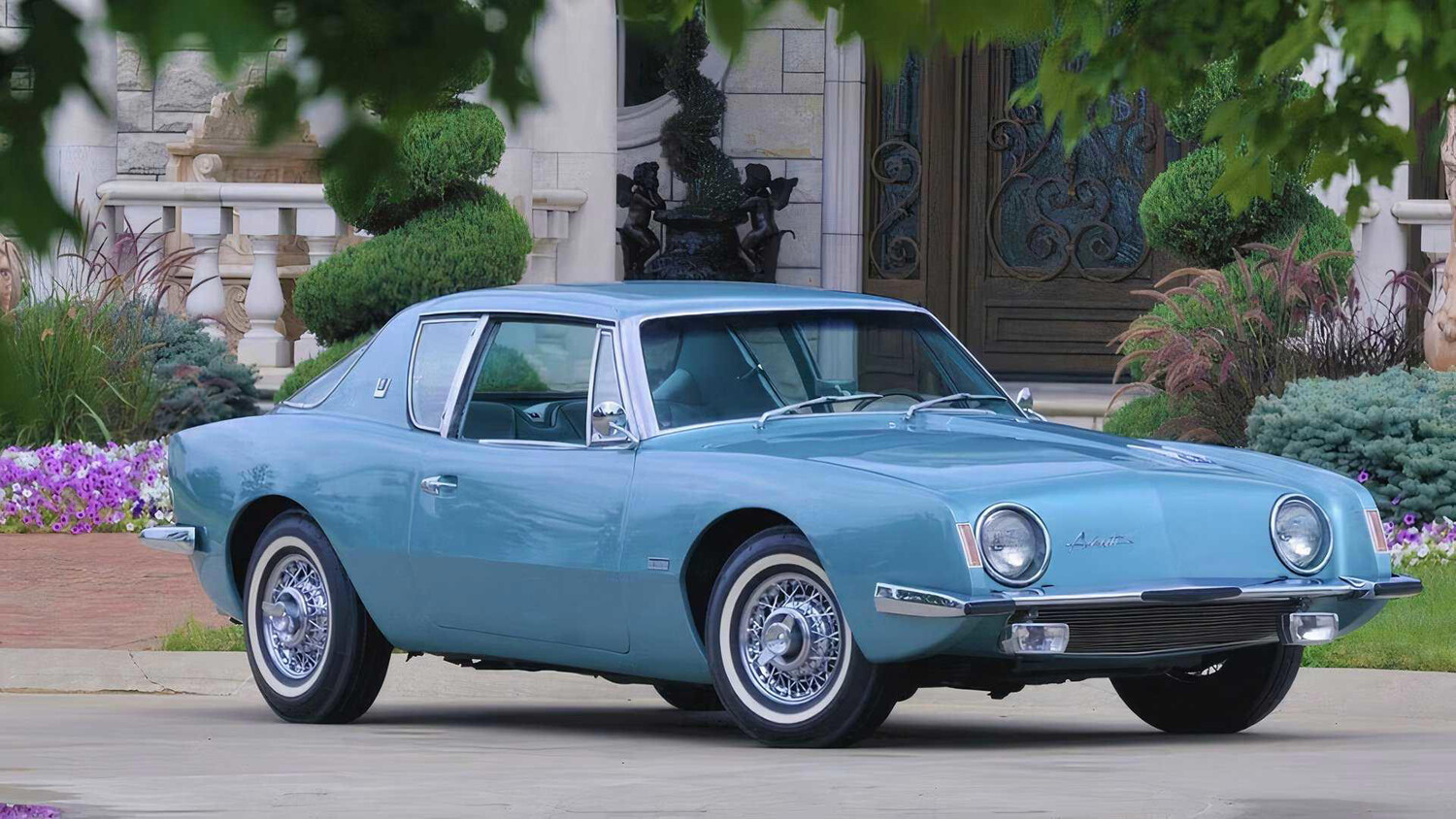
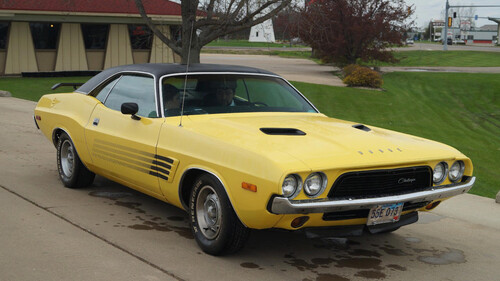
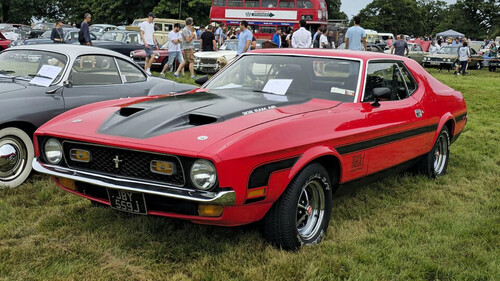
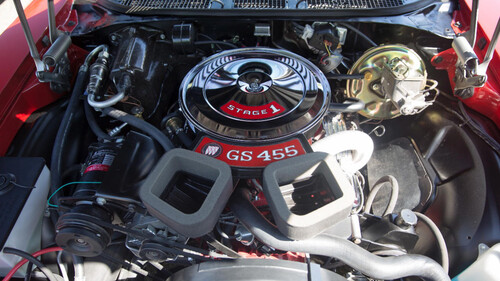
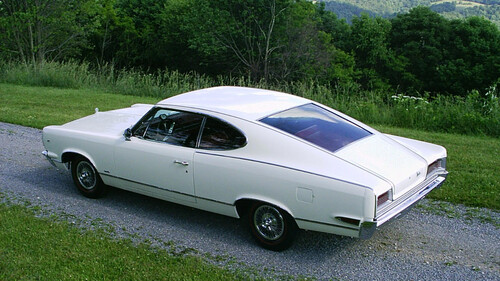
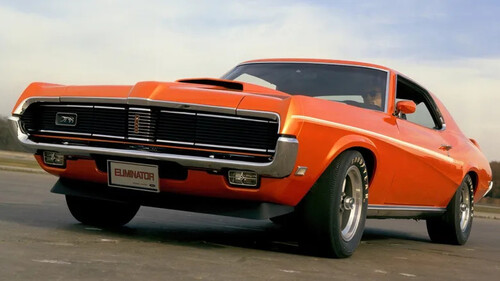
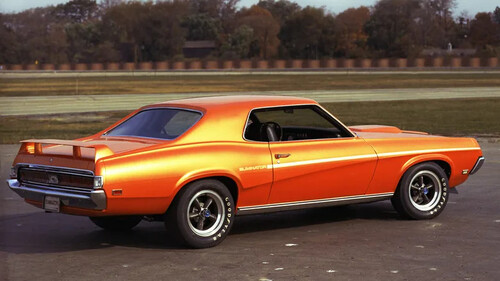
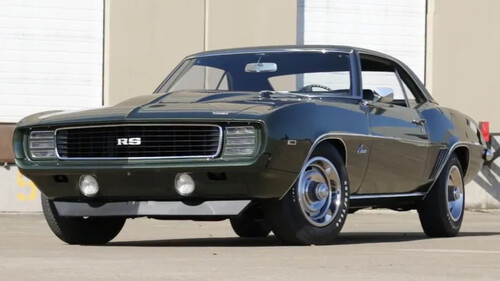
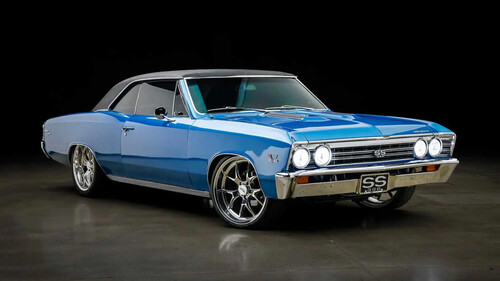
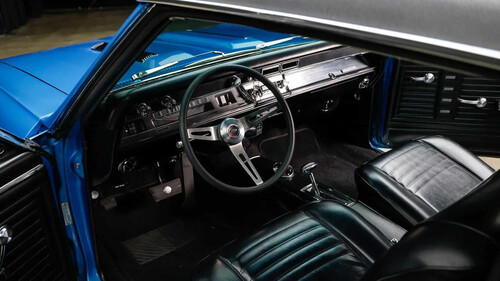
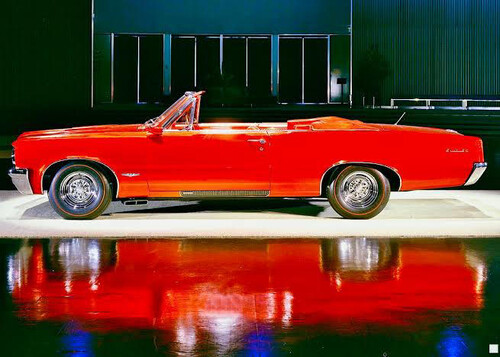
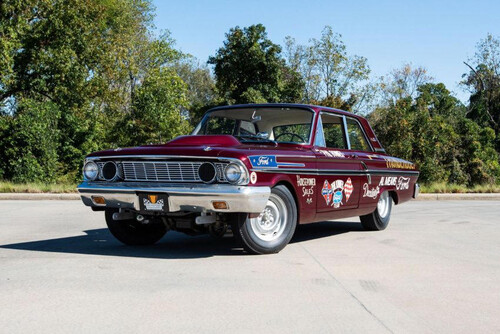
The muscle car era of the '60s and early '70s was a time when gasoline, massive displacement, and quarter-mile times meant something. During the latter half of the 1960s through the 1970s, large, American-built machines dominated the roads with loud engines, impressive power, and excitement.During the heyday of muscle cars, more American car brands sprouted than are on the market even today, most of them making seriously fast machines in an attempt to rise up amid the era's horsepower wars. Some of these muscle cars ended up becoming celebrated icons, such as the rare Plymouth Hemi Cuda, which is now worth seven figures, while others never quite managed to get the recognition they deserved.The most underrated and overlooked of these high-powered classic muscle cars came from all sorts of brands – those that survived until today, such as Ford and Chevy, as well as offshoot brands trying to leave their mark.Despite their impressive power and cool looks, the muscle cars on this list were some of the least popular models of their time. They were also built in ridiculously small numbers, making them surprisingly rare (and potentially valuable) finds today.The information used to compile this article, including production numbers, was sourced from the respective car manufacturers and other authoritative sources, including Hemmings. This list is sorted by the number produced from highest to lowest. 1969 Mercury Cougar Eliminator Number Produced: 2,250 Mecum Auctions Mercury was branded to be a step above the Ford name but to fit slightly below Lincoln, making it the perfect balance between the two. That unfortunately meant the Cougar Eliminator would compete with the Ford Mustang. In fact, the Cougar Eliminator could have been ordered with the legendary Boss 302 V8 engine, which would have been problematic for cars under the same company competing with each other.Most Eliminators were equipped with the 428-cu-in Cobra Jet V8, officially rated at 335 horsepower and 440 lb-ft of torque, enough to push the big cat through the quarter mile in the mid-14-second range. About 169 were fitted with the high-revving Boss 302, according to Hemmings.The Eliminator’s run ended after 1970 – not just because of Mustang overlap, but due to tightening emissions standards, rising insurance costs, and Mercury’s shift away from raw performance toward comfort and luxury. 1969 AMC Hurst SC/Rambler Number Produced: 1,512 Bring A TrailerMany collectors are familiar with the 1969 AMC Hurst SC/Rambler, but it's not nearly as well-known as muscle cars from the Detroit Big Three. This car was built as a performance package for homologation of AMC for NHRA F/Stock racing. Many examples wear a semi-patriotic paint scheme, which draws the desire of American muscle car enthusiasts.Power for this AMC muscle car came from a 390 cu-in AMC V8 engine that sends 315 horsepower and 420 lb-ft of torque to the rear wheels through a four-speed manual transmission. The SC/Rambler is capable of completing the quarter-mile sprint in 14.3 seconds, making it an extremely competitive muscle car. 1969 Ford Torino Talladega Number Produced: 750 Via: Mecum AuctionsSome researchers believe there were actually 754 Talladega models built, but the official registry can only account for 750 models, creating a bit of a mystery. The 1969 Ford Torino Talladega was built as a NASCAR/homologation car to provide a bridge between stock-car engineering and street muscle car performance. This makes the car historically significant, but unfortunately, forgotten.A Cobra Jet 428 cu-in V8 engine provides power for the Torino Talladega. This engine sends 335 horsepower and 440 lb-ft of torque through a three-speed automatic gearbox to the rear wheels, making it possible for this Ford muscle car to complete the quarter mile in only 14.7 seconds. The Talladega model was only offered in three color choices, with only 199 examples sold in Presidential Blue. 1968 Oldsmobile Hurst/Olds Number Produced: 515 Bonhams Cars Automakers worked with dealers at various times in history to create specialty cars. Despite the fame of the Don Yenko cars, the Hurst/Olds didn’t quite get the same recognition, despite its factory/after-factory mix of features. Some of these include the Force Air systems and Turbo Hydra-matics with a Hurst Dual-Gate shifter. George Hurst’s most important invention was the Jaws of Life rescue tool (a tidbit for trivia buffs).The 1968 Hurst/Olds was powered by a 455 cu-in V8 engine officially rated 390 horsepower and 500 lb-ft of torque, which were incredible figures for the time. However, many period dyno tests claim the car actually made over 400 hp, putting it among the most powerful muscle cars of the decade. This was enough power to allow the car to complete the quarter-mile run in 13.9 seconds, making it a competitive muscle car. The Hurst/Olds continued on for 1969 with 906 versions officially created (Hemmings). 1964 Ford Fairlane Thunderbolt Number Produced: 100 Mecum Auctions Collectors of drag-race cars know the 1964 Ford Fairlane Thunderbolt, but outside that crowd, it's mostly unknown. Ford produced this drag car in small numbers because it was strictly made for NHRA Super Stock homologation. There were 49 versions built with a four-speed manual transmission and 51 equipped with an automatic shifter.The Fairlane Thunderbolt was powered by a 425 cu-in V8 engine that produced 425 horsepower and 480 lb-ft of torque. This was enough to send the car across the quarter-mile stripe in about 13 seconds flat, making it a great choice for drag racing at the time. As one of the first factory drag special packages, the Thunderbolt is a rare gem in the muscle car world. 1967 AMC Rambler American Rogue 343 Convertible Number Produced: 58 Unique Classic CarsThe 1967 AMC Rambler American was a relatively common car with 69,912 versions produced, but of them, only 921 were Rogue convertibles. Of the Rogue models made (which were built in both hardtop and convertible body styles), only 58 received the new AMC 343 cu-in V8 engine, which made this configuration a rarity in the muscle car world. A slightly rarer choice from Rambler was the 440 model with the 343 V8 engine, which was only produced 55 times.You don’t see many Rambler V8 models because it’s the American is a small car, and adding a V8 to a small car didn’t happen often, even during the muscle car era. The Rogue engine produces 280 horsepower and 365 lb-ft of torque and uses a four-speed manual transmission to route power to the rear wheels, enabling the Rogue to finish a quarter-mile sprint in 14.7 seconds. 1963 Pontiac Tempest Super Duty Number Produced: 12 HagertyTechnically, Pontiac built 14 Tempest Super Duty models, two of which were prototype vehicles. This car should have gained more notoriety, but was overshadowed by the GTO that came later, and the demise of the Super Duty program. This was the fastest Pontiac muscle car of the 1960s, and strangely, Pontiac built it in wagon and coupe models, with six of each.The Tempest Super Duty makes use of a 421 cu-in V8 engine that sends 405 horsepower and 425 lb-ft of torque to the rear wheels through a complicated four-speed transmission that was part manual and part automatic. This car was fast enough to complete a quarter-mile spring in 12.04 seconds at 116 MPH. The Tempest Super Duty dominated the Daytona American Challenge Cup in 1963 but was quickly forgotten when GM cancelled its factory racing program. 1964 Studebaker Avanti R3 Number Produced: 9 Mecum Auctions It would be easy to forget the 1964 Studebaker Avanti R3, with only nine versions produced. There were just over 4,600 Avantis built during 1964 (Hemmings), but only nine had the R3 engine, making it a rare car that was easily forgotten. The Avanti brought advanced design for the era, but that wasn’t enough to make it a popular choice among collectors. The body was made of fiberglass, allowing the car to be much lighter than many other muscle cars of the time.The Avanti lineup used the same basic engine, with only a few changes. The R2 was the basis of the program, using a bored-out 304 cu-in V8 engine that was supercharged and produced 290 horsepower. The R3 models had a better supercharger and delivered 335 horsepower and 400 lb-ft of torque to the wheels. This was good enough to allow the Studebaker Avanti R3 to cross the quarter-mile stripe in only 14.6 seconds.Source: Hemmings.