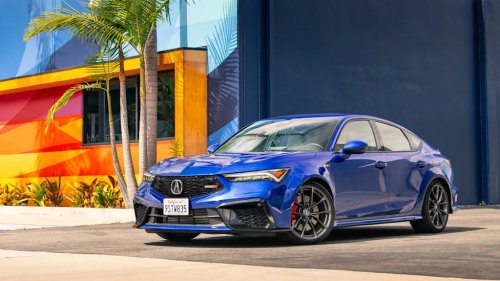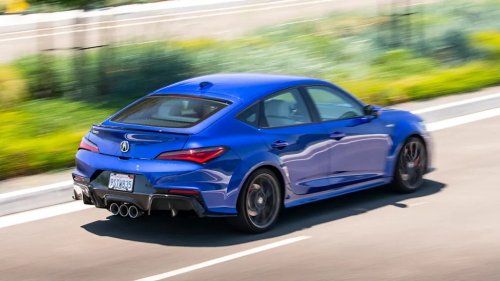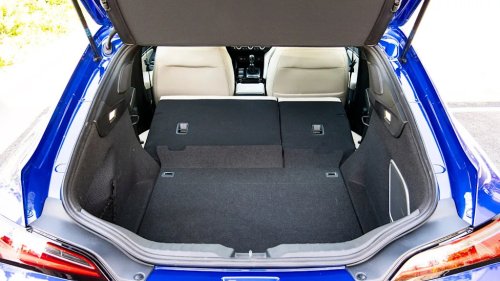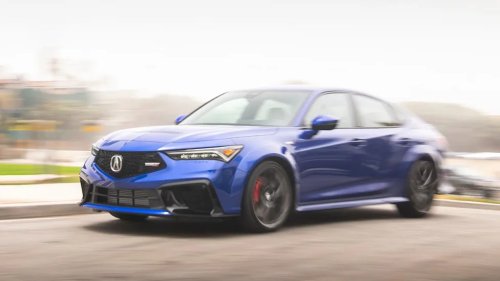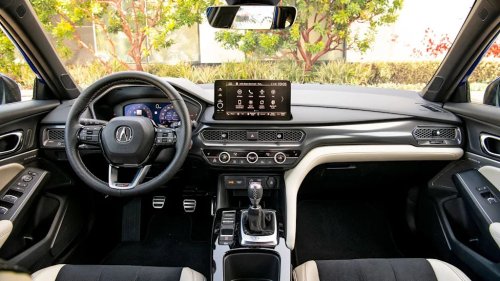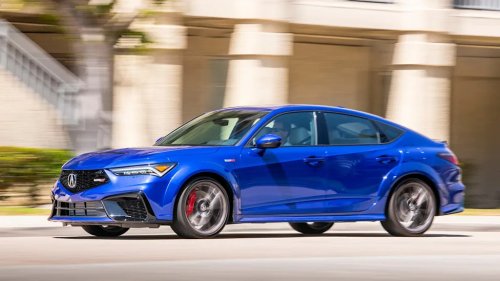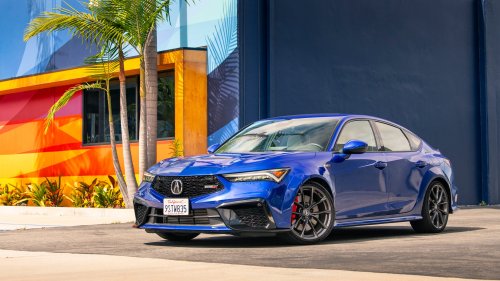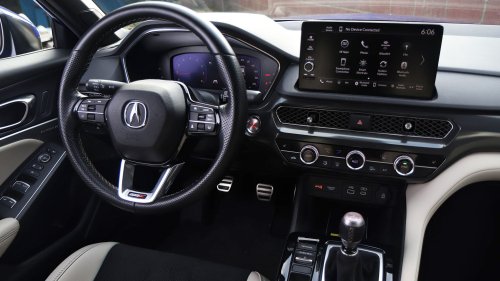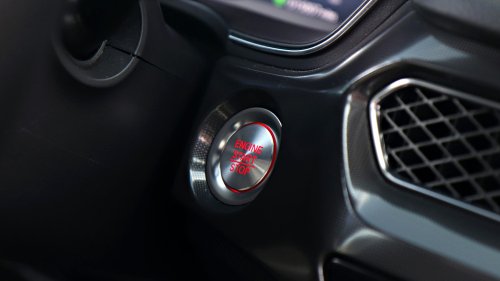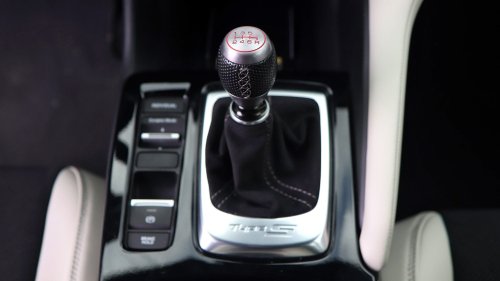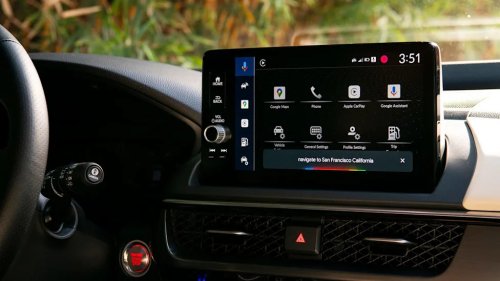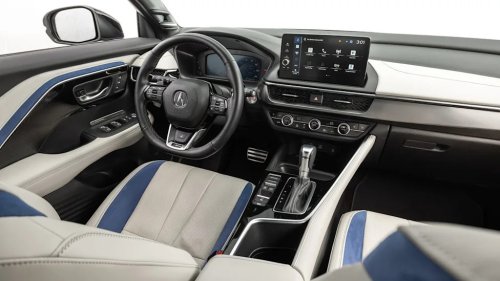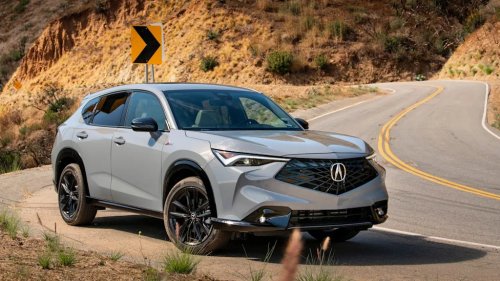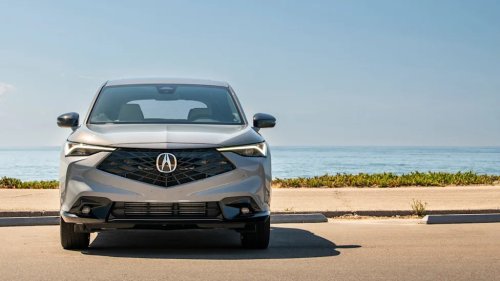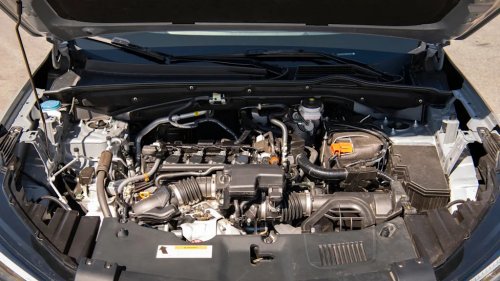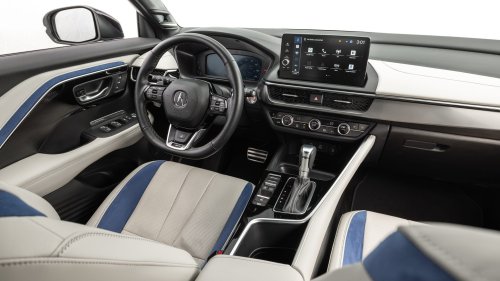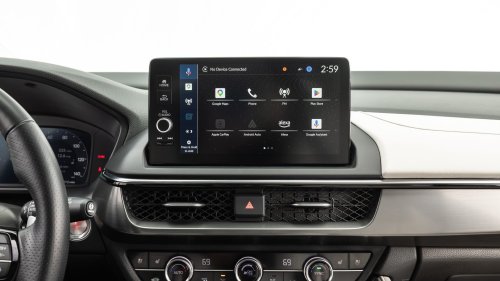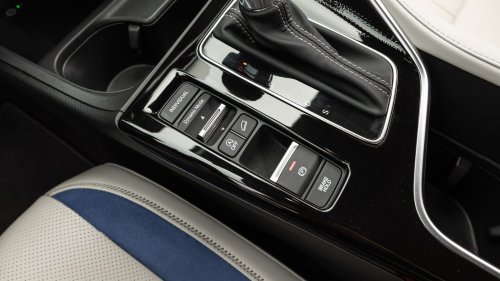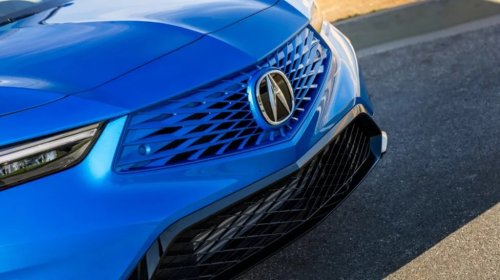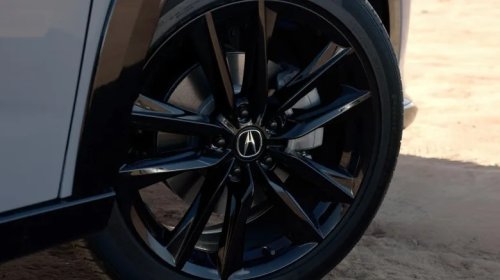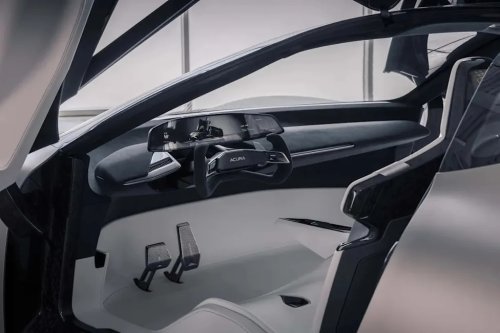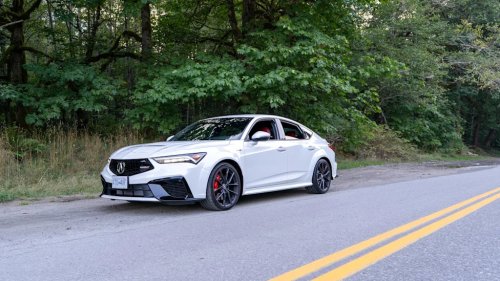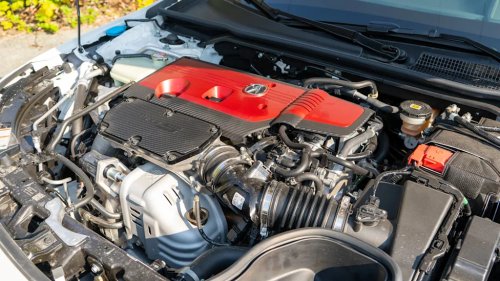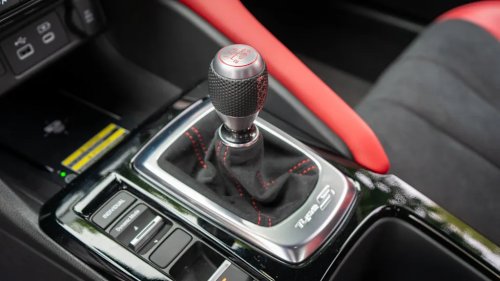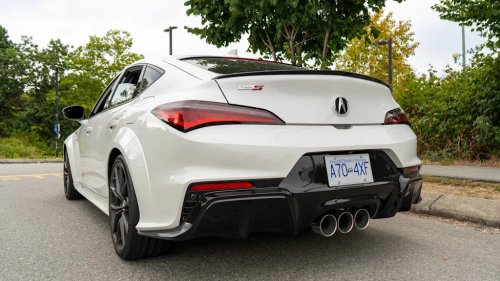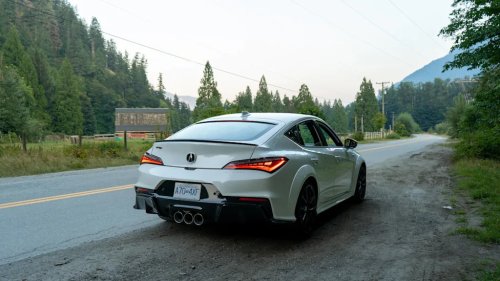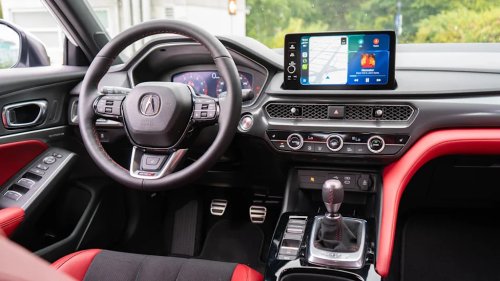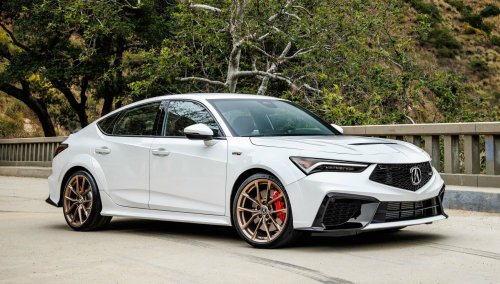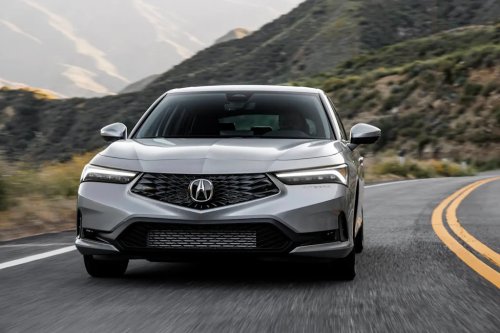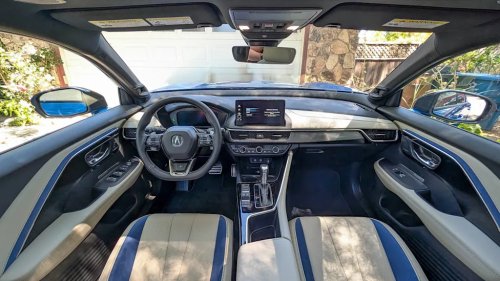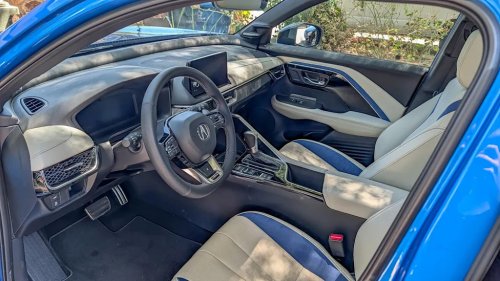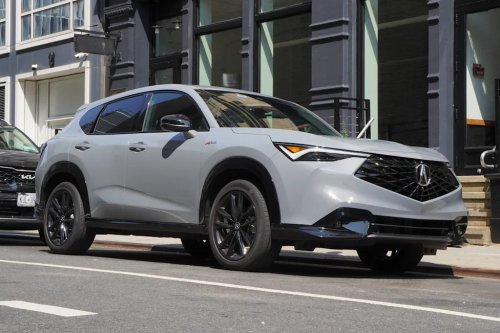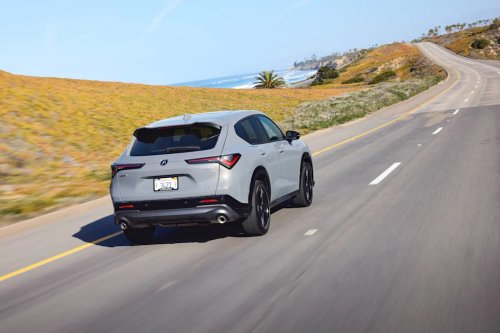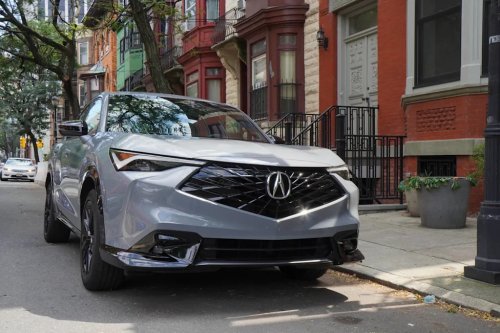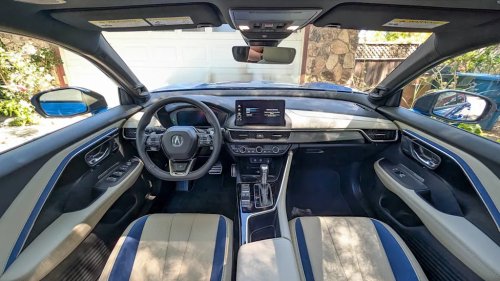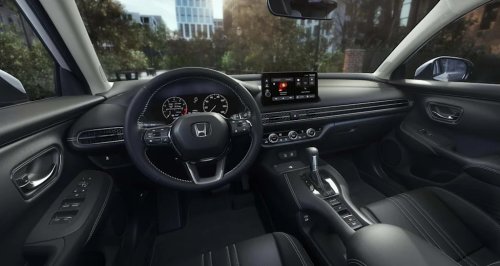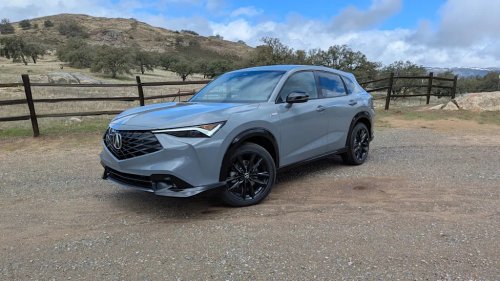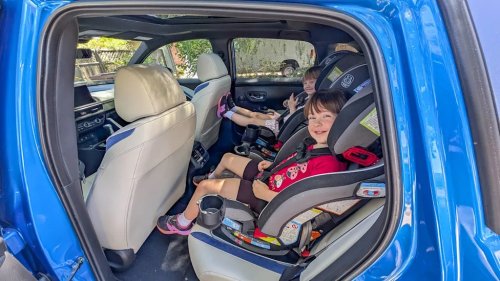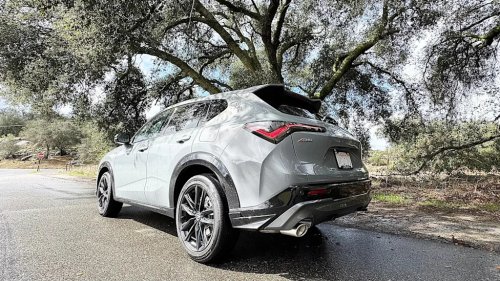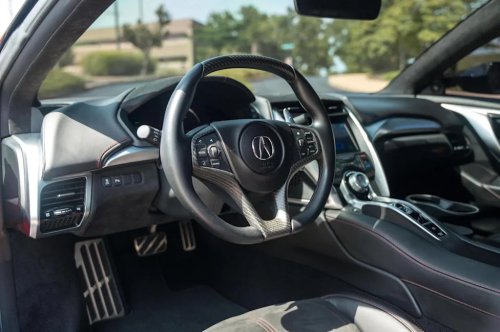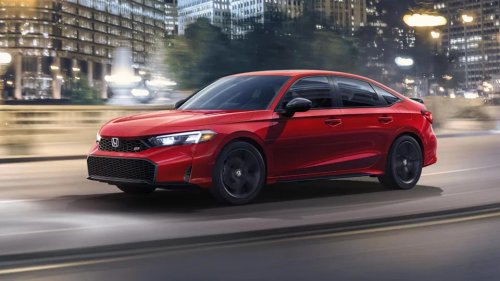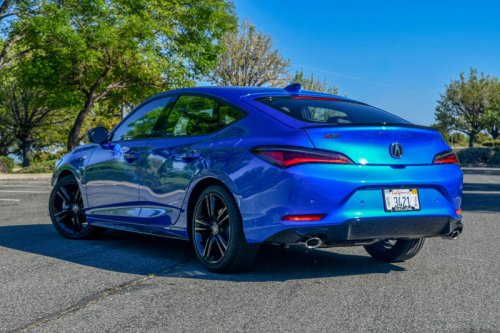
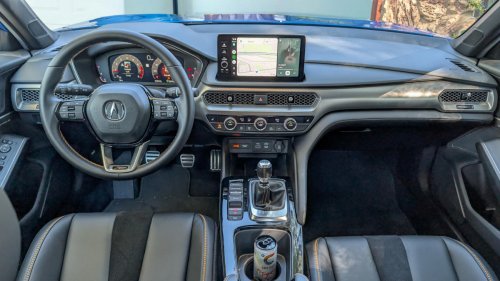
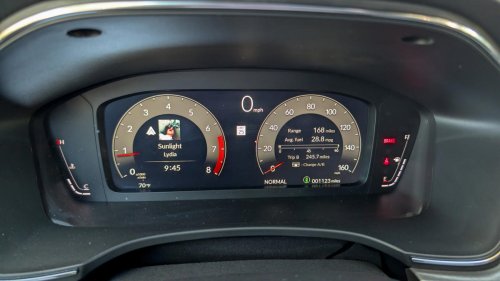
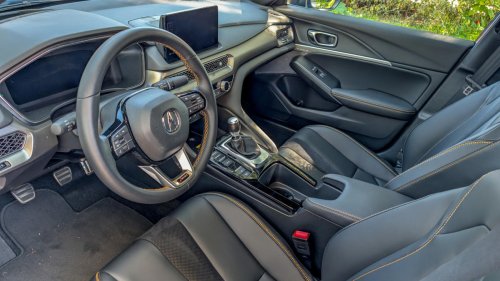
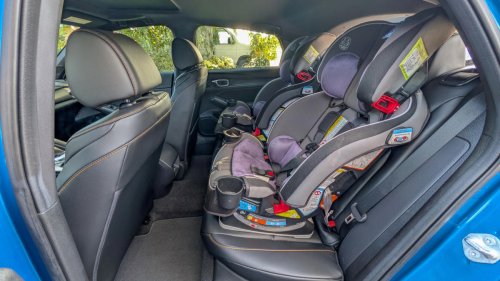
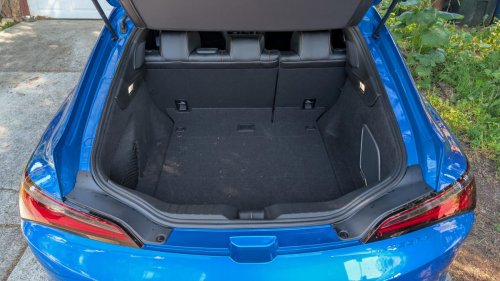
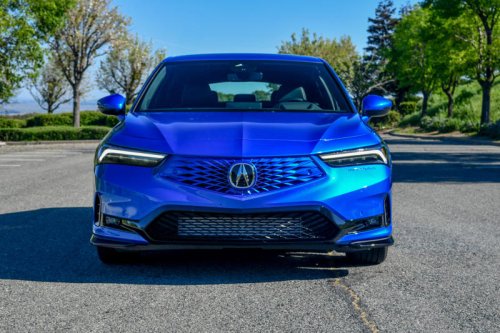
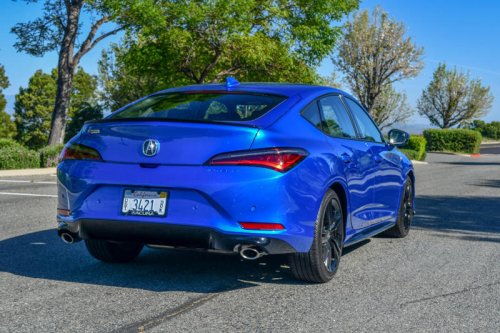



















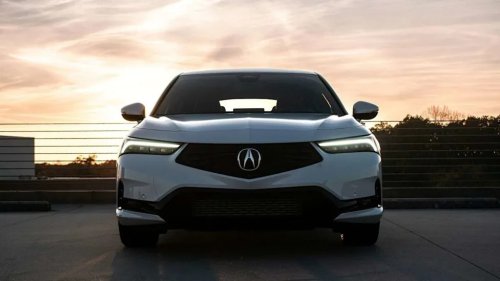
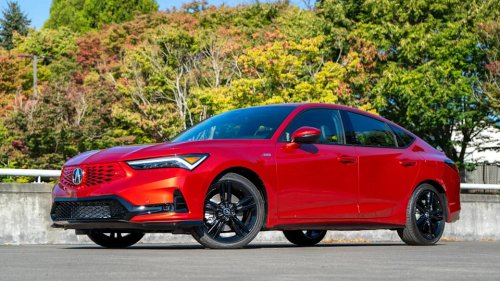
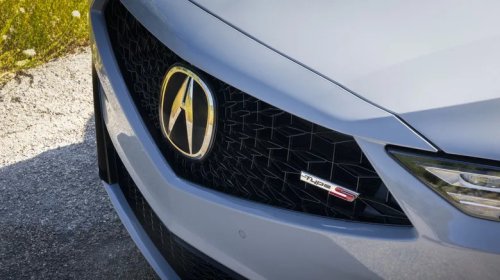
Because manual transmissions (and the people who know how to drive them) are a dying breed, I rarely get to drive a brand new car with a stick. Out of almost 70 new cars that I’ve reviewed, only three—including the Acura Integra A-Spec—had a manual. The other two were the Miata Club Edition and the Subaru WRX tS. And I will say, I think I liked the Acura’s transmission the most. It didn’t have rev-matching, but it was such an easy transmission to figure out and maneuver that I didn’t feel like I needed it. Even in bumper-to-bumper traffic, it wasn’t bad at all. But that’s besides the point—yes, it has a great manual transmission. But it also has a lot of other favorable features, like a nice, simple yet elegant interior, a decent amount of cargo space and rear legroom, a nice stereo, great balance of power, approachable technology, and an abundance of curb appeal (especially in double apex blue). It was so nicely put together that both my husband and I could hardly believe that, even with all of the premium add-ons, it was under $40,000. Granted, by just a hair, but still—it’s not completely unattainable. Here’s why I’d say, yes, it’s worth every penny if you’re looking for a reliable, easy-going mid-level luxury sports sedan.1. The manual transmission is smooth and easy to become acquainted withI’m ashamed to admit it, but whenever I drive a manual that isn’t my 2002 WRX, it takes a driving session (or two) for me to feel like I “get used to” that transmission. The Acura was one of the first ones I didn’t have to adjust to, and I attribute that to its short throw, ease of shifting, and the way I felt the clutch engaging and disengaging. I don’t feel it in most new cars, so it was a nice change. I like my Subaru’s transmission a lot because there’s a lot of feedback, and the Acura Integra felt very, very similar. I also really liked its brake hold feature. Where I live in the Bay Area, there aren’t an insane amount of hills, but I found myself thinking about how nice it would have been to have that feature when I took my WRX to Seattle. That city most definitely honed my ability to pull up the hand brake, engage the clutch, then accelerate, and then lower the hand brake as you feel tension to avoid rolling backward (and in a city like Seattle or San Francisco, every car is centimeters from your bumper…). You don’t have to worry about that with the Acura at all. In fact, the brake hold feature in the Integra A-Spec had the most intuitive, sensitive, and accurate system I’ve experienced. I never rolled backwards once. It’s also a fun car to drive. Yes, it’s the smaller 1.5-liter turbocharged four-cylinder engine, but it produces 200 horsepower—and that’s more than enough to move the 3,073-pound sedan with enthusiasm. Whether it was just running errands around town, cruising on the highway, or even stuck in traffic, it was simply a pleasure. 2. Despite its sportiness, it’s remarkably efficientOne of the things my husband and I were both surprised by was the mileage. We mostly drove it around town, with the occasional half-hour trip across the Bay to see my dad, and I averaged an impressive 28.8 miles to the gallon. And that mileage didn’t dip, even when I was stuck in traffic. The range with a full tank was just a smidge under 300 miles, which gave me more than enough juice to cruise the Bay Area without having to worry about hitting up a gas station before I go over the bridge. Speaking of gas, a bonus (at least to me) was that Acura doesn’t require premium fuel for the Integra A-Spec, but it’s recommended. So, if you want the extra pazzaz and more responsiveness, you can fill’er up with the expensive stuff. But if you’re between paychecks, you can use regular and be just fine. I appreciated that, even though it’s a luxury sports sedan, you weren’t married to the most expensive fuel grade.3. The interior is deceptive—in a good wayYes, the Integra A-Spec is under $40,000 with a few add-ons, which, in today’s age, puts it in a very attainable spot for all tax brackets—not just the lofty ones. But you wouldn’t know it based on the interior. Because it’s the A-Spec, it’s clad in a rich, black leatherette material with yellow contrast stitching. It does have a 9-inch multimedia display with wireless Android Auto and Apple CarPlay, but because it came with the Technology Package, it also came with a heads-up display, a wireless phone charger, and a very much appreciated 12-speaker ELS Studio 3D sound system. The front seats were incredibly comfortable, the outward visibility wasn’t awful even though the seating position was low, and I really liked the 10.2-inch driver information display. That’s where you see the digital tachometer and your speed, of course, but each side can be customized to show things like a boost gauge, fuel economy, or to show the song that’s playing. I was a little amazed that the A-Spec didn’t have a gear indicator option since the Type S model does, but you know what they say—once you’ve driven it long enough, you don’t need it. But the point here is, it looks and feels a lot more expensive than it really is. It doesn’t feel like a rebaged Honda. It feels like a genuine Acura, for the price of a Honda.4. It has enough room in the rear for both little ones and adultsThis isn’t a luxury sports sedan that’s only a decent ride in the front. The rear seats are plenty comfortable and accommodating, with more than enough legroom for a grown man (or woman) to fit, with rear A/C vents, USB-C charging ports, and a stow-away elbow rest that has built-in cupholders. The rear windows weren’t super large because of the sloping rear and low seating position, but the sunroof (though small) helped open up the interior back there by quite a bit. Additionally, even though there was a louder, performance-oriented exhaust equipped, it wasn’t so loud that you couldn’t hear the music or the person talking up front. Even in Sport mode. And, if you’re like me with two small kids in car seats, they fit back there, too. The lower anchors were a bit annoying to find because I had to dig around for them, but once I found them, it was easy to secure them. The top tether was easy enough, but the headrests are built into the seat. So you can’t adjust them or remove them. To attach the top tether, I just had to run the strap over the headrest and make sure the strap didn’t become crooked or move on the headrest while I tightened it. Both of my daughters are front-facing, and even with a low, angled roof, their seats fit perfectly. And they both loved riding in the Integra. As a bonus, the trunk space wasn’t vast, but it was more than enough for daily errands, tasks, shopping hauls, or even luggage for extended trips. And it has a built-in cargo cover, so if you lived in a sketchy neighborhood (like I do), at least your goods wouldn’t be visible to curious eyes. My husband filled it full of tools to bring to my dad’s house, and there was plenty of room to spare for my daughters’ bag full of extra clothes, shoes, toys, and snacks.5. It’s an amazing value, especially compared to its competitorsIf you look at Acura’s website, the company compares the Integra and Integra A-Spec to the Audi A3, BMW 228i Gran Coupe, Cadillac CT4, and the Mercedes-Benz CLA 250. While its MSRP of approximately $40,395 (with the Technology Package, $39,800 without it) makes it more expensive than the base trims of its competitors, like the Cadillac CT4 or the Audi A3, we need to focus on the price-to-feature ratio here. Stick with me. Base trims in this segment usually lack the premium amenities that many buyers expect with the name, such as high-end audio systems or adaptive dampers—all of which are standard on the Integra A-Spec Tech. When looking at the bare-bones versions of its rivals, the Integra may seem like a step up in price, but it arrives with a level of equipment that those base models simply do not match. The value proposition becomes much clearer when comparing the Integra to trims that offer a similar level of technology and sportier features. To get a BMW 228i Gran Coupe or a Mercedes-Benz CLA 250 equipped with comparable driver-assistance tech and interior luxury, you typically have to move into mid-to-high tiers or add expensive standalone packages, often pushing the price well into the $45,000 to $48,000 range. In this context, the Integra A-Spec with Technology remains significantly less expensive, providing a fully loaded experience for thousands less than the German competition. It successfully bridges the gap between affordable entry-level pricing and the steep costs of fully equipped luxury sport sedans.6. She sure is a lookerI know I mentioned the interior made it feel more expensive, but I say the same thing about the exterior. Because it’s an Acura, I would have assumed it was closer to $50,000 than just under $40,000. The curved headlights, smooth lines, flattering angles, glossy black wheels, and the sheen of that [optional] double apex blue pearl made me feel like I was driving an undiscovered gem. It’s not very popular in my area, and that’s a dirty rotten shame. It’s unfortunately slept on.