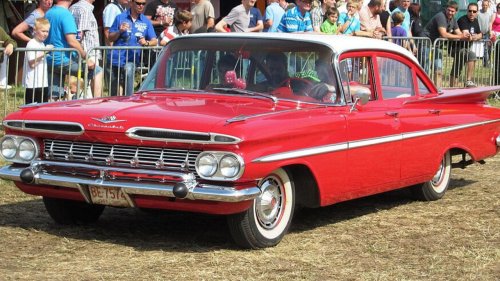
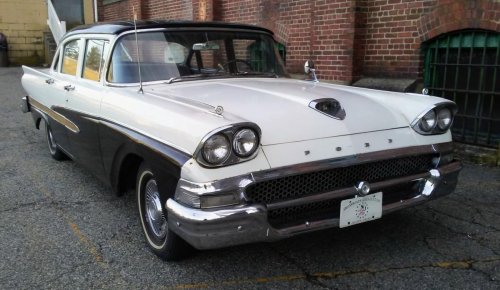



















1959 Ford Fairlane vs 1959 Chevrolet Biscayne one faded faster than expectedThe 1959 Ford Fairlane and the 1959 Chevrolet Biscayne arrived in showrooms pitched to the same budget-minded buyer, yet their legacies have aged in very different ways. One of them, at least in the eyes of many survivors parked in fields and barns today, seems to have lost its shine and structure faster than owners expected. Paint chemistry, rust protection, and even fan folklore all help explain why two cheap full-size sedans from the same year weathered so differently. From True Blue optimism to budget reality Detroit entered the late 1950s with tremendous confidence in color. Earlier in the century, DuPont’s nitrocellulose lacquer had helped unleash a vivid palette, famously showcased on the “True Blue” Oakland Six. That technology made it possible to spray quick-drying, glossy finishes in bold shades, which fit perfectly with the tailfin era’s taste for spectacle. By 1959, however, the shine of innovation had met the reality of cost cutting. The Ford Fairlane and Chevrolet Biscayne stood at the lower end of their respective full-size lineups. Each was designed to deliver big-car presence without the premium trim of a Galaxie or Impala. That meant more modest interiors, simpler ornamentation, and, crucially, less lavish paint and rust protection than halo models enjoyed. Paint systems on these cars were still single stage, with pigment and gloss in the same layer. Clear coats and modern electrocoat primers were years away. Manufacturers relied on lacquer or enamel over relatively basic primers, and the quality of metal prep varied from plant to plant. In a dry climate a Fairlane or Biscayne could keep its color for decades. In the salt belt, the finish often failed first, inviting rust into seams and rocker panels. How Ford and Chevy built their budget bruisers The 1959 Ford Fairlane carried over much of Ford’s 1958 structure, wrapped in cleaner, squarer styling that pointed toward the 1960s. It sat on a full frame with body-on-frame construction and used conventional body steel for outer panels. The Fairlane nameplate signaled a step below the flashier Galaxie, but the car still offered the full range of Ford engines and a respectable level of trim for families who wanted value more than prestige. The 1959 Chevrolet Biscayne played a similar role for Chevrolet. Positioned under the Bel Air and Impala, the Biscayne stripped away some chrome and interior frills but shared the same dramatic new “batwing” body. It rode on Chevrolet’s full-size chassis and could be ordered with anything from a thrifty six to serious V8 power. Period commentary has pointed out that a Ford owner who wandered into a Chevrolet showroom in 59 and drove the new Chevy would quickly realize that this new car felt very different in size, style, and road manners compared with the more conservative Ford. That contrast was at the heart of a Ford versus Chevrolet comparison that weighed which low-priced car gave the better experience. Chevrolet’s radical styling brought thin rear fenders and wide horizontal surfaces that caught sun and road spray. The Ford Fairlane’s body was more upright and conventional, with less extreme overhangs. Those shapes mattered when paint and primer were only marginally up to the job. Areas that trapped moisture or flexed under load tended to crack or chip, and once bare metal appeared, corrosion could spread quickly. Rust, structure, and the long shadow of “Rust Never Slept” Enthusiasts often argue about which brand rusted worse, but the available reporting paints a nuanced picture. A detailed look at mid- to late-1960s and 1970s Fords describes how cost-driven decisions around steel quality, seam sealing, and drainage created cars that became notorious for corrosion. That history, captured under the memorable phrase “Rust Never Slept,” explains why some observers still refer to why Fords were in that later period. Although that deep dive focuses on later decades, the pattern it describes is instructive for 1959. The piece shows how Ford’s internal corrosion protection lagged behind some rivals until better electrocoat processes arrived. It also illustrates how specific design choices, such as boxed frame sections without proper drain paths, trapped salty water and accelerated decay. When owners talk about Fairlanes that “dissolved” in a few winters, they are often describing the cumulative effect of thin coatings, poor drainage, and frequent exposure to road salt. Chevrolet’s record was not spotless, but the Biscayne’s structure appears to have held up relatively better in many climates. Surviving shells often show familiar rust in lower quarters and around rear windows, yet the frames and main floor pans sometimes remain sound enough to save. That may reflect differences in how Chevrolet treated seams and the way its full-size bodies shed water, even if the brand later faced its own paint and corrosion controversies. One vivid illustration of structural decline appears in images of later Ford products, such as a severely corroded 1978 Bronco captured in a Rust Never Slept photo. Another image of an E-Coat body shows how later electrocoating technology eventually addressed some of these issues by immersing entire shells in primer. Neither process was available to the 1959 Fairlane or Biscayne, which left both cars reliant on more primitive rust defenses. Paint that faded faster than owners expected Paint failure often marks the first stage of visible decline. Once the gloss disappears and chalky pigment appears, the car looks tired even if the structure underneath remains solid. On 1950s cars, that aging process depended heavily on the original coating’s thickness, the quality of the primer, and how much ultraviolet light the car endured. Modern owners of full-size GM vehicles have complained that their paint is failing early, with multiple reports of clear coat peeling and premature fading. In one social media discussion, several people describe how multiple owners of full-size GM vehicles say their paint is failing early and theorize that some units do not have a prime coat or have insufficient clear that works as a UV protectant. One commenter, Ben Grabner, suggests that missing or thin primer and inadequate clear leave the color coat exposed, which accelerates breakdown under sun and weather. Although those complaints involve newer trucks and SUVs, the underlying logic echoes what happened to many Biscaynes. If the primer was thin or uneven at the factory, and the color coat was not especially thick, years of sun and washing could erode protection until the pigment chalked and the metal beneath began to spot rust. The Biscayne’s large, flat trunk lid and horizontal fins were especially vulnerable, since they faced the sky and baked in direct sunlight for hours. Ford owners have their own narratives about material quality. In a spirited online exchange about why certain brands seem to rust more, one participant jokes that when asked how to avoid a particular make, the answer is “You DODGE them of course!” Another commenter insists that “Cuz chevys made of steel their frames cheap steel. Ford aluminum body and high quality steel frame,” presenting a fan’s view that Ford’s materials are superior. That opinion appears in a Jan discussion that mixes humor, brand loyalty, and sweeping claims about steel and aluminum. Those fan arguments do not match the historical record for 1959, when both Ford and Chevrolet used steel bodies and frames. They do, however, show how deeply perceptions about rust and paint have shaped brand reputations. If a Fairlane’s frame rotted in the rust belt while a neighbor’s Biscayne survived, local folklore would favor Chevrolet. If a Biscayne’s paint faded to a flat pastel in the sun while a Ford’s finish stayed glossy a little longer, the story might flip. Over decades, those anecdotes harden into what people believe about each brand’s durability. Why one 1959 survivor class looks more tired Walk through any online gallery of unrestored American sedans and a pattern emerges. Many 1959 Chevrolets, including Biscaynes, appear with thin paint, sunburned roofs, and surface rust on horizontal panels. Yet the bodies often remain reasonably straight, with doors that still hang correctly and frames that can be reused. Survivors from the Ford side, by contrast, sometimes show more advanced structural rust, particularly in rockers, lower fenders, and frame rails, even if patches of original paint remain on the roof or trunk. Images from a pool of discovered street-side classics help illustrate the point. In that collection, several shots of a 1958 Ford Custom 300, a 1959 Chevy Biscayne, and a 1960 Dodge capture how these low-priced cars aged differently in similar environments. The Ford Custom 300 in one photo carries thin but still recognizable paint and visible rust at the lower edges. The Chevy Biscayne in another image sports heavily faded color on its wide rear deck but appears relatively intact in its main structure. A 1960 Dodge in a third frame shows its own pattern of corrosion around the fins. Additional close-ups, such as a sedan, a sun-baked , and a patina-rich , show how original finishes break down into pastel shades, bare spots, and streaks of rust. Another angle on a weathered highlights the way seams and lower panels surrender first while roof paint lingers. Those visual case studies suggest that the Biscayne’s paint often surrendered faster than its structure. The wide, thin sheet metal of Chevrolet’s batwing rear made the finish look tired early, even if the underlying steel still had years of life. The Fairlane’s more conservative body might have held its gloss slightly better in some colors, yet hidden cavities and frame sections could rust from the inside out. By the time the Ford’s paint finally failed, the structural damage was sometimes already severe. Survivor bias also plays a role. Enthusiasts have long prized Chevrolets from the late 1950s, especially Impalas, which share much with the Biscayne. That enthusiasm increased the odds that a rough Biscayne would be saved and later restored. Fewer people felt the same urgency to rescue a tired Fairlane, so many rusted quietly into the ground. The result today is a field of survivors where the average Ford often looks more structurally compromised than the average Chevy, even if both started life with comparable build quality. Repainting, restoration, and the business of nostalgia The modern restoration industry has built an entire ecosystem around reviving faded Detroit steel. Guides to repainting classic cars still reference the heritage of nitrocellulose lacquer and the colorful legacy of the True Blue Oakland Six, while explaining why modern urethane systems offer far better durability. Enthusiasts who want to replicate original hues or finishes often turn to specialized suppliers and how-to resources, such as those linked through Painting subscriptions and related Old Cars Weekly marketplaces. Some sign up for dedicated Old Cars Weekly newsletters that cover paint, bodywork, and sourcing correct materials. For a 1959 Fairlane, restoration often begins with structural triage. Shops inspect the frame, torque boxes, and rockers, then decide whether the shell is worth saving. Rust repair can involve extensive panel replacement, especially in cars that spent their lives in regions where road salt was common. Once the structure is sound, modern epoxy primers and two-stage paint systems can give the Ford a level of protection it never had when new. A 1959 Biscayne presents a slightly different challenge. Many survivors show severe cosmetic wear but retain relatively solid frames. Restorers may focus on stripping failed paint, treating surface rust, and preserving as much original metal as possible. The goal is often to keep the car’s character while preventing further deterioration. In some cases, owners choose to leave a sun-faded finish intact, sealing it with clear to celebrate the car’s history rather than erase it. The market has also rediscovered the appeal of honest, unrestored Chevrolets. One barn-found Biscayne, described as all original and one owner, illustrates how a car that once seemed disposable can become a prized artifact. That story of a Biscayne survivor in top shape shows what is possible when a car spends its life indoors, away from harsh sun and salt. The paint may fade gently, but the structure remains remarkably intact, challenging the idea that these cars were inherently fragile. Fairlane survivors in similar condition exist, but they are rarer. When they do appear, they often surprise observers who grew up hearing that Fords from that era rusted away overnight. In those cases, careful storage and light use turned out to be more important than brand differences in paint or steel. The cars that lived outside, in daily service, became the ones that shaped reputations. What the 1959 Fairlane and Biscayne tell modern owners Looking back at these two workhorse sedans highlights several lessons that still matter for car buyers and restorers. The first is that paint chemistry and rust protection have improved dramatically since 1959, but trade-offs remain. A modern electrocoat primer, like the one shown in the E-coat image from the Rust Never Slept analysis, can protect seams and hidden cavities in ways that Ford and Chevrolet engineers of the 1950s could only imagine. Yet recent complaints about GM paint failures, such as the discussion that drew in Ben Grabner, show that even advanced systems can falter if cost cutting or process errors creep in. The second lesson is that brand folklore often oversimplifies complex histories. Enthusiasts who insist that “Cuz chevys made of steel their frames cheap steel. Ford aluminum body and high quality steel frame” are expressing loyalty rather than citing metallurgical data. The Rust Never Slept investigation into Why Fords Were the Worst Rusters in the mid to late 1960s and the 1970s provides evidence that Ford had specific corrosion issues in that era, but it does not prove that every Chevrolet was immune or that earlier Fords were always worse. The 1959 Fairlane and Biscayne both suffered from the limitations of their time. The third lesson concerns perception versus reality. Because Chevrolet’s styling for 1959 emphasized large, flat surfaces and thin rear fenders, the Biscayne’s paint often looked exhausted early, especially in sunny climates. Owners saw chalky colors and concluded that the car was worn out, even if the frame and floors remained solid. Ford’s Fairlane, with its more conservative lines, sometimes hid its decay until rust had already eaten deeply into structural members. That difference in how failure appeared helped shape which car enthusiasts viewed as having “faded faster.” Finally, the story of these two cars underscores the value of care and storage. The barn-found Biscayne that survived in top shape did so because its owner kept it dry and protected. Fairlanes that received similar treatment tell the same quiet story. In both cases, the cars outlasted the expectations of their designers, who never imagined that anyone would care about their budget sedans more than six decades later. Today, when a restorer drags home a 1959 Ford Fairlane with sagging rockers and patchy paint, or a 1959 Chevrolet Biscayne with sunburned fins and a surprisingly stout frame, the visible evidence reflects a long chain of decisions. Engineers chose certain primers and seam sealers. Stylists drew dramatic or conservative lines. Owners parked in garages or on streets. Weather, salt, and time did the rest. One car may seem to have faded faster than the other, but the full story runs deeper than a single brand name stamped on a grille. More from Fast Lane Only Unboxing the WWII Jeep in a Crate 15 rare Chevys collectors are quietly buying 10 underrated V8s still worth hunting down Police notice this before you even roll window down