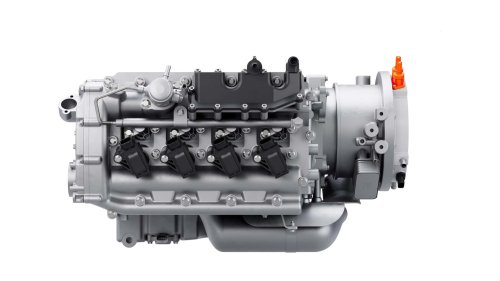
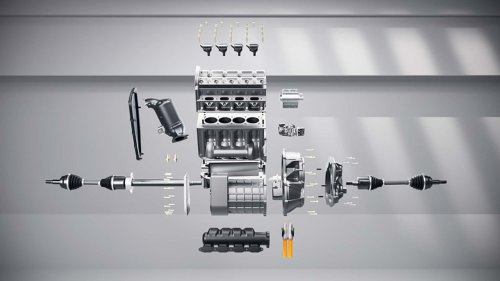
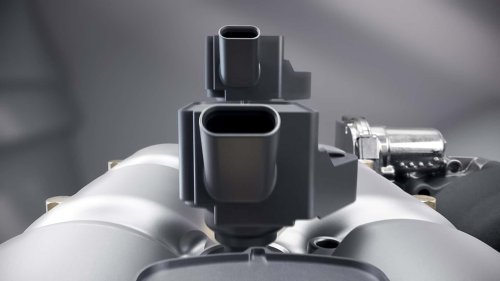
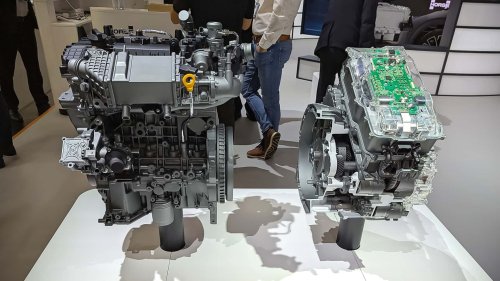
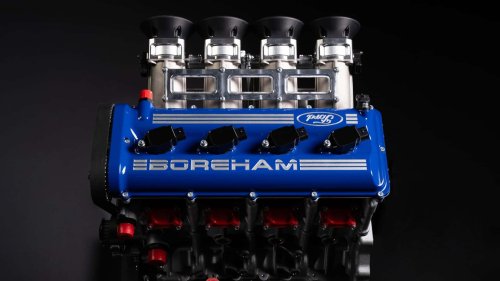
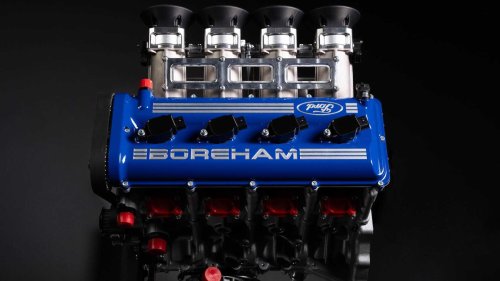
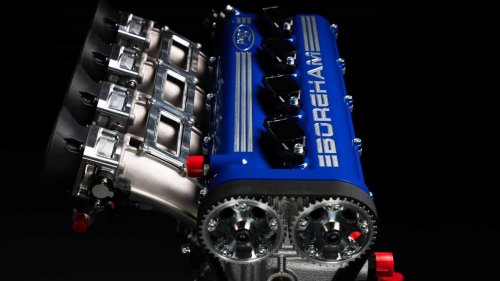
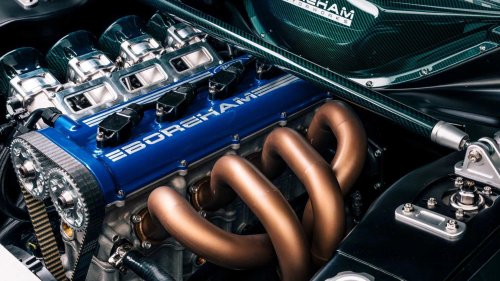
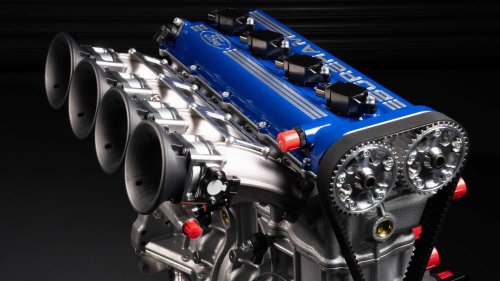
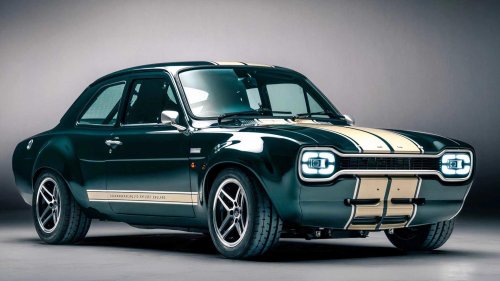
Finding a 2.0-liter inline-four that's capable of producing 325 horsepower isn't all that impressive these days. The increased popularity of turbocharging has made that sort of punch a reality. Customers can even find it in hot hatches such as the Volkswagen Golf R and the Honda Civic Type R. Remove the turbocharger, though, and 325 hp from a tiny engine becomes much more difficult to achieve.That is, unless you're Boreham Motorworks. The British motorsport company recently unveiled an engine that pumps out 325 hp without a turbocharger, while weighing just 187 pounds. It's called the TEN-K, and in order to make that much power without forced induction or a larger displacement, the mill takes advantage of a ton of fine-tuned tech not often seen outside serious motor racing. The engine makes you wonder how much power you can extract from an engine if you ignore virtually all conventional assumptions about a powerplant's design. The TEN-K's Simple Formula For Huge Naturally-Aspirated Power Boreham MotorworksBoreham Motorworks didn't just slap the TEN-K together for kicks and giggles. It was actually built for use in the brand's Ford Mk1 Escort RS restomod. It's a bespoke, limited-production model that improves one of Ford's best-ever European performance cars. The initial target output was 300 horsepower, but the company achieved 325 horsepower, with a 10,000-rpm peak-power rating. With 2.1 liters of displacement, the TEN-K produces a gargantuan 155 hp per liter.Without the help of a turbocharger, the TEN-K needed to move a tremendous amount of air for its size naturally, so Boreham set to work trying to figure out the near-impossible. First and foremost, high RPM is one of the easiest ways to get an NA engine to chuck out a huge amount of power, so long as it can continuously move air efficiently at higher revs. Think of legendary European powerplants that made big power without turbochargers, like the Cosworth GMA V12. It can rev up to 12,100 rpm and makes 623 horsepower with just 3.9 liters of displacement at its disposal. Boreham Motorworks isn't the first to build a ludicrously powerful, lightweight four-pot that lacked a turbo. In the mid-1970s, engine tuner Brian Hart produced the Hart 420. It was a series of lightweight, powerful, racing-focused engines that included in the Hart 420S, a naturally aspirated 2.0-liter four-cylinder that could produce up to 305 horsepower at 9,500 rpm and weighed about 220 to 245 pounds.The Boreham TEN-K takes that old-school Hart approach and injects some modernity into the mix. Instead of outdated designs and trial and error, the TEN-K uses precise computerized design, modern materials, and about half a century of additional engine-building techniques that Mr. Hart and his team weren't yet privy to. 10,000 RPM Is Where The Horsepower Comes From Boreham MotorworksBeing able to reach sky-high revs is essential for any engine without forced induction to make a lot of horsepower. A powerplant has to ingest a huge amount of air to make big power without forced induction, hence why high RPMs matter. However, the techniques for achieving high RPMs typically result in low torque output.The Boreham TEN-K uses four throttle bodies, one for each cylinder. Using four instead of one means the engine's throttle response can be much sharper, and airflow is individually optimized for each combustion chamber. Sitting just below the throttle bodies is a 16-valve valvetrain making use of F1-inspired port geometry. The reason for this is, you guessed it, better airflow.Along with being technologically advanced, the TEN-K also needs to be a darn-side lighter than most conventional mills to up the performance ante even further. Because the engine focuses on squeezing out every bit of power possible, the crankshaft, connecting rods, pistons, and other spinning parts need to be as light as possible to reduce rotating mass. Because of this, Boreham uses billet-machined bits wherever it can.A racing-inspired dry-sump oiling system and lightweight oil pan keep all those moving parts lubricated. For those not in the know, dry-sump lubrication uses a shallow oil pan hooked up to a separate oil tank, which oil is then pumped out of. Wet-sump systems are what we're generally familiar with a deeper oil pan beneath the engine block with an oil pump inside it. Dry-sump systems are much better for racing, as they reduce the risk of oil starvation when the engine is subjected to extreme cornering, acceleration, or braking g-forces.The TEN-K uses a pair of camshafts driven by a timing belt, rather than a chain. It's a similar setup as the classic Ford/Cosworth engine lineage. However, this is virtually the only mechanical comparison you can make between the older engines and the newer Boreham Motorworks beast. 190 Pounds Is Almost As Important As 325 Horsepower Boreham MotorworksWhat's a powerful race-derived engine worth if it isn't lightweight, too? According to Boreham Motorworks, the TEN-K weighs 187.4 pounds (85 kilograms). The low weight comes from a litany of small tweaks and material choices throughout the engine. Thanks to components such as a low-inertia flywheel and a billet alloy cradle, the TEN-K weighs less than some domestic sheep breeds. Each weight-saving decision was made to further enhance the TEN-K's performance, with little thought given to component cost or long-term profitability.Boreham didn't stop at material scrutiny, either. The brand's engineers used 3D printing for the engine block and overall manufacturing process to eliminate excess developmental waste that the human hand or eye could leave on the drafting table. By going this route, Boreham Motorworks ended up with an engine that makes more power than the Honda K20C1 found in the current Civic Type R, and that engine needs a turbo, a whole host of intercooling and associated plumbing, and 355 pounds of mass to get the job done.The car built for the TEN-K is also no cost-cutting, mass-market job, either. It's a ground-up custom job completed by Boreham, limited to just 150 units worldwide. The Escort Mk1 RS is slated to weigh around 1,973 pounds, so its extremely lightweight engine contributes greatly to keeping its overall curb weight under a ton. As you can imagine, the little Escort isn't meant for quarter-mile sprints; instead, it's for enjoying on tight racing circuits. There's even a lighter version weighing around 1,750 pounds. When Old-School Racing Meets Modern Tech, You Get The TEN-K Boreham MotorworksBoreham Motorworks didn't build a modern tribute to an old-school racing engine, even though the TEN-K closely resembles older Ford/Cosworth designs. Instead, it reimagined the pursuit of lightweight, four-pot power popular in mid-20th-century racing. Companies like Hart, with its 16-valve, 305-horsepower 420R/420S engine family, were essential to bringing small engine power in racing to where Boreham could pick it up today.Boreham Motorworks took that same basic philosophy brought forth by Brian Hart, and applied it to a modern-day engine using modern developmental and production techniques. Small displacement, extremely high RPM, and an uncompromising focus on low weight allow the TEN-K to get as much out of its tiny stature as possible. At present, the only model slated to receive the TEN-K is, so far, the Mk1 Escort RS, which has official approval from Ford itself.Natural aspiration isn't better than forced induction by any stretch, though it has positives. Turbocharging is simply the easiest way to force a small engine to make big power. Boreham chose the hard way, and that's a respectable path. On a larger scale, what Boreham Motorworks' TEN-K has shown the modern world is that you don't necessarily need a turbocharger to make big power from a lightweight, four-pot engine; you just need to make it breathe better, weigh less, and spin faster.Boreham Motorworks MK1 Ford Escort RS 27



















 +61 others