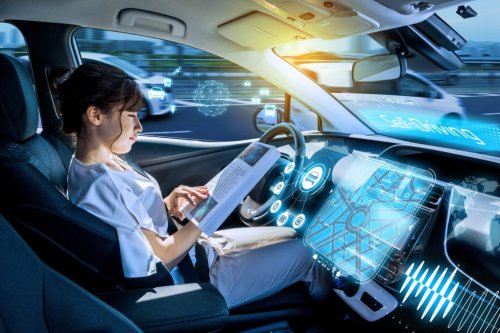
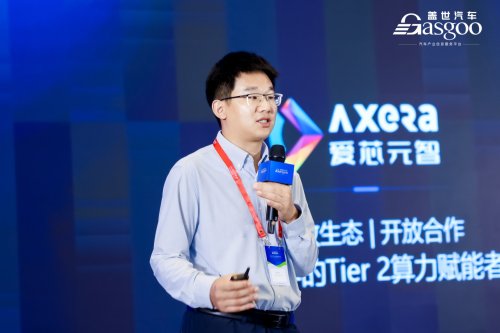
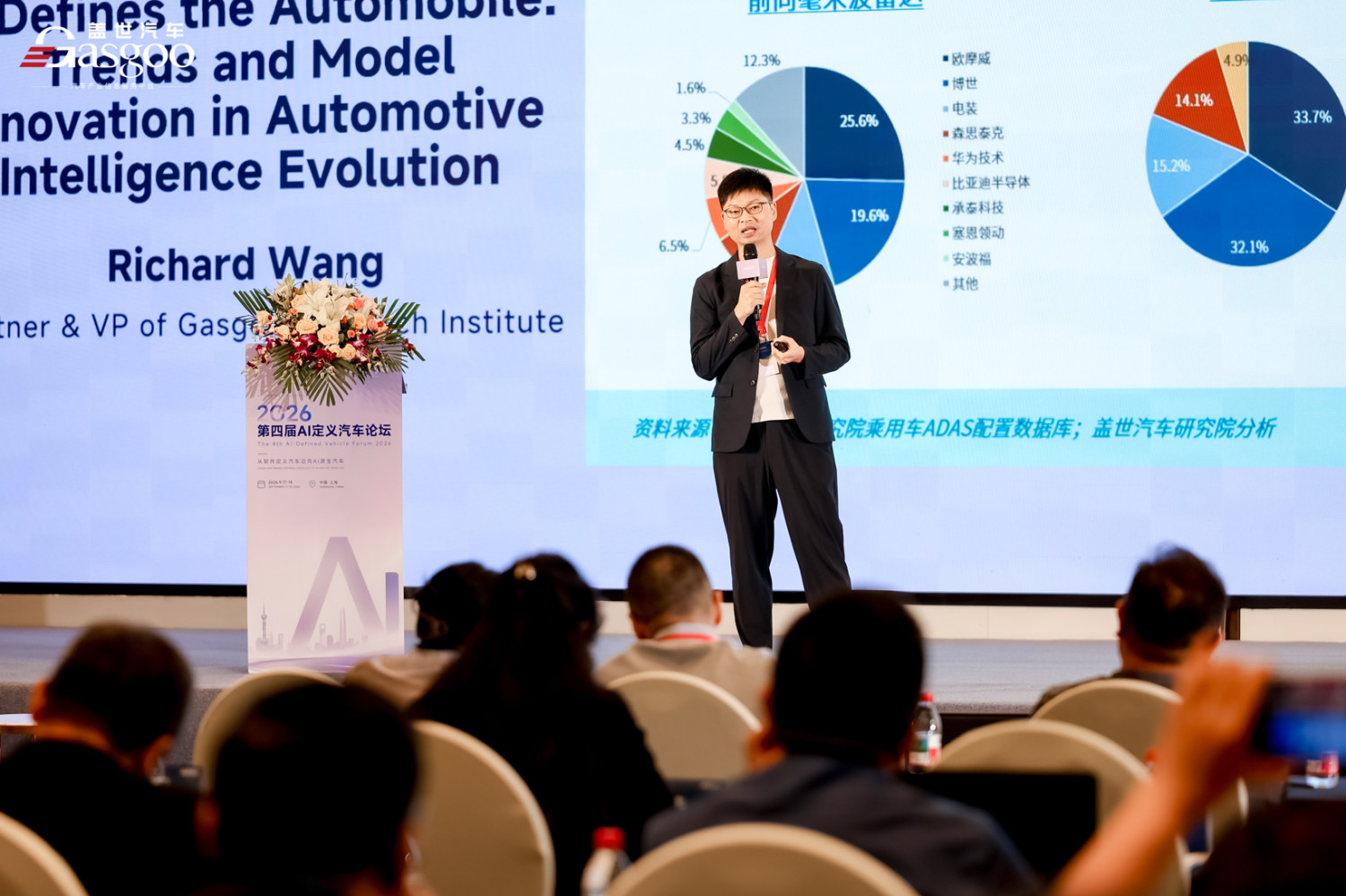
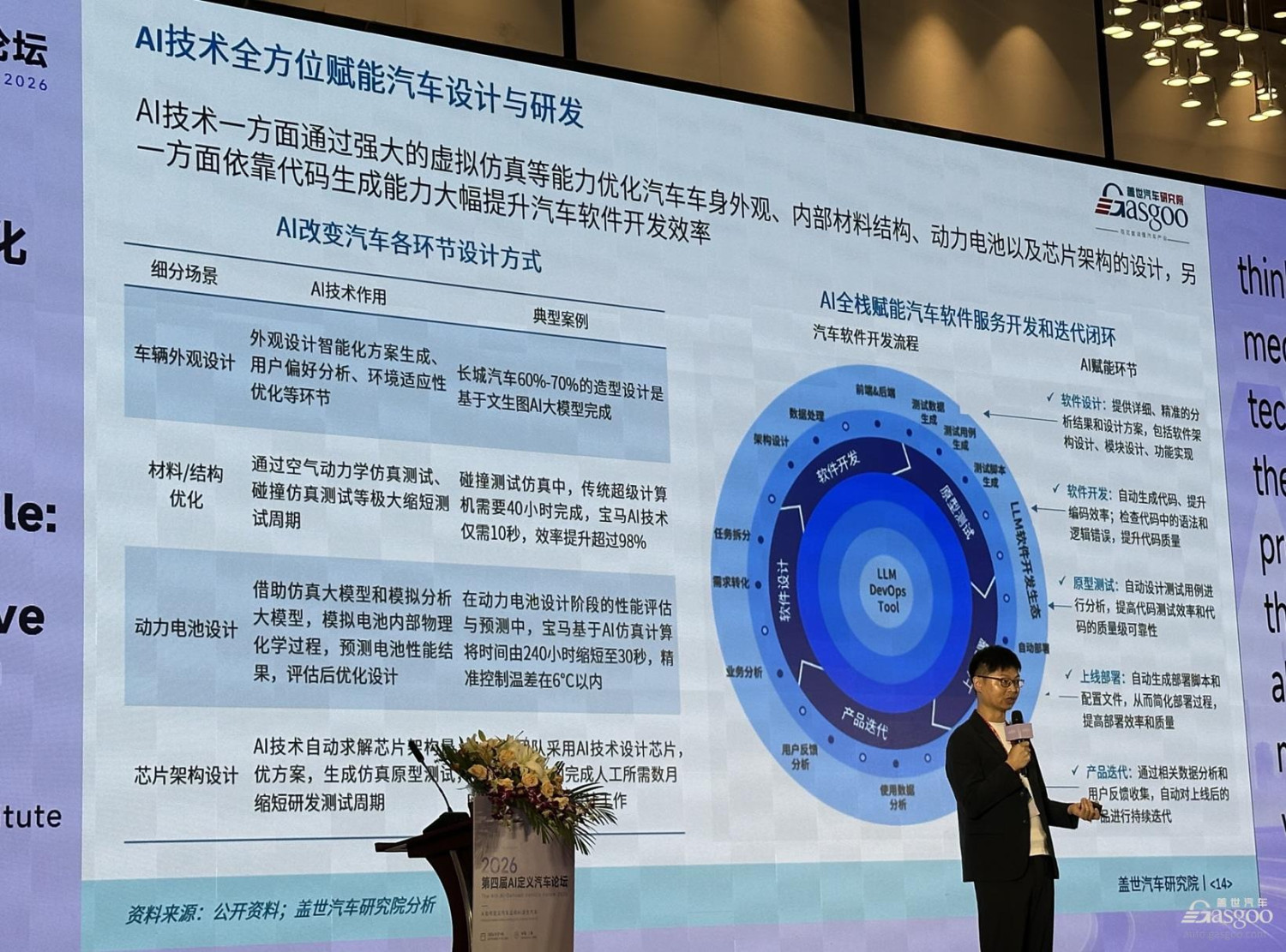
Gasgoo Munich- When the development cycle for a new model is compressed to just 12 months, how much time is actually left for suppliers?Speaking at the AI-Defined Vehicle Forum 2026 on September 17, Wang Xianbin, a partner of Gasgoo and vice president at the Gasgoo Automotive Research Institute, offered a stark estimate: perhaps only 3 to 4 months.The pace of new model launches in China has accelerated relentlessly in recent years. The timeline from project approval to market launch—once a drawn-out three or four years for traditional automakers—has been slashed to 18 months, 15 months, or even just 12.Yet, shorter timelines do not mean the required design, development, and verification work has diminished in tandem.Wang was blunt. "If you've cut everywhere else and still miss the deadline, the only knife left to use is on verification."That observation may carry more weight than any discussion about how much AI has boosted R&D efficiency.It points to a hard reality as China's development velocity surges: when every possible efficiency gain has been exhausted, where is there left to squeeze time?Building a Car in 12 Months: What Finally Gets Compressed?In Wang's view, the rapid contraction of China's development cycles stems first from changes in development mechanisms.Some emerging players have shorter decision-making chains, with core managers directly involved in product definition—where "the boss is effectively the product manager." At the same time, suppliers are brought in earlier, shifting software, hardware, and vehicle systems from a serial progression to parallel development.AI is now entering the mix as well.From styling design and material research to crash simulation, software testing, virtual verification, and OTA iteration, an increasing number of R&D stages are leveraging AI and digital tools to boost efficiency.Even so, time remains in short supply.Wang noted that if a vehicle is developed in roughly 12 months, the actual window left for suppliers to complete their own development and verification might be just 3 to 4 months.Certain stages in automotive R&D are inherently time-bound.Take winter calibration as an example. A prospectus released this year by CATARC shows that complete winter calibration and R&D verification for a model typically requires spanning two winter testing windows. A single effective winter testing period is usually only 3 to 4 months, concentrated between November and March.In other words, while the overall development cycle can be squeezed from 36 months to 18, and then down to 12, winter still comes only once a year.This is precisely why the "3 to 4 months" left for suppliers is so tight.When faster decision-making, early supplier involvement, parallel development, and AI simulation are all exhausted—and launch deadlines still loom—verification is often what gets squeezed further.Therefore, there is no contradiction between AI improving R&D efficiency and the rising pressure on verification.AI can help detect issues early and reduce repetitive tasks, but it cannot make physical verification for extreme cold, durability, or complex road conditions simply vanish.Regulators are already responding to these concerns.The Ministry of Industry and Information Technology has repeatedly demanded this year that automakers strengthen production consistency, reliability, durability, and the testing of new technologies—explicitly warning against launching products without sufficient verification. In August, four government departments launched a year-long special campaign on production consistency and quality improvement, with reliability, durability, and new tech verification listed as priorities.Revisions to related standards this year sent a similar signal: the reliability driving test mileage for new energy vehicles is set to increase from roughly 15,000 km to no less than 30,000 km.These shifts indicate that compressing development cycles is no longer just an issue of efficiency—it is becoming a matter of quality management.For suppliers, this shift is also redistributing value.Suppliers of chassis, thermal management, mechanical, and safety components—which require extensive physical verification and long-term durability testing—face immense time pressure. Conversely, the value of companies providing AI R&D tools, simulation platforms, digital verification, and early collaborative development capabilities is being amplified.Therefore, the real debate over a 12-month development cycle is not just about whether it can go faster.It is about determining which time can be reclaimed through technology, and which verification steps must remain untouched no matter what.As Supply Chain Boundaries Expand Beyond the Auto SectorIf AI is changing *how* cars are built, another transformation is occurring in *who* builds them.Wang noted in his speech that the next phase of innovation in smart cockpits may increasingly come from outside the traditional automotive industry.In recent years, features like screens, voice control, and seat adjustments—along with configurations broadly summarized as "fridges, color TVs, and big sofas"—have proliferated.As these functions gradually shift from differentiating selling points to standard equipment, the next round of cockpit competition is expanding into health, comfort, space, and lifestyle.And these capabilities are not necessarily held by traditional automotive Tier 1 suppliers.Wang revealed that over the past two years, the Gasgoo Research Institute has encountered numerous cross-sector supply chain directions in its frontline technology intelligence work.For instance: Can bedding and comfort materials from the hospitality industry enter the car cabin? Can materials originally designed for the female consumer market or sports and health scenarios be reimagined for vehicle interiors? And which mature technologies from massage or health monitoring industries can be redefined and integrated into automobiles?This implies that the sources of innovation for the next generation of cockpits may no longer be limited to the existing automotive supply chain.This crossover is even more pronounced in the robotics sector.On September 15, at a Gasgoo seminar on embodied perception fusion and multimodal large models, Wang cited data showing that the overlap between automotive and robotics supply chains has reached 60% to 70%.In the same speech, he noted that execution systems account for nearly half of a robot's BOM cost, while mainstream perception solutions heavily reuse the computing, sensing, and control architectures already employed in automobiles and autonomous driving. As scale increases, there remains significant room for cost reduction across different product segments.This indicates that the connection between automobiles and robots is no longer merely one of "technological similarity."The supply chains themselves are overlapping.At the AI-Defined Car Forum on September 17, Wang proposed an even more imaginative concept: Could a robotic dog serve as a mobile AI Box for a car?Under his vision, while inside the vehicle, the robotic dog could handle some edge computing tasks. Once the car reaches its destination, the dog could detach and continue performing tasks in scenarios such as camping, luggage handling, or child companionship.In this scenario, the car and the robot are no longer two entirely independent pieces of hardware, but potential sharers of a single set of AI, perception, and computing capabilities.Clearly, this concept is still a long way from true mass commercialization.Yet the industrial logic behind it is becoming clear.On one hand, the sensors, controllers, motors, materials, thermal management systems, computing platforms, and large-scale manufacturing capabilities accumulated by automotive suppliers can migrate to robotics. On the other, companies from the hospitality, health, consumer electronics, and robotics sectors are beginning to move into the automotive space.The boundaries of the automotive supply chain are shifting from internal restructuring to external expansion.Wang characterizes the next stage of automotive evolution as a shift from SDV—Software Defined Vehicle—to AIDV—AI Defined Vehicle.But based on the insights from this speech, AIDV is changing much more than simply adding a large model to the head unit.On one end, it penetrates deep into the R&D system, altering how a vehicle is developed, verified, and delivered. On the other, it continuously opens supply chain boundaries, allowing more technologies and enterprises previously unrelated to the automotive sector to enter the fold.The 12-month development cycle, the 3 to 4-month supplier verification window, and the seemingly disparate topics of hotel materials, robots, and AI Boxes all ultimately point to a single shift:AI is redefining the time of the automotive industry, and it is redefining the industry's boundaries as well.



















 +60 others
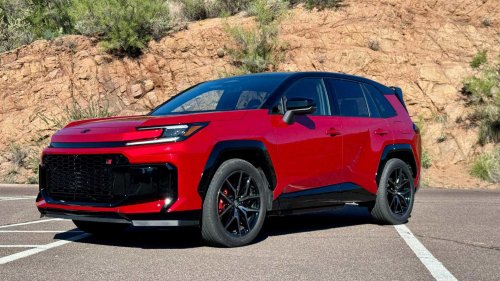
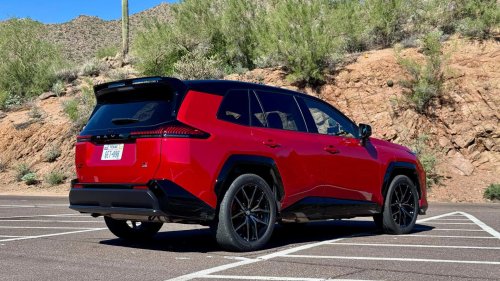
![Volkswagen, Volkswagen ID.4, SUV, Volkswagen's next EV SUV is not just a rebadged ID.4 [Images]](https://cdn.topcarnews.net/thumb/id/aHR0cHM6Ly9pMC53cC5jb20vZWxlY3Ry-ZWsuY28vd3AtY29udGVudC91cGxvYWRz-L3NpdGVzLzMvMjAyNi8wMS9Wb2xrc3dh-Z2VuLUlELjQtcmVmcmVzaC5qcGVnP3c9-MTUwMCZhbXA7cXVhbGl0eT04MiZhbXA7-c3RyaXA9YWxsJmFtcDtzc2w9MQ/60f1ee87b5c40928cb2f3d5b4808f49a.jpeg?t=20261008&post_id=42292)
![Volkswagen, Volkswagen ID.4, SUV, Volkswagen's next EV SUV is not just a rebadged ID.4 [Images]](https://cdn.topcarnews.net/thumb/id/aHR0cHM6Ly9pMC53cC5jb20vZWxlY3Ry-ZWsuY28vd3AtY29udGVudC91cGxvYWRz-L3NpdGVzLzMvMjAyNi8wMS9Wb2xrc3dh-Z2VuLUlELjQtZmFjZWxpZnQtc2lkZS5q-cGc_c3RyaXA9aW5mbyZhbXA7dz0xMjYw-JmFtcDtzc2w9MQ/919ad2a6d8535bc9c67d1708805c02fa.jpg?t=20261008&post_id=42292)
![Volkswagen, Volkswagen ID.4, SUV, Volkswagen's next EV SUV is not just a rebadged ID.4 [Images]](https://cdn.topcarnews.net/thumb/id/aHR0cHM6Ly9pMC53cC5jb20vZWxlY3Ry-ZWsuY28vd3AtY29udGVudC91cGxvYWRz-L3NpdGVzLzMvMjAyNS8wMi9Wb2xrc3dh-Z2VuLUlELjQtYmVzdC1zZWxsaW5nLUVW-LTEuanBlZz9zdHJpcD1pbmZvJmFtcDt3-PTE0MDAmYW1wO3NzbD0x/6ef1aa2de9672157e7d6ae3a35776934.jpeg?t=20261008&post_id=42292)
![Volkswagen, Volkswagen ID.4, SUV, Volkswagen's next EV SUV is not just a rebadged ID.4 [Images]](https://cdn.topcarnews.net/thumb/id/aHR0cHM6Ly9lbGVjdHJlay5jby93cC1j-b250ZW50L3VwbG9hZHMvc2l0ZXMvMy8y-MDI2LzAxL1ZvbGtzd2FnZW4tbmV3LUVW-LWludGVyaW9yLTEuanBlZw/a106bbbb5b6f08ecb1a79cd076df492b.jpeg?t=20261008&post_id=42292)
![Volkswagen, Volkswagen ID.4, SUV, Volkswagen's next EV SUV is not just a rebadged ID.4 [Images]](https://cdn.topcarnews.net/thumb/id/aHR0cHM6Ly9pMC53cC5jb20vZWxlY3Ry-ZWsuY28vd3AtY29udGVudC91cGxvYWRz-L3NpdGVzLzMvMjAyNi8wMS9Wb2xrc3dh-Z2VuLUlELjQtcmVkZXNpZ24tVGlndWFu-LmpwZz9zdHJpcD1pbmZvJmFtcDt3PTEy-NjAmYW1wO3NzbD0x/04f43b8d13846e15ea27360f370e5a6a.jpg?t=20261008&post_id=42292)
![Volkswagen, Volkswagen ID.4, SUV, Volkswagen's next EV SUV is not just a rebadged ID.4 [Images]](https://cdn.topcarnews.net/thumb/id/aHR0cHM6Ly9pMC53cC5jb20vZWxlY3Ry-ZWsuY28vd3AtY29udGVudC91cGxvYWRz-L3NpdGVzLzMvMjAyNi8wMS9Wb2xrc3dh-Z2VuLUlELjQtZmFjZWxpZnQtcmVhci5q-cGc_c3RyaXA9aW5mbyZhbXA7dz0xMjYw-JmFtcDtzc2w9MQ/2c3bdc1a0dfcfbc50ded14ce590b31a5.jpg?t=20261008&post_id=42292)