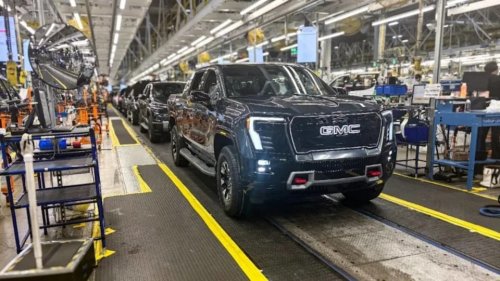
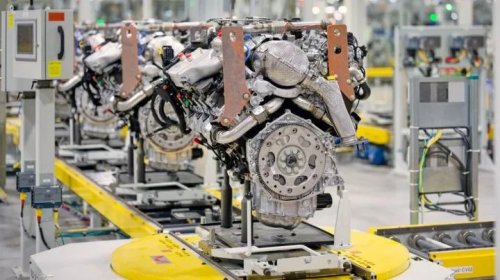
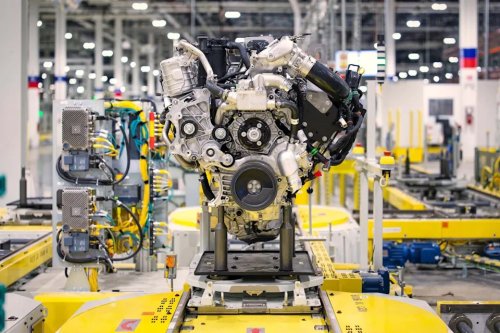
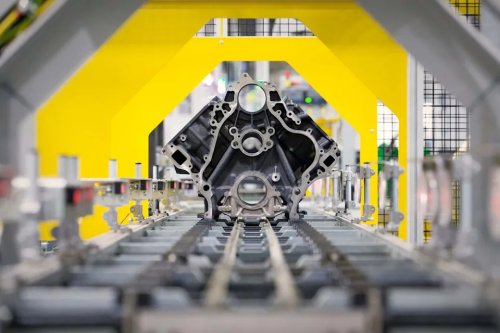
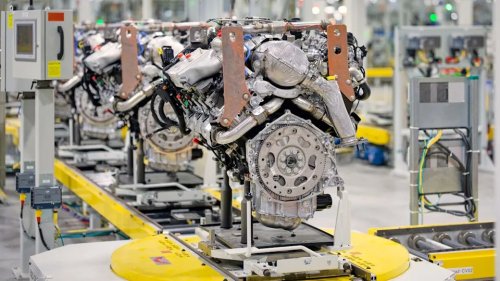
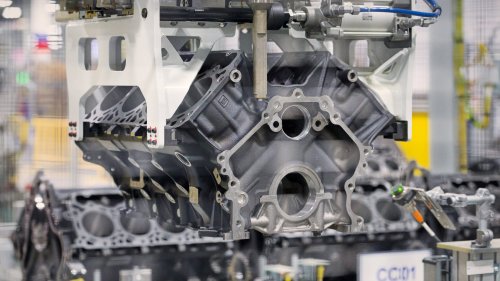
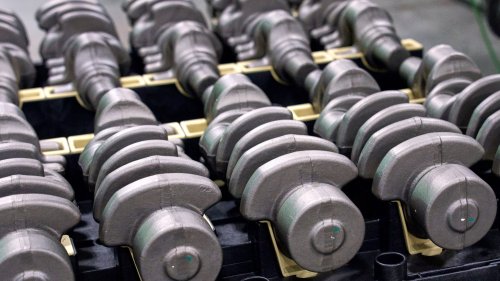
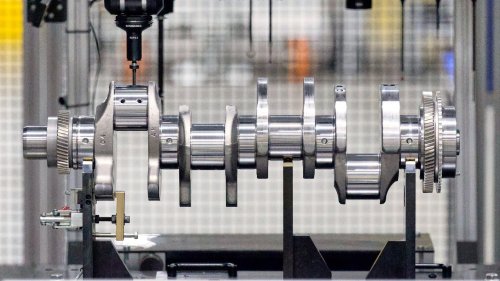
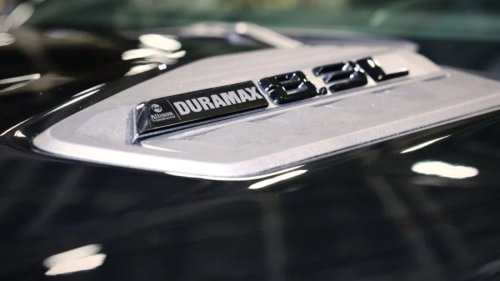
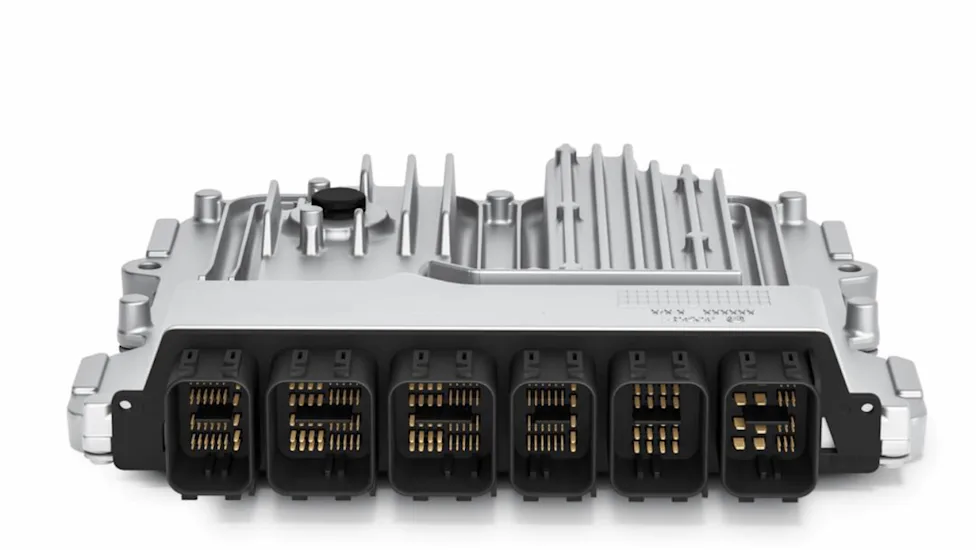
(Photo: General Motors)The hardest part of putting a proven engine into a new commercial vehicle has never been the engine itself. It is teaching that engine where it lives among the sensors, onboard computers and control modules that fill modern commercial vehicles.GM Powered Solutions is selling a shortcut, announced at ACT Expo earlier this year. The automaker's business-to-business propulsion group has rolled out a commercial vehicle ECM built for its 6.6-liter heavy-duty gas engine. It's aimed at on-road applications from companies that never put a GM badge on the hood. The module ships with a GM-approved base engine calibration already loaded and is designed to function as a ready-to-run testing package.An ECM is the engine's computer. In GM's words, it decides how the engine responds to different driving and load conditions.AdvertisementAdvertisementFor integrators, upfitters and fleets spec'ing step vans, work trucks and last-mile delivery vehicles, the real value shows up on the development calendar. Programs that once started with a dead engine and a blank controller can now start with a running one.Turning fuel to noiseThe package exists because customers told GM the opening stretch of engine integration was the most punishing and the least differentiated work in the whole program."We listened to our customer saying, 'Hey, I really need a launching pad. I don't know what it takes to get an ECM to a state where we can turn fuel to noise — run the engine. It's very technical, it's very unique to that specific engine, and we just don't know how to do that,'" said Anthony Locano, technical specialist and on-highway lead application engineer at GM Powered Solutions.GM's answer is what Locano calls a foundational starting point package.AdvertisementAdvertisement"Because every application has its own requirements, we have to be thoughtful about where we apply our engineering and calibration resources," Locano told FreightWaves. "When we're certifying an engine, it has to meet a defined set of requirements, so it isn't practical to tailor the production solution for every application. So we got really scrappy and unique with this ECM."Locano has been with General Motors since 2013. Before that he worked in heavy-duty trucking as a diesel and aftertreatment calibrator and in on-road and off-road applications like marine, industrial and generator-set applications running 14-liter engines and larger.What changes for integratorsThe controller is tailorable. That capability is new for external customers."What's unique about this controller is that it can be tailored, meaning if a customer wants to add content to it for specific vehicle-related features or functionality, they have that ability," Locano said. "That is something we haven't been able to do in the past. That's what makes this very unique."AdvertisementAdvertisementEngines do not arrive in a vacuum. Every calibration depends on the hardware the vehicle maker chooses, and that hardware changes with the chassis."Our controller is not specific to any exhaust system or air induction system, all these are inputs the go into building this calibration. They're vehicle-dependent," Locano said. "An air induction system or exhaust system out of one of our trucks isn't going to work for a step van. It's all integrated; our engine is integrated into another chassis.""The vehicle has to interface with the ECM. Now they can do that. They can tailor this specific ECM to communicate with their vehicle without a gateway and have that one piece tailored to their specific application," he added.A starting point, not a certified productBuyers need to understand the certification boundary. "With this controller we've taken it to a point where it's up and running for engine dyno only. ," Locano said.AdvertisementAdvertisementIn practice, the customer installs the engine in a test cell and fires it at full power right away. Emissions calibration stays on the customer side because the intake and exhaust hardware is theirs."We tuned for performance, but it needs to be tuned for emissions, and that exhaust and intake system are required," Locano said. "That's customer-specific and unique to dial in the calibration for emissions and for certification purposes.""It's only a starting point; it's not a certified product," he said. "But what it will do is jumpstart their development. They come to the table not starting from ground zero. They're actually starting from a place of a running engine, and that can jumpstart development in the test cell.""There's a lot of time saved in that initial development, and they can really focus on the meat and potatoes of integrating the engine into the vehicle and generating the data and making the changes required for emissions in the test cell," Locano said.Room left for hybrid applicationsGM built spare capability into the hardware for powertrains that are not on the order sheet yet.AdvertisementAdvertisement"Maybe they want to do a hybrid. From a hardware capability standpoint, the ECM has additional I/O, additional pins and widgets that can make other possible powertrains work in the future," Locano said. "We tried to future-proof the package for opportunities that aren't in scope right now."A shift to take advantage of Good Manufacturing PracticesThe group is not built for small orders. "We're a B2B group, so we don't do onesies and twosies out of our group," Locano said. "The work required to do one engine versus ten thousand, in terms of providing information and executing a program, the work is the same. But we leverage high volume production coming off the line today."GM Powered Solutions sells propulsion across marine, industrial, off-road and on-road commercial applications. Parts and service run through GM's Customer Care and Aftersales network, dealers and ACDelco distributors. GM has powered boats for more than 100 years.Nobody specs the brainLocano's pitch to buyers is straightforward: the controller is not an accessory to the engine purchase. It is the thing that makes the purchase work.AdvertisementAdvertisement"Put it this way: without the ECM, the engine is a paperweight in today's world," he said.That reality often gets buried under everything else on a spec sheet."A lot of people don't think about the amount of work it takes to bring a certified product to market. There's a lot of work, a lot of integration work," Locano said. "When we work with these external customers, they're going to have a unique vehicle architecture.""Even with an engine, we're not talking about carburetors anymore. It's very complicated," he said. "We're trying to reduce that complication by offering this ECM to get them to a place where they can focus on that integration effort — taking it from a foundation to a production piece."AdvertisementAdvertisementThe post GM targets development costs with commercial vehicle ECM appeared first on FreightWaves.



















 +59 others