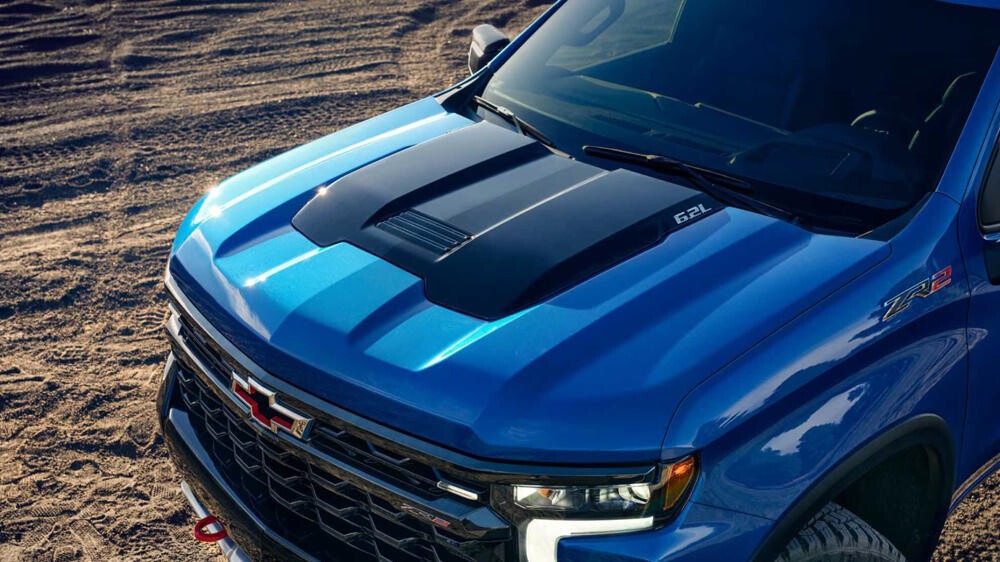
As at most automakers, safety is a priority at GM and when any of its myriad tests come back below desired levels, the company pounces to make improvements. That includes the new 2027 Chevrolet Silverado, one of the most important launches this year, and engineers continue to work to make sure all variations are hitting goals. Chevy started the rollout of the 2027 Silverado with the popular crew cab and is getting ready to launch the 2027 double cab in the second half of next year with changes intended to score higher safety ratings than the outgoing model. The 2026 Silverado 1500 earned a National Highway Traffic Safety Administration four-star rating. The New Car Assessment Program rates the safety of new vehicles on a scale of 1 to 5. But there was room for improvement when it came to rear-seat occupant safety in a frontal crash in which part of the vehicle’s front end hits something. The outgoing Silverado, especially the double cab that has less room for rear occupants, received a marginal rating from the Insurance Institute for Highway Safety on what is known as the offset deformable barrier impact test, largely because of the impact on the rear seat passenger in the smaller cab. For the 2027 model, the Silverado added seatbelt pretensioners to the rear seats and changed the seat structure, said Brian Curry, safety performance team lead for the truck. Updating models offers an opportunity to upgrade safety features. Regulations change and when they take effect is not always in line with a given product’s release cadence. The 2027 Silverado has more than 20 active safety features including the ability to monitor cross traffic at an intersection and emergency brake if necessary. Blind spot detection now extends to the trailer when towing. Crashing New Silverados for Safety While the crew cab is already on sale, tweaking, testing and validation continue in the runup to the double cab launch next year. Another live crash test was scheduled for November 10 and GM allowed some media into the Milford Proving Ground outside Detroit to watch a 2027 Silverado double cab crash with a 50th percentile (average-size) male dummy in the driver seat and a 5th-percentile female dummy in the second row. The truck hit an offset deformable barrier at 40 mph (64 kph) to emulate a crash common in the real world. The front of the truck on the driver’s side took the brunt of the impact. The energy absorbing structure did its job and the steel cage around the cabin maintained its integrity, protecting the occupants and making it possible to easily open the doors to get out. Engineers want to see that the frame, cab, airbags, and emergency systems all perform as engineered. Cameras caught the action at 1,000 frames per second; grease applied to the dummies shows points of impact on the airbags. The truck’s emergency responses kicked in: the hazard and interior lights came on, the horn sounded, and the doors unlocked. After the crash, in addition to combing through all the data, engineers will disassemble the vehicle, taking out the interior to evaluate it. It takes about two weeks to prepare a vehicle for a crash test and another week to de-instrument it after the crash, do the full teardown, and begin to analyze the data. Each GM dummy, valued at more than $1 million, collects about 50 channels of data from each crash. In all, a crash that happens in the blink of an eye takes four to five weeks to execute. GM’s facility for safety and crash testing was opened in 1966. Originally, crash testing was done outdoors but GM has since built a structure to contain the test area.