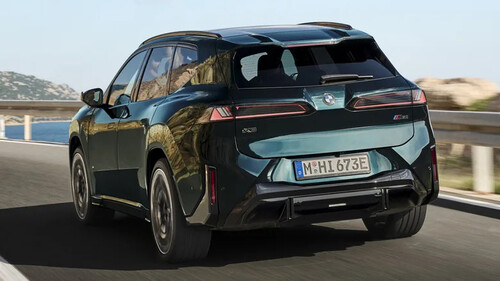
Nearly every vehicle on the market today is offered with some type of cloud-based subscription services.©2026 Michael Harley/Schnell Auto, Inc.Your next car may send you a monthly billing reminder—nagging you for a dozen other fees you didn't know you'd signed up for. The industry's quiet pivot toward subscriptions and software‑locked features is changing what it means to "own" a vehicle, and many drivers are discovering they don't like that fine print.My first new car was a 1990 Honda Civic Si. The purchase process was simple. I walked into the showroom, picked out a car, completed the financing process, and drove away with the vehicle. The compact two-door had a fixed set of features and amenities (the AM/FM radio with a cassette player and four speakers was my favorite), and there were no surprises or hidden fees—I made the same payment for 60 months, until the hatchback was paid off.Vehicle ownership wasn't complicated. If your vehicle had heated seats, a sunroof, or fog lights, you owned them outright. Everything was bundled into the agreed-upon price, and monthly payments didn't change throughout ownership. And, when the vehicle was paid off, its features were unchanged from the day it had been delivered years earlier (even the third owner, a decade later, enjoyed the original set of features without worry).AdvertisementAdvertisementToday's new cars and trucks are many times more sophisticated than their predecessors just a few decades ago. They offer dozens more mechanical features (e.g., cooled seats, power tailgates, active headlamps), and today's software-driven vehicles deliver hundreds of conveniences, audio, and safety features through complex infotainment systems—they are literally smartphones on wheels, governed by code instead of physical wiring.Automakers are taking advantage of modern electronics and software‑centric manufacturing, thinking of new ways to charge for old ideas, and utilizing subscription switches to turn options on or off years after you've driven off the lot.The business logic makes sense: a software-defined vehicle is not only easier to manufacture but also trivially easier to gate features—think of them like phone apps—behind a digital paywall. Manufacturers build the required hardware and software into the vehicle and offer only a basic feature set at the base price (e.g., the vehicle comes with power seats but not heat, cooling, or massage). Customers can upgrade features à la carte, but that requires a new monthly subscription.Most vehicle owners are familiar with connected-vehicle cloud-based services like OnStar, from General Motors. That subscription data, entertainment, and safety service offers complementary base services, but owners are enticed to upgrade for premium services. While OnStar's basic service is about $25/month, the Full-Suite Premium Bundle is nearly $50/month. That means the typical car owner who keeps their vehicle for 8 years will spend $4,680 over that period. For auto manufacturers staring down plateauing sales, volatile EV demand, and rising costs, turning a one‑time sale into a recurring revenue relationship looks like a very profitable lifeline.AdvertisementAdvertisementToyota charged a subscription fee for remote‑start capability through its Connected Services platform, even though all of the vehicles were already equipped with the necessary hardware and key fob. GM's Super Cruise, a hands-free driving system, is offered without charge after new vehicle delivery, but then converts to a subscription model down the road. And Ford does the same with its BlueCruise hands-free driving system—there is a trial period, followed by a subscription model.But subscription services don't stop with digital (data, entertainment, and safety) services. Automakers are testing the water in other areas. BMW recently tested the waters with subscription-based heated seats—the heating coils were manufactured in the seat, but consumers had to pay to unlock them. BMW also experimented with subscription-based high-beam assist and remote start. All were met with aggressive consumer pushback, forcing the German automaker to focus future subscriptions towards "software and service‑related products."The push against automakers moving more products to a subscription model is, in part, a generational clash. Older buyers grew up with the idea that once you drove off the lot, every button and switch on the car was yours forever. Younger buyers, raised on Netflix, Spotify, and cloud software, are far more accustomed to paying monthly for access, so the idea of a car as a subscription platform doesn't bother them as much—even if it still stings on the monthly credit card bill.Whether consumers like it or not, cloud-based services aren't going away. The same hardware that allows automakers to charge for services also allows them to upload genuinely useful, often free improvements. Over‑the‑air updates can quietly fix bugs, refine transmission shift logic, improve battery preconditioning for faster charging, or sharpen the calibration of automatic emergency braking systems. Updates that used to require a trip to the dealer can now be completed overnight while the vehicle sits in the owner's garage. And, thanks to the convenience, more vehicles are getting the updates—making the roads and highways safer for everyone.AdvertisementAdvertisementAutomakers have no intention of abandoning profitable subscription revenue. Instead, they'll keep nudging the line, seeing how much they can bundle into monthly fees before customers push back; after all, no one wants the sense that they're being charged to rent what they already own.The consumer's takeaway is simple. Before you buy or lease, ask pointed questions about what is included with the vehicle, and what the subscription add-ons are. Does driver assist remain active for the life of the vehicle, or is it tied to a subscription down the road? Are software updates free, or will you have to pay for them? Years ago, consumers could sign a lease or purchase contract and know exactly what they were getting. With today's subscription services, it's no longer enough to simply scan the window sticker, agree to the finance numbers, and drive home.This article was originally published on Forbes.com