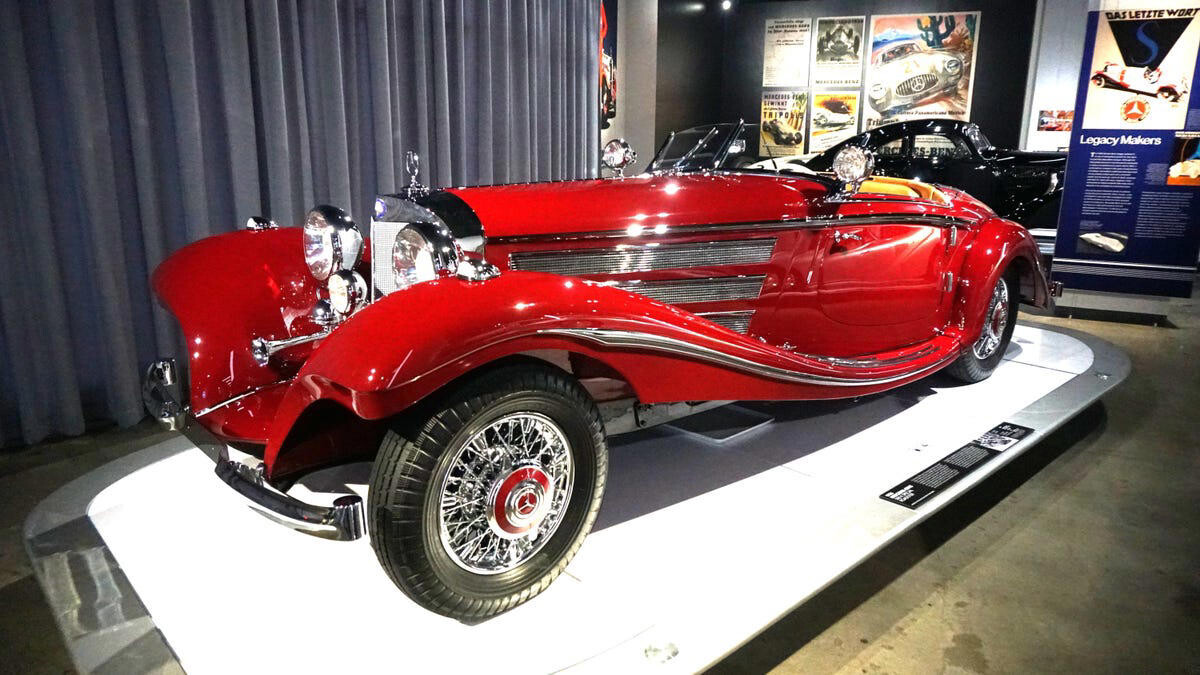
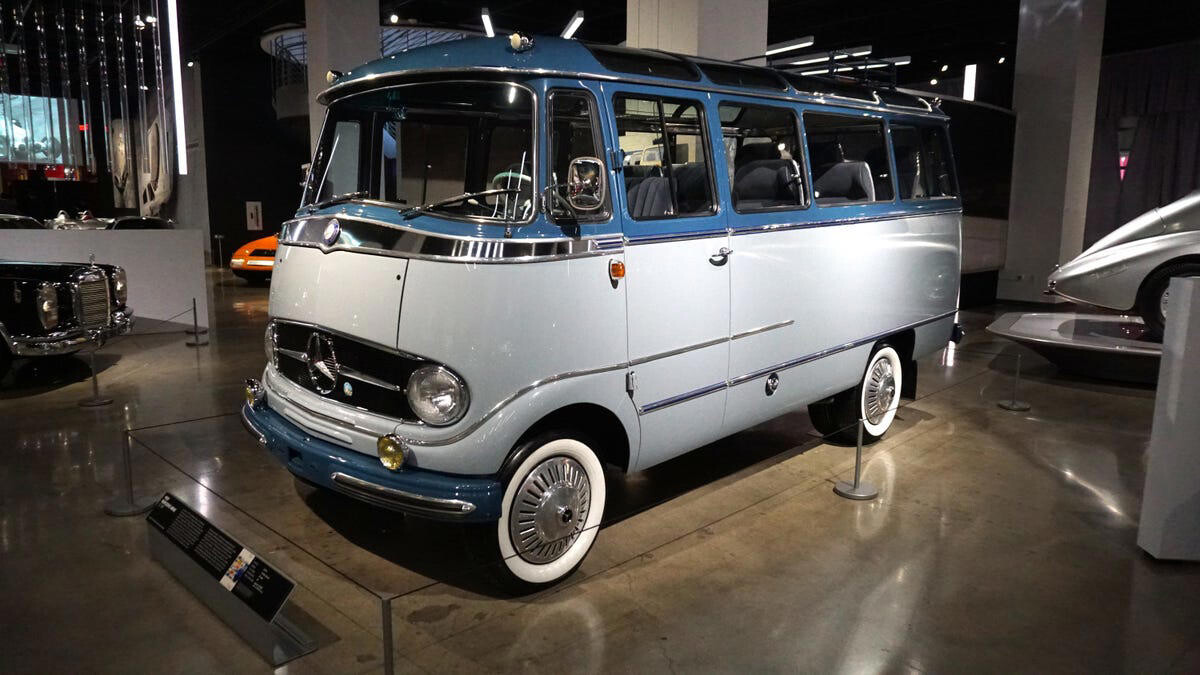
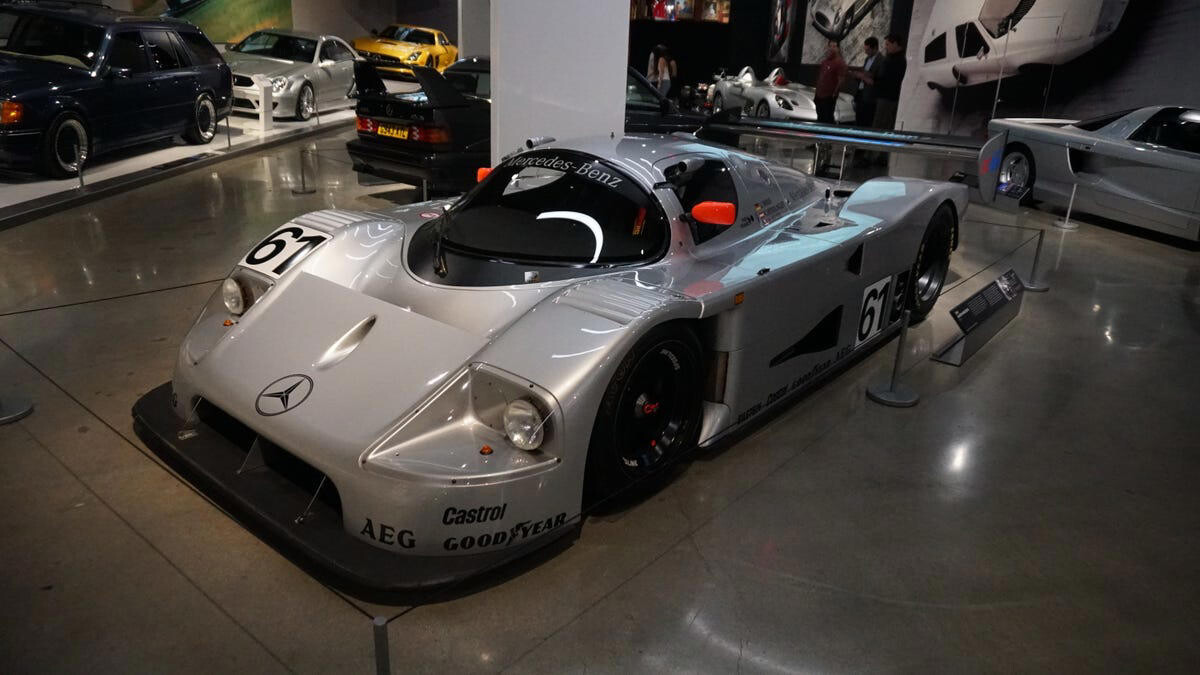
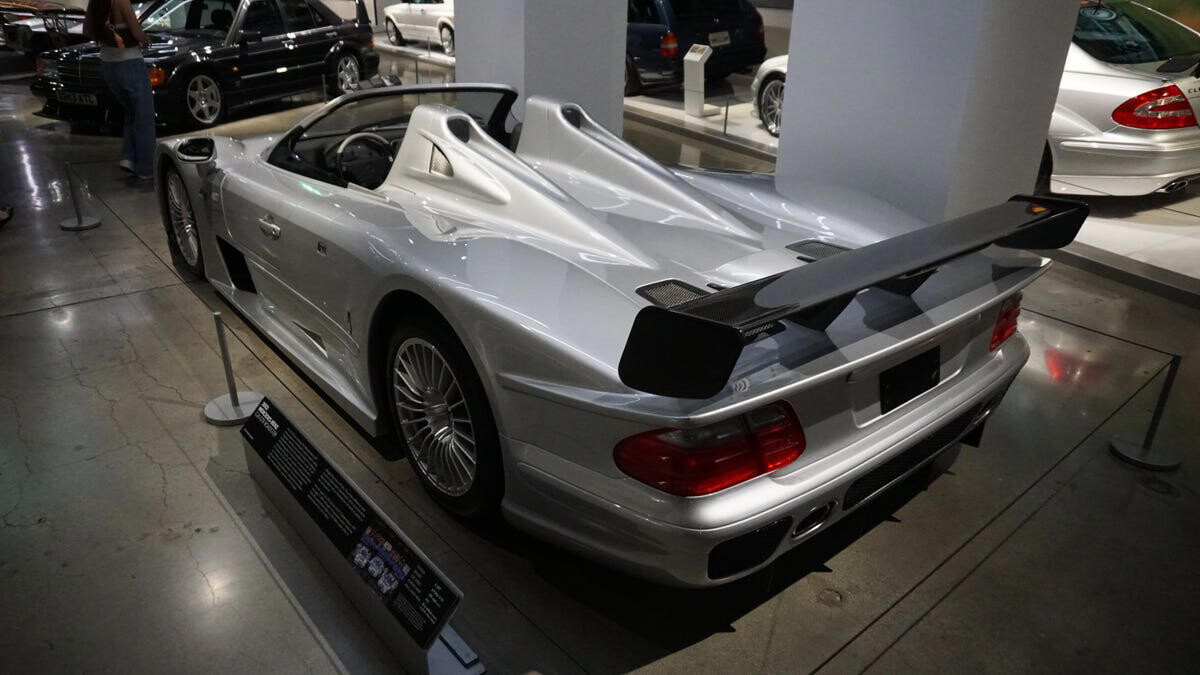
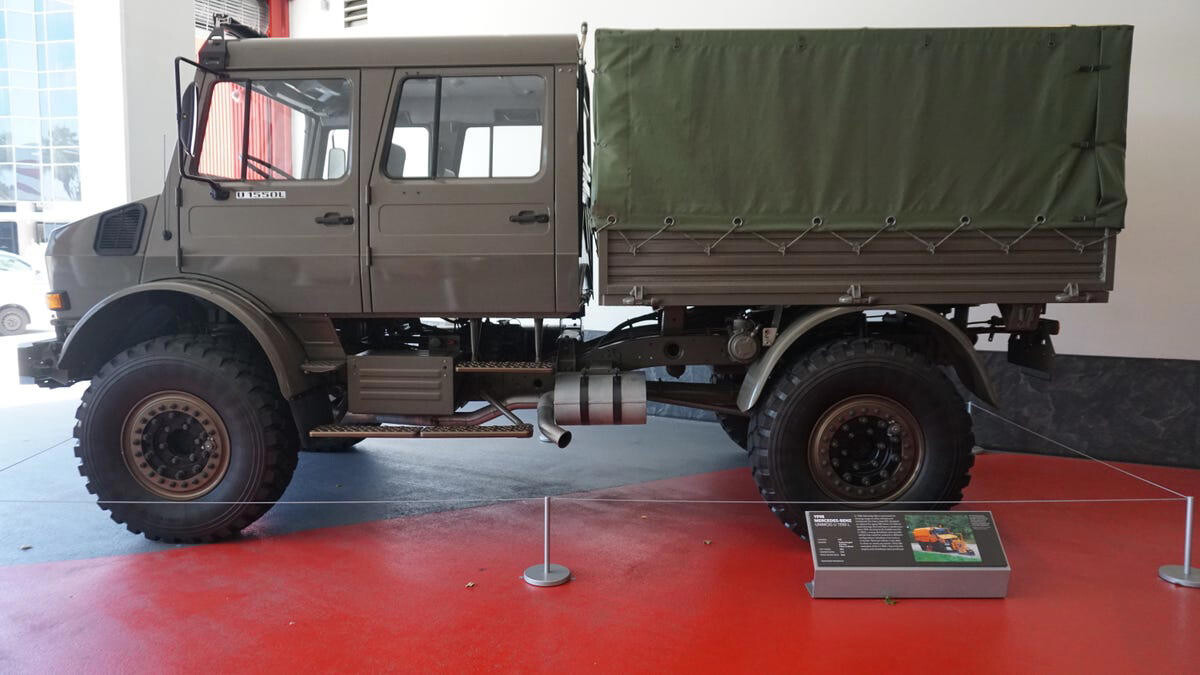
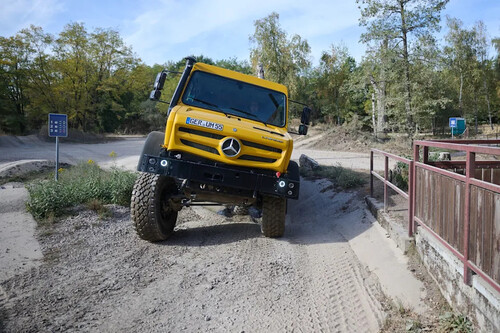
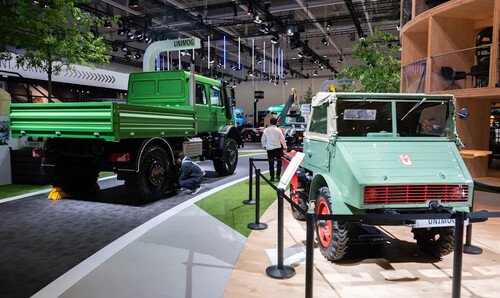
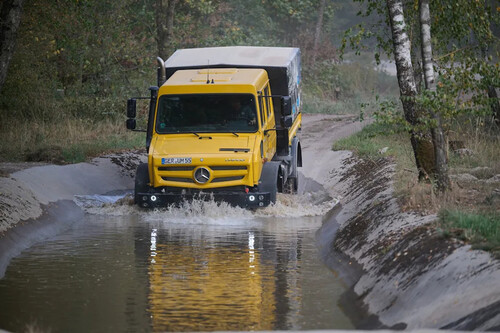
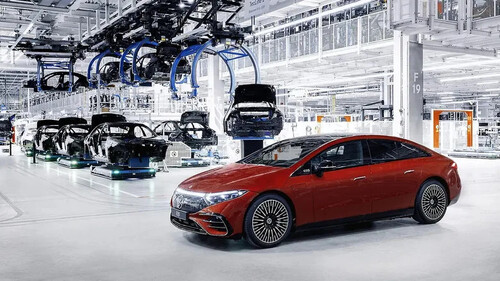
While it’s true that Karl Benz created the three-wheeled, tiller-steered Benz Patent-Motorwagen in 1886, it wasn’t until 40 years later on June 28, 1926, that he and Gottlieb Daimler merged their respective companies (Benz & Cie. and Daimler-Motoren-Gesellschaft) to form Daimler-Benz AG, which we know as Mercedes-Benz.To celebrate the centennial of that union, the Petersen Automotive Museum in Los Angeles has gathered together some of the fastest, most significant, and many of the most gorgeous products of that collaboration to come out of the company’s first century. “It’s a way we look at the Mercedes-Benz brand in the US,” said associate curator Shervin Nakhjavani. The exhibit contains 11 cars from the Pyramids Collection of three-time Pebble Beach Best of Show winner the late Arturo Keller, four others from the Mercedes Museum in Stuttgart, some from the Petersen’s own vault, and the rest from private collectors around the world. “It’s world-class,” said Nakhjavani. And he wasn’t kidding.1886 Benz Patent Motor Wagen“The first stationary gasoline engine developed by Carl Benz was a one-cylinder, two-stroke unit which ran for the first time on New Year’s Eve 1879,” Mercedes notes. By 1885, it had evolved into a four-stroke, and Benz put it into a tubular-steel frame with three wire-spoke wheels, a differential, and a tiller to steer. On January 29, 1886, Carl Benz applied for a patent for his “vehicle powered by a gas engine.” “The patent—number 37435—may be regarded as the birth certificate of the automobile,” Mercedes says.1936 500 K Special RoadsterThis was introduced at the Berlin auto show in 1934. The 500 in the name refers to a displacement of five liters and the K stands for compressor, meaning the 5.0-liter straight-eight was supercharged. The body was made by Mercedes’ in-house coachbuilder in Sindelfingen, outside of Stuttgart. This car was designed to be operated by its owner, not necessarily by a chauffeur. 1936 540 Cabriolet by Erdmann & RossiThe 540 K was the bigger, more powerful successor to the 500 K. Many of the 419 540 Ks made were fitted with custom coachwork like this example’s glamorous Erdmann & Rossi body, built in Berlin. This one belonged to American socialite Barbara Hutton, heir to the Woolworth fortune, who specified the back seat because she didn’t drive and didn’t want to sit next to a chauffeur. Those were the days!1938 540 K AutobahnkurierWhen it was introduced at the 1936 Berlin auto show, the 540 K Autobahnkurier was the fastest production car in the world. This example earned Mr. Keller his third Best of Show at Pebble in 2021.1938 W 154This car won two of the four races in each of the 1938 and 1939 grand prix seasons. Originally built for Rudolf Caracciola to drive in the Indy 500, the car debuted at the German Grand Prix at the Nürburgring. By 1939, it was driven by Hermann Lang to four major victories in Europe, including two European Championship races, making it the most successful of the W 154s.1953 300 SL HobelThe 300 SL was the first Mercedes race car after the war. This particular model, created by Rudolf Uhlenhaut, has more power, more torque, a shorter wheelbase, and 155 pounds less weight to increase performance on track. Hobel is German for “slicer,” because the creased hood looks like a slicer. Only one Hobel was built before Mercedes shifted its efforts to the 1954 Formula 1 competition.1937 170 HThink of this as a larger, more luxurious VW Beetle. The H stands for Heckmotoren, meaning rear-engine. It traces its roots back to some concept cars built during Ferdinand Porsche’s short tenure at Mercedes. The 170’s predecessor sported a 3.0-liter engine that made 26 hp. Unfortunately, that predecessor was underpowered even for the day, the car didn’t handle very well, and people thought it was ugly. The successor 170 H, shown here, offered better engineering, a bigger 1.7-liter engine, a top speed of 70 mph, and 30 mpg. Pricing was no bargain, either, with a sticker of $2,000, an awful lot during the Great Depression, and production ended in 1939 while the company was pursuing other avenues.1959 0 319This post-war marvel is the ancestor of today’s Sprinter Van. While the O 319 was made for people-hauling, there was also an L 319 cargo van. Both debuted at the 1955 Frankfurt auto show, powered by a 1.8-liter diesel that made 43 hp, enough to shuttle 18 passengers around in comfort. 1971 600 Pullman LandauletThe 1971 Mercedes-Benz 600 Pullman Landaulet was a car made for heads of state, dictators, and other fearless leaders. The back of the roof folded open so the tinpot hero could wave at his or her people. Powered by a 6.3-liter fuel-injected V8 making 250 horsepower, the craft had enough oomph to move its 6,500-plus pounds down the road. While most 600 Pullmen came in four-door configuration, the six-door setup is preferred to get enough yes men inside to travel in style. While they worked well for the first owner, extensive, complex hydraulic systems that silently operated the roof, windows, door locks, and seat adjustments, as well as the pneumatic suspension, meant mechanical troubles lurked on the horizon. 1989 Sauber-Mercedes C 9The glory days of Group C in Europe were in the late ‘80s, and this was right in the thick of it. The car took second to the Jaguar XJR-9 in 1988 and cleaned up in 1989, winning seven of the eight races including Le Mans. 2002 CLK-GTR RoadsterThis car was a road-going version of the race car, produced to meet homologation requirements for 25 cars. Of the 25, 20 were coupes and only six were roadsters like this one. It has the same carbon fiber monocoque, suspension, and V12 engine as the race car, except the engine was enlarged to 6.9 liters here. Price back in 2002 was $1.6 million.2009 SLR McLaren Stirling MossIf you wanted to buy one of these Stirling Moss editions back in 2009, you had to have already bought at least one of the stock SLR McLarens. Top speed was 217 mph, fastest of any production car at the time. 1998 Unimog U 1550 LUnimog was acquired for Mercedes-Benz in 1951. The U 1550 L was a long-wheelbase and versatile vehicle that could be ordered in everything from camper to fire truck configurations. Its turbocharged inline-six made 214 hp.1966 Unimog U 80 T NiederflurhubwagenWouldn’t it be great to have your own Niederflurhubwagen? This Niederflurhubwagen was converted to what you see here by German truck equipment manufacturer Ruthmann. The truck’s name means “low-floor elevated truck.” The rear wheels extend hydraulically from beneath the bed, allowing the bed to lower to the ground for easy loading.