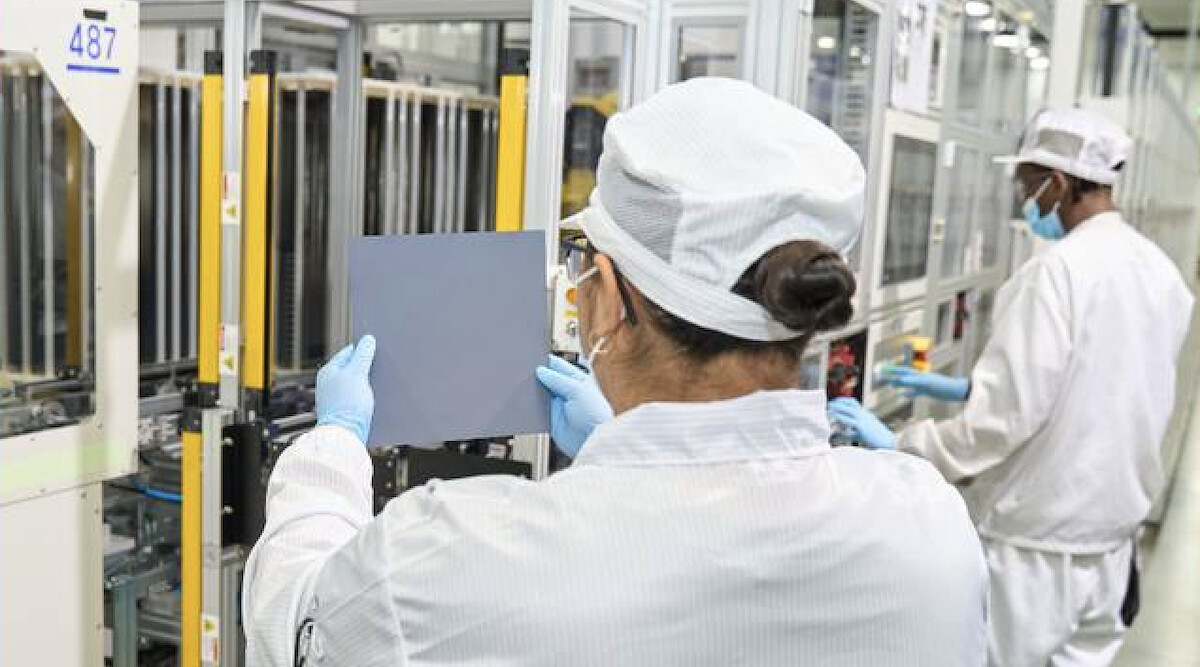
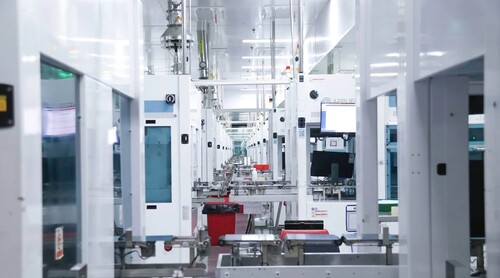
US President Donald Trump would have everyone believe that coal power is the best idea since sliced bread, but the the facts keep getting in his way. Coal is inevitably succumbing to the march of historical irrelevance and renewables are rising, particularly in the case of solar power. In the latest news, a new solar cell manufacturing operation is cranking up to full speed in the City of Cartersville, Georgia. What’s So Special About A New Solar Cell Factory? With so many solar factories coming to the US in recent years, another one is not particularly big news. However, this one is newsworthy from a size perspective. The firm behind the news is the US branch of Korea-headquartered Qcells, which is a bigger-is-better newsmaker unto itself. Back in 2023, the company described how it planned to make the largest clean energy investment ever made in the US, with Georgia the focus of attention. The result is Cartersville, where Qcells has been manufacturing solar modules from solar components made elsewhere. As of June 9, the campus is now home to a solar cell fabrication facility, making Cartersville “America’s first and only vertically integrated solar factory” as described by Qcells. As is common practice in the solar industry, the Cartersville plant was producing solar modules (the step between solar cells and solar panels) with cell components made elsewhere. Now the campus is a vertically integrated, Made-in-the-USA facility. At full capacity, it will turn out solar ingots, wafers, and cells at the rate of 3.3 gigawatts each per year. The solar cell end of the operation is up and running at partial volume, with full capacity expected in Q3. Qcells also reminds everyone that it recently expanded its Dalton factory in Georgia. Between the two factories Qcells expects its cumulative capacity to reach 8.6 gigawatts per year, the equivalent of 47,000 panels per day. Made-In-The-USA Solar Cells Are Coming For Your Fossil Fuels The Made-in-the-USA element is a also a significant development because it represents the ability of some domestic industrial sectors — though not coal — to rebuild. The US once dominated solar manufacturing globally, after Bell Labs introduced the first practical silicon solar cell at its New Jersey campus in 1954. However, Japan and other nations quickly caught on, particularly China. By the turn of the century, the domestic industry was practically dead in the water. The turnaround began with a healthy assist from US taxpayers during the Obama administration, with a soup-to-nuts effort to bring the installed cost of solar energy down to parity with fossil fuels. Taxpayer support has continued through to the present day, including tax law that favors domestic content. The new facility enables Qcells to claim all-domestic content for its Cartersville modules, making it eligible for Section 45X manufacturing tax credits that apply to each stage of the fabrication process, from ingots, wafers, and cells to the modules themselves. Qcells emphasizes that it is the only solar manufacturer in the US with that capability.”The Cartersville factory is the first such operation built in the United States in more than a decade and will be home to the largest ingot and wafer plant ever constructed in the country,” the company states. If you know otherwise, drop a note in the comment thread. Assuming Qcells really is the one and only, the firm is looking forward to a competitive advantage from a chain of tax credits that will support future growth past its current 8.6-gigawatt output. The Benefits To Solar Developers Qcells also takes note of the benefits of its Made-in-the-USA model on the solar power plant side. Developers have been parking solar panels in the ground and on rooftops at a white-hot pace, regardless of the sharp U-turn in federal energy policy. Meanwhile, despite Trump’s efforts to rebuild the domestic coal industry, the output from coal power plants slipped behind utility-scale solar in May. That marks the first month solar outran coal, and it won’t be the last. The tax advantage of domestic-content solar modules lends further support to the pace of solar development. As Qcells points out, under current tax law its Cartersville modules will help qualify developers qualify for a 10% domestic content bonus. Qcells also takes note of additional advantages: A fully integrated domestic facility shields customers from supply chain disruptions. Information about sourcing, pricing, timelines for delivery is more accessible and transparent. Exposure to overseas supply issues is reduced. Exposure to tariff volatility is also reduced. That last item is a rather mild way of referring to the President’s willy-nilly and ofttimes illegal tariff declarations. If you have any thoughts about that, drop a note in the discussion thread. More Solar News Than You Can Shake A Stick At President Trump swept into office last year determined to stamp out both wind and solar power. Why? Who knows! Everyone else knows that wind and solar are by far the most economical, and the quickest ways to feed more electricity to a hungry population. Federal energy policy aside, the decline of coal is written on the wind, so to speak, with industry analysts drawing attention to structural issues. The outsized expense of building, operating, and maintaining coal power plants is just part of the problem. The cost of upgrading coal mines to increase domestic production also factors in, along with the cost of procuring the modern mining equipment needed to increase production. Shortcomings in the nation’s freight rail system are already impeding some coal deliveries, creating a bottleneck that limits future growth. An ongoing labor shortage has been bubbling up, and the impact goes beyond struggles to recruit more coal miners. The supply of professionals who know how to build and repair coal power plants is dwindling, too. Meanwhile, the US solar industry is firing away on all cylinders. In addition to the news from Qcells, earlier this week the US manufacturing branch of Japan-based Toyo Solar announced that it will expand its solar operations in Texas with the addition of a new $357 million HJT (heterojunction technology) solar cell line, representing another step in an ongoing series of technology improvements that cut costs and boost efficiency. Yesterday, TOYO also nailed down two supply agreements with two major developers, totaling $185.6 million combined. “The multi-million-dollar commitments highlight growing commercial demand for TOYO’s solar modules, which are engineered to offer superior power output, low degradation rates, and optimized levelized cost of energy for large-scale assets,” TOYO explained in a press statement emailed to CleanTechnica. “Utility-scale buyers are increasingly prioritizing transparency, execution track record, and strict regulatory compliance,” the company also emphasized. The “strict” in that statement includes supply chain regulations that motivate TOYO and other US producers to avoid China as a source. More specifically, according to the company: “FEOC-Compliant Manufacturing: Production will be executed across TOYO’s designated manufacturing footprint, supporting customer compliance requirements and positioning the final products to align with evolving domestic content and FEOC (Foreign Entity of Concern)-compliance guidelines favored by U.S. project financing sources.” “All modules delivered under these contracts will utilize TOYO’s established non-Chinese wafer sourcing channels,” the company affirms, while underscoring the reduced risks including less exposure to “evolving tariff frameworks.” Again, that’s rather polite way of describing the decision-making process of a US President whose decisions are routinely struck down by federal judges, but so be it. No word yet on the names of the two developers. TOYO expects to see its solar cells distributed among Texas, New York and Maine, so stay tuned for more news from those quarters. Photo: With the addition of on-site solar cell fabrication, the US branch of Qcells has achieved full, vertical, Made-in-the-USA status for its solar factory in Cartersville, Georgia (cropped, courtesy of Qcells).