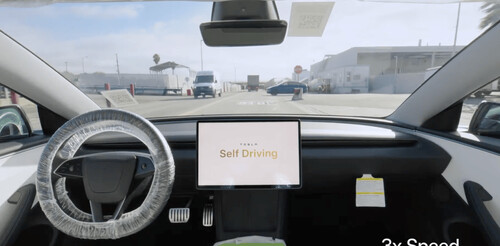
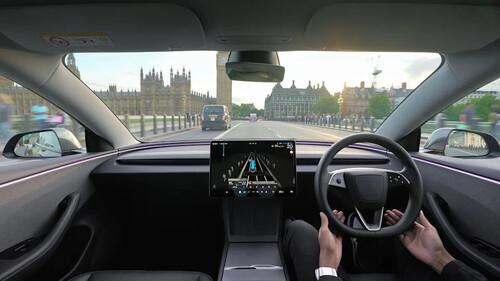
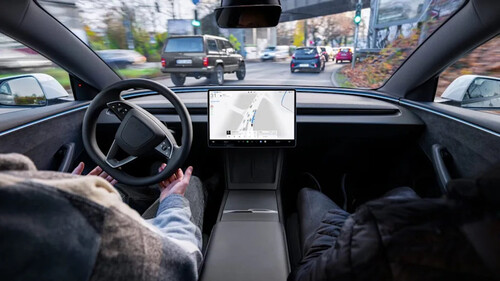
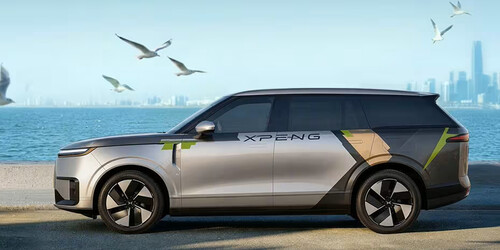
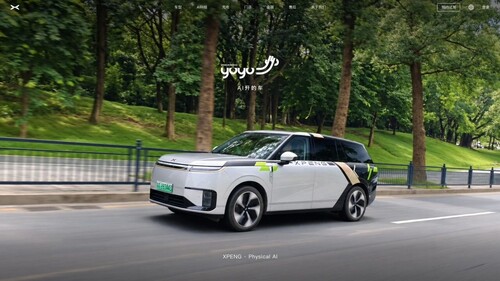
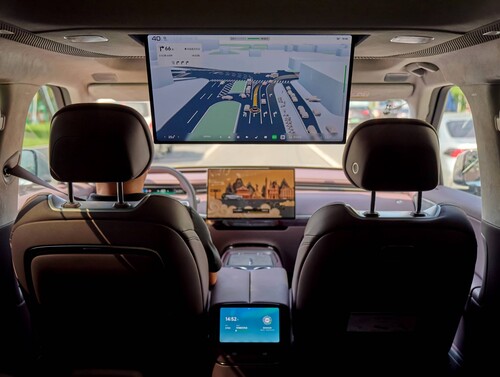
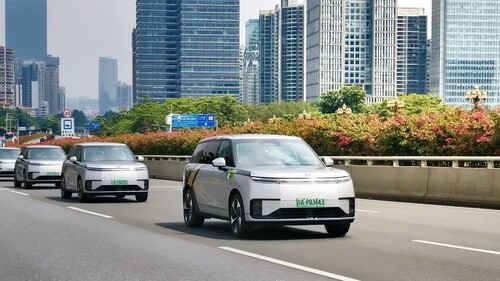
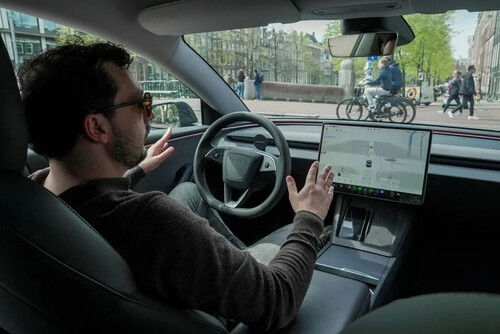
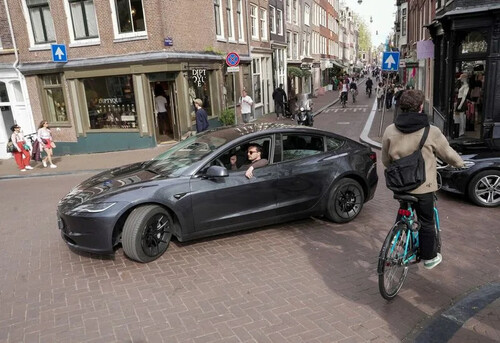
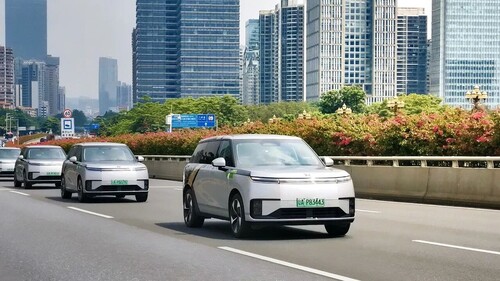
Are Robotaxis the Right World Cup Solution?CHARLY TRIBALLEAU - Getty ImagesWithout a driver, robotaxis can't charge or clean themselves—they have to go, as often as three times a day, to a behind-the-scenes depot where they're plugged in, cleaned, and checked for a steady stream of left-behind items. It's messy, and means that a third of the taxis are offline and driving empty a lot of the time.The issue is coming into focus now, as the 2026 World Cup descends on North America, and robotaxi operators plan to deploy new or expanded fleets in many of the 16 host cities. Eran Ofir, CEO of Imagry, which provides autonomous solutions for public transit, argues that beefing up robotaxi fleets will only add hundreds of vehicles to streets that are already gridlocked. And, of course, the companies will also have to find somewhere to locate all those charging depots."Our solution to congestion is to field fewer robotaxis and more autonomous buses," Ofir told Autoweek. "Autonomous buses can carry 40 people, where robotaxis usually carry one or two." He points to Japan, where population shrinkage has led to a severe driver shortage and plans for 10,000 autonomous buses, taxis, and trucks in 100 cities by 2030.AdvertisementAdvertisementOfir argues that increasing transit options are a better bet than ride-share cars, though this, too, has had its challenges. New Jersey Transit announced it planned to charge World Cup ticket holders a whopping $150 for travel to MetLife Stadium from any of its transit stations, but was then forced to back down to a still-high $105 after a public outcry. And on June 10, a perfect storm of Knicks fans and World Cup arrivals snarled the JFK AirTrain and local trains to the extent that it took three hours to go the short distance from Terminal 4 to Grand Central Station.World Cup fans using New Jersey transit.ADAM GRAY - Getty ImagesIn New York ahead of the France-Senegal match June 16 at MetLife, busy West 42nd Street was temporarily closed to all but transit buses and FIFA vehicles heading for the stadium in New Jersey, and more than 500 contracted buses were stationed near Penn Station. It didn't work out as planned.Reports the New York Post, "The beautiful game made an absolute mess of the Big Apple, as mass gridlock shuttered Midtown streets and left traffic snarled to make it easier for fans to get to MetLife Stadium for the region's first World Cup match."Fans in New York City making their way to Penn Station.LEONARDO MUNOZ - Getty ImagesThe robotaxi operators say they want to help. Alphabet-owned Waymo, for instance, has expanded its service coverage to more than 1,400 square miles around 11 US cities that are hosting World Cup games. In Houston, alone, it doubled service to 50 square miles, including NRG Stadium. Waymo will also be offering rides in Atlanta, Los Angeles, Miami, and the San Francisco Bay area. "Whether you're heading to the pitch for kickoff in Miami, a watch party in Los Angeles, or exploring all these cities have to offer, we're making sure every ride feels like a win," Waymo said.AdvertisementAdvertisementAnd as a Robotics and Mobility Partner of FIFA, Hyundai is managing a huge logistics fleet with more than 1,000 passenger vehicles across the 16 cities. There's going to be lots of vehicles on the road during the World Cup.George Kalligeros, a former Tesla engineer who is co-founder and CEO of California-based Aseon Labs, thinks he has a solution—not only for the World Cup mess, but for robotaxi operations in general. It's a portable and autonomous recharging station, with robot arms to clean and de-litter the vehicles. The stations can be located at gas stations with existing charging (or tied into off-grid solutions such as solar or batteries), much closer to central city action than the depots now in place.An Aseon pod in place at a gas station.Aseon Labs"Waymo is scaling aggressively," said Kalligeros, "and will be in 25 to 30 cities by 2030. They now have a 28 percent ride-sharing and robotaxi market share in San Francisco, where they'll soon have 1,000 cars. One in four rides there are self-driving now. But all those vehicles are making up to three pit stops a day, driving up to 44 percent of their miles empty, and heading to satellite operations with 100 charging bays far away from the core of operations. Seventy percent of the cost of delivering the service is human operations and infrastructure. Cleaning is now being done by humans with electric vacuum cleaners. In Las Vegas, Zoox uses a maintenance depot that's 40 minutes away. It's all super expensive."Aseon's idea is an easily transportable depot-in-a-box that takes up only one and a half parking spaces. The vehicle pulls in, gets plugged in, and robot arms clean the interior, while autonomous grippers remove any lost-and-found items. The whole process takes 30 minutes. Because they're temporary structures, pod deployment and permitting is easier, Kalligeros said.AdvertisementAdvertisementAseon is supported by startup accelerator Y Combinator, which said, "By eliminating unnecessary depot trips and automating routine operations, Aseon helps autonomous fleet operators increase uptime, reduce reset cost by 50 percent and unlock scale."Robotaxis enter here. Charging takes 30 minutes.Aseon Labs"Ride-share vehicles need infrastructure," Kalligeros argues. "They have a real-estate problem. When you have 10,000 vehicles trying to get to distant charging and cleaning stations in industrial zones, it means its much harder for the robotaxi companies to scale, not to mention the contribution to traffic congestion and cost. And seeing empty taxis cruising around just pisses people off."If a location doesn't work, the Aseon boxes can be moved somewhere else fairly easily, Aseon says. They will recycle 95 percent of their cleaning water.Fun fact: According to Edmunds.com, the average get-in price of two World Cup tickets, $16,578, would pay for a 2015 Lexus IS ($15,520) or a 2016 Toyota Sienna minivan ($16,660).AdvertisementAdvertisementKalligeros declined to name any robotaxi partners, but said that 100 of the boxes are under construction, with the first box deployment in Redwood City, where the company is based. The first commercial operations are expected by the first quarter of 2027. Current revenue is not being disclosed, but a major seed round announcement is coming at the end of June.Kalligeros and partner Dan Keene were also behind the London startup Pushme Bikes, a large battery-swapping network for electric scooters and e-bikes. It raised $600 million before being sold to Tier Mobility in Germany seven years ago.Want another tech solution to World Cub gridlock? Tal Kreisler, CEO and co-founder of NoTraffic, says the solution is an AI mobility program, already in place in Dallas and Houston, that adjusts traffic signal during stress times—such as when a stadium is emptying out.