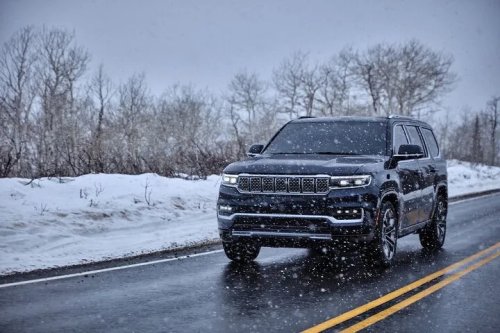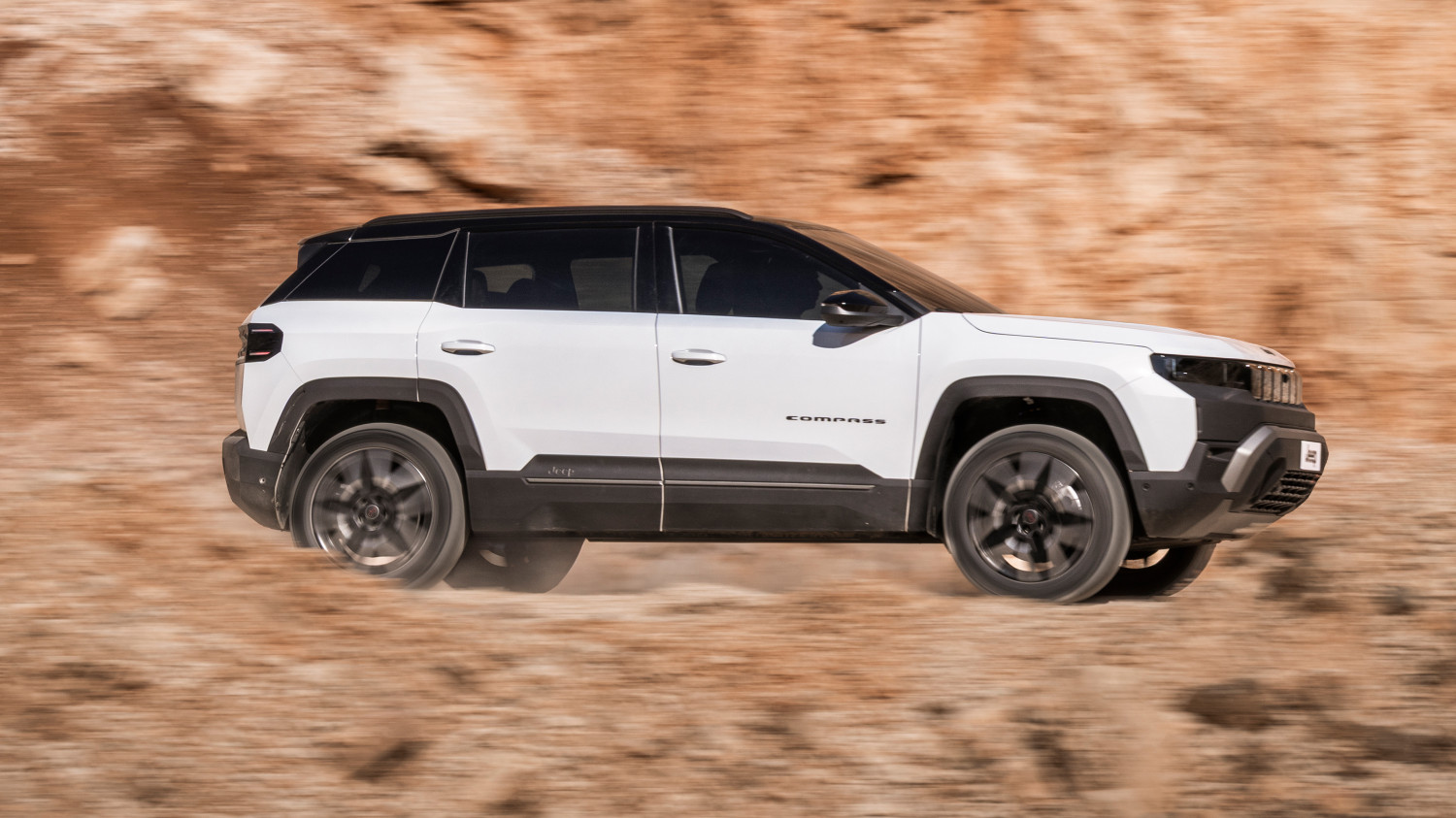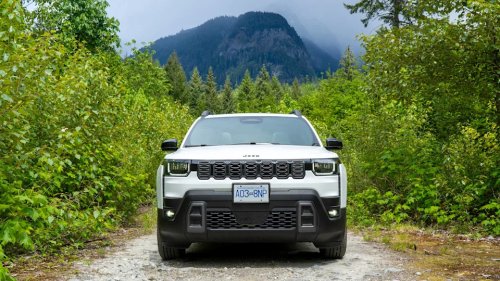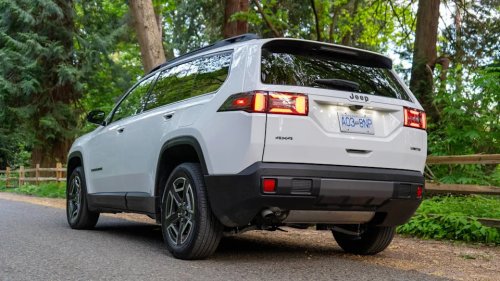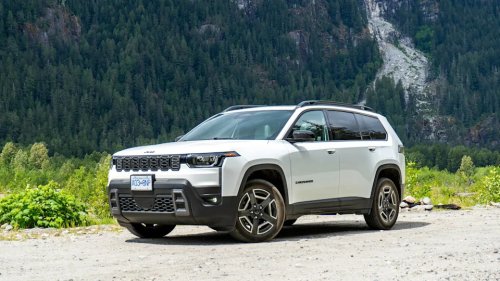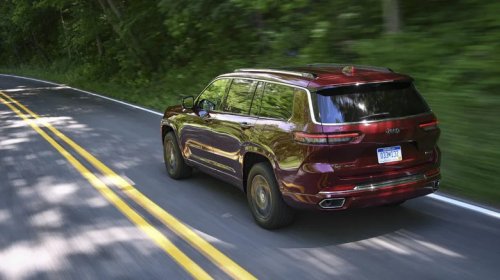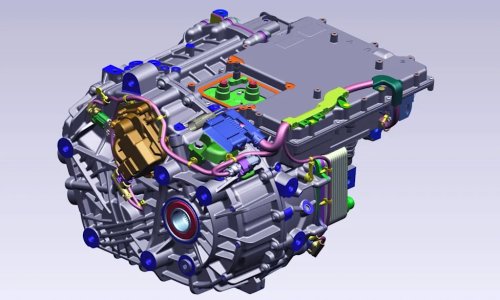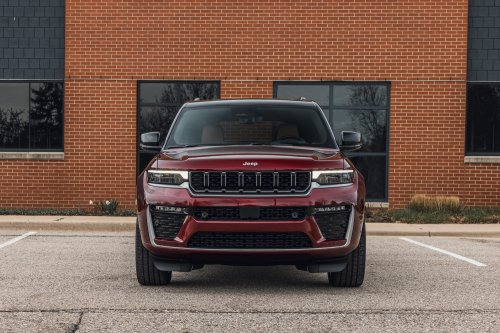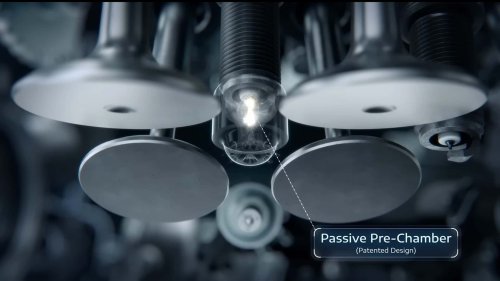
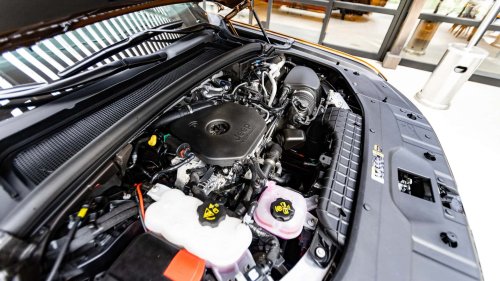

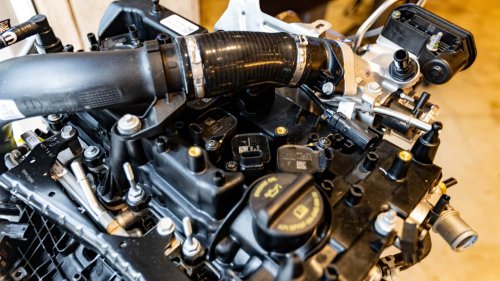
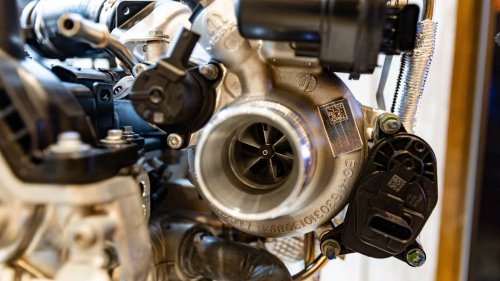
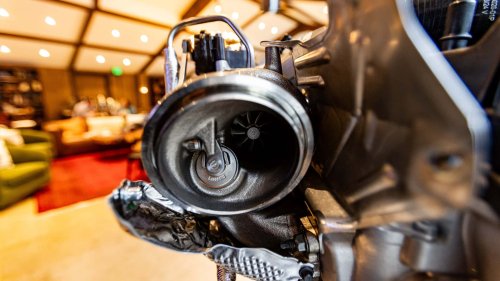
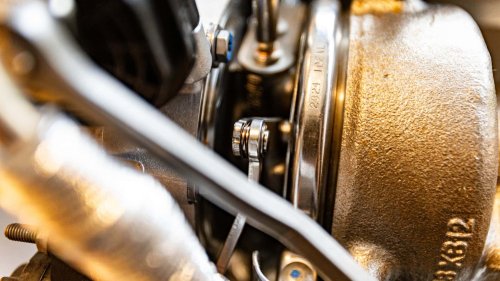
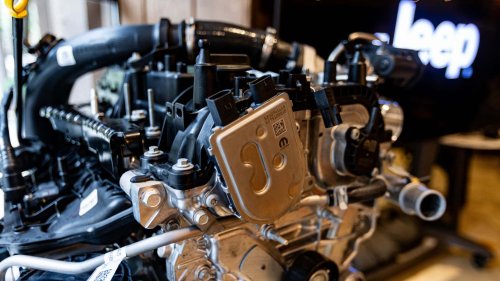
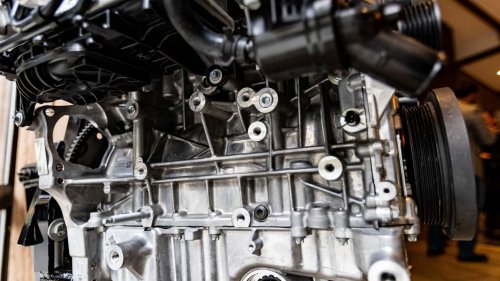

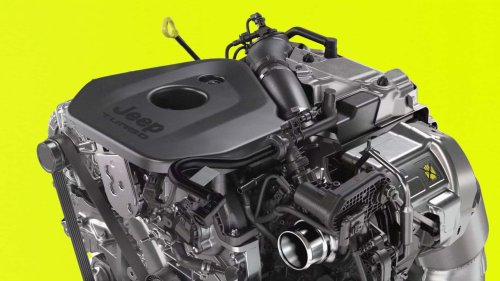



















You know, with EVs and hybrids being such a thing right now, it’s rare to come across a genuinely cool new internal combustion engine that isn’t made for something preposterously inaccessible, like Bugatti's naturally aspirated V16 or Lamborghini's 10,000 rpm V8. But there might be a new contender for most psychotic engine of 2026: Jeep’s Hurricane four-cylinder. On paper, Jeep’s four-banger doesn't sound all that special—it’s a turbocharged 2.0-liter that makes 325 horsepower. You can yawn now. But it's the nitty-gritty tech that makes this thing crazy, and one of the most powerful four-cylinders on earth. Allow me to explain. Turbulent Jet Ignition Let’s start with the headline technology: Turbulent Jet Ignition (TJI). That’s Jeep’s marketing term for its pre-chamber combustion tech. Basically, it’s a Formula 1-derived combustion technology borrowed from the Maserati MC20’s Nettuno V6, but retuned for Jeep. It is not a derivative of the old Maserati 2.0 that is now out of production. This engine uses a small chamber within the combustion chamber where the fuel-air mixture can, well, mix better before being ignited. The way Jeep designed it, it's almost like a second form of fuel injection. The Hurricane 4 already uses direct and port injection, with the direct injectors handling most duties and the port injectors supporting them. The pre-chamber uses an insert shaped like the tip of a fuel injector, with a defined spray pattern that helps distribute the pre-mixed chamber air to the main combustion chamber. TJI also mixes in twin-spark ignition, meaning there are two spark plugs per cylinder. The pre-chamber has its own spark plug, which ignites the mix before it's "sprayed" or effectively sucked into the combustion chamber during the power stroke. Then there’s a second spark plug to help with any unburned fuel or for other higher-load situations. But at its peak, the pre-chamber helps Jeep engineers extract the absolute maximum amount of energy from a given fuel-air mixture. Photos by: Chris Rosales / Motor1 Pre-chamber combustion is the secret to Jeep’s power output and fuel economy. In the heavy and aerodynamically draggy Grand Cherokee (relative to something like a Civic Type R), the Hurricane 4 achieves an EPA-estimated 27 miles per gallon highway, which is extremely impressive. Variable Geometry Turbo Efficiency was the primary function Jeep engineers drilled into my brain when showing me the Hurricane in person for the first time. Internal combustion is, fundamentally, extremely inefficient. At the absolute best, over 50 percent of the energy generated by combustion is wasted through friction, pumping losses, and heat. Controlling that energy loss is key to modern engine design, and turbochargers are a huge contributor, taking one of the single biggest sources of energy loss and reusing it for more power. Photos by: Chris Rosales / Motor1 The Hurricane 4 uses a variable-geometry turbo (VGT), which sounds scary but is actually deceptively simple. There’s an arm and actuator that move a set of interconnected vanes in the turbocharger’s exhaust housing. The vanes help control the speed and amount of exhaust gas entering the turbo, which has a significant impact on power output. The turbo itself is modestly sized, with a 55-millimeter compressor wheel and a 50-millimeter turbine wheel. At its peak, it can supply enough airflow for 35 psi of boost, and it looks like it’s made by Stellantis in-house. At least, I couldn’t find any other parts supplier stamps on it, besides the Pierburg compressor wheel speed sensor. Detail of the vane actuator mechanism. Notice the anti-rattle springs where the actuator arm meets the vane arm. The VGT controls the turbo speed, much like a wastegate, but only in transient situations. Most of the benefit of a VGT is in responsiveness—it can light the turbo quickly on throttle tip-in, but also manage exhaust gas velocity to help efficiency during cruise. There’s also a knock-on emissions angle to VGTs. On a cold start, it helps warm the catalytic converter more quickly and manage exhaust energy overall. It’s a neat addition to the Hurricane 4 sandwich and very uncommon in gasoline engines. Basically, it shares company with the 997-generation Porsche 911 GT2RS and the 718 Cayman S. Optimization Detail of the electronic cam phaser Making all of that work takes a bit of support, which includes a few different technologies we’ve seen before, but are still worth mentioning. The intake camshaft uses an electric phaser, which is important because the ECU can move the camshaft at any time. Normally, cam phasers are driven by oil pressure, which means the engine has to run to actuate them. An electric phaser allows Jeep to move the camshaft while the engine is off, which is critical for smooth start/stop transitions. By moving the cam, Jeep can effectively “decompress” cylinders, which helps smooth startup. It also gives Jeep a wider range of intake cam adjustment, which offers even greater combustion efficiency. The Hurricane also runs on the Miller cycle, which keeps the intake valves open for longer, helping mix the fuel-air even further. Then, the pressurized air from the turbo is cooled by a relatively small water-to-air intercooler, though Jeep says most of the work is done by the front-mounted heat exchanger, which keeps the main intercooler small. Hurricane 4 block detail Looking at the details around the engine, it is very modern. The block is aluminum and has extensive webbing, but minimal material is used. It’s visually similar to the impressively subtractive BMW B48 / B58 engines in terms of construction, but it's difficult to tell without a cutaway. The skirts of the block—basically the parts of the block that extend below the crank centerline—run deep as well, indicating plenty of strength for the bottom end. Though I’m not sure what holds the crankshaft in the block, whether it's separate main caps or a bedplate. The Hurricane 4 is, overall, an interesting entry. I sampled it in the Grand Cherokee for a brief loop and found it surprisingly willing to lug around the huge SUV. It definitely felt encumbered, but it had good power once the engine could gain some RPM. Turbo lag was minimal, but the engine definitely had a mid to high-biased powerband. It’s a hazard of using a small displacement engine. I’m going to hold out hope for this engine ending up in a sport sedan. Or maybe even a sports car. The amount of tech that Jeep packed into this engine for a base powertrain is impressive, and it definitely pushes the boundaries harder than any other Jeep engine ever made. Who’da thunk? We want your opinion! What would you like to see on Motor1.com? Take our 3 minute survey. - The Motor1.com Team