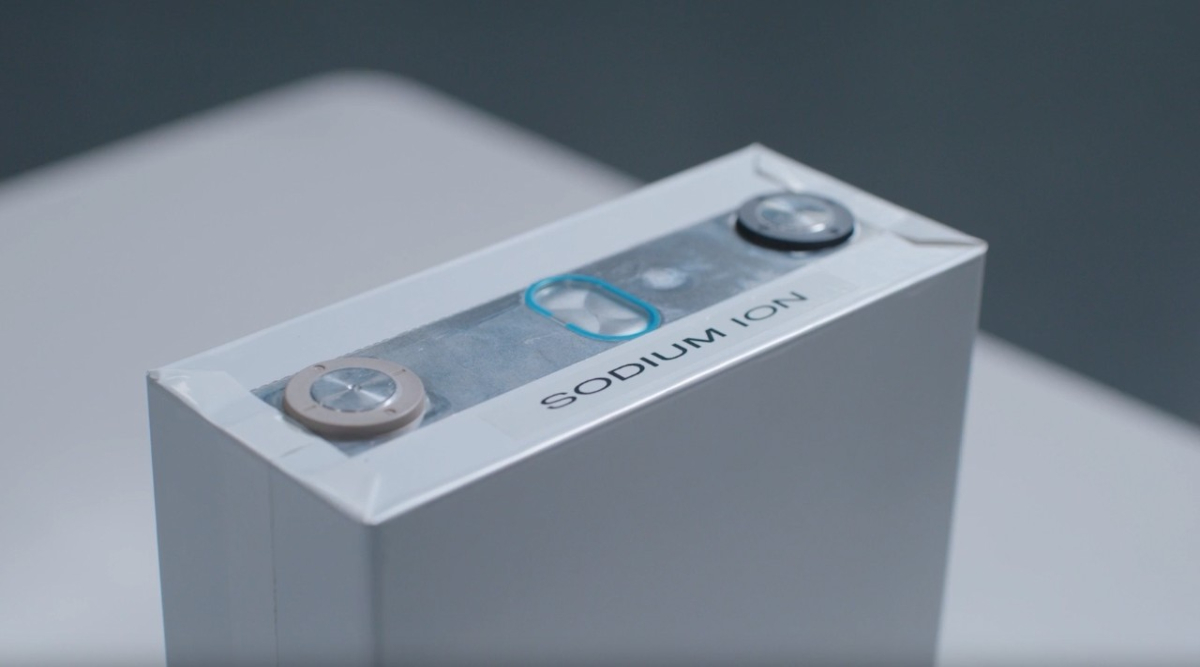
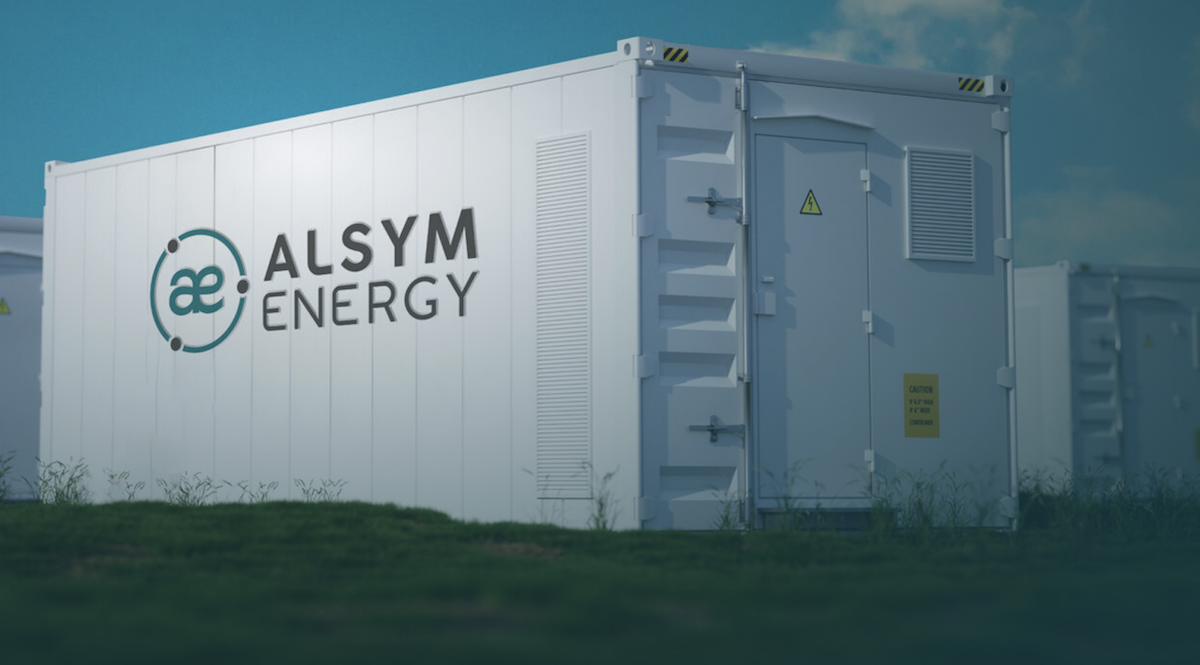



















You can’t blame a company that has written off billions of dollars against its EV business to try and make a buck any way it can. GM this week said it will transition to making sodium-ion batteries for energy storage company Peak Energy. And why not? The Section 45X Advanced Manufacturing Production Credit for batteries remains in effect — one of the few parts of the Inflation Reduction Act that the current administration did not take a chainsaw to. Ford is also transitioning from making batteries for EVs to manufacturing grid-scale energy storage. The production-based tax credit subsies for US-made battery components and critical minerals are as follows: Battery Cells: $35 per kWh Battery Modules: $10 per kWh Electrode Active Materials: 10 percent of the production costs Critical Minerals: 10 percent of the costs incurred to produce the mineral All of the above are subject to the 2026 Foreign Entity of Concern provisions, which state that battery components qualify only if at least 60 percent of the material assistance cost ratio (MACR) comes from non-prohibited entities. Full credits apply through 2029. Starting in 2030, the credit scales down to 75 percent of the original amount. GM Partners With Peak Energy Peak Energy said in a press release that GM’s investment arm — GM Ventures — will invest in the company to combine its passively cooled storage technology with GM’s battery cell development expertise to deliver the world’s most affordable, most reliable stationary storage. Under the partnership, GM will develop the sodium-ion cell in its Michigan battery labs and retain exclusive manufacturing rights, while Peak will incorporate the cell into its proprietary energy storage systems. This combination is expected to strengthen American leadership and innovation in the rapidly growing energy storage market while solidifying Peak’s supply chain as its domestic manufacturing scales. “Lowering the cost of energy is one of the most important issues facing America today. We are proud to develop an energy storage system that is safer, cheaper, and faster to deploy that any other technology on the market, enabling the US to meet rapidly growing energy demand without saddling consumers with higher prices,” said Landon Mossburg, CEO of Peak Energy. “The future of grid storage will be defined by affordability, reliability, and American innovation. We’re thrilled to partner with GM to bring a better solution to the American energy economy.” The LFP batteries currently used for large-scale energy storage require active cooling to maintain safe operating temperatures. Peak Energy’s proprietary passively cooled battery storage system has eliminated the energy-intensive cooling systems that increase costs. Peak’s sodium-ion system reduces energy storage costs by 20 percent compared to conventional systems and delivers more than 99 percent up-time, the press release said. Peak Energy claims the US could reduce the annual energy wastage attributable to active cooling systems by up to 2 TWh per year by switching from LFP-based systems to its passively cooled system. “At GM, we know that the application should determine the battery, and for grid-scale stationary storage, sodium-ion is the right solution,” said Kurt Kelty, VP of Battery and Sustainability at General Motors and former battery leader at Tesla Motors. “Peak is already demonstrating the value of sodium-ion through their innovative energy storage platform, and together we’re working to push those benefits even further with our next-generation cell and helping deliver more reliable, lower cost energy storage at scale for the US grid.” Technical Advantages CleanTechnica reported recently on Alsym, another energy storage company that is leveraging the advantages of lithium-ion batteries for energy storage. Its CEO and co-founder Mukesh Chatter said recently, “[Sodium ion] can comfortably operate at ambient temperatures up to 50 degrees Celsius. In hot climates like California or Texas, once temperatures reach around 43 degrees Celsius, you need to shut lithium iron phosphate (LFP) systems down because it’s too hot. “Since it’s based on LFP technology, during the times you need it most, such as in extreme heat, you’ll actually have the least performance. We will also have the UL9540A certification at the cell level, which LFP cannot achieve. This underscores the focus on non-flammability, non-toxicity, cost competitiveness, and an extended temperature range.” Here is how UL describes that certification: “UL 9540A, the Standard for Test Method for Evaluating Thermal Runaway Fire Propagation in Battery Energy Storage Systems, is the American and Canadian national standard for assessing fire propagation related to thermal runaway events in battery energy storage systems. Testing to these national standard requirements is an essential element of due diligence. “UL 9540A provides a methodology for testing a system’s safety related behavior when the design or installation conditions of an ESS exceed the limits set by the National Fire Protection Association (NFPA) 855, NFPA 1, the International Fire Code (IFC), or the International Residential Code (IRC). UL 9540A is the only consensus standard explicitly cited in NFPA 855 for large-scale fire testing and the only national standard in the U.S. and Canada for fire safety testing methods for battery ESS. We offer testing that aligns with both the 5th and 6th editions of UL 9540A, giving customers the flexibility to choose the edition that best matches their project and compliance strategy.” We presume the sodium-ion batteries from GM will also meet those standards. A First Step On The Road To The Energy Future GM’s Kurt Kelty said in a separate press statement: “For decades, battery progress has been defined by familiar performance metrics such as better energy density, higher power, and faster charging. Those headline metrics still matter, especially in electric vehicles. But as electricity demand rises and data centers consume a growing share of US power, the battery conversation is changing. “When you’re talking to a utility, a hyperscaler, or other power provider in need of energy storage solutions, their priority is not maximizing range or minimizing weight. It is delivering reliable, affordable power over long periods of time in real-world conditions. That is what makes sodium-ion battery technology so compelling, and it is why we at GM are developing next-generation sodium-ion battery cells purpose built for grid-scale storage, in partnership with Peak Energy and backed by a strategic investment from our GM Ventures arm. “At a foundational level, a sodium-ion battery works much like a lithium-ion battery. It stores and releases energy through the movement of ions during charging and discharging. Sodium and lithium sit in the same column of the periodic table, so they share important chemical similarities. But they do not behave in exactly the same way, and those differences create a meaningful opportunity to design batteries with a performance profile tailored for a different class of applications. In grid-scale stationary storage systems, if we can make the cell safer and more robust, we can remove complexity elsewhere in the system. That can translate into a quieter, simpler, lower-maintenance ESS for the customer. “Compared to [other] chemistries, sodium-ion can perform across a wider range of temperatures and for more cycles. That means that sodium ion-powered energy storage systems have the potential to operate without active cooling and with much less system complexity. In large energy storage systems, that matters. Active cooling requires more hardware, more maintenance, more parasitic energy losses, more noise, and more opportunities for failure, all of which can drive costs higher over time. “Peak’s energy storage platform is already demonstrating how sodium-ion’s strengths can translate into lower costs and greater reliability. For stationary storage operators, that is a meaningful advantage. They are looking for dependable assets that are safe and require less intervention and achieve lower total operating costs — exactly the kind of performance profile that makes sodium-ion so well suited to grid-scale applications. “That does not mean sodium-ion has to do everything on day one. In fact, what really excites us about sodium-ion is how much headroom remains in its development. LFP has improved significantly over the past 25 years, but as it has matured, those gains are beginning to plateau. Sodium-ion, like LMR, is still early in its development curve, which gives us more room to drive meaningful improvements as the technology matures. “We are building on GM battery know-how here in the United States for a grid market that needs durable, cost-effective storage at scale. It begins in Warren, Michigan, where we have built a centralized battery R&D engine. This is where we’re advancing chemistries like LMR for EVs, and we’re now extending it from the vehicle to the grid. “At GM, we have built deep battery expertise in the U.S., along with the talent, technical capability and infrastructure to lead. Now we are extending that leadership beyond the vehicle and into the electrical grid itself. If we get this right, we will not just build better batteries. We will help create a more resilient, more affordable and more flexible energy future.” Sodium-ion batteries may or may not be coming for electric cars. They do have some advantages, such as better performance in cold temperatures, but they also are less energy dense — at least today — than NMC and LFP batteries. But by eliminating the need for active cooling, they appear to be the new killer app for grid-scale energy storage. If GM can move the adoption of sodium-ion chemistry for energy storage forward, that will be a huge step forward for clean energy in the US.