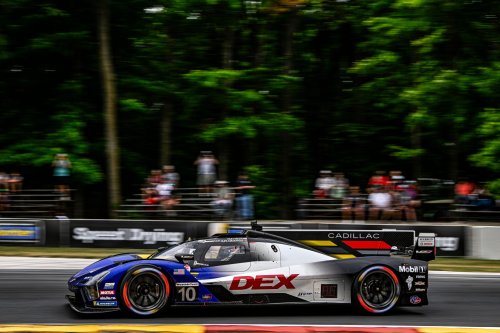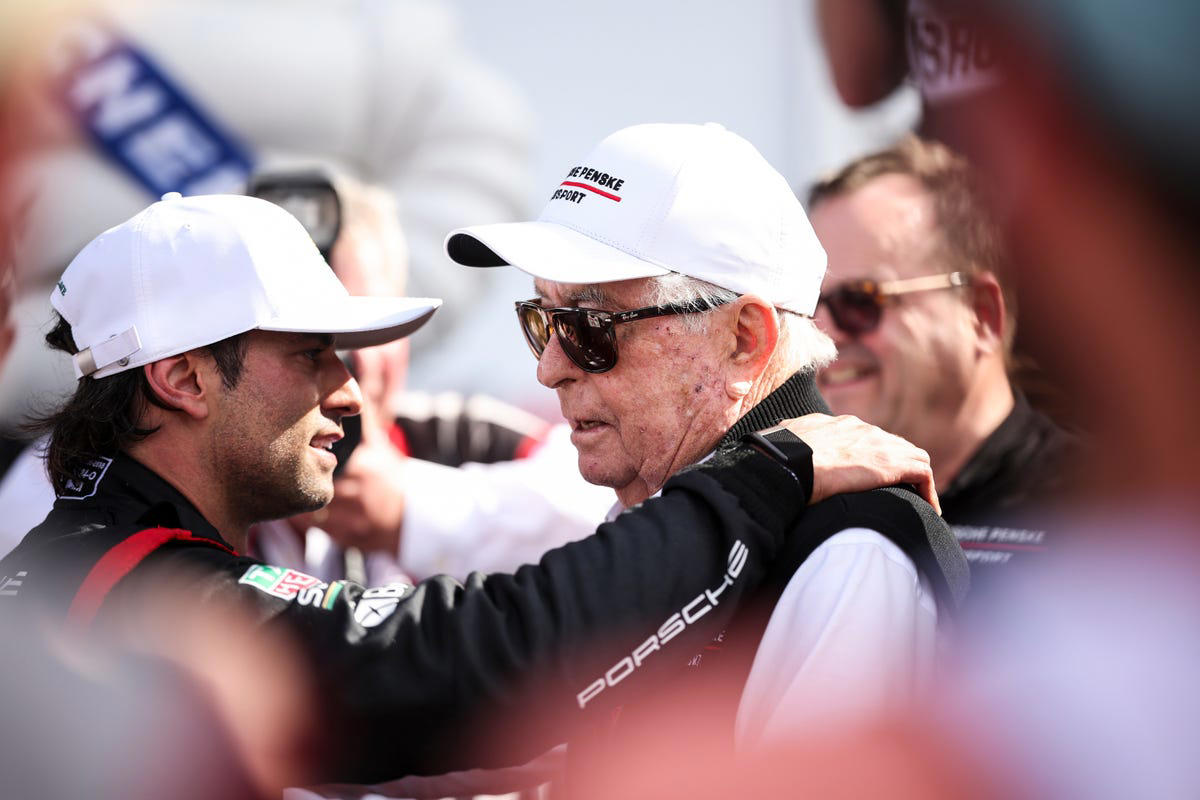
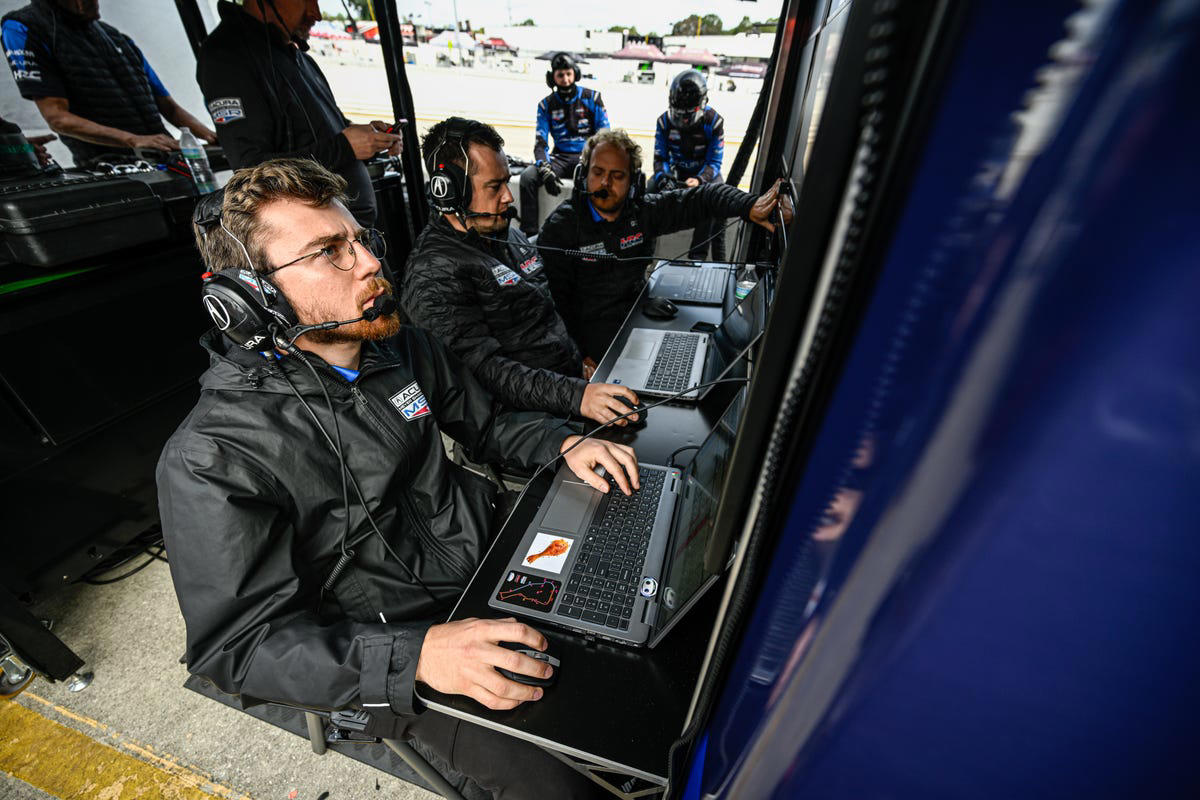
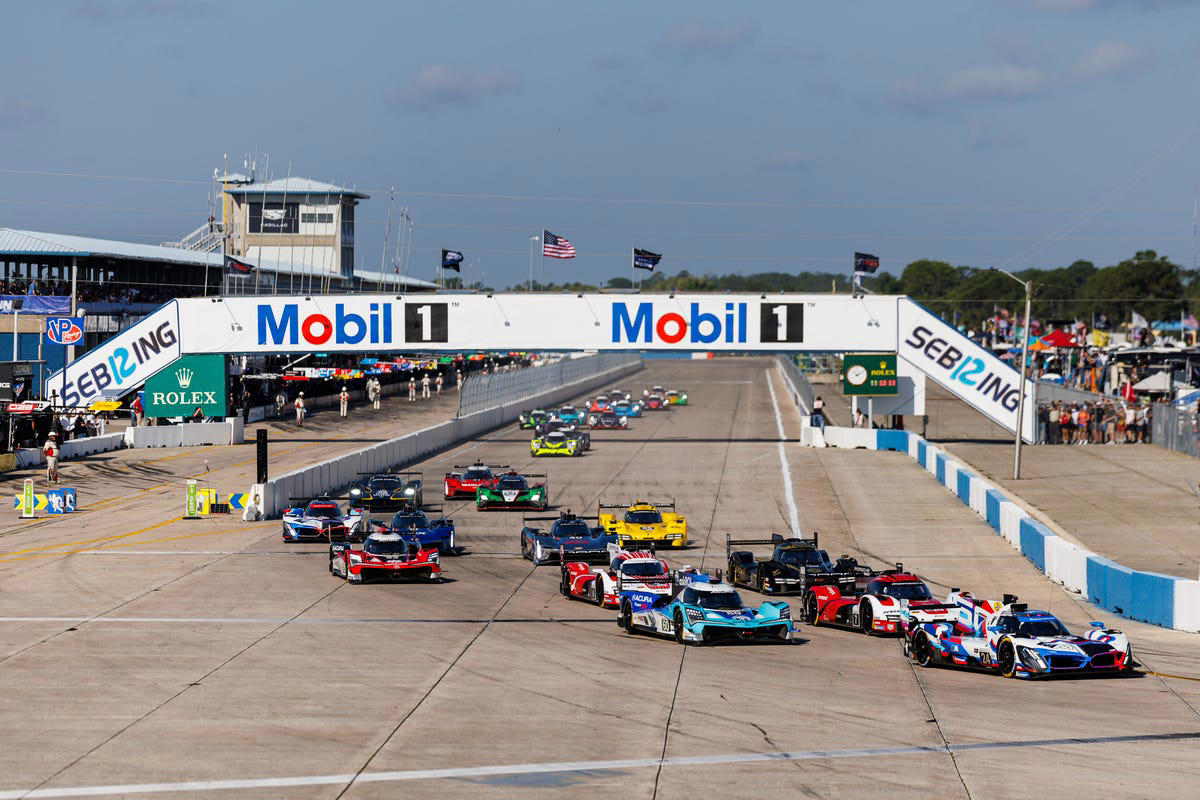



















The jury may still be out on whether hybrids or EVs are the wave of the future on the highways, but there’s no doubt endurance racing’s future rests with hybrids. Led by its GTP hybrids, IMSA’s WeatherTech Championship is drawing increasingly large crowds to its major endurance events, which is expected to continue with Saturday’s Mobil 1 Twelve Hours of Sebring.The challenges of winning at Sebring have not changed. Teams must fight the bumps at high speed and the extreme temperature swing between day and night. They must battle the traffic created by four different classes and a finish in the dark on a poorly lit track. What has changed with the introduction of the GTP class in 2023 is a reliable number of manufacturers who have responded to the challenge of racing hybrid prototypes.“The hybrids are adjustable and you can do that over the course of 12 hours,” said Gary Nelson, team manager for the Cadillacs of Action Express Racing. “That’s the magic thing that everybody is trying to figure out to stay ahead of their competition. It’s huge.” Acura, BMW, Cadillac, and Porsche have 10 hybrids entered for the 12-hour along with the Aston Martin Valkyrie, which relies on traditional motivation from its V12 engine. Genesis will arrive next year with an LMDh hybrid platform. Although there’s no official word, Ford and McLaren are expected with their hybrids in 2028.Felipe Nasr with his boss, Roger Penske. “It’s a prime time to be in sports car racing,” said Felipe Nasr, who will defend last year’s victory at Sebring in the 963 of Porsche Penske Motorsport. “Every driver is having a blast.”That’s in sharp contrast to this year’s rocky start for the new Formula 1 cars. Pressure from manufacturers anxious to gain more knowledge for production cars has led to a new hybrid system, which relies on regeneration under braking at the rear wheels. F1 fans and drivers have been vocal in their dislike of the new method, which previously relied primarily on regeneration by turbos.Rear-wheel regeneration is the same method used in sports car racing. But the major difference between sports car hybrids and the F1 hybrids lies in the rules governing energy use. The F1 cars must have a 50% split between traditional ICE engines and hybrid power on each lap, which has led to drivers slowing down to harvest energy in a series where flat-out sprints are the calling card.Sports cars rely far less on their hybrid systems, which produce less than 10% of the power in the drivetrain, where the energy transfer is seamless. Mapped in advance, engineers create a bank of different settings that determine where the hybrid system recharges and where the energy is fed into the drivetrain on each lap.How their mapping is set up before each race remains a closely guarded secret among the manufacturers. Acura, BMW, Cadillac, and Porsche all have a bevy of engineers working on their “bank” of settings prior to races. During races, data sharing takes place between the pit wall and with factory engineers in remote locations—a model pioneered in F1.“Having a good race or a bad race depends how you fine tune these things,” said Nasr. If the race managers on the pit wall decide to alter their settings according to track conditions—which at Sebring can change dramatically—drivers are instructed to switch to a different map setting in the cockpit.Honda Racing Corp. race engineers with Meyer Shank Racing before last year’s Petit Le Mans at Road Atlanta.The drivers are the wild card, in no small part because of their feedback. Their biggest task is to maintain lap times with the most efficient use of energy from the engine and battery. Tire degradation—a major factor on Sebring’s uneven asphalt and concrete surfaces—is the biggest factor in consistent and efficient lap times. “At Sebring you see a lot of tire deg, and especially on double stints,” said Louis Deletraz, who will co-drive the No. 40 Cadillac V-Series.R of Wayne Taylor Racing. “The fact that we have hybrid and so many tools in the car, we can adapt the balance. We can really take it from one lap where it’s very good on your tires to where it goes to oversteering on the same lap. We’re driving a car and doing what we’re told. But there’s still a driving factor and a lot more we can do.” In addition to how they enter and exit corners, drivers reduce tire wear by keeping the balance between all four wheels using brake bias, now a cockpit-controlled system that includes the differential. Altering both the braking front and rear and the differential from the cockpit on the fly is complicated by the regeneration under braking at the rear wheels.The administration of Balance of Performance (BoP), which can change performance for each manufacturer at each race, has been controversial in the World Endurance Championship and in IMSA and some fans find it antithetical to racing. But the crowds at major endurance events, including Le Mans, keep growing.It’s not by chance that almost half of the manufacturers in F1, in its 13th season of hybrid racing, are also now committed to sports car racing. The list of manufacturers in both sports cars and F1 includes Cadillac, Ferrari, and Honda, represented by Acura in IMSA. If one includes the umbrella of corporate ownership, the Volkswagen Group is pursuing hybrid racing with Audi in F1 and Porsche in IMSA. McLaren and Ford will join the sports car ranks in the WEC next year and likely IMSA in 2028.IMSA WeatherTech Championship Mobil 1 Twelve Hours of Sebring“One of the main benefits of endurance racing, is the car has to last for 24 hours straight,” said Jonathan Diuguid, the president of Penske Racing. “It has to last at 30 degrees up to 100 degrees. These platforms and environments are opportunities for manufacturers to optimize systems, but also train engineers, get engineers to think differently than how they might think in their production car job. It’s really about pushing everything to the limit and pushing the technological forefront.”Part of that frontier is the development of sensors for use in a hybrid system, said Diuguid. “One of the things that gets lost (in the conversation on hybrids) is all these complex systems are being monitored by different types of sensors.” The arguments over BoP are likely to continue. But the need to harvest technology bodes well in the long haul for endurance racing, which is one season away from 75 years at Sebring.