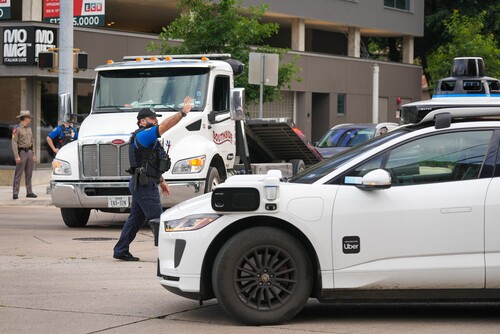
Leo Mitchell · 4 months ago@leomitchell93Waymo recalls 3,900 robotaxis after they sped through construction zones: 'We're dead' Liked by+77 othersPost commentRelated PostsAmazon’s Robotaxi Company Recalls Its Fleet After One of its Cars Got Confused by Heavy Smoke 17 · Owen Tremblay · 3 months agoA Waymo Plowed Through a Construction Zone, Floored It, and Got Chased by the Cops With a Terrified Passenger Along for the Ride 30 · Justin Leblanc · 4 months agoWaymo recalls nearly 3,900 robotaxis over risk of entering closed construction zones 47 · Caleb Campbell · 4 months ago2024 Mercedes-Maybach GLS600 For Sale With 3,900 Miles 49 · Morgan Harris · 2 months agoGas Engines Aren’t Dead, They’re Getting Smarter 57 · Matthew Anderson · 3 months agoZoox Recall Affects 105 Robotaxis After Fire Scene Incident 31 · Connor Lavoie · 3 months agoRidiculous $3-Million Buick Riviera Has 900 HP And Gets Driven Flat Out 35 · Sophie Turner · 3 months agoFord Can't Even Get Recalls Right, Has To Re-Recall Over 387,000 Vehicles For A Second Time 51 · Alexander Walker · 4 months agoZoox Issues Software Recall Because Its Robotaxis May Be Confused By Smoke 74 · Aiden White · 3 months agoWaymo Recalls 3900 Self-Driving Cars for Driving Into Highway Construction Zones 60 · Adam Poirier · 4 months agoAfeela Is Dead, But Sony And Honda Are Still Pretending They're Automotive Partners 99 · Jacob Scott · 6 months agoFord Is Now Re-Recalling Nearly 400k Vehicles Because They Messed It Up Last Time 86 · Aiden Hall · 4 months agoZoox Recalls 105 Robotaxis After One Drove Into a Fire Scene 61 · Leo Bouchard · 3 months agoWaymo Recalling 3900 Autonomous Vehicles for Driving Into Construction Zones 46 · Matthew Moreau · 4 months ago7 vintage cars we miss (and 7 we’re glad are dead) 59 · Henry Mitchell · 6 months agoFord Is Re-Recalling More Than 389,000 Cars Because the First Recall Problems Weren't Fixed Right 23 · Claire Campbell · 4 months agoZoox recalls 105 robotaxis after smoke detection failure 48 · Adam Côté · 3 months agoWaymo Recalls Nearly 4,000 Robotaxis After Fleet Blows Through Freeway Construction Zones 33 · Nicole Walker · 4 months agoFord Re-Recalling 389,000 Cars Because First Recall Fixes Were Done Incorrectly 37 · Hannah Moreau · 4 months agoZoox issues software recall after a robotaxi got confused by heavy smoke 22 · Lucas Hall · 3 months ago


 +77 others+77 others
 +77 others