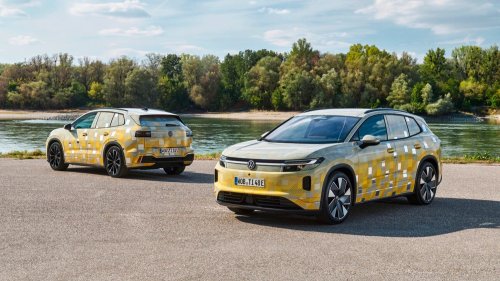
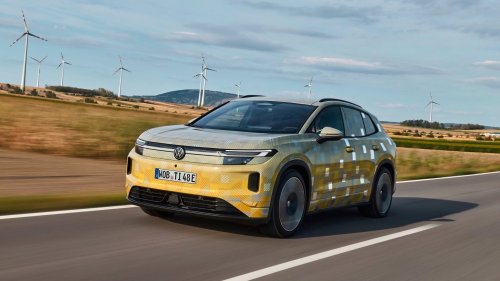
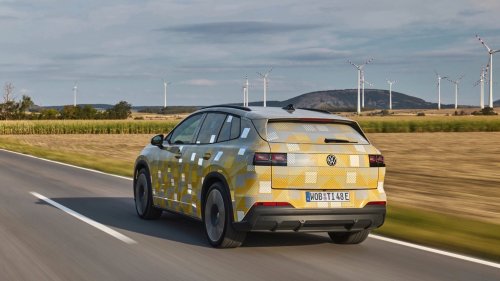
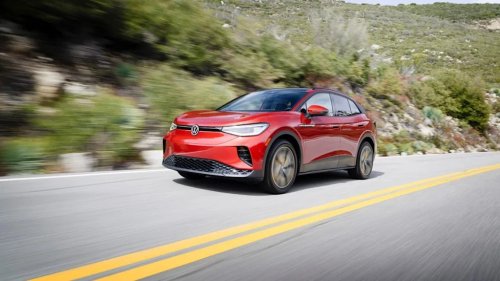
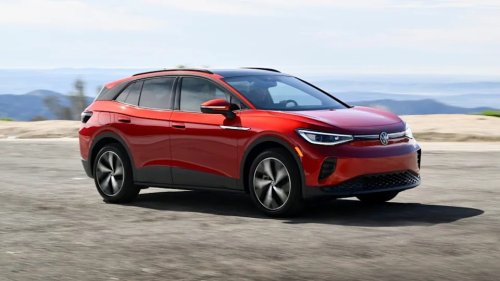
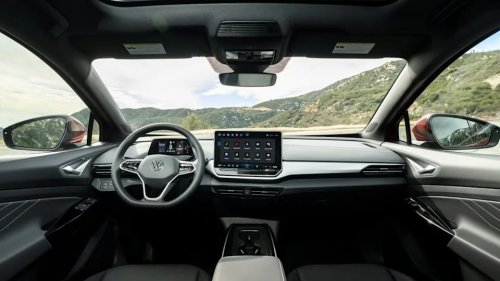
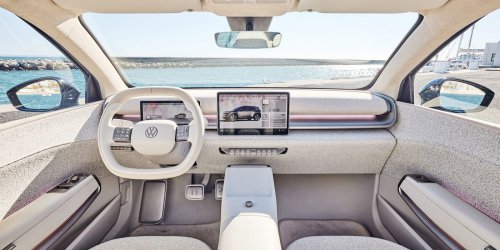
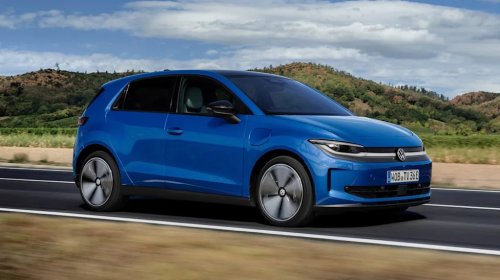
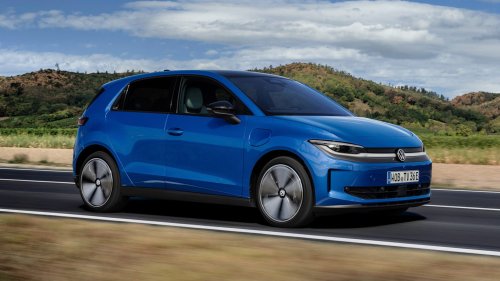
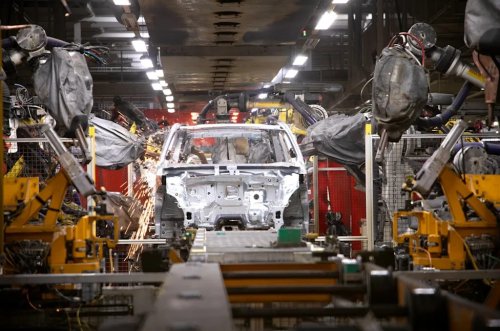
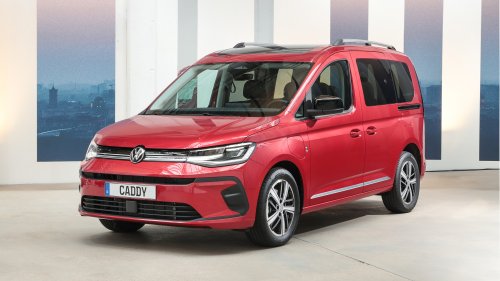
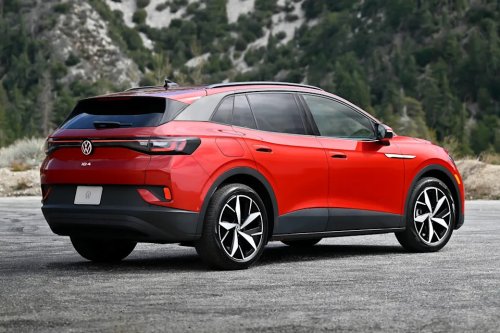
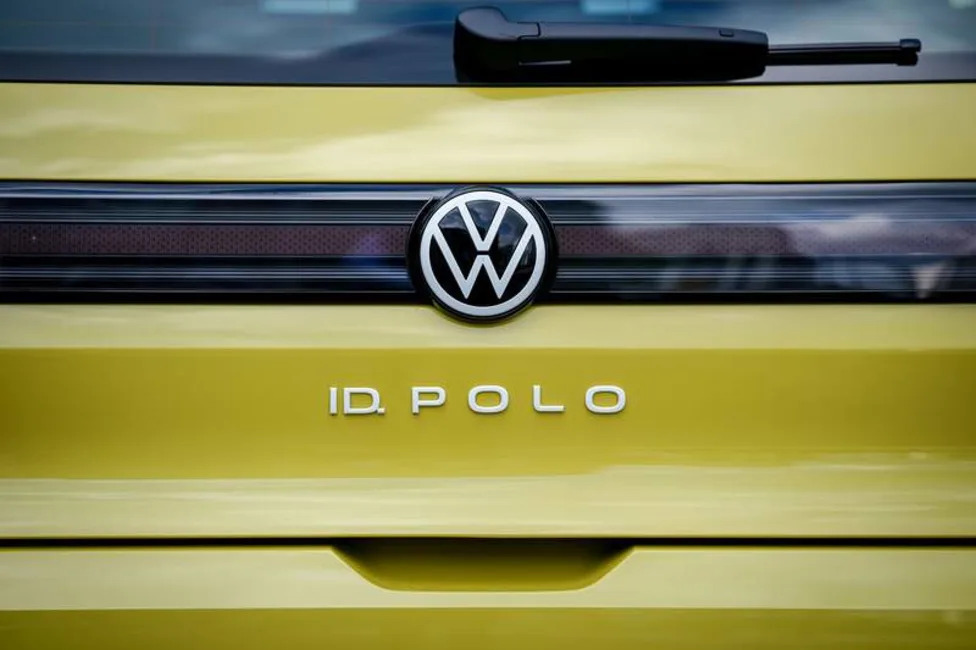
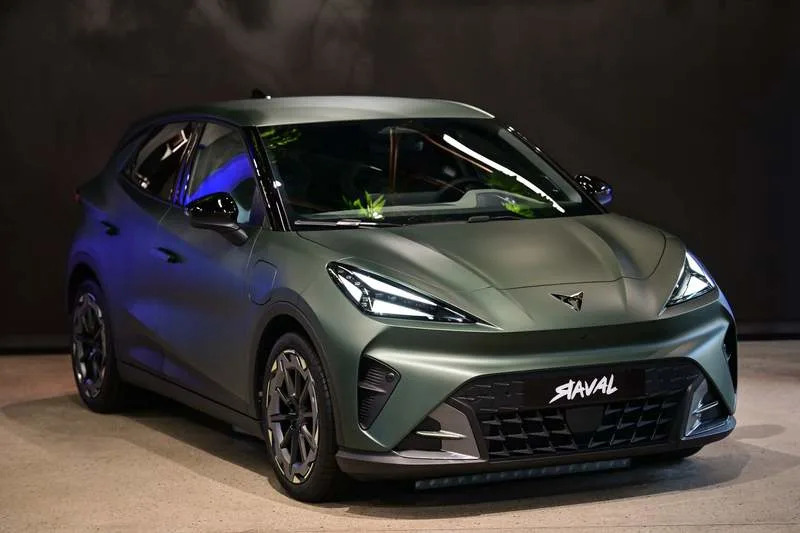
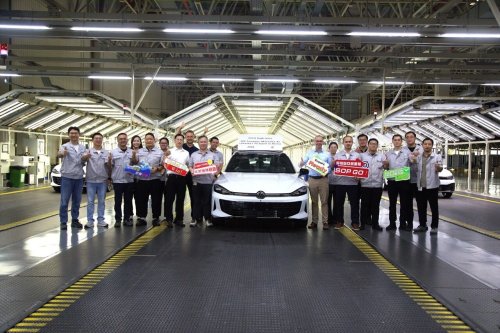
With the ID. Polo and Cupra Raval, VW is aiming to conquer the affordable electric car segment. Production of these promising models is now getting underway – but not in Germany. Kay Nietfeld/dpaVolkswagen has begun production of two new budget electric cars at its Seat subsidiary in Martorell, Spain, in what the group describes as its most important model launch of the year.The ID. Polo and its sister model, the Cupra Raval, rolled off the production line on Tuesday, with two further models from VW and Skoda set to follow at a second plant in Pamplona, in northern Spain.The entry price for the cheapest ID. Polo is just under €25,000 in Europe. The Cupra, which comes to market slightly earlier, is priced €1,000 higher.AdvertisementAdvertisementVW is pinning great hopes on the new models. "With this new vehicle family, we are going on the offensive in one of the highest-volume segments of electric mobility, with enormous growth potential," chief executive Oliver Blume said in September at the IAA motor show in Munich.He said the market for fully electric small cars in Europe would be around four times its current size after 2030 — a development he said would also give the Volkswagen group a significant boost. "Every year, we want to sell several hundred thousand cars from this model range," he said.Sánchez attends production launchThe official production launch has been given a high-profile send-off: alongside Blume, Seat-Cupra chief Markus Haupt and VW brand board member Thomas Schäfer, Spanish Prime Minister Pedro Sánchez was set to attend. The occasion is comparable in prominence to the 2019 launch of the first ID. model in Zwickau, which was attended by then-chancellor Angela Merkel.AdvertisementAdvertisementAt the world premiere of the Cupra Raval in April, Blume had already travelled to Madrid and described the model as "a milestone for Cupra." The model showed "what affordable, emotional and European-developed electric mobility can look like," he said — "without compromises on technology, safety or design."VW brand chief Schäfer later said of the ID. Polo: "With this car, we are underlining that entry-level electric mobility does not require compromises." Electric mobility must not be a luxury, he said. "It has to work, be affordable and convince people in everyday use."Electric car prices fallThe entry price of just under €25,000 is no longer as ambitious as it seemed when the concept was unveiled in 2023. "By today's standards, this is no longer an entry-level model," says industry analyst Frank Schwope, who teaches automotive economics at the University of Applied Sciences for Medium-Sized Businesses in Berlin. At €25,000, the price is simply too high for that segment, he says.AdvertisementAdvertisementThat task would more likely fall to the even cheaper ID. Every1, which is due to launch next year and will be built in Portugal for around €20,000.Even the €25,000 entry price that VW is promising for the ID. Polo will not be available immediately: At launch, both the Cupra and the VW will only be available in better-equipped versions with a larger battery, priced well above €30,000.The cheaper entry versions with a smaller battery and less power will not be orderable until July, with deliveries of the ID. Polo in both variants starting in September.Other manufacturers have moved faster and already offer electric cars for under €25,000. The electric Renault Twingo is available for around €20,000. The Dacia Spring and the T03 from Stellantis partner Leapmotor are priced even lower — as is the electric Citroën C3, which, thanks to a current promotional discount, is available for just over €17,000 in parts of Europe.AdvertisementAdvertisementLate, but not too lateVW is arriving somewhat late to this segment, Schwope says — "but not too late." And given high fuel prices and the new electric car subsidies in Germany, the Wolfsburg-based group could even be arriving at just the right moment, according to Stefan Bratzel of Germany's Center of Automotive Management.Interest in electric cars is picking up noticeably, he says. "And €25,000 is not a bad starting price. I think it will reach a broad market."VW and its suppliers have invested around €10 billion in the transformation of its Spanish operations. Some €3 billion alone has been invested since 2023 in the conversion of the Martorell plant.AdvertisementAdvertisementUp to 300,000 electric cars per year could eventually be built there. In addition, a battery cell factory is being built in Sagunto near Valencia, and the second production site — the former VW plant in Pamplona — is also being converted. The SUV sister models Skoda Epiq and VW ID. Cross are due to launch there later this year.Spain lures with subsidiesThe decision to build the cars in Spain comes down primarily to cost. "A model like this can no longer be built in Germany," says industry analyst Bratzel. The economics just don't add up.Spain, by contrast, offers cheap solar power for battery production and low labour costs in assembly. The Spanish government is also contributing almost €400 million in subsidies.AdvertisementAdvertisementTo keep costs down, VW is sharing 80% of components across the four models — but only where customers won't notice. The cars are designed to look distinct from one another. Development of the vehicles was also consolidated at Cupra, which VW says saved €600 million.Germany's struggling plants benefit little from this arrangement. One consolation is that the group's own battery plant in Salzgitter is supplying batteries to Spain. Batteries remain the most expensive component in an electric car.However, only the high-performance nickel-manganese-cobalt cells for the more expensive models come from Germany. The cheaper lithium iron phosphate batteries for the base versions will come later from Valencia, once that plant is operational.With the ID. Polo and Cupra Raval, VW is aiming to conquer the affordable electric car segment. Production of these promising models is now getting underway – but not in Germany. Sebastian Gollnow/dpa



















 +31 others







![Volkswagen, Volkswagen ID.4, Volkswagen ID.5, Volkswagen's best-seller is going electric in 2027 to replace the ID.4 and ID.5 [Images]](https://cdn.topcarnews.net/thumb/id/aHR0cHM6Ly9pMC53cC5jb20vZWxlY3Ry-ZWsuY28vd3AtY29udGVudC91cGxvYWRz-L3NpdGVzLzMvMjAyNi8wOS9Wb2xrc3dh-Z2VuLUlELVRpZ3Vhbi1JRC00LmpwZWc_-dz0xNTAwJmFtcDtxdWFsaXR5PTgyJmFt-cDtzdHJpcD1hbGwmYW1wO3NzbD0x/aed2aa2870791850c8e69c5fc3a0ed85.jpeg?t=20261004&post_id=66267)
![Volkswagen, Volkswagen ID.4, Volkswagen ID.5, Volkswagen's best-seller is going electric in 2027 to replace the ID.4 and ID.5 [Images]](https://cdn.topcarnews.net/thumb/id/aHR0cHM6Ly9lbGVjdHJlay5jby93cC1j-b250ZW50L3VwbG9hZHMvc2l0ZXMvMy8y-MDI2LzA5L1ZvbGtzd2FnZW4tSUQtVGln-dWFuLUlELTQtZnJvbnQtcXVhcnRlci5q-cGc_c3RyaXA9aW5mbyZhbXA7dz0xMDI0/97fb00cd3919b8d0dc36440715039e6e.jpg?t=20261004&post_id=66267)
![Volkswagen, Volkswagen ID.4, Volkswagen ID.5, Volkswagen's best-seller is going electric in 2027 to replace the ID.4 and ID.5 [Images]](https://cdn.topcarnews.net/thumb/id/aHR0cHM6Ly9lbGVjdHJlay5jby93cC1j-b250ZW50L3VwbG9hZHMvc2l0ZXMvMy8y-MDI2LzA5L1ZvbGtzd2FnZW4tSUQtVGln-dWFuLUlELTQtc2lkZS5qcGc_c3RyaXA9-aW5mbyZhbXA7dz0xMDI0/ed240b20e8275f3af4b904f46ebb5fb3.jpg?t=20261004&post_id=66267)
![Volkswagen, Volkswagen ID.4, Volkswagen ID.5, Volkswagen's best-seller is going electric in 2027 to replace the ID.4 and ID.5 [Images]](https://cdn.topcarnews.net/thumb/id/aHR0cHM6Ly9lbGVjdHJlay5jby93cC1j-b250ZW50L3VwbG9hZHMvc2l0ZXMvMy8y-MDI2LzA5L1ZvbGtzd2FnZW4tSUQtVGln-dWFuLUlELTQtcmVhci1xdWFydGVyLmpw-Zz9zdHJpcD1pbmZvJmFtcDt3PTEwMjQ/436c7979cf5b947053f7f0bf39ff94bc.jpg?t=20261004&post_id=66267)
![Volkswagen, Volkswagen ID.4, Volkswagen ID.5, Volkswagen's best-seller is going electric in 2027 to replace the ID.4 and ID.5 [Images]](https://cdn.topcarnews.net/thumb/id/aHR0cHM6Ly9lbGVjdHJlay5jby93cC1j-b250ZW50L3VwbG9hZHMvc2l0ZXMvMy8y-MDI2LzA5L1ZvbGtzd2FnZW4tSUQtVGln-dWFuLUlELTQtZnJvbnQuanBnP3N0cmlw-PWluZm8mYW1wO3c9MTAyNA/ec2e4ca027ccbfb42942abe523f3acf7.jpg?t=20261004&post_id=66267)
![Volkswagen, Volkswagen ID.4, Volkswagen ID.5, Volkswagen's best-seller is going electric in 2027 to replace the ID.4 and ID.5 [Images]](https://cdn.topcarnews.net/thumb/id/aHR0cHM6Ly9lbGVjdHJlay5jby93cC1j-b250ZW50L3VwbG9hZHMvc2l0ZXMvMy8y-MDI2LzA5L1ZvbGtzd2FnZW4tSUQtVGln-dWFuLUlELTQtcmVhci5qcGc_c3RyaXA9-aW5mbyZhbXA7dz0xMDI0/668525889dc433b0fd0e166fd5bd8366.jpg?t=20261004&post_id=66267)