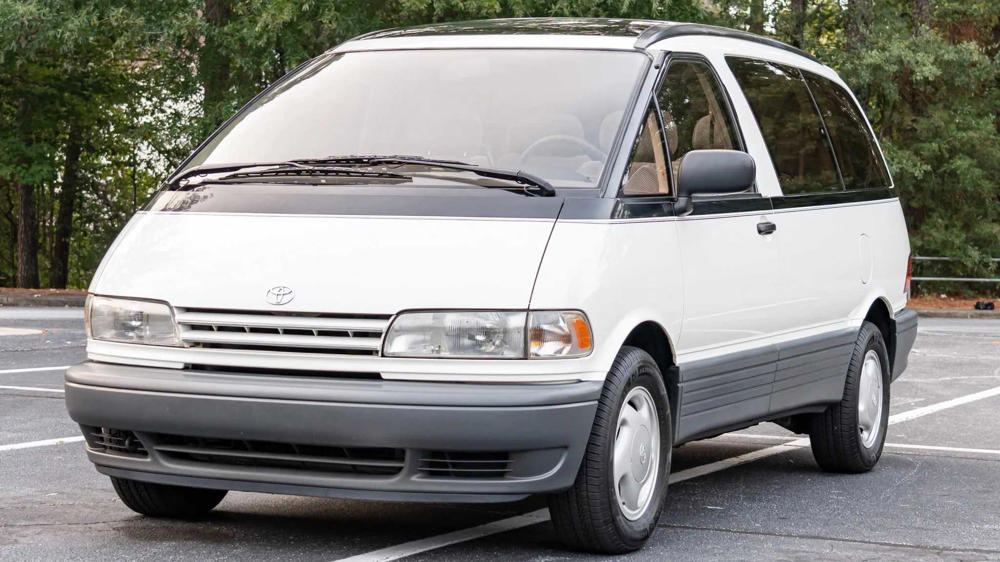
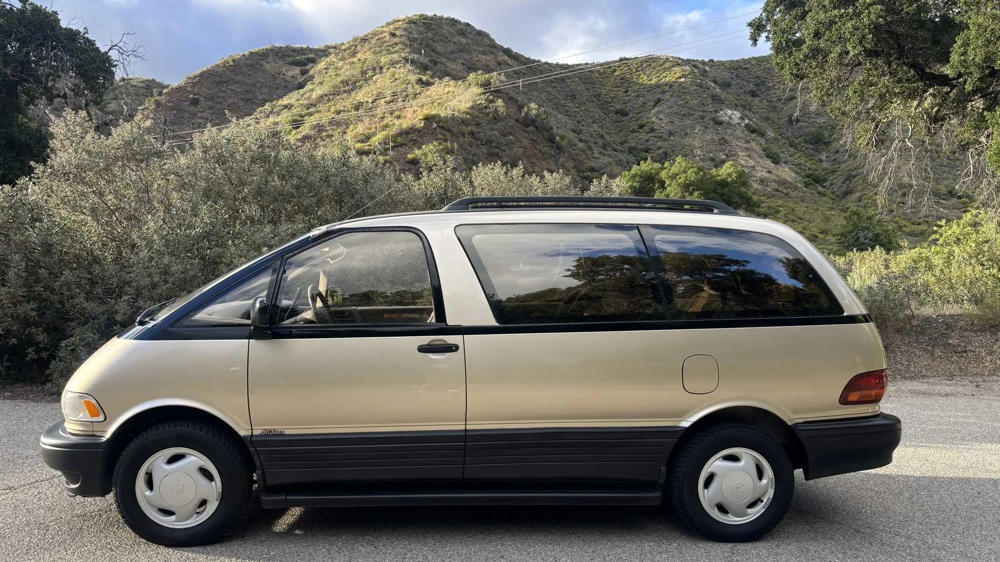
Volkswagen began offering its Transporter trucks in the United States in the early 1950s, and sales here continued all the way through four generations and the 2003 model year. Today's Junkyard Find is a distressingly solid late-third-gen van, currently residing at a self-service boneyard near Denver. Based on the devotion of Transporter lovers in this country, particularly those who believe that the T3 (Vanagon) and T4 (Eurovan) are still sensible everyday vehicles, you'd think these vans would be rare in Ewe Pullet-style car graveyards. Such is not the case. At this very moment, the U-Pull-&-Pay in Aurora, Colorado, has a "builder" Eurovan for sale, plus another in the self-serve parts inventory. Just a few months ago, the yard that now hosts today's Junkyard Find had this running 1985 Vanagon in beautiful condition for sale, with title, for $2,200. Fearing it would end up being set out in the yard for parts, I spread the word and a buyer was found … but it took several weeks and the van almost met its junkyardy fate. Do I see Westfalias in junkyards? You bet! In fact, I have no trouble finding discarded T2, T3 and T4 Transporters during my junkyard travels. Vanagons are a common sight in Denver these days, mostly Syncros with Subaru engine swaps (like this one in my neighborhood). Eurovans are popular here as well, though some of those are European-market T5s brought over under the 25-year rule. You still see beater T3s on the street in Europe, of course. Over there, they aren't quite as loaded down with cultural symbolism. In the United States, a Vanagon/Eurovan zealot tends to believe in sensible European design and often wishes to show an appreciation for the mythologized T1/T2-driving hippies of the late 1960s/early 1970s period (most of whom couldn't afford VW buses and drove whatever Detroit vehicles they could find for cheap). When this van was new, it was just about impossible to beat its footprint-to-interior-space ratio. Perhaps the Toyota Previa, which first appeared in the U.S. as a 1991 model, came close (though it was quite a bit longer than this van). Today's Junkyard Find arrived at CAP with ample evidence that it was driven by a series of loving owners who spared no expense on repairs and maintenance over its 36 years on the road. Inside was an immense stack of records dating back to the very beginning. Looking at the receipts, it appears that at least four owners in three states and one Canadian province took good care of this van. Just flipping through the paperwork, I looked at enough money spent to have bought several new Toyota vans … but do the Previa and Sienna have sensible European design suffused with the soul of a free-spirited 1969 hippie getting stabbed in the head at Altamont strumming a guitar while grooving on a Laurel Canyon sunset? That said, I respect the people willing to keep these vans alive on the cruel highways of this country, in the same way I respect the people who love, e.g., the Pontiac Fiero or two-stroke Saabs. This isn't just any Vanagon. Not only is it from the second-to-last model year for T3 sales in the United States, it's a genuine Carat. The Carat was the top trim level for the nonpop-top Vanagon in 1990. It came standard with air conditioning, automatic transmission, a fold-down table and a bench seat that could be converted into a bed. The MSRP was $18,670, or about $49,470 in 2026 dollars. This one has a four-speed manual transmission, which was available as a no-cost option (or maybe this is a swap, though I didn't see any receipts for that). If original, this engine is a 2.1-liter wasserboxer rated at 90 horsepower and 117.3 pound-feet of torque (yes, Volkswagen of America claimed that 0.3 of a lb-ft in their brochure). Curb weight was 3,460 pounds, so drivers had to be patient when accelerating. It was built in West Germany, about seven months before reunification with East Germany. At least the old "W" lives on as the first character in present-day VINs for German-made cars. I think this big dent on the left side was the reason it got parked, maybe combined with some expensive mechanical problem. The latest receipts I could find were from the mid-to-late 2000s. There's a 2002-issue Homies figurine, Masta Blasta, sitting in front of the idiot lights. I've got a collection of Homies I've found in junkyard vehicles over the decades, so perhaps it's time for me to start drinking Homies Tequila. In the end, the odometer shows nearly 175,000 miles, although the misaligned reels don't inspire trust in their mileage accuracy. I couldn't find any meaningful rust anywhere in this van, and the interior was in great shape for its age. Was it worth restoring? Since it's not a Syncro, I'd say no from a cold-hearted economic standpoint. Should it have been rescued and put back on the road? I think so. 1990 VW Vanagon Carat in Colorado junkyard. 1990 VW Vanagon Carat in Colorado junkyard. 1990 VW Vanagon Carat in Colorado junkyard. 1990 VW Vanagon Carat in Colorado junkyard. 1990 VW Vanagon Carat in Colorado junkyard. 1990 VW Vanagon Carat in Colorado junkyard. 1990 VW Vanagon Carat in Colorado junkyard. 1990 VW Vanagon Carat in Colorado junkyard. 1990 VW Vanagon Carat in Colorado junkyard. 1990 VW Vanagon Carat in Colorado junkyard. 1990 VW Vanagon Carat in Colorado junkyard. 1990 VW Vanagon Carat in Colorado junkyard. 1990 VW Vanagon Carat in Colorado junkyard.

 Liked by Sarah Tremblay, Justin Turner














 Liked by Sarah Tremblay, Justin Turner