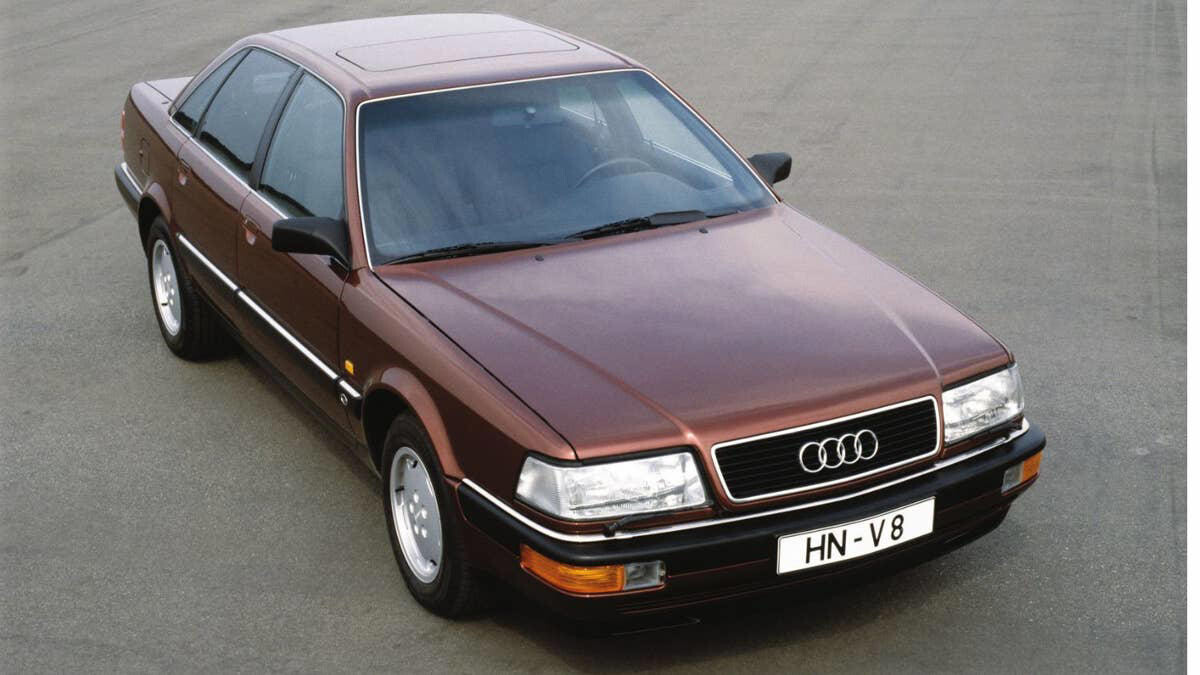
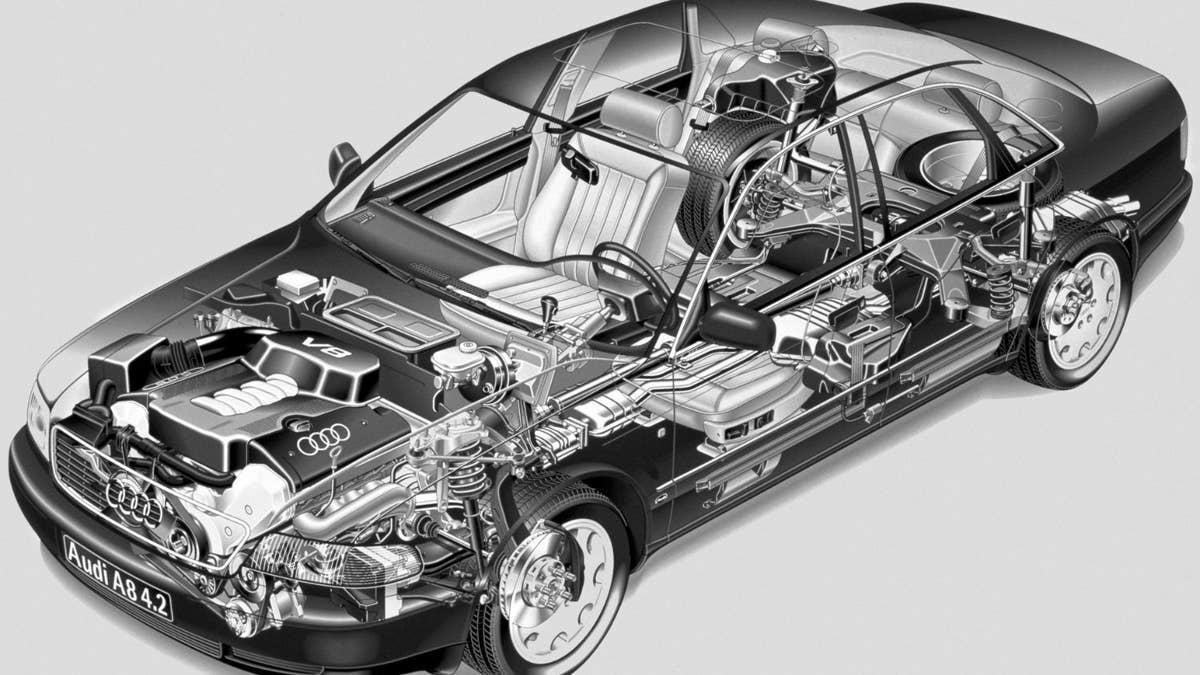
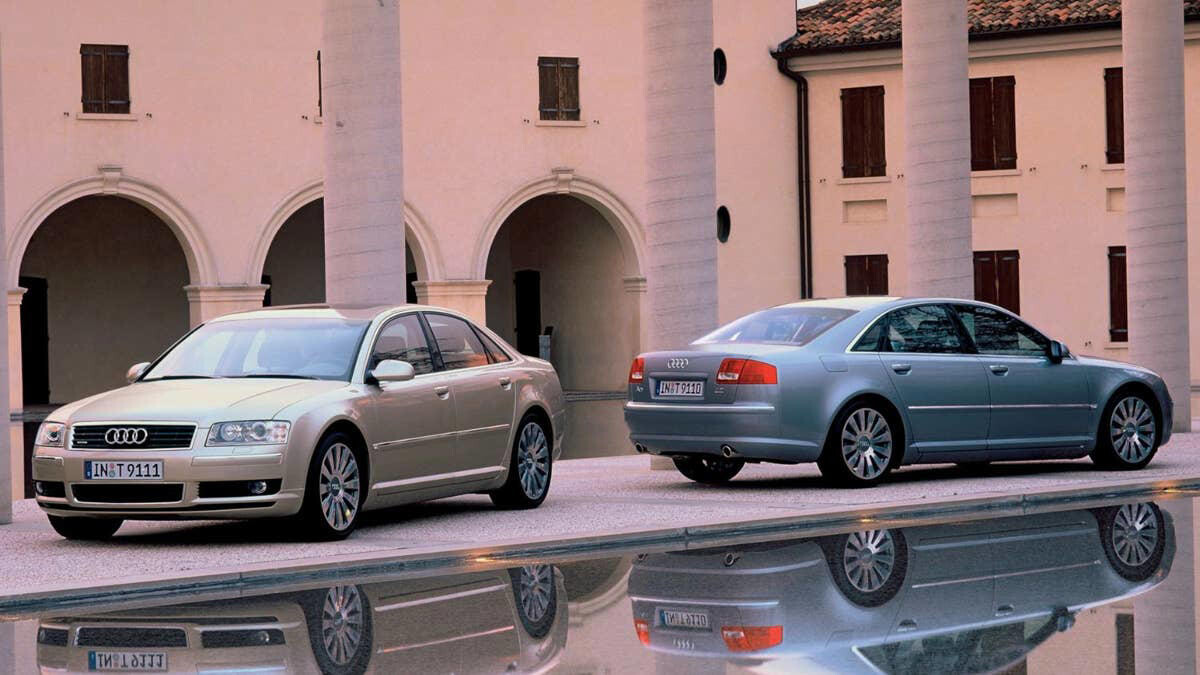
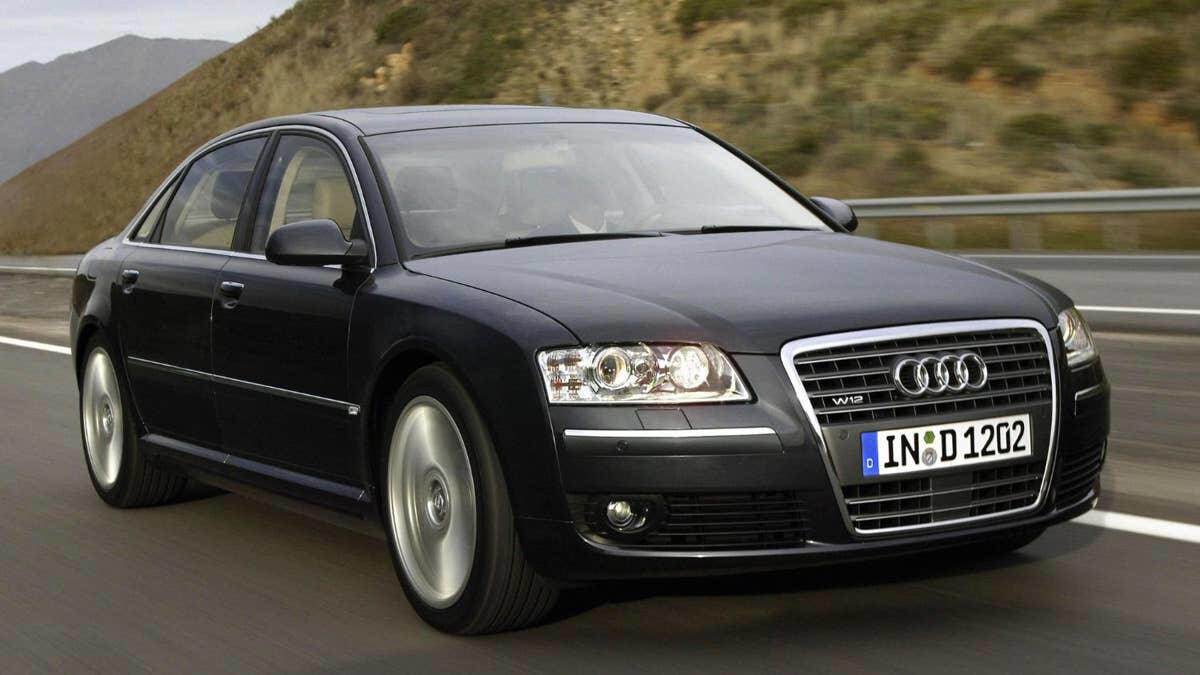
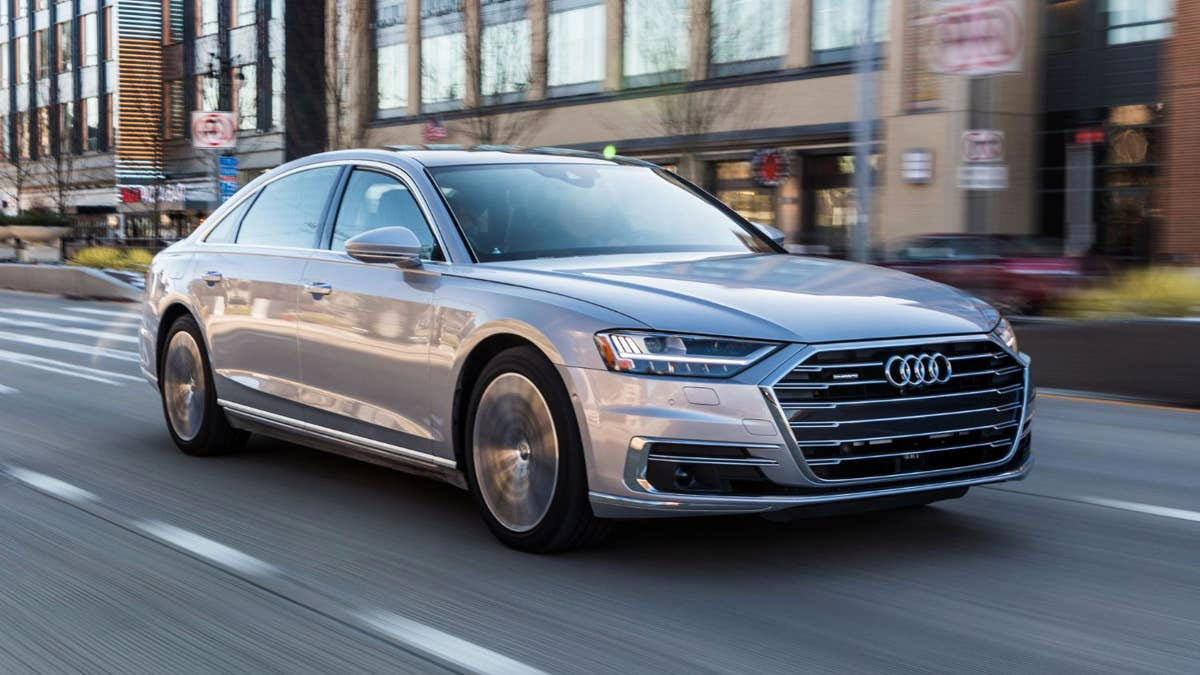
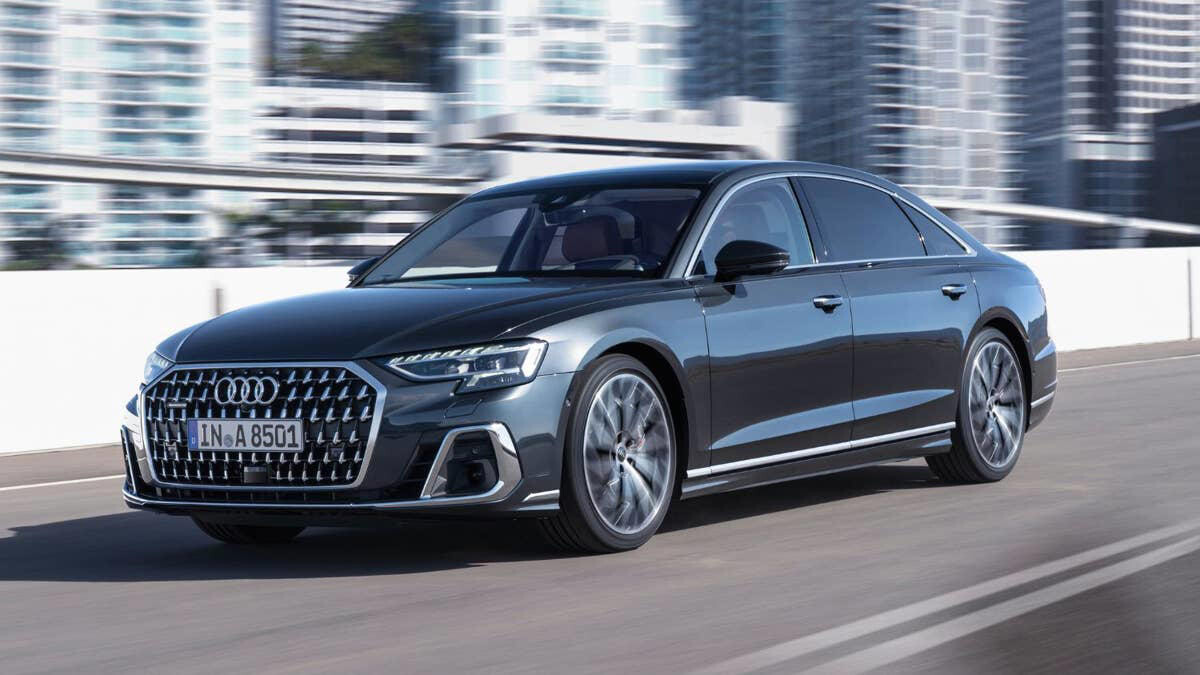
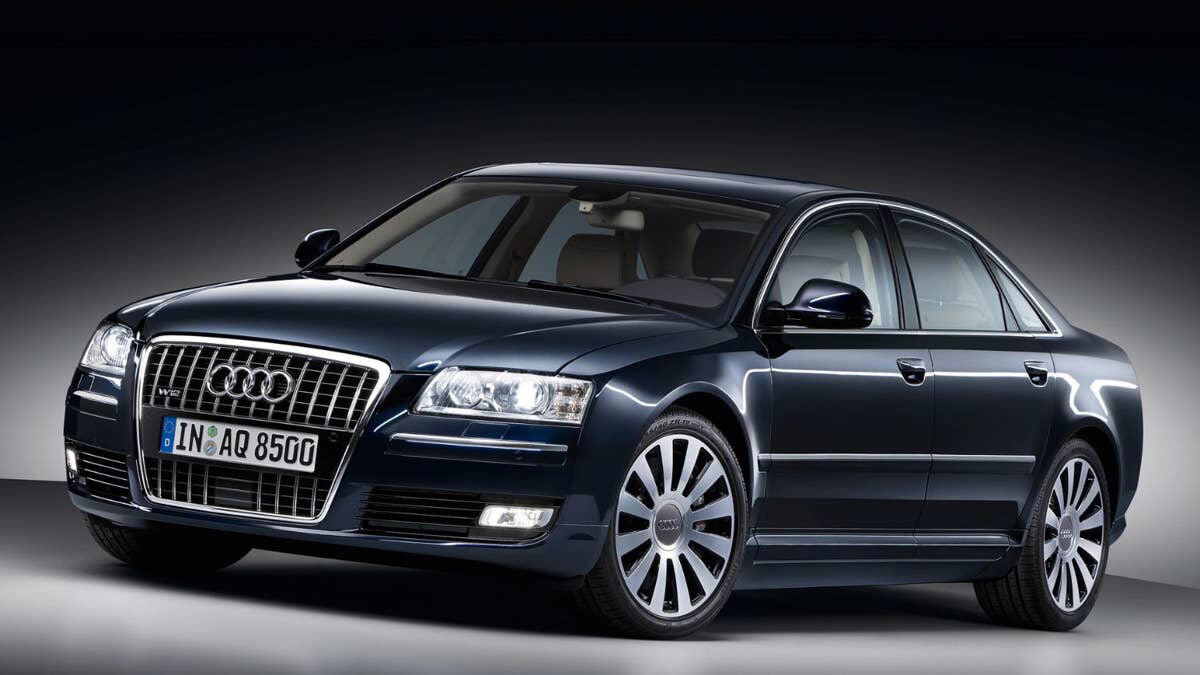
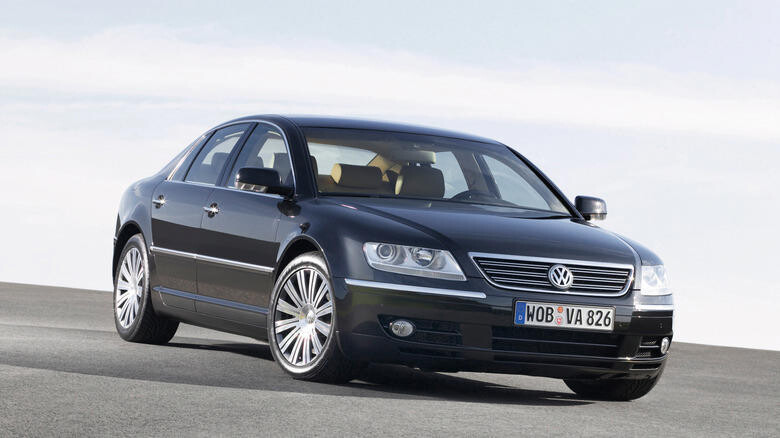
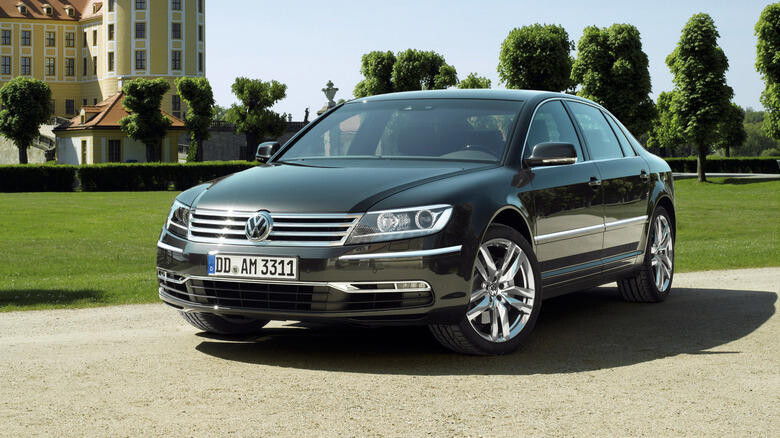
So Long, A8 In case you missed it, the last Audi A8 has rolled off the production line. It slipped quietly into retirement, without much in the way of a big announcement. Yes, there is still a 2027 model year present, but after that, the A8, along with the S8, will be no more. With its sales in near-negligible figures, perhaps the writing was on the wall for the flagship sedan. But there was once a time the A8 had the spotlight shining brightly on it. It was, after all, the car that finally established Audi as a true contender in the full-size luxury sedan market. At the moment, we don’t know what’s next for the car, but it’s safe to say we won’t have a four-ringed big sedan for quite some time. With production wrapped up, it’s perhaps a good time to take a minute or two to look back at the legacy that the Audi A8 had cemented over 30 years. The Preamble Before the A8, there was the car simply known as the V8. Made from 1988 to 1993, it was based on the Audi 200/5000, and stretched in all directions to make it closer in size to the BMW E32 7 Series and the W126 Mercedes-Benz S-Class. It had a whole host of innovations that were deemed cutting-edge at the time, and of course it had all-wheel drive. Early models came only with a 3.6-liter V8, hence the car’s brutally straightforward name. It made 247 hp and 251 lb-ft of torque, easily outperforming a contemporary BMW 735i and Mercedes-Benz 420SEL. Audi then added a 4.2-liter option in 1991, bumping power up to 276 hp and 295 lb-ft with the option of pairing it with a six-speed manual. Unfortunately, Audi didn’t quite have the cachet of its compatriots just yet, despite having what was the most advanced engine among its peers. But it was the Lexus LS that effectively left the V8 fighting for scraps in the large luxury sedan sales race. Less than 22,000 were sold with about 4,000 ending up in the U.S, and survivors are rarer than hen’s teeth. It flopped, but its failure meant Audi would try even harder with its successor. Flagship Breakthrough Given how much of a sales dud the V8 was, a clean-sheet redesign was in order. On top of that, Audi was about to kick off a new, cleaner, and more defined naming convention. The clean slate started with the A8, and it’s the reason why Audi’s cars are named as such. Internally known as the D2 (the V8 was the D1), it was previewed as the Audi Space Frame (ASF) concept during the 1993 Frankfurt Motor Show, and made its world premiere as a production model in March 1994 at the Geneva Motor Show. It was, by all means, a massive leap over the V8. It was the world’s first sedan to have an all-aluminum chassis, so it was lighter than many of its contemporaries. That was just the start, because it also introduced the brand’s new design direction that would later be used in the A4 that would come out the same year, and later on, the second-generation A6. The cabin was a night-and-day difference between it and the V8, and one of the reasons why motoring journalists kept on praising Audi interiors for decades. The rave reviews at the time were then followed up by strong sales in Europe, and Ingolstadt had finally joined the esteemed flagship sedan club as a full-time member. America had to wait until October 1996 to get the A8, although that didn’t slow down the praise for the car. That same year, the first S8 was released and helped shift the performance flagship sedan genre into higher gear. Of course, North America had to wait yet again before it finally landed in late 2000. At least the S8 still came, but what the U.S. didn’t get, aside from the diesels and small-capacity gas engines, was the 6.0 W12 engine. Yes, the D2 A8 was the very first recipient of the Audi W12, with a very short production run of just two years. As for total production, 105,092 were built between June 1994 and August 2002. Those numbers were still about a third of 7 Series sales from the same era, and a quarter of Mercedes S-Class sales. But if you consider the fact that the first A8 sold nearly five times more than the V8, it was a smashing success by all means. Of V10s and W12s Audi had proven its point with the first A8, but then came the harder part: Following it up. It couldn’t just be a simple evolution of the car, but it couldn’t be too radical of a change, either. The company gave a hint of things to come with the Avantissimo concept from 2001. It was pitched as a flagship station wagon, but was more of the prologue of the D3 A8 that would come out a year later. The usual revolutionary changes were present, namely bigger on the outside and more room on the inside. But in terms of design and technology, it was far ahead of its predecessor. We’re not saying the D2 was old-hat, but next to the D3 model, it was a big leap yet again. Somehow, though, it managed to move Audi design and technology into the new millennium without sparking an outrage. That’s something that couldn’t be said about one of the D3 A8’s rivals, the E65 BMW 7 Series. Like its predecessor, it won praise from critics, and was even winning comparison tests more frequently. Audi nailed the design and technology revolution just right, but on top of that, this was the era the company went ham on engine choices. There were the sober TDI models for many parts of the world, along with the familiar gas V8s. However, Audi thought it would be a good idea to stick with a Lamborghini-derived V10 in the A8, making it the only gas-powered V10 flagship sedan in history. Its cousin, the incredibly over-engineered VW Phaeton, would be the only V10 diesel sedan ever produced. We can’t forget about the 6.0-liter W12 mill, either. By the time its production had wrapped up in late 2009, Audi had managed to build over 140,000 second-gen A8s. A smaller number of those had the wilder engines, but that’s what also made this generation very memorable. Further Innovations The V8 was the dry run, the D1 firmly planted the A8 flag, and the D2 proved the model was no one-hit wonder. Now, you’ve often heard the phrase ‘the difficult third album.’ That didn’t apply at all for the third-generation A8. The D3, built from late 2009 to 2017, was more than a mere evolution of its already-impressive predecessor. If anything, it’s probably the peak generation. Styling-wise, it had loads of presence, especially with those pronounced LED daytime running lights. It was bigger in all directions, and the smooth and clean flanks made the big sedan appear even more imposing. Inside, the cabin design was inspired by yachts, and there was no shortage of new tech. On top of that, the D4 fixed a good number of reliability shortcomings of the previous generation, all while moving its tech features forward. The D4 A8 also boasts many firsts for the model line. For instance, early iterations of advanced driving assists appeared here. Lighting systems also got an upgrade, as well as its infotainment system. Forced induction in gas engines first appeared here, too, with a mix of supercharged and turbocharged options, plus the option of hybrid power. As for the range-toppers, the W12 engine got a displacement bump from 6.0 liters to 6.3 liters, while the S8 traded its V10 for a twin-turbo V8. While it lost the distinct soundtrack, it gained heaps more power and torque, with the S8 Plus models being a genuine supercar chaser. In the end, over 220,000 of these were produced, easily making the D3 the most successful generation of A8 by quite some margin. The Final Act, For Now? And now, we come to what is the final generation of the A8. When the D5 launched in 2017, it was unimaginable that this would be the last iteration of the flagship sedan for the time being. As one would expect, luxury and tech levels were further stepped up, and it became the first A8 to feature innovations such as predictive active suspension, level three autonomous driving capabilities (outside of North America), and suspension that can raise itself in the event of a side impact. By this time, turbochargers had become the norm in the powertrain department save for one model. The W12 engines still made it to this generation, but it was dropped in 2019 due to tightening regulations. Many markets also dropped the turbo V8 option for the same reason. That said, even the remaining 3.0-liter V6 turbo has more than enough grunt to outpace an S8 from 25 years ago. For those who insist on V8 power, though, the only way to go is with the S8. It’s a fantastic flagship sedan and all, but in hindsight, the trimming down of the engine choices was already a sign of eventually winding down production. U.S. sales had practically flatlined, and it was barely moving stock in Europe. Judging by Audi’s own numbers, it’s believed that there are well below 200,000 of these sold, which is a massive drop from its predecessor. The D5 isn’t a bad car by any means, but it was clear that more buyers associated luxury with extra ground clearance and a higher seating position. It’s a cliché to blame it all on SUVs, but the numbers don’t lie. Pop Culture Icon Even though there are allegedly plans for an A8 successor, we’re not expecting one any time in the near future. If we’re being realistic and a touch pessimistic, we doubt its return given that large luxury sedans as a whole are an endangered species. While its future still remains in doubt, the A8 has left an indelible mark in automotive history and pop culture. What made Audi’s full-size sedan a pop culture icon? All you have to say is Ronin and The Transporter franchise. There were loads of cars in Ronin with heaps of star power, namely the W116 Mercedes-Benz 450SEL 6.9 and E34 BMW 535i, along with some French cars alien to U.S. audiences like the Citroën XM and Peugeot 406. However, it was the D2 S8 that became the most associated with the espionage thriller. Meanwhile, Audi stole BMW’s thunder in The Transporter franchise. Sure, the E38 7 Series was the car used in the original, but the sequels saw Frank Martin, portrayed by Jason Statham, using an Audi A8 W12 instead. In the TV series, the D4 A8 was the four-wheeled co-star. The pairing of the car to the character has reached a point wherein Statham has also become inextricably linked to anything with four rings on the grille. Unforgettable As the curtains close on the A8 and S8, we can say that it won’t be forgotten for a very long time. It’s won the hearts of enthusiasts and critics alike, and it’s cemented its legacy on screen with memorable hero roles. We could say the car’s memory will live on for more generations to come. One could say that the Q9 is the indirect successor of the A8 on the basis of its positioning. We have no doubts about its capabilities, but there’s just something about a big sedan that quietly commands the room more than a large SUV making its presence felt. Audi won’t have that kind of car for quite some time, which is a little sad considering the A8 is the youngest among the German flagship sedan trio. But as the saying goes, a star that shines twice as bright lives for half as long.

 Liked by Parker Fortin, Ava Poirier

























 Liked by Parker Fortin, Ava Poirier