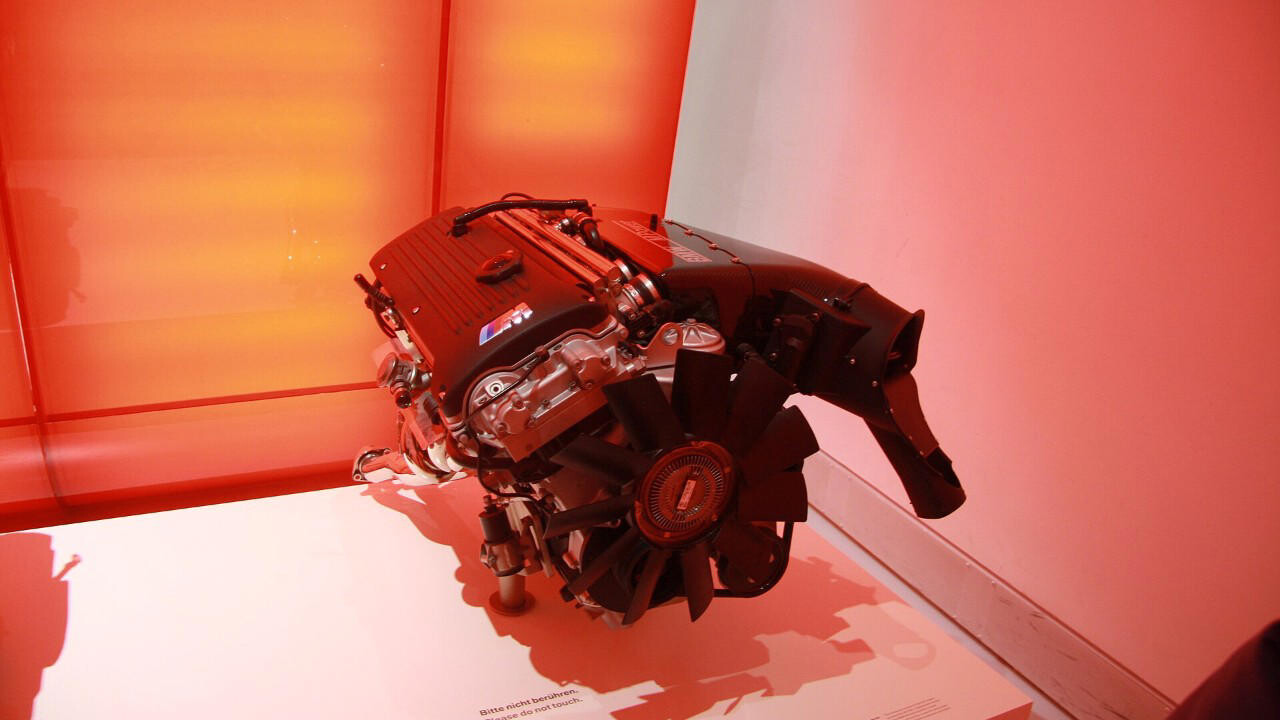
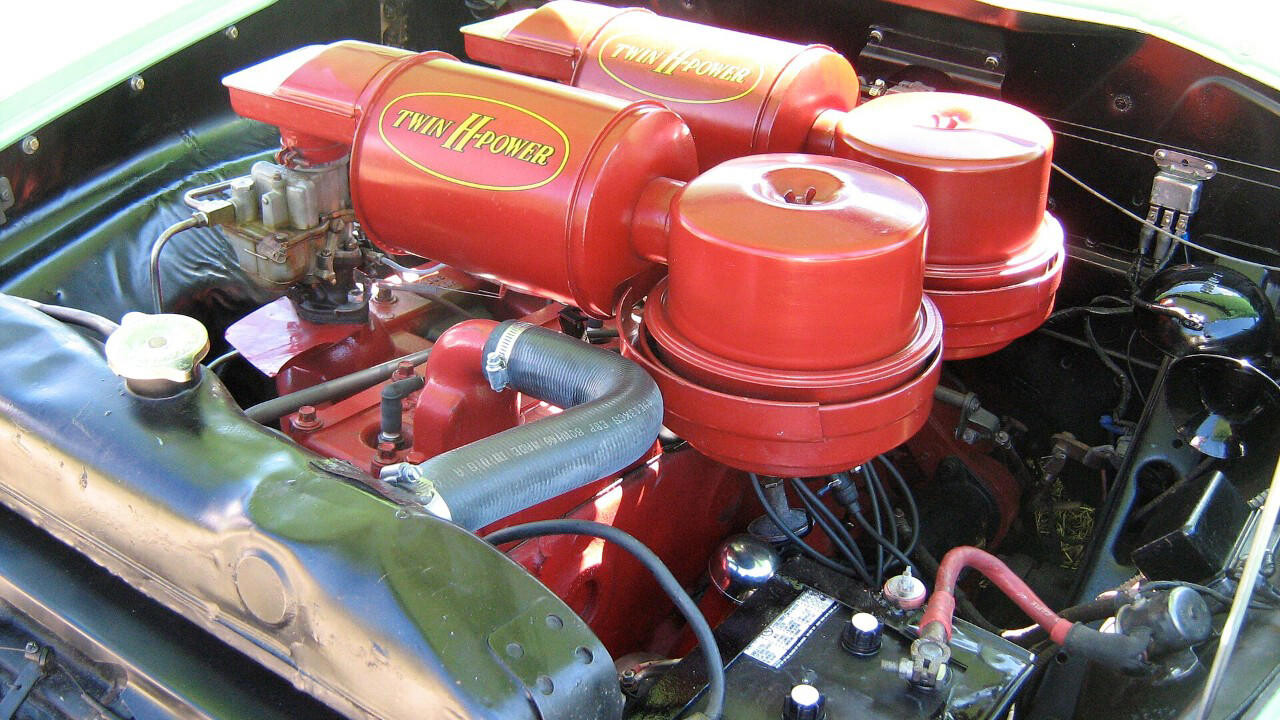
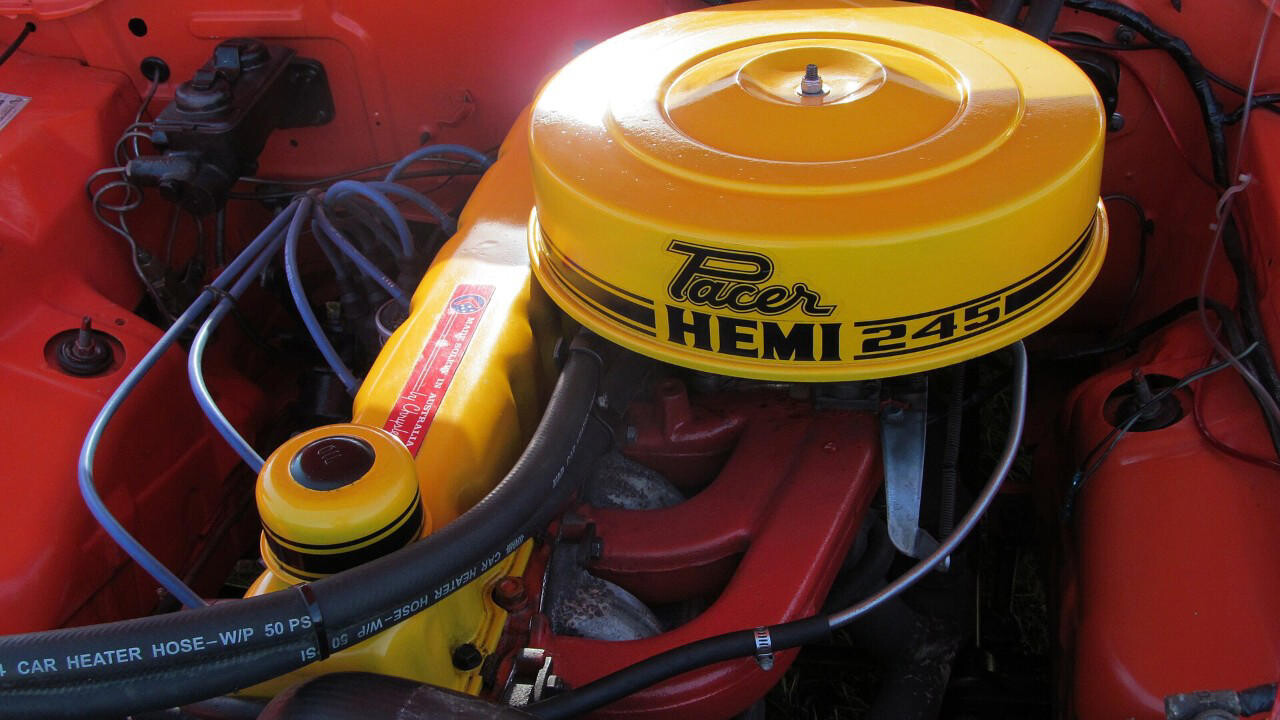
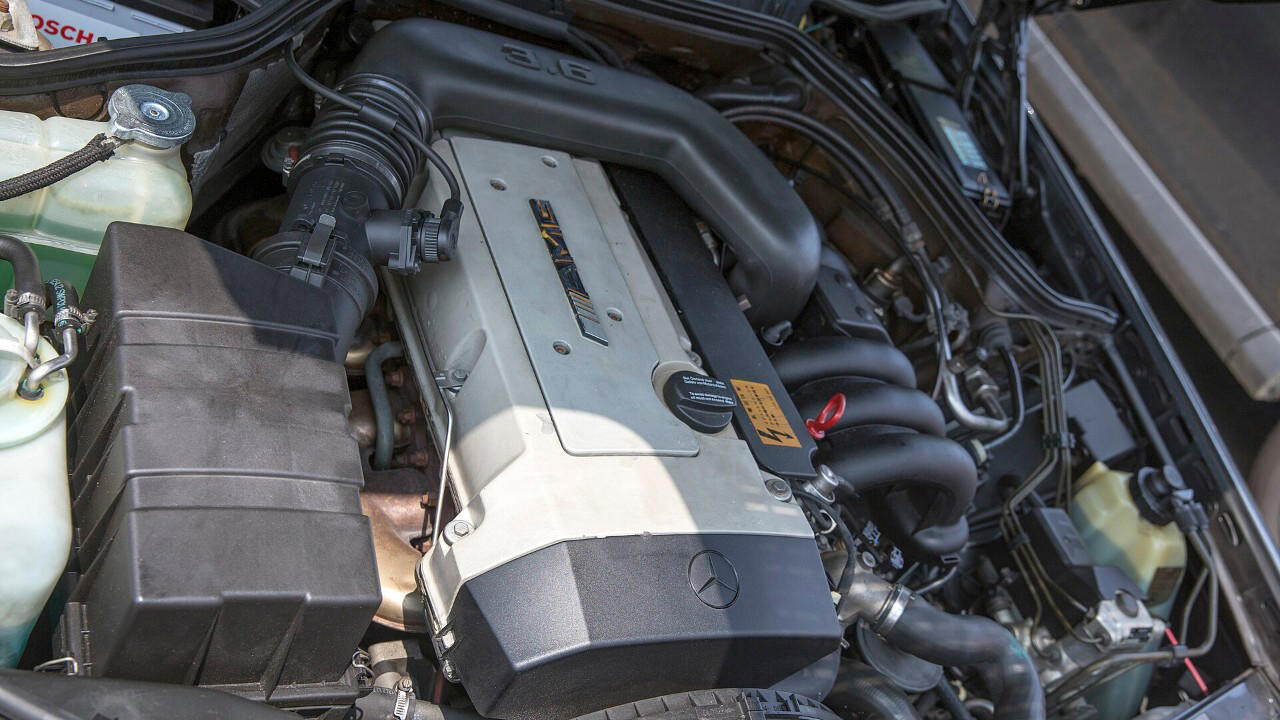
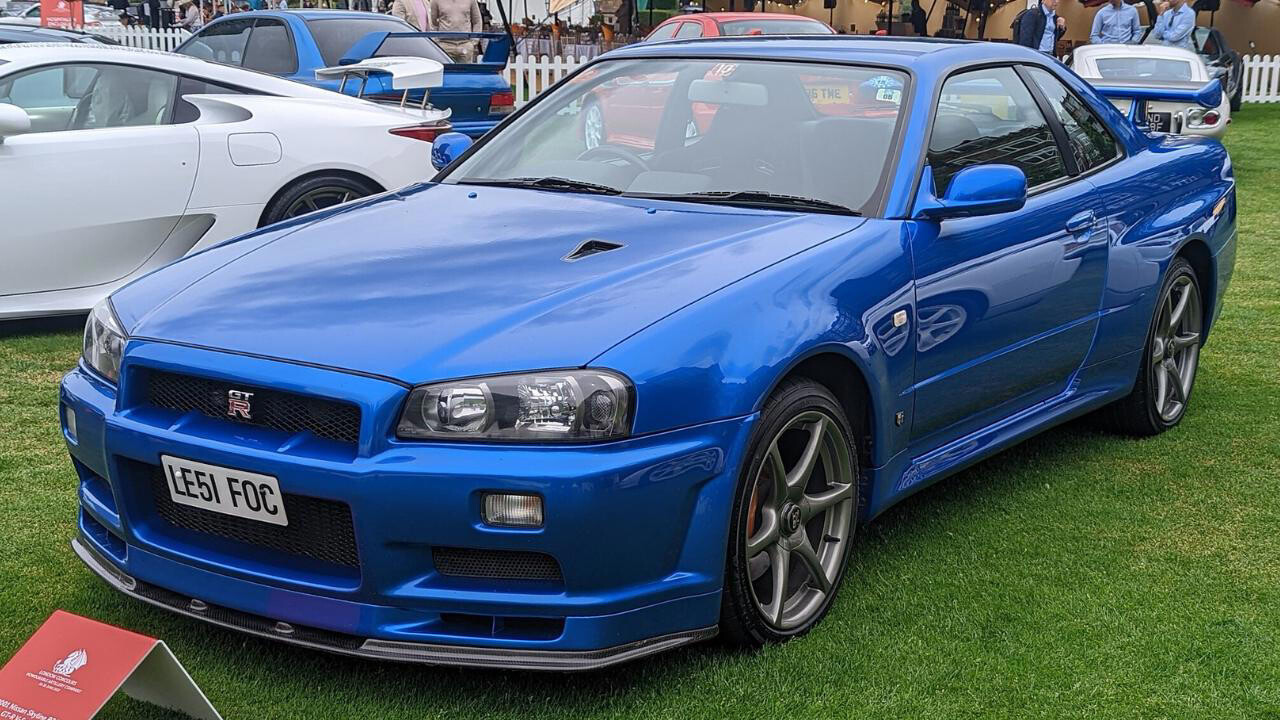
For years, Japan’s carmakers kept to an unwritten gentlemen’s agreement that capped advertised output at 280 PS. Some of the straight-six engines built under that cap made a mockery of it. Meanwhile, in Europe, Australia and Detroit, engineers kept proving that six cylinders in a row could make serious power. The straight-six is naturally smooth, simple to build and easy to tune. That is why it shows up everywhere, from 1950s stock cars to modern BMW M cars. Some versions were gentle workhorses. Others had so much in reserve that tuners push them past 1,000 horsepower. These 12 are our picks for the inline-sixes that felt almost too strong for the road. To be clear, the “should have been restricted” verdict is our opinion and a bit of fun, because none of these engines was banned. The displacements, outputs and dates behind each choice come from manufacturer figures and engine histories. 1. Toyota 2JZ-GTE The 2JZ-GTE is the engine that made the 1990s Supra a tuner’s dream. It displaces 2,997 cc and breathes through sequential twin turbochargers. Toyota built it from 1991 to 2005, and it powered the JZA80 Supra as well as the Aristo luxury sedan in Japan. Export Supras carried a rating of 320 horsepower. In addition, Toyota offered it with a six-speed Getrag manual. The secret is the bottom end. According to HP Academy’s 2JZ-GTE guide, the engine uses a closed-deck iron block with seven main bearings and a forged crankshaft. As a result, the guide says a stock-internal 2JZ can make around 600 horsepower and keep its factory durability. With upgraded main bearing caps, that figure climbs to around 800. That kind of headroom is why we put it on this list. Toyota built a luxury-sedan engine that could take double its rated power without opening the block. In our view, that is exactly the kind of engine that “should have been restricted,” at least by anyone selling rival sports cars in the 1990s. If you buy one today, budget for a proper tune, because the factory computer can’t be reflashed. 2. Nissan RB26DETT The RB26DETT is the engine that lived under a polite fiction. Nissan rated it at about 276 bhp, or 280 PS, which matched the gentlemen’s agreement among Japanese carmakers. However, enthusiasts have long believed the real figure sat closer to 320 PS. The hardware explains why. The 2,568 cc straight-six uses a pair of T25-type ceramic turbochargers and six individual throttle bodies instead of a single throttle. From the factory, the wastegates held boost to about 10 psi, which left plenty of room for more. Nissan fitted it to the Skyline GT-R from 1989 to 2002, across the R32, R33 and R34 generations. For racing, Nismo built an N1 version with a revised block, a better-balanced crankshaft and turbos with steel turbine wheels in place of the ceramic ones. So the RB26 was, in a sense, restricted already, at least on paper. That’s why it belongs here. Our take: a twin-turbo six with individual throttles is a race engine in a road car’s clothes. If you are shopping for a GT-R, have the turbos and oil pressure checked first, since ceramic turbine wheels don’t love extra boost. 3. BMW S54 The S54 is the last of BMW’s great naturally aspirated M sixes. It displaces 3,246 cc and revs to 8,000 rpm. BMW built it from 2000 to 2006, and in the E46 M3 it made 343 PS in European trim. It also powered the Z3 M and Z4 M roadsters and coupes. In fact, the European Z4 M used the same 343 PS tune as the M3. The wildest version came in the 2003 E46 M3 CSL. That engine, the S54B32HP, made 360 horsepower and 370 Nm of torque. In other words, BMW pulled more than 110 horsepower per liter from a straight-six with no turbochargers at all. Of course, a compression ratio of 11.5:1 and that high redline helped the engine breathe. Few road engines of its time could match that output without forced induction. That is why the S54 makes our list, because it delivered race-car numbers in a car you could drive to work. Our take: the CSL version is the one to frame on the wall, but any S54 is a treat at full throttle. If you own one, stay on top of the maintenance, because a high-revving engine rewards careful upkeep. 4. BMW M88 The M88 started life on the racetrack. BMW based this twin-cam straight-six on the 3.0 CSi racing engine, and it went into production in 1978. It displaced 3,453 cc, with a slightly oversquare bore and stroke of 93.4 by 84.0 millimeters. It also fed each cylinder through its own throttle body with Kugelfischer injection. In the mid-engined M1 supercar, the M88 made 277 PS at 6,500 rpm. Then BMW took it racing again. For the Procar series of 1979 and 1980, a bored-out version made well over 450 horsepower. Later, the M88/3 moved into the M635CSi and the first M5, where it produced roughly 210 kW from 1983 to 1989. By then, Bosch Motronic had replaced the Kugelfischer injection. That journey from race car to supercar to sports sedan is what makes the M88 special. Our take: an engine that powered both a Procar racer and a family-size M5 is an engine that should have come with a warning label. A four-door that shares its heart with a racing supercar is a recipe for trouble, in the best way. If you find a first-generation M5, it is the most practical way to own one. 5. BMW S58 The S58 shows that the straight-six is far from finished. BMW released it in early 2019, first in the X3 M and X4 M. Its displacement is 3.0 liters, and it uses two mono-scroll turbochargers. In the 2025 M4 CS, it reaches its most potent form so far. As a result, that car needs an estimated 3.4 seconds to reach 100 km/h. According to BMW’s M4 CS announcement, the engine makes 543 horsepower and 479 lb-ft of torque in that car. Maximum boost rises to 30.5 psi, and the redline sits at 7,200 rpm. BMW also notes a forged lightweight crankshaft and a cylinder head cast around a 3D-printed core. That core allows coolant passages that normal casting can’t make. The M4 CS also set an official Nürburgring Nordschleife lap of 7:21.99. That is supercar pace from a six-cylinder coupe with a back seat. In our view, the S58 is the clearest modern case for this list. An inline-six making over 540 horsepower from the factory deserves a raised eyebrow from every regulator. Our take: you don’t need the CS to enjoy it, since every S58 car is wildly quick. 6. Jaguar XK 4.2 straight-six The XK engine had one of the longest careers in car history. William Heynes, Walter Hassan, Claude Baily and Harry Weslake helped create it, and it debuted in the XK120 at the 1948 London Motor Show. Sir William Lyons also shaped the project. At first it was a 3.4-liter twin-cam rated at 160 bhp, with a long stroke of 106 millimeters that the later 4.2 kept. The biggest version arrived in 1964. The XK 4.2 displaced 4,235 cc, and in the 1965 E-Type it was rated at 265 horsepower SAE gross with 283 lb-ft of torque. Meanwhile, the engine kept going for decades. Jaguar’s last car with the XK was the 1987 XJ6, and the final Daimler DS420 limousine with the 4.2 left the factory in 1992. That means the XK straight-six powered cars across six consecutive decades, which strikes us as a remarkable span for one design. Our take: an engine that could give a 1960s sports car its punch, then haul a limousine into the 1990s, was strong enough to make rivals nervous. If you buy an E-Type 4.2, take it on a long road and enjoy that torque. 7. Hudson 308 Twin H-Power Before the V8 ruled stock-car racing, a Hudson straight-six owned it. The Hornet’s 308-cubic-inch six made 145 horsepower at 3,800 rpm, along with 275 lb-ft of torque. Then Hudson added Twin H-Power, a dealer-installed option from mid-1951 that cost $85.60 and became standard in 1952. The results were stunning. Hornets won 27 of 34 NASCAR Grand National races in 1952, 22 of 37 in 1953 and 17 of 37 in 1954. In AAA racing, Marshall Teague won 12 of 13 scheduled events in 1952. Overall, Hudson took 48 wins and 23 second places that season. Hudson’s step-down design, which lowered the center of gravity, played a part too. By 1954, the Twin H-Power six made 170 horsepower, and a factory “7-X” option pushed it past 210. Few engines dominated a racing series the way the Hudson six did in the early 1950s. Rival makers, surely, would have loved to see it restricted. Our take: the 308 Twin H-Power is the original giant-killer of American racing. If you find a Hornet with the Twin H setup, keep it original, because that dual-carb manifold is the whole story. 8. Ford Barra 245T Australia built one of the toughest inline-sixes of the modern era. Ford Australia’s Barra engines came from its plant in Geelong, Victoria, and the turbocharged 245T arrived in 2005 in the BF Falcon XR6 Turbo. It displaced 3,984 cc and made 245 kW, or 329 horsepower, at 5,250 rpm. Torque was the real headline. The 245T delivered 480 Nm across a flat band from 2,000 to 4,500 rpm. Its compression ratio sat at a boost-friendly 8.9:1. Compared with the earlier 240T, it gained stronger pistons and a redesigned intake manifold. Later BF Series II engines added stronger connecting rods and better valve springs. The same engine also went into the SY Territory Turbo SUV from 2006 to 2011. Tuners love the Barra because it takes big power with only minor changes and stays reliable when modified. As a result, the Barra has built a big following in tuning circles. Ford ended engine production in Geelong on September 26, 2016. Our take: a family-sedan engine that shrugs off huge boost is the definition of “should have been restricted.” If you buy an XR6 Turbo, check for a history of sensible tuning. 9. Chrysler Hemi-6 245 The Hemi-6 began in the United States and grew up in Australia. In 1966, Chrysler Corporation started an inline-six project, called the D-engine, to replace the Slant Six in Dodge trucks. Chrysler abandoned it after building prototypes. Instead, it sent a prototype to Chrysler Australia, whose engineers kept developing it. The 245-cubic-inch version, a 4.0-liter, arrived in the 1970 VG Valiant. In single-barrel form, it made 165 horsepower at 4,600 rpm and 235 lb-ft of torque at just 1,800 rpm. That broad, early torque suited a full-size family sedan perfectly. Chrysler Australia kept it in the lineup through the 1981 CM Valiant. Meanwhile, its bigger 265-cubic-inch sibling showed the family’s potential. In the E49 Charger, that engine wore triple Weber carburetors and made 302 horsepower. The 245 is the foundation of that performance family, and it is a stout engine in its own right. Our take: an American design that Chrysler gave away, only to see Australia turn it into a muscle-car engine, is a story that deserves more attention. Because of that low-rpm torque, a 245 Valiant is a relaxed cruiser that can surprise drivers who underestimate it. 10. Aston Martin Tadek Marek 4.0 straight-six Tadek Marek almost never got the Aston Martin job, because a rejection letter reached him by mistake. Once hired, he designed an all-aluminum, twin-cam straight-six. Work started in 1955 for the DB4, and the first engine displaced 3.7 liters and made 240 horsepower. Early engines had problems, as Jalopnik’s history of the engine explains. Long runs at speed could cause low oil pressure and bearing failures. Aston Martin fixed that with a larger sump and, later, an oil cooler. Meanwhile, the 1961 DB4 Vantage added an extra carburetor and bigger valves for about 26 more horsepower. For the 1963 DB5, the engine grew to 4.0 liters and made 282 horsepower with 288 lb-ft of torque. In DB5 Vantage form, it made 325 horsepower and pushed the car past 150 mph. The same six powered the DB4, DB5, DB6 and DBS, running well into the 1970s. Our take: an aluminum six with that much power in the early 1960s was the kind of engine rivals feared. If you are lucky enough to own a DB5, watch the oil pressure gauge, just as the factory learned to do. 11. Mercedes-Benz M104 AMG 3.6 The M104 AMG 3.6 is a Mercedes straight-six with an AMG accent. It displaced 3,606 cc and made 280 PS, or 276 horsepower, at 5,750 rpm, with 385 Nm of torque. Bore and stroke measured 91 by 92.4 millimeters, and the compression ratio was 10.5:1. Because AMG finished these engines by hand, output varied slightly, from 276 to 287 horsepower. The engine came from the M104 family, a twin-cam, four-valve straight-six that Mercedes built from 1989 to 1998. AMG’s version found homes in the C 36 AMG, the W124 and W210 E 36 AMG, and the G 36 AMG. It even went into the Isdera Spyder 036i. By comparison, the earlier AMG 3.3 made 272 PS from 1990 to 1992, so the 3.6 was a clear step up. Later, Mercedes replaced the M104 with the M 112 V6, starting in 1997. A Mercedes sedan or wagon with a hand-built six was a quiet rebel in its day. Our take: the M104 AMG 3.6 is the start of the modern AMG story, and it gave a family car more punch than many sports cars had. 12. Jaguar AJ6 Jaguar needed a successor to the XK, and the AJ6 was it. The engine debuted in 1984 in the XJ-S as a 3.6-liter twin-cam with four valves per cylinder. It made 221 horsepower, or 201 with a catalytic converter. In 1989, a 4.0-liter version with about 245 horsepower replaced the 3.6. Meanwhile, a smaller 2.9-liter single-cam version served the 1986 to 1989 XJ6, mostly in Britain and Europe. Then Jaguar added a supercharger. The 1994 XJR used the 4.0-liter AJ16, a revised version of the AJ6, with an Eaton M90 blower, and it made 322 horsepower. Jaguar also built a twin-turbo 4.0 with 330 bhp for its XJ41 sports-car prototype, although that car never reached production. Meanwhile, a supercharged 3.2-liter version went into the Aston Martin DB7. A supercharged straight-six in a luxury sedan was a bold move for the 1990s. Our take: the AJ6 family rarely gets the credit it deserves, perhaps because it followed the famous XK. In supercharged XJR form, it built a fast sedan that could embarrass sports cars. The AJ6 family’s run ended when the AJ-V8 replaced it for the 1996 and 1997 models.

 Liked by Gabriel Côté, Thomas Clark
 Liked by Gabriel Côté, Thomas Clark