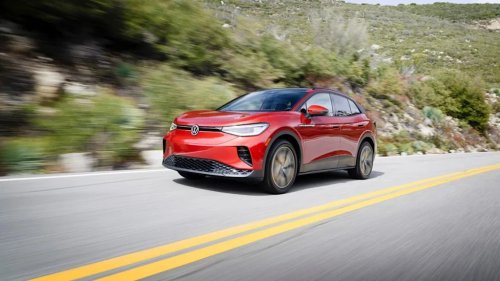
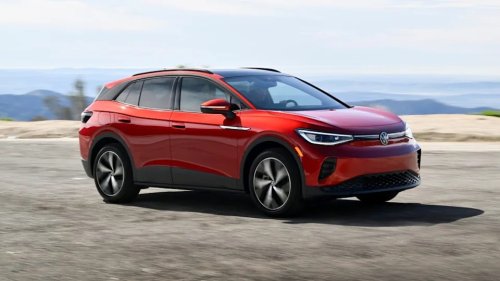
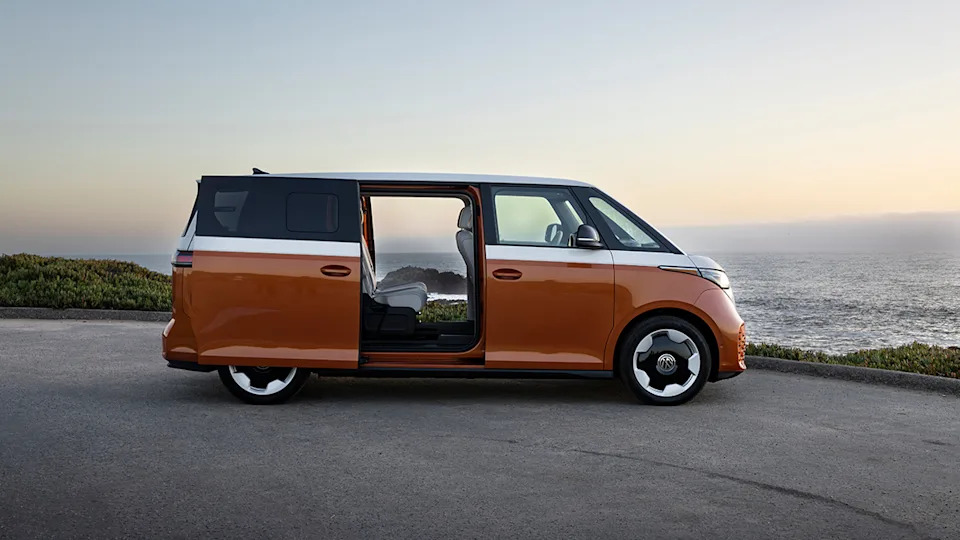
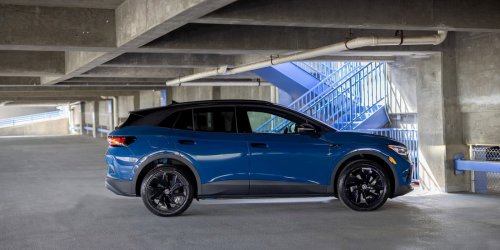
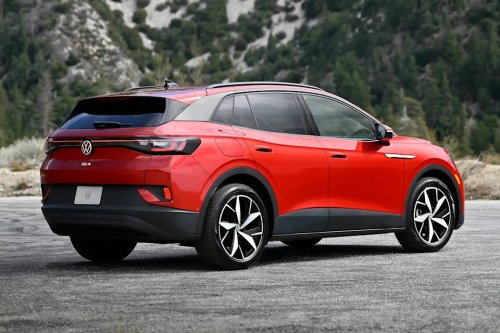
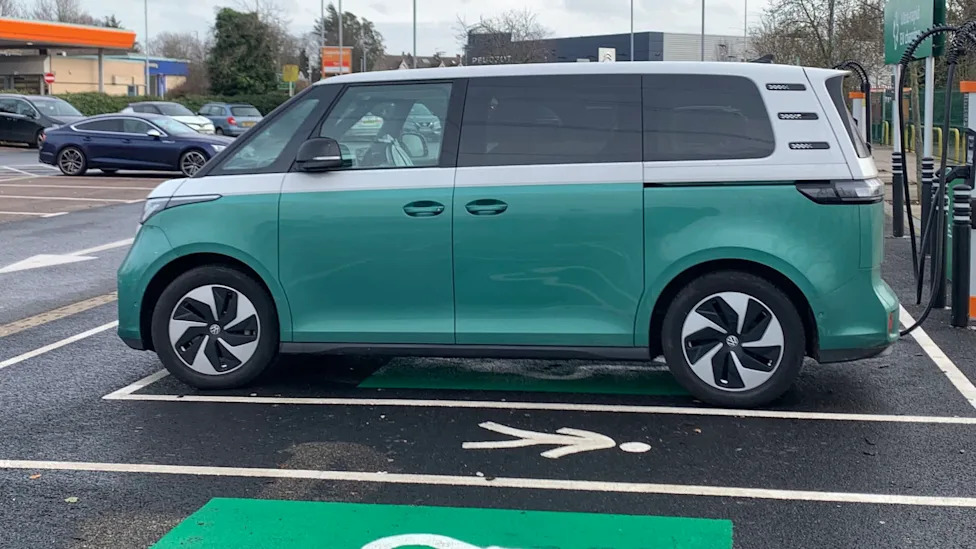
Volkswagen ID.Buzz completes 8,200-mile US road trip, challenging EV range doubtsA five-week, 30-state run in a Volkswagen ID.Buzz is offering fresh evidence against the claim that a modest-range EV cannot manage a serious road trip.On Reddit, the driver said the journey covered 8,222 miles and involved 76 charging sessions.What happened?According to the Reddit post, the ID.Buzz — nicknamed "Otto von Buzzmarck" — started north of Seattle, headed through Moab and Santa Fe, continued across the southern U.S. toward Atlanta, reached Boston and New York, and then returned, going through Chicago, Minneapolis, and Montana.AdvertisementAdvertisementThe driver said the trip was meant to answer people who doubt whether EVs with shorter range can handle long-distance travel. "This post is an answer to those who have whinged that vehicles with 230-250 miles range, like the Buzz, aren't road trip worthy," the original poster wrote.Charging the van for the entire route cost $1,389, the Redditor said. Over 8,222 miles, they used 3,123 kilowatt-hours, which works out to 2.62 miles per kilowatt-hour. They also estimated the EV saved roughly $700 to $800 compared with a gas-powered Ford Transit that gets 14 to 18 miles per gallon.Delays appeared limited as well. The driver said they only had to wait once for a charger, the average stop took 23 minutes, and just two of the 76 charging sessions happened in remote places without a backup option.Why does it matter?That matters because range anxiety is still one of the main reasons some drivers hesitate to switch to an EV. A five-week trip around the country in a vehicle with roughly 230 to 250 miles of range offers a real-world example that those vehicles can still cover long distances. It also points to potential savings on energy costs.AdvertisementAdvertisementThe driver further estimated that a comparable gas van would have generated about five tons of carbon pollution on the same route, versus around one and a half tons for the ID.Buzz — roughly a 70% reduction.They also wrote that "all that DC charging did not appear to impact battery capacity," adding another piece of real-world experience to the discussion.What can I do?The trip suggested that planning mattered at least as much as the vehicle's rated range. The driver said route-planning and charging apps helped reduce stress, and that Tesla chargers were often the lowest-cost option when used with a plan.The Redditor also highlighted certain parts of the charging network as especially helpful. "The charging rock stars are the Ohio and Indiana Turnpikes with charging in the service areas," they wrote, pointing to how convenience improves when chargers are built into places drivers already stop.AdvertisementAdvertisementThe report included one more tip for travelers: "Pro tip - if you stay at a campground with 50A RV service you can get a full L2 charge overnight for free."Taken together, the trip suggested that an EV does not need class-leading range to be useful on long drives, and the same would apply to many others with a similar range, like Volkswagen's similarly-named ID.4, which has a slightly better 263-291 miles of range. Smart routing, expanded charger access, and lower fueling costs may make a modest-range model more road-trip-capable than many people assume."Charging infrastructure is there for long-distance EV travel across the U.S. even for modest range," the original poster wrote.After 8,222 miles, they said the trip showed that the idea that these vehicles "aren't road trip worthy" does not hold up very well.AdvertisementAdvertisementGet TCD's free newsletters for easy tips, smart advice, and a chance to earn $5,000 toward home upgrades. To see more stories like this one, change your Google preferences here.



















 +39 others




![Volkswagen, Volkswagen ID.4, Volkswagen ID.5, Volkswagen's best-seller is going electric in 2027 to replace the ID.4 and ID.5 [Images]](https://cdn.topcarnews.net/thumb/id/aHR0cHM6Ly9pMC53cC5jb20vZWxlY3Ry-ZWsuY28vd3AtY29udGVudC91cGxvYWRz-L3NpdGVzLzMvMjAyNi8wOS9Wb2xrc3dh-Z2VuLUlELVRpZ3Vhbi1JRC00LmpwZWc_-dz0xNTAwJmFtcDtxdWFsaXR5PTgyJmFt-cDtzdHJpcD1hbGwmYW1wO3NzbD0x/aed2aa2870791850c8e69c5fc3a0ed85.jpeg?t=20261005&post_id=66267)
![Volkswagen, Volkswagen ID.4, Volkswagen ID.5, Volkswagen's best-seller is going electric in 2027 to replace the ID.4 and ID.5 [Images]](https://cdn.topcarnews.net/thumb/id/aHR0cHM6Ly9lbGVjdHJlay5jby93cC1j-b250ZW50L3VwbG9hZHMvc2l0ZXMvMy8y-MDI2LzA5L1ZvbGtzd2FnZW4tSUQtVGln-dWFuLUlELTQtZnJvbnQtcXVhcnRlci5q-cGc_c3RyaXA9aW5mbyZhbXA7dz0xMDI0/97fb00cd3919b8d0dc36440715039e6e.jpg?t=20261005&post_id=66267)
![Volkswagen, Volkswagen ID.4, Volkswagen ID.5, Volkswagen's best-seller is going electric in 2027 to replace the ID.4 and ID.5 [Images]](https://cdn.topcarnews.net/thumb/id/aHR0cHM6Ly9lbGVjdHJlay5jby93cC1j-b250ZW50L3VwbG9hZHMvc2l0ZXMvMy8y-MDI2LzA5L1ZvbGtzd2FnZW4tSUQtVGln-dWFuLUlELTQtc2lkZS5qcGc_c3RyaXA9-aW5mbyZhbXA7dz0xMDI0/ed240b20e8275f3af4b904f46ebb5fb3.jpg?t=20261005&post_id=66267)
![Volkswagen, Volkswagen ID.4, Volkswagen ID.5, Volkswagen's best-seller is going electric in 2027 to replace the ID.4 and ID.5 [Images]](https://cdn.topcarnews.net/thumb/id/aHR0cHM6Ly9lbGVjdHJlay5jby93cC1j-b250ZW50L3VwbG9hZHMvc2l0ZXMvMy8y-MDI2LzA5L1ZvbGtzd2FnZW4tSUQtVGln-dWFuLUlELTQtcmVhci1xdWFydGVyLmpw-Zz9zdHJpcD1pbmZvJmFtcDt3PTEwMjQ/436c7979cf5b947053f7f0bf39ff94bc.jpg?t=20261005&post_id=66267)
![Volkswagen, Volkswagen ID.4, Volkswagen ID.5, Volkswagen's best-seller is going electric in 2027 to replace the ID.4 and ID.5 [Images]](https://cdn.topcarnews.net/thumb/id/aHR0cHM6Ly9lbGVjdHJlay5jby93cC1j-b250ZW50L3VwbG9hZHMvc2l0ZXMvMy8y-MDI2LzA5L1ZvbGtzd2FnZW4tSUQtVGln-dWFuLUlELTQtZnJvbnQuanBnP3N0cmlw-PWluZm8mYW1wO3c9MTAyNA/ec2e4ca027ccbfb42942abe523f3acf7.jpg?t=20261005&post_id=66267)
![Volkswagen, Volkswagen ID.4, Volkswagen ID.5, Volkswagen's best-seller is going electric in 2027 to replace the ID.4 and ID.5 [Images]](https://cdn.topcarnews.net/thumb/id/aHR0cHM6Ly9lbGVjdHJlay5jby93cC1j-b250ZW50L3VwbG9hZHMvc2l0ZXMvMy8y-MDI2LzA5L1ZvbGtzd2FnZW4tSUQtVGln-dWFuLUlELTQtcmVhci5qcGc_c3RyaXA9-aW5mbyZhbXA7dz0xMDI0/668525889dc433b0fd0e166fd5bd8366.jpg?t=20261005&post_id=66267)