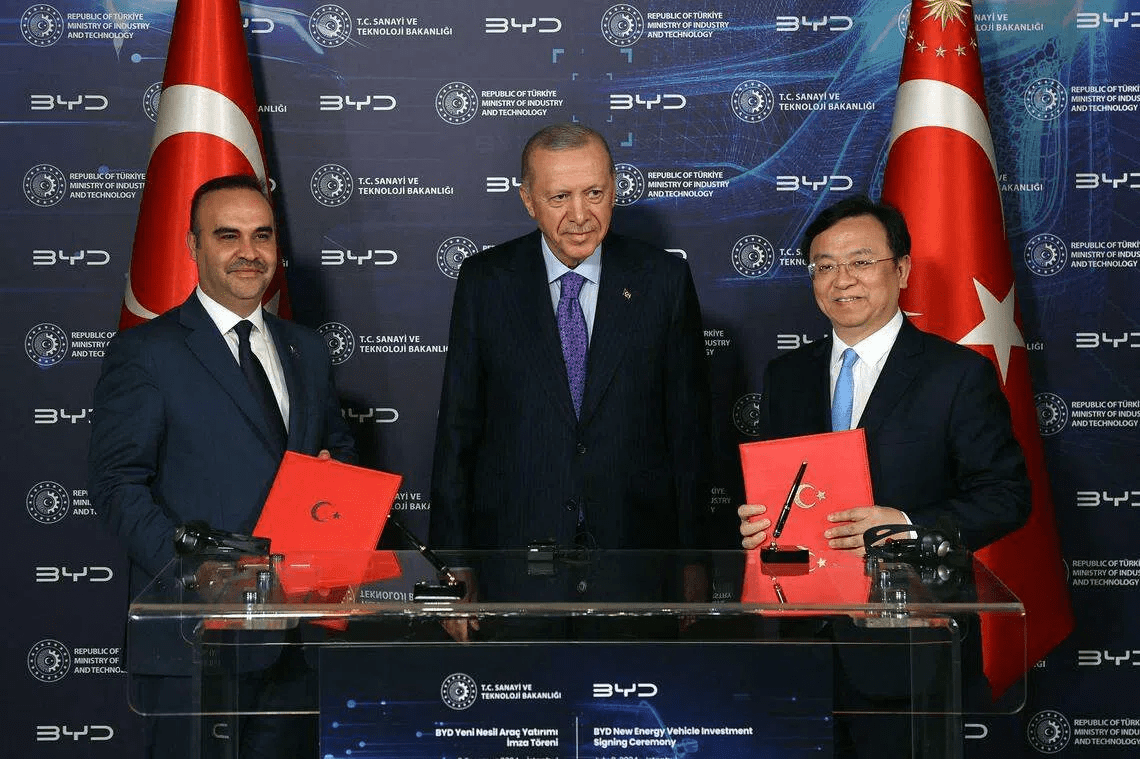
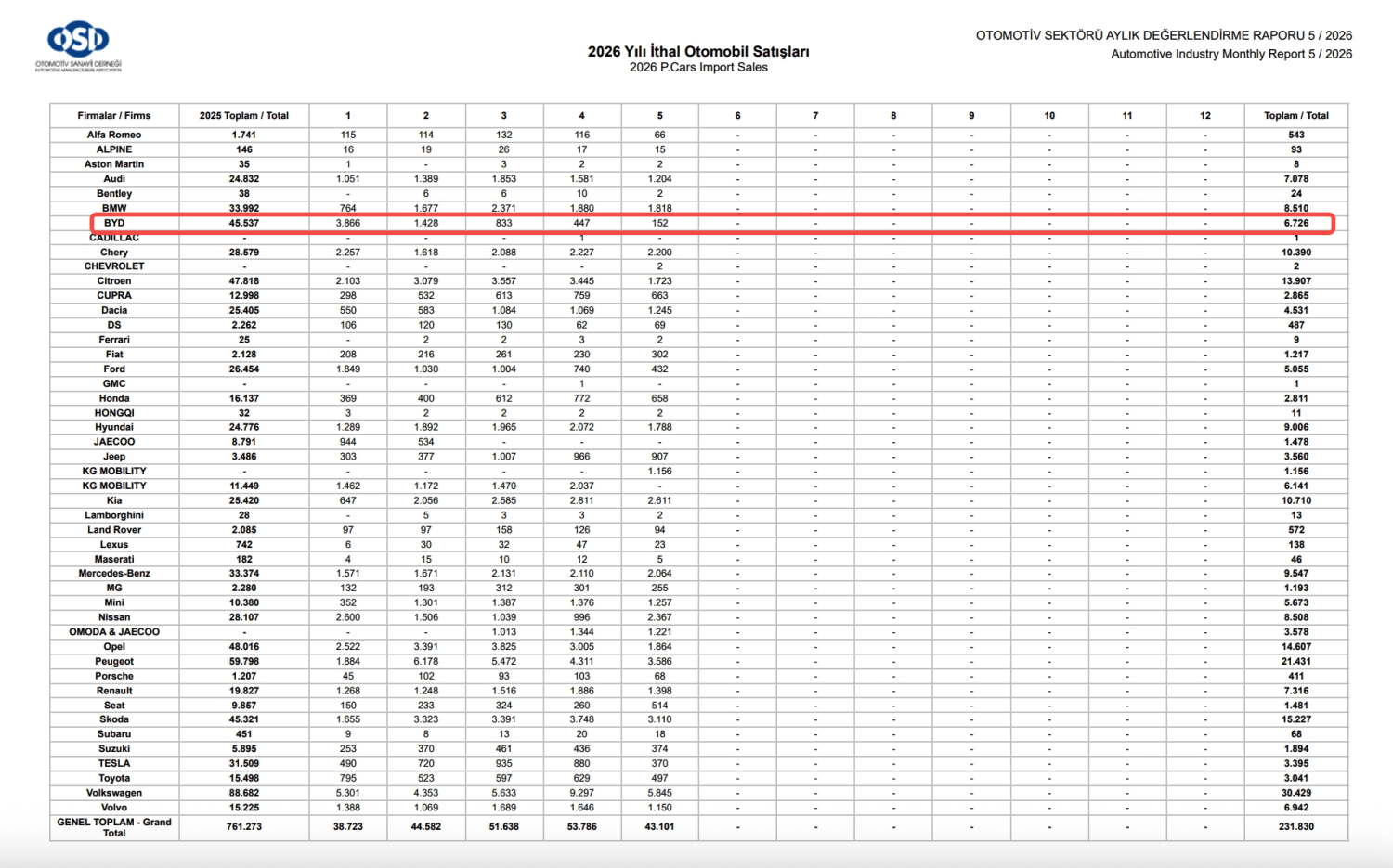
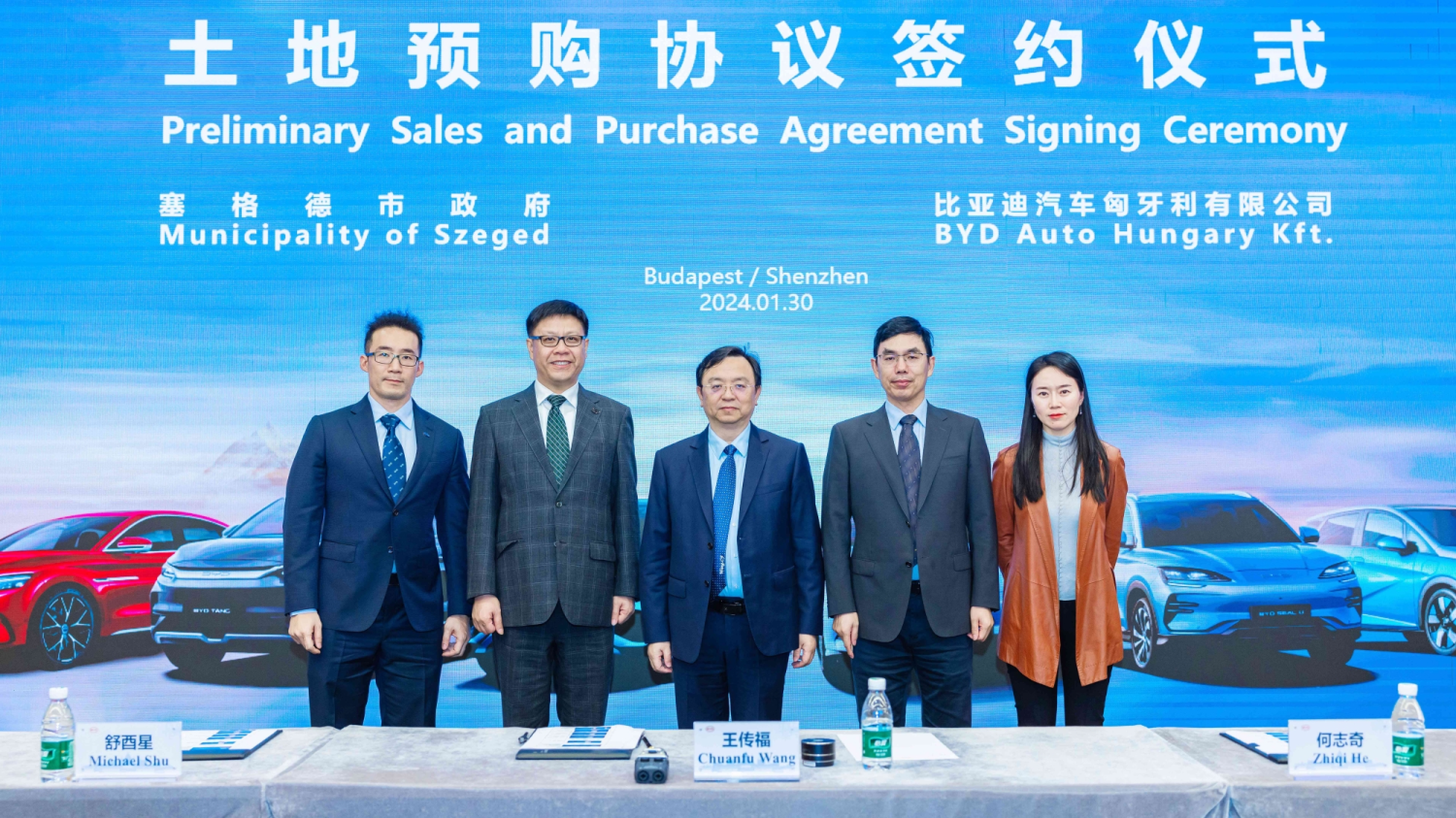
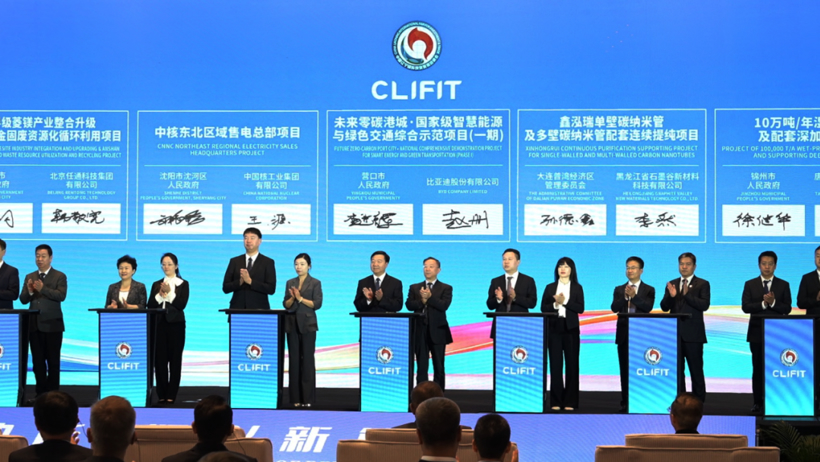
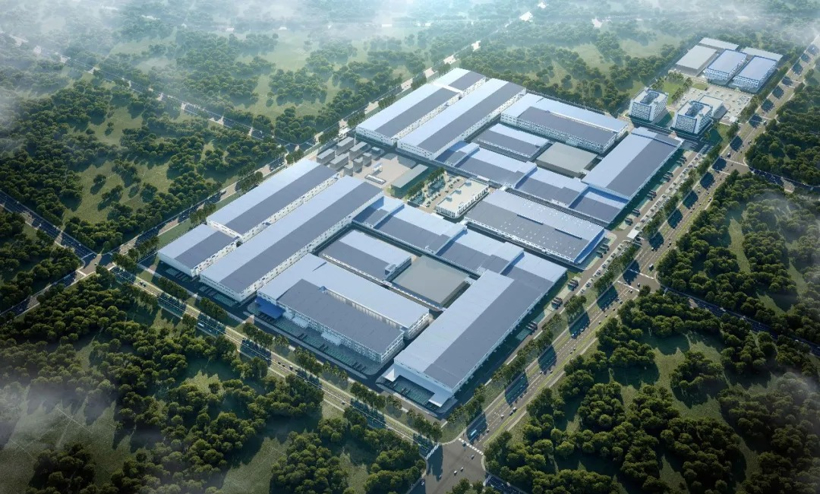
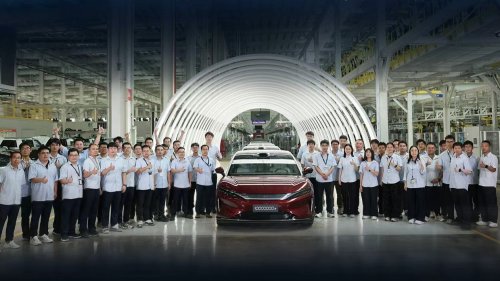
Nikkei Asia reported on June 16 that the Turkish government has formally stopped providing import tax benefits to BYD. Officials at Turkey’s Ministry of Industry and Technology said the exemption was withdrawn at the beginning of 2026. The Manisa factory project showed little tangible progress. Authorities also warned that BYD could be required to repay previously received tax benefits if the promised $1B investment fails to materialize. The policy reversal is closely tied to delays surrounding BYD’s planned manufacturing complex in Manisa, western Turkey. In July 2024, BYD signed an investment agreement with Turkey’s Ministry of Industry and Technology to build an EV production plant, an R&D center. Executives from BYD and Turkey posed for a group photo at the signing of the plant construction agreement in 2024. The project was designed with annual capacity of 150K vehicles. Production was set to cover battery-electric vehicles, plug-in hybrids. Operations were expected to begin before the end of 2026, creating roughly 5K jobs. For Turkey, the investment carried strategic significance beyond job creation. Officials viewed the project as a catalyst for developing the country’s domestic EV ecosystem. At the time, Turkey described BYD as the first major foreign automaker in nearly three decades to commit to building a new vehicle manufacturing facility in the country. In return, Ankara offered a package of incentives, including import tax exemptions, policy support for dealer network expansion. Nearly two years later, however, construction has yet to formally begin. More importantly, BYD Executive Vice President Stella Li previously told Reuters the company had paused its original $1B Turkey factory plan. The impact is already showing up in sales figures. Supported by preferential import policies, BYD sold 45.5K vehicles in Turkey during 2025, more than five times higher than a year earlier. The company emerged as one of the country’s fastest-growing EV brands. Momentum faded sharply in 2026. Monthly sales fell from 3,866 units in January to 1,428 in February, then 833 in March. Deliveries dropped further to 447 units in April, reaching just 152 units in May. Chart of Turkey’s auto sales for 2025 and January–May 2026 BYD’s recent actions across Europe suggest the Turkey pause reflects a broader strategic recalibration rather than a standalone project delay. While announcing the suspension, Stella Li said the company was prioritizing construction of its factory in Szeged, Hungary. The Hungarian plant is expected to begin production in the fourth quarter of 2026, becoming BYD’s first passenger vehicle manufacturing base in Europe. From a strategic standpoint, Hungary offers greater value. Following the European Union’s anti-subsidy tariffs on Chinese-made EVs, local manufacturing has become increasingly important for Chinese automakers seeking to preserve competitiveness across the region. Building vehicles inside the EU allows manufacturers to reduce exposure to trade barriers, strengthen local supply chains, improve access to consumers. BYD executives at the signing of a Preliminary Sales and Purchase Agreement with Szeged, Hungary, in Shenzhen, 2024. Turkey maintains a customs union with the EU but remains outside the bloc. Vehicles produced there still face additional trade restrictions when entering EU markets, reducing the factory’s importance within BYD’s long-term European strategy. The shift comes as BYD’s European business continues to expand rapidly. The company increased European sales by 270% last year to nearly 188K vehicles. Sales more than doubled again in May, surpassing 100K units. Maintaining that growth increasingly depends on local production capacity inside the European Union. Against that backdrop, pausing Turkey while accelerating Hungary appears less a project cancellation than a strategic pivot toward BYD’s most critical European manufacturing hub.