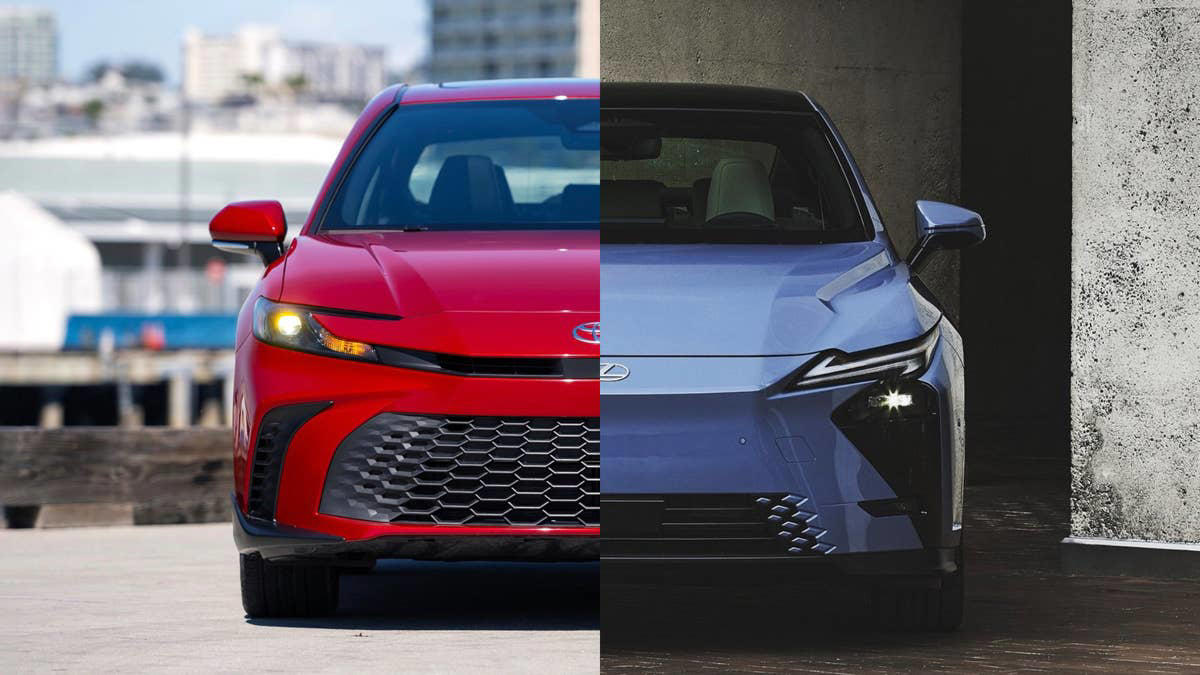
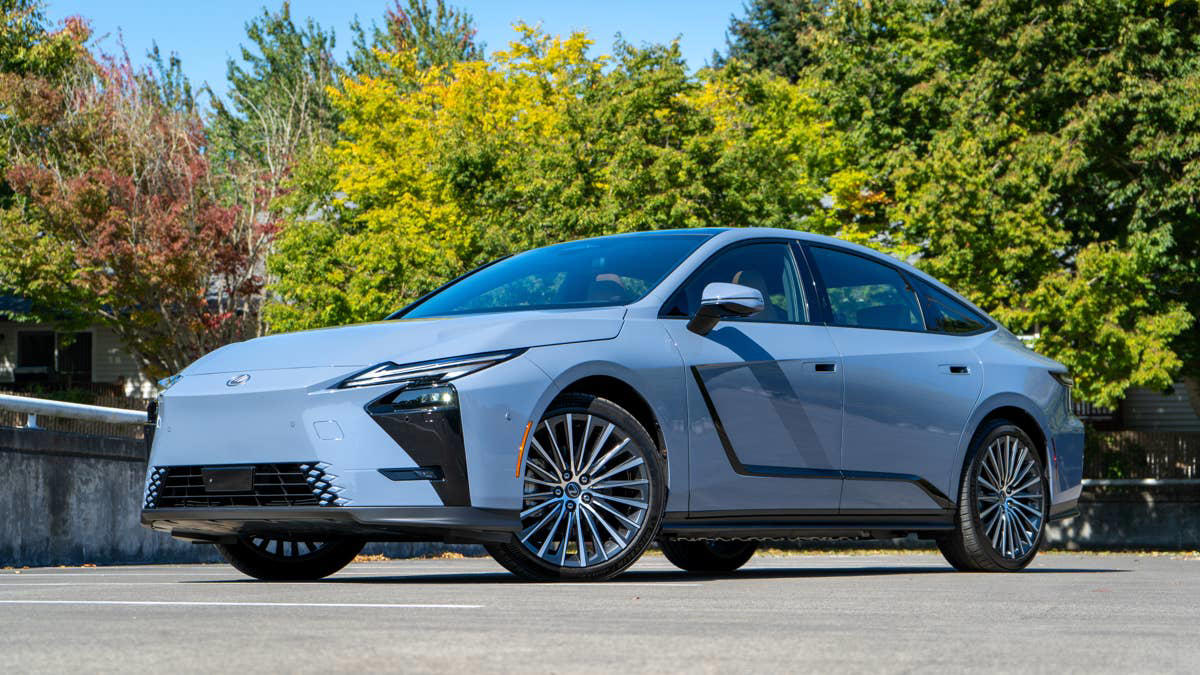
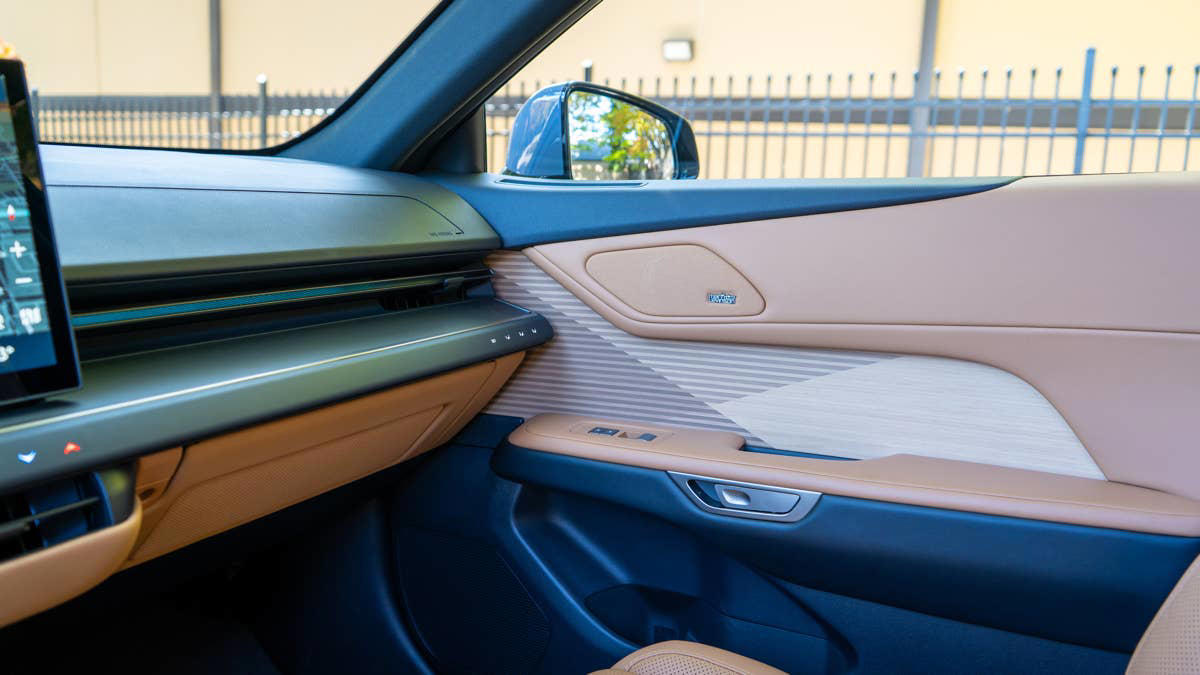
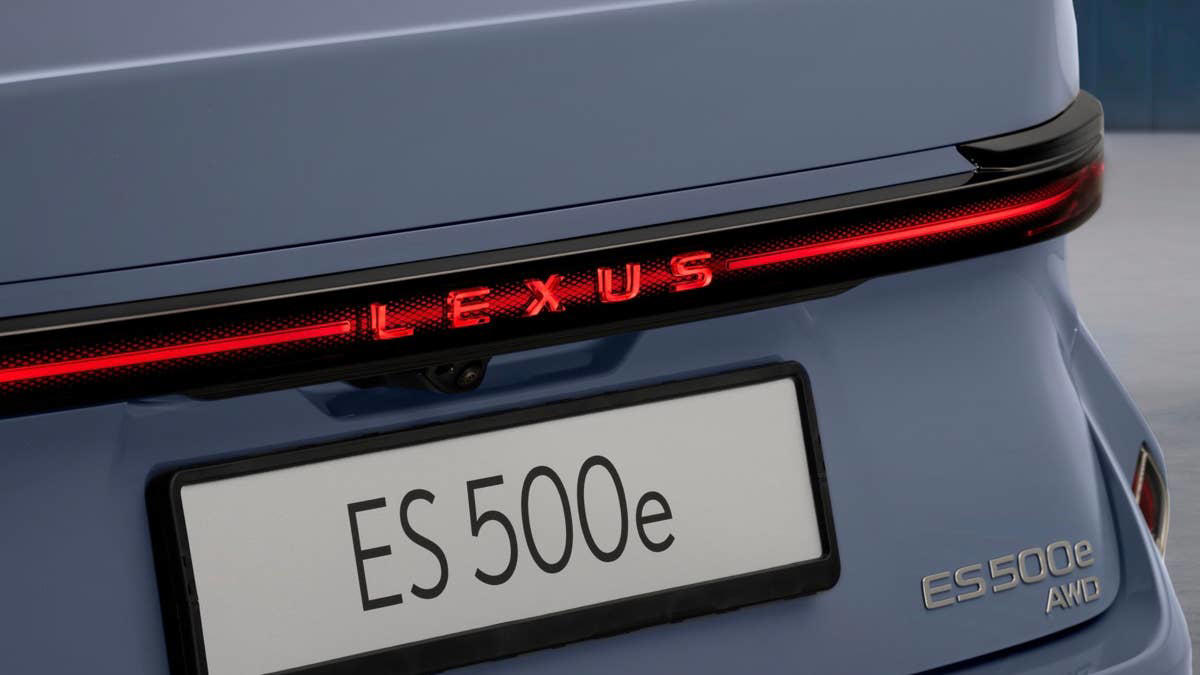
There’s always been a premium to pay for a Lexus over the closest Toyota, but where the latest Lexus ES and Toyota Camry are concerned, that number has increased significantly. It now costs $17,800 more for a base ES versus a base Camry, underlining just how much the gap between these two midsize sedans has grown. The latest ES is a completely new design with both electric and hybrid powertrains, while the Camry has a hybrid-only lineup. Yes, the Lexus is the much more luxurious sedan here, but what do you actually get for almost $20,000 more? We’ll break down the differences here in terms of design, performance, features, and comfort. Camry Vs. ES Pricing: A Huge Gap Pricing puts everything into perspective, so that’s where we’ll start. The prices below are for the 2027 models of both sedans and they exclude each automaker’s destination fee. Let’s look at the Camry first. 2027 Toyota Camry Pricing Trim MSRP LE $29,700 SE $32,200 Nightshade $33,200 XLE $34,900 XSE $36,100 The 2027 Camry is great value; in LE guise, you won’t easily find another sedan that offers this combination of performance, efficiency, and practicality. Even a fully loaded model is decently priced. 2027 Lexus ES Pricing Trim MSRP 350e Premium $47,610 500e Premium AWD $50,610 350e Luxury $56,010 500e Luxury AWD $59,010 350h Premium $49,805 350h Premium AWD $51,205 350h Premium+ $54,605 350h Premium+ AWD $56,005 The Lexus ES is one of the very few vehicles on the road that’s cheaper in electric guise than it is in hybrid form, but it’s still far more expensive than any Camry. It’s possible to spend close to $50,000 on the Camry XSE, but that’s for a model equipped with nearly every conceivable package and accessory. Design and Showroom Appeal Most luxury-car buyers want a vehicle that makes a statement before you’ve even driven in. In that respect, the Lexus ES should easily have the better of the Toyota Camry, and in entry-level form, it does. The base Camry LE has a rental-car vibe about it, especially in white paint and with the standard 16-inch alloys, which look weedy. It’s not a bad-looking car in this trim, but it’s hardly inspiring. The base Lexus ES 350e premium makes a much better first impression. It looks more expensive on its 19-inch alloys and comes with a power moonroof, rain-sensing windshield wipers, and acoustic glass for the windshield and front side glass (the Camry LE only gets acoustic glass for the windshield). Buyers who like to customize their vehicles will also find more interesting paints for the ES, even on the base trim. These include Wavelength (a light blue) and Copper Crest. The range-topping Camry XSE is another story, though. It looks far nicer than the LE with its 19-inch alloys, color-keyed sport mesh front grille, black rear spoiler, and available two-tone paint. In fact, one could argue that the Camry in this specification is a more cohesive design than the ES. Digital latch electronic door handles are found on the ES. These contribute to sleeker looks but aren’t as functional as traditional handles. All Lexus trims have a power trunk, too. Overall, the Lexus ES does come across as the more upscale sedan, but this alone doesn’t justify the huge price premium. Performance: Similar Hybrids, But Electric ES Stands Out The key difference here is that the ES has an electric powertrain option to go with the hybrid. There’s no electric Camry, with all Toyota trims being hybrids. Here’s an overview of how they compare. Toyota Camry Lexus ES Hybrid Lexus ES EV Powertrain 2.5L I4 Hybrid 2.5L I4 Hybrid Single or dual electric motors Horsepower 225 hp (FWD) | 232 hp (AWD) 244 hp 221 hp (350e) | 338 hp (500e) Torque 163 lb-ft (engine only) 173 lb-ft (engine only) 198 lb-ft (front motor) | 125 lb-ft (rear motor, 500e only) Drivetrain FWD or AWD FWD or AWD FWD or AWD 0-60 mph ~7 seconds 7.1 seconds (AWD) 5.1 seconds (500e) Efficiency (city/highway/combined) 52/49/51 mpg (FWD LE) 48/44/46 mpg (FWD) 135/118/127 MPGe (350e with 19-inch wheels) The Camry and ES hybrids are evenly matched in terms of acceleration and power, but the Camry is more efficient than its posh cousin. The performer of the group is the ES 500e EV, which needs just 5.1 seconds to reach 60 mph. All other versions of these cars take about two seconds longer to do the same. These sedans share the same basic platform, but the one in the Lexus has a wider track and stiffer structure. We found the ES 350h to be an exceedingly relaxing sedan to drive. The ride quality is excellent and the transition between electric and gas power virtually imperceptible. Only hard acceleration spoils the mood, as the strained four-cylinder engine note permeates the otherwise quiet cabin. For this reason, we preferred the 500e. It’s even more refined and noticeably quicker. The Camry can’t match the polish of the ES, but it’s very good for a sedan that starts at under $30K. As with the ES Hybrid, we appreciate the refinement of the Camry’s powertrain, which provides much more punch than a non-hybrid Honda Accord. The interior is quiet, although not to ES standards. Like the Lexus, the Toyota is not a particularly sporty car, so don’t expect much in the way of feedback from the light steering. Interior: Finish, Features, and Space The gap between the two sedans is most prominent from behind the wheel. The latest Camry has a solid, functional interior with enough space for adults in both rows. Although there are dual digital displays, a row of physical switches make climate control adjustments easy on the move. The base model has cloth seats and does without a leather-trimmed shift lever or steering wheel, but upper trims get SofTex imitation leather seats, leather/microfiber, or full genuine leather. The Lexus ES is a palpable step up in ambience and quality, but we also have some reservations. On a positive note, the clean, uncluttered dashboard is modern and does not overwhelm the senses like so many German luxury cars. Perforated NuLuxe upholstery makes way for soft semi-aniline leather on top trims, and there are attractive color schemes, such as black/white or the rich Palomino, a toffee-colored hue. All that being said, the new ES cabin looks a little sterile, especially in an all-black finish. There are also far fewer physical controls than in the Camry, although the ES does have larger digital displays. Here’s a comparison of standard and optional features. Toyota Camry Lexus ES Dual-zone automatic climate control S S Power-adjustable front seats O S Heated front seats O S Ventilated front seats O S Heated rear seats N/A O Ventilated rear seats N/A O Front seat radiant knee heating N/A O Heated steering wheel O S Powered steering column with memory N/A S Wireless phone charging S S Driver’s display 7-inch standard, 12.3-inch optional 12.3 inches Touchscreen 8-inch standard, 12.3-inch optional 14 inches Speakers 6 (9-speaker JBL optional) 10 (17-speaker Mark Levinson optional) Surround-view camera O O Power moonroof O S Power rear window sunshades N/A O Auto soft-close doors N/A O There are far more standard and available features in the Lexus, as there should be considering what it costs. However, a fully-loaded Camry actually comes with some equipment that’s not standard on the ES, such as a head-up display, a panoramic-view monitor, and traffic jam assist—all for roughly $7,000 less than the base ES. Space and Practicality These are not small cars, but the Lexus is nearly 10 inches longer. Both cars are spacious, with a few key differences in how they utilize that space. Toyota Camry Lexus ES Front/rear legroom 42.1/38 inches 41.9/40.7 inches Front/rear headroom 38.3/37.6 inches 38.3/37.8 inches Front/rear shoulder room 57.5/55.7 inches 57.5/53.9 inches Cargo space 15.1 cubic feet 13.3 cubic feet Headroom and shoulder room are close, but the Camry has a larger trunk. The ES wins on rear legroom; its back seat offers a genuinely luxurious feeling of space. Both cars can seat four people comfortably or five with adequate comfort. Verdict: Is The Lexus ES Worth The Premium? The Lexus ES is without a doubt the smoother, quieter, and more pleasurable car here. It doesn’t come across as merely a “fancy Camry”; it delivers an authentic executive sedan experience, especially with the electric powertrain. At just over $47,000, the ES 350e Premium is a bit of a bargain when compared to the likes of the BMW i5 ($67,100). Yes, the Lexus is much more expensive than the Toyota, but it largely justifies that premium. The Toyota is by no means embarrassed, though. At around $40,000, a top-spec XSE with a few options is considerably cheaper than the base ES 350h, despite having a near-identical powertrain and a few features the base ES does not. For buyers who can live without the fancy badge, it’s a genuinely well-rounded midsize sedan.

 Liked by Ava Bouchard, Camille Smith



















 Liked by Ava Bouchard, Camille Smith