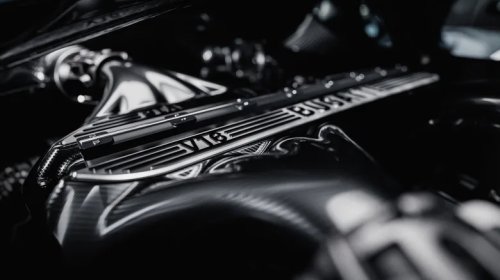
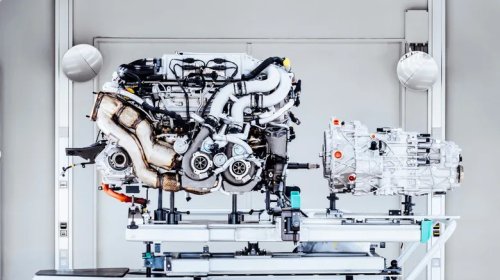
Tiny Aerodynamic Details Help Bugatti Tourbillon Chase 277 MPH PerformanceBugatti-Rimac CEO Mate Rimac has revealed a little-known engineering detail hidden beneath the Bugatti Tourbillon, showcasing the level of precision required to help the hypercar achieve its extraordinary top-speed capability.The Tourbillon is among the fastest production vehicles ever developed, with an electronically limited top speed of 380 km/h (236 mph). That figure rises to 445 km/h (277 mph) when the vehicle's specialized Speed Key is activated, placing it in an elite category of ultra-high-performance automobiles where even the smallest design decisions can have measurable effects.In a recent social media video, Rimac provided a close-up look at the underside of the Tourbillon, drawing attention to a feature that many observers might overlook. The vehicle's carbon-fiber undertray incorporates a series of integrated ducts designed to channel airflow toward critical engine components. While such aerodynamic solutions are expected in a modern hypercar, the finer details attracted the most attention.AdvertisementAdvertisementBuilt into the undertray are miniature aerodynamic channels surrounding the bolt housings themselves. Rather than treating the fasteners as simple hardware components, engineers developed specialized casings intended to manage airflow and reduce aerodynamic disruption underneath the vehicle.The design reflects the challenges associated with developing a car capable of approaching 277 mph. At such speeds, even minor sources of drag can affect performance. Small irregularities in airflow that may be insignificant at lower speeds become increasingly important as velocity rises, influencing efficiency and top-end acceleration.Mechanical engineer Simone Bianconi noted that while airflow-management features are common on performance vehicles, custom-designed aerodynamic solutions for bolt housings are far less typical. According to his assessment, the shape of the Tourbillon's bolt recesses likely serves multiple purposes, including reducing pressure losses and controlling airflow beneath the car.Traditional exposed screw heads can create aerodynamic disturbances because of their shape. Even recessed fasteners can introduce pressure differences if the surrounding cavity is not carefully designed. Bianconi suggested that Bugatti engineers likely analyzed the geometry of these components in detail to minimize unwanted effects and optimize airflow behavior.AdvertisementAdvertisementThe attention given to such a small component illustrates the engineering philosophy behind the Tourbillon. While the vehicle's acceleration and performance figures naturally capture headlines, the hypercar's development also depended on countless subtle refinements that are largely invisible to the public.For Bugatti-Rimac, achieving extreme speed is not simply a matter of adding power. The Tourbillon demonstrates how meticulous aerodynamic development, down to the design of individual bolt housings, can contribute to the overall performance of a vehicle operating at the highest levels of automotive engineering.As Rimac's demonstration highlighted, reaching 277 mph requires more than a powerful drivetrain. It demands careful consideration of every surface, every airflow path and, in the Tourbillon's case, even the hardware holding the car together.SourceImages Via: Bugatti-RimacJoin our Newsletter, follow our Instagram page, and follow us on Facebook.




















 +19 others