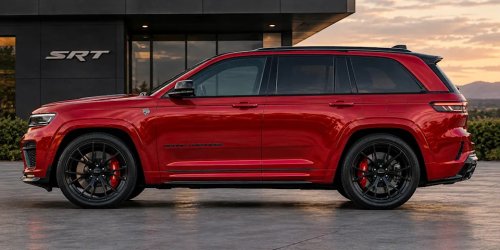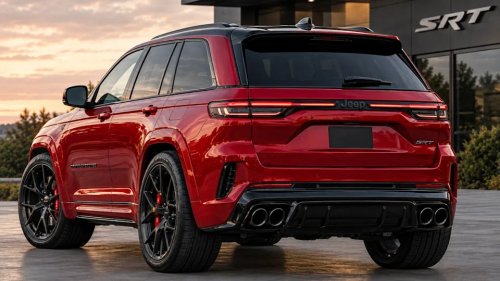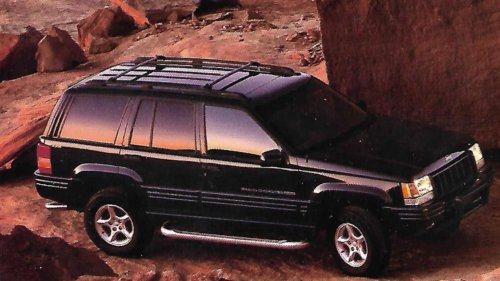
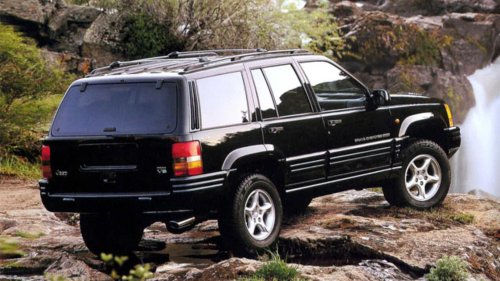
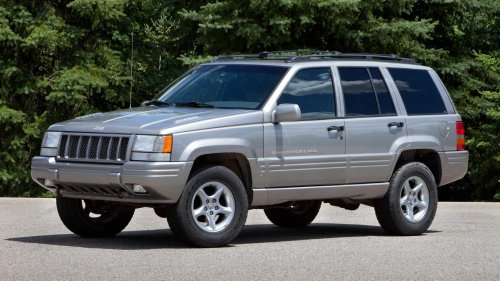
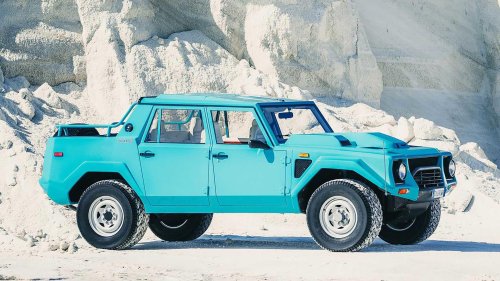
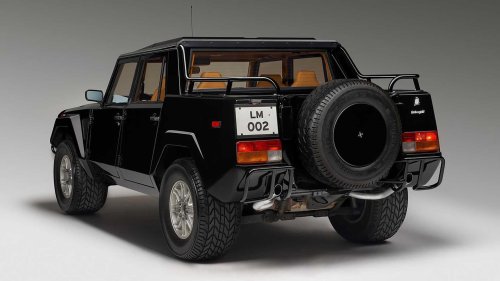
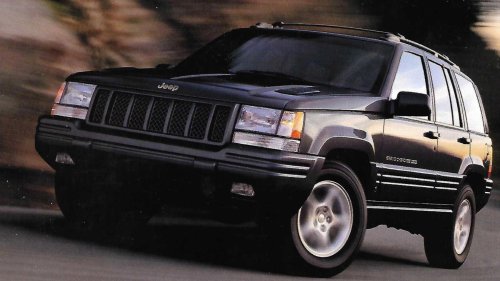
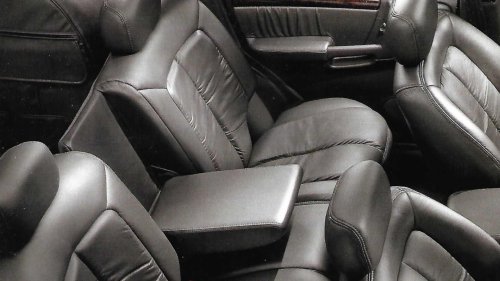

















For a long time, SUVs were thought to be as far removed from the realm of performance as a vehicle could get. A long way away in both mechanics and design from the sleek sports cars one might see on the road, SUVs were mostly utilitarian machines, built to deal with rough terrain without complaining.However, as the new millennium approached, the two worlds of off-roading and performance began to collide. The line between SUVs and cars started to get increasingly blurred with the arrival of the crossover, and SUV buyers started to show an interest in performance.Jeep, one of the automakers most famously associated with the SUV world, did not hesitate to embrace this new direction, releasing a limited-edition model that earned the title of fastest off-roader in the world. We’re talking about the Grand Cherokee 5.9 Limited, a unique variant of the first-gen Grand Cherokee with an extra helping of power under the hood. Heightened Performance, Ruggedness, And Luxury JeepAlthough the Grand Cherokee had been introduced to the world in 1992, the fastest and most powerful version of the model in the lineup did not arrive until six years later, in 1998. The Grand Cherokee 5.9 Limited, as suggested by its name, was powered by a 5.9-liter Magnum V8, which produced 245 horsepower. This engine was exclusively paired with a four-speed automatic transmission, although a few dedicated enthusiasts have since attempted manual swaps with limited success.The engine, however, was far from the only interesting thing about the 5.9 Limited; it also came with a host of other upgrades that set it apart from the rest of the Grand Cherokee lineup. These included mechanical upgrades, such as 3.73 differential gearing with rear Trac-Lock system (a specific type of limited-slip differential found in some Jeep and Ford models).There were also cosmetic changes: the 5.9 Limited came with a unique set of wheels sporting a “five-star” design, as well as having a slightly different grille and chrome exhaust tips. The design changes continued inside the cabin, where the model was fitted with wood-grain accents and leather upholstery.JeepThe 5.9 Limited’s engine allowed it to gain a unique position in the SUV world, holding onto the title of quickest SUV in the world for 10 years. It could hit 60 mph in just 6.8 seconds, roughly the same as the Ford Mustang GT of the same era. However, the Jeep was a far heavier vehicle, making the accomplishment all the more impressive. The 5.9 Limited would not be displaced from its throne until the 2008 Grand Cherokee SRT beat its record, getting from 0 to 60 in 4.8 seconds. The 5.9 Limited's Family: The First-Generation Grand Cherokee Jeep The 5.9 Limited was just one of a handful of special editions produced as part of the Grand Cherokee’s very first generation, the ZJ. The Grand Cherokee made its debut in 1992, going on sale for the 1993 model year; as suggested by its name, it was intended to be a larger, mid-sized offshoot of the Cherokee. The Cherokee itself did not disappear, but continued to exist under the name of Jeep Liberty in North America, until the Cherokee nameplate was brought back in 2014.The 5.9-liter V8 found in the Limited was just one of three engines that made up the ZJ Grand Cherokee’s lineup over the years. The other two were a 4.0-liter inline-six and a smaller (5.2-liter) Magnum V8. There was also a 2.5-liter diesel inline-four, however this engine was confined to export markets and not available in the US. Transmission options included a four-speed automatic and a five-speed manual.Stellantis In 1996, the model received a mid-cycle facelift, which brought about a host of cosmetic and tech upgrades. The front and rear bumpers were reworked, new options were added to the alloy wheel selection, and the interior was given a radical refresh with several new comfort features available. These included a more modern stereo, equipped with both a CD and cassette player as well as radio.Aside from the 5.9 Limited, the first-gen Grand Cherokee also had a few other special-edition models in its lineup. The third generation of the Wagoneer, sold under the Grand Wagoneer nameplate, was actually a special version of the Grand Cherokee, produced for a single year in 1993. Other special editions included the Orvis, with a unique Moss Green color scheme among other cosmetic enhancements, and the TSi with single-color body paneling and a body-colored grille. How SUVs Broke Into The World Of Performance Lamborghini The Grand Cherokee 5.9 Limited was just one piece of the puzzle: around the time it was released, SUVs were beginning to move not just into the territory of daily drivers, but also into the realm of performance.The earliest seeds for the performance SUV movement, however, had been planted two decades earlier, in the late 1970s. The automaker responsible was Lamborghini, who sought to create a vehicle that blended the characteristics of the SUV with those of the performance car. Its first attempts didn’t quite live up to the task: first the Cheetah in 1977, and later the LM001 in 1981.Lamborghini, however, gained valuable knowledge and engineering insight from those failed attempts: in the first half of the 80s, it set out to build a new vehicle, with the V12 engine that had powered the LM001 moved to the front for better weight distribution and handling.Lamborghini The result was the LM002, which made its debut in 1986. Sharing the Countach’s engine and adding a generous helping of off-road-ready ruggedness, the LM002 set the blueprint for other high-performance SUVs to come. The idea of the performance-oriented SUV picked up momentum; just over a decade later, Jeep unveiled its Grand Cherokee 5.9 Limited.Other automakers jumped on the bandwagon. A year after the 5.9 Limited’s debut, Dodge joined the game with the Durango Shelby SP360, which sported a supercharged V8 that produced 360 hp. A year after that, Mercedes-Benz introduced the ML55 AMG, powered by a 5.4-liter V8 that produced 342 hp and could get to 60 mph in under seven seconds.The turn of the millennium saw the performance SUV truly explode onto the scene; as most major automakers included SUVs in their lineup, performance variants of these models became an increasingly common sight on American roads and beyond. Sports car manufacturers – such as Aston Martin and Ferrari – also joined the movement. Today, the idea of a performance-oriented SUV is far from unusual, but rather a sizable part of the automotive world. Buying A 5.9 Limited Today Jeep The 5.9 Limited is a fairly rare variant of the first-generation Grand Cherokee. Nearly 30 years after the ZJ Grand Cherokee went out of production, it’s tricky enough to find a good example of the model in general, let alone one from this particular version. Only 14,286 examples of the 5.9 Limited were built over the course of a single year, so finding one that’s still in good condition and available for sale on the used market might take a little effort.Over the past five years, a few examples of the 5.9 Limited have been sold at auction, all fetching their asking price. Their prices varied between around $15,000 and $25,000. If you do manage to spot something significantly below this range, beware: it’s likely that some repairs will be in order, so unless you’re happy to take on a project car, it’s probably best to steer clear.Jeep If, however, your efforts pay off, and you do manage to get your hands on a 5.9 Limited, you will be in possession of a rare and significant part of Jeep history and the wider history of SUVs. In a world where high-performance SUVs have become ubiquitous, a Grand Cherokee 5.9 Limited gives you an opportunity to sit behind the wheel of one of the vehicles that gave rise to this category.Sources: Jeep