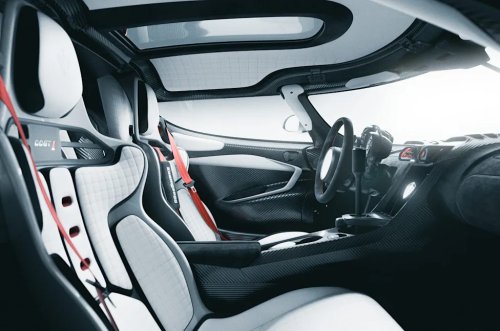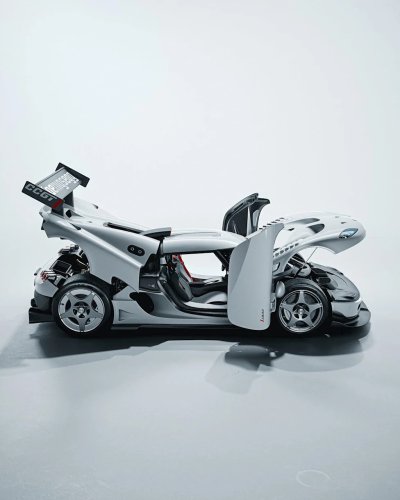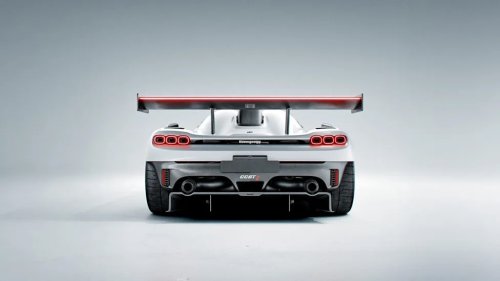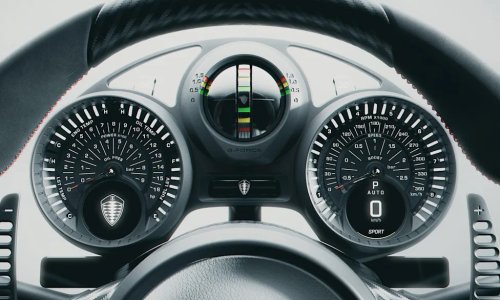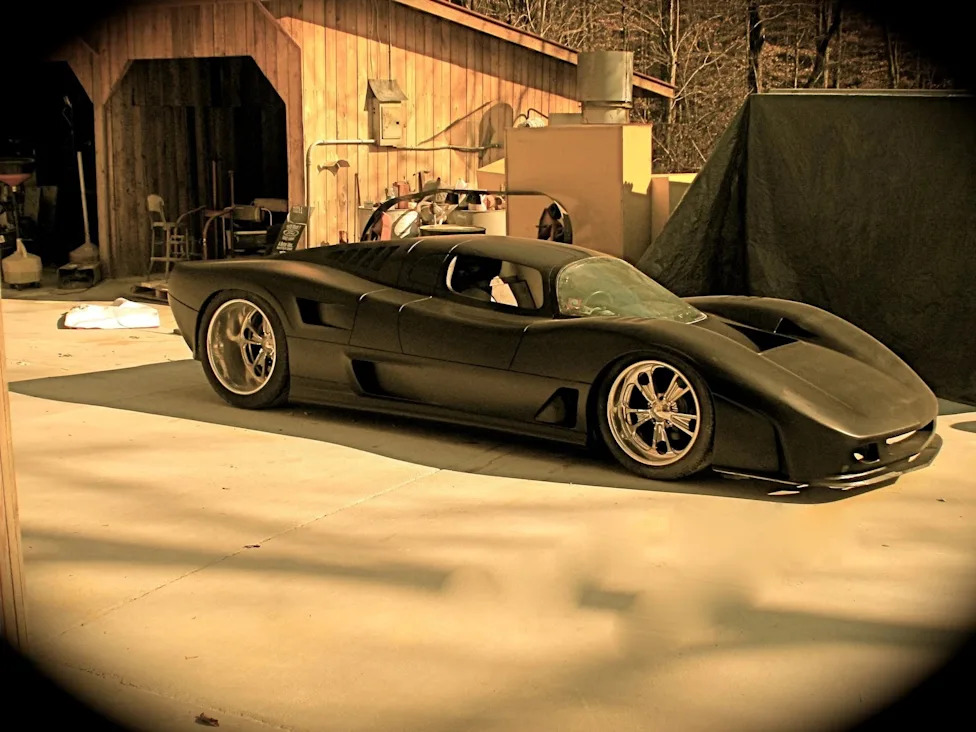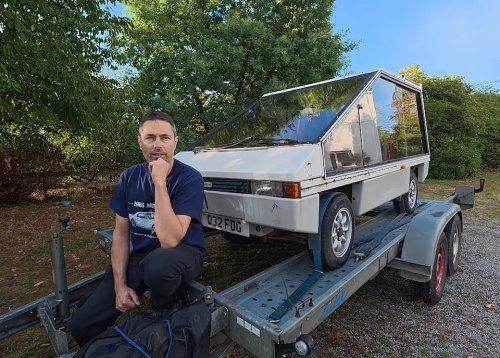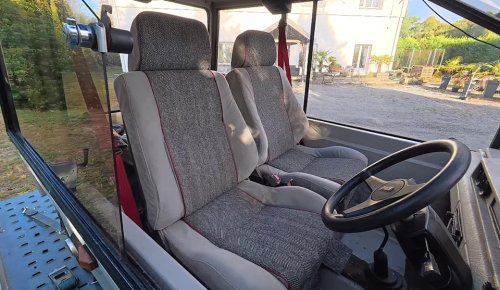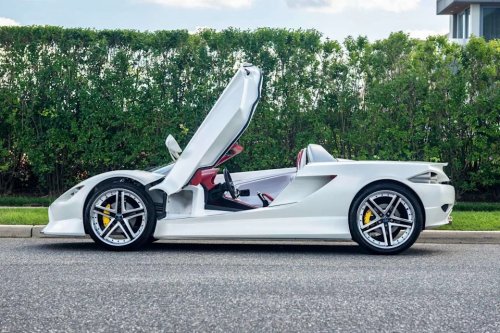
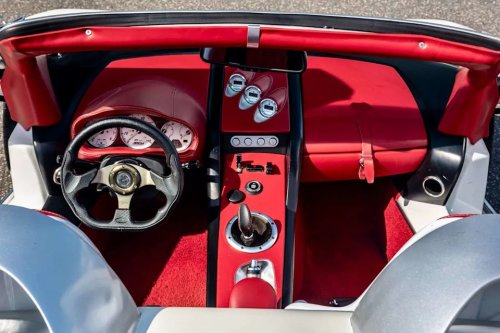
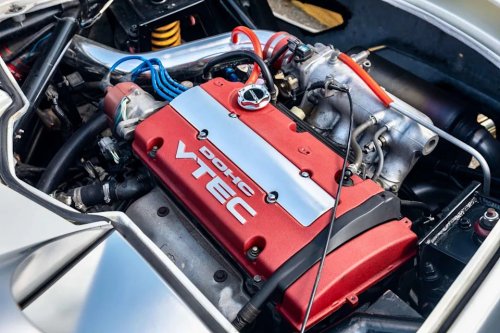
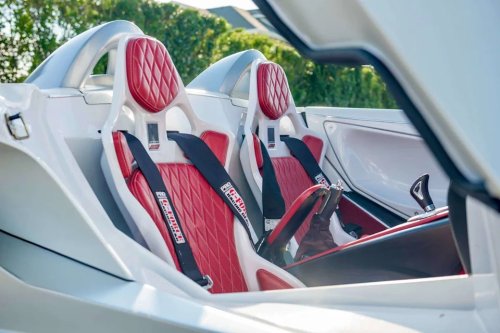
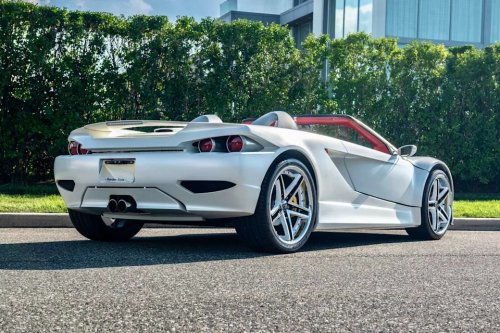


















This K-1 Attack Isn’t Cheap Because It’s a Kit. It’s Cheap Because Nobody Wrote Down Who Built It.Modern Car CollectorJohn LloydTue, September 15, 2026 at 6:37 PM UTCAdd us on GoogleThe most consequential number attached to this car is not the bid. It is NY74475 — a vehicle identification number issued by a state motor vehicle department rather than stamped by a manufacturer. Nearly everything the collector market will ever conclude about this 2016 K-1 Attack, now finishing on Bring a Trailer proceeds from that one detail, and no amount of carbon trim or scissor-door theater changes it.Start with the title, because the title is where the confusion begins. New Jersey describes the car as a 2016 K1 ATT. That is not a model year in any sense a collector would recognize. The K-1 Attack was designed at the turn of the millennium; 2016 is simply the year a set of forms was completed. The seller states the kit was assembled roughly a decade ago by the previous owner, and the car was purchased recently by the current seller. So the document says 2016, the design says 2000, the build says circa 2016, and the odometer says nothing at all, because there isn't one. If you have ever wondered why experienced buyers read paperwork before they read spec sheets, this is the case study. Our primer on how to read a collector car's documentation exists precisely for cars like this one.Fiberglass bodywork over a tubular steel spaceframe, with scissor doors. The design is original — the build record is not documented. Photos via Bring a Trailer.This Is Not a Replica, and That Distinction MattersIt would be easy, and wrong, to file the Attack alongside the fiberglass Ferrari and Lamborghini pastiches that clutter the low end of the market. The Attack is an original design. According to K-1's own company history, the car came out of a Slovak firm, K-1 Styling & Tuning, headed by Dick Kvetňanský, with Juraj Mitro credited as designer. The prototype appeared in 2000, kits went on sale internationally in 2001, kit sales were suspended in 2006 when the company moved to building complete cars, and the design was later relaunched by B-racing, which acquired exclusive rights in 2014 and introduced a new generation of kits in 2016.AdvertisementAdvertisementThat is a real lineage with real authorship, and it puts the Attack in a different category from a re-bodied Pontiac Fiero. A collector buying an Attack is buying someone's design, not someone else's trademark. The market gives credit for that — just not very much of it, and the reason is instructive.Rarity Is Real Here. It Simply Isn't Doing Any Work.Here is the uncomfortable part: nobody can tell you how many Attacks exist. K-1's own history quantifies exactly one run — a 35-car limited edition of the complete Roadster 3.0 V6, production of which ended in 2009. Total kit output across two decades and two ownership structures has never been publicly documented in any form a serious buyer could rely on. There is no factory register, no chassis ledger, no heritage department to write a letter.Contrast that with any blue-chip collector car, where scarcity is not merely asserted but recorded. A Ferrari 288 GTO is valuable because 272 were built and the factory can tell you which one you are standing next to. Scarcity that cannot be verified is not scarcity in the market's eyes — it is merely obscurity, and obscurity trades at a discount. We made a version of this argument earlier this year about a kit-built prototype on eBay, and the Attack lands on the same side of the line.The Japanese-market Prelude 2.2-liter VTEC four, mounted amidships. An unglamorous choice that is also the car's most sensible one. Photo via Bring a Trailer.The Engine Is the Smartest Thing About This CarA Japanese-market Honda Prelude supplied the 2.2-liter VTEC inline-four and five-speed manual, mounted behind the seats and driving the rear wheels. On paper this is the least exotic decision in the entire build. In practice it is the one that protects the car's value most effectively.AdvertisementAdvertisementComponent cars are almost never undone by their bodywork. They are undone by orphaned drivetrains — a one-off supercharged V8 with no parts supply, a wiring harness only its builder understood, an ECU nobody can flash. An H22-family Honda four is the opposite of that problem: globally supported, thoroughly understood, and serviceable by any competent independent shop. Honda has even begun formalizing support for its own heritage hardware through a U.S. heritage parts program, which quietly strengthens the case for Honda-powered specials of every description. The same logic underwrites the market for early S2000s and much of what we track on our JDM investment list.Serviceability is not a glamorous virtue. It is, however, the virtue that determines whether a car like this is still running in fifteen years — and cars that still run are the only ones that hold a bid.White-dial BEM Power Performance instrumentation, a 140-mph speedometer, an 8,000-rpm tachometer — and no odometer at all. Photo via Bring a Trailer.No Odometer Is Not a Flaw. It Is a Structural Condition.The dash carries BEM Power Performance gauges, a 140-mph speedometer, an 8,000-rpm tachometer, fuel and coolant readouts, and a trio of Innovate Motorsports auxiliary gauges. What it does not carry is an odometer. Mileage is unknown and will remain unknown.On a production collector car, missing mileage is a discount. On a component car, it is closer to a permanent feature of the asset class, and the market has learned to price around it by pivoting to condition, workmanship, and documentation instead. Which is fine — except that this car's documentation consists of a title, a state-issued VIN plate, and a seller's recollection that the previous owner assembled it about ten years ago. There are no build photographs cited, no invoices, no named shop, no alignment or corner-weight sheets, no record of who welded what.Fixed-back buckets in red leather with G-Force Pro Series harnesses, plus Vintage Air air conditioning — finish work that reads far better than the paperwork behind it. Photo via Bring a Trailer.On a Component Car, the Builder Is the ProvenanceThis is the part collectors new to the category tend to miss. With a factory car, provenance is a chain of owners. With a component car, provenance is a person — the builder — and the chain of owners is nearly irrelevant by comparison.AdvertisementAdvertisementThe market proves this constantly. A Cobra replica assembled by a documented shop with an invoice file and a build log sells for multiples of an identical car with no history, and the difference is not the hardware. When student-built Factory Five Cobras crossed the block at Mecum Harrisburg, the program behind them was the story, because the program was the paperwork. Superformance and Ultima owners trade on serial records and known assemblers. The same dynamic governs the restomod market, where the shop's name on the build is frequently worth more than the donor car underneath it.By that standard this Attack is anonymous — and it shows in the presentation. The finish work looks genuinely accomplished: red leather across the dash and console, G-Force Pro Series harnesses, Vintage Air air conditioning, adjustable coilovers at both ends, 19-inch Rohana wheels on 235/35 front and 295/30 rear Hankooks, a carbon front lip, a clamshell hood, twin exhaust tips through the rear valance, and a removable hardtop included in the sale. Someone cared. Nobody wrote down who.Ventilated engine cover and twin exhaust exiting the rear valance. The silhouette promises six figures; the market prices the documentation. Photo via Bring a Trailer.What This Means for BuyersAt the money this car was bringing as the auction ran down — bidding reached $18,000 with hours remaining — it is not competing with collector cars at all. It is competing with the used performance market: a tidy 987 Boxster S, a high-mile 996, a clean S2000. Against that field, the Attack offers a mid-engine layout, scissor doors, and a silhouette that will stop traffic at any cruise night in the country, which is a genuine value proposition for the right owner. It is also why cars like this rarely appear on lists such as our best collector cars under $50,000 guide, despite looking the part more convincingly than anything on it.Four things deserve scrutiny before anyone bids on a car of this description. First, VIN portability: a state-assigned number recognized in New Jersey is not automatically frictionless in every other state, and re-titling a component car across a border can be tedious and occasionally expensive. Second, insurance and appraisal, which require an agreed-value policy and an appraiser who has handled component cars before — standard valuation tools, including our own valuation resources, have no comparables to offer here. Third, a mechanical inspection focused on the things a body cannot hide: spaceframe welds and corrosion, brake plumbing, fuel system routing, wiring discipline, and suspension geometry. Fourth, resale friction. The buyer pool for an anonymous component car is small, regional, and patient. Expect to hold it.The VerdictThis is not an investment-grade collector car, and it is not trying to be. It is an original design, competently executed, powered by one of the most serviceable engines ever put behind a driver's shoulders, sold with almost no history. That combination produces an excellent weekend car and a poor store of value, and there is nothing dishonest about that — provided the buyer understands which of the two they are purchasing.AdvertisementAdvertisementThe broader lesson is worth more than the car. Collectors tend to assume that scarcity creates value, and that documentation merely confirms it. The component-car market inverts the relationship and exposes the truth: documentation is what converts scarcity into value. Without it, rarity is just a small number nobody can check.The K-1 Attack has never lacked for rarity. What it has always lacked is a scribe.The 2016 K-1 Attack is offered on Bring a Trailer as Lot #263,180, with the car located in Oakhurst, New Jersey and offered by a private party.Join our Newsletter, follow our Instagram page, and follow us on Facebook.