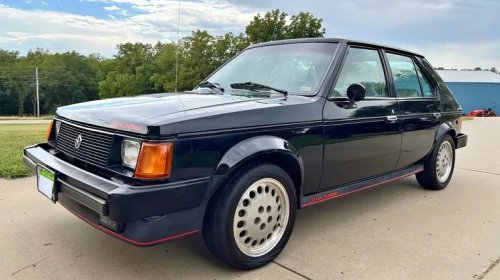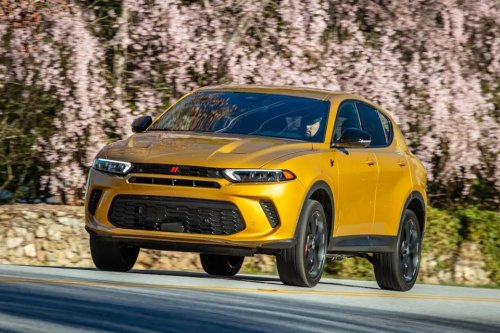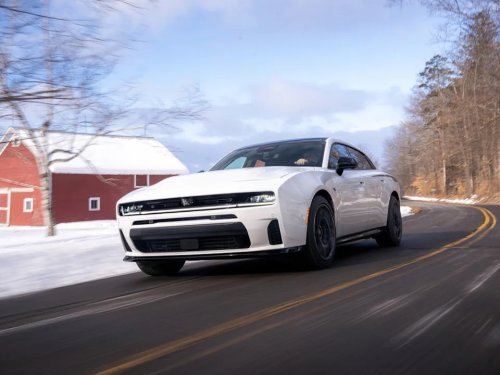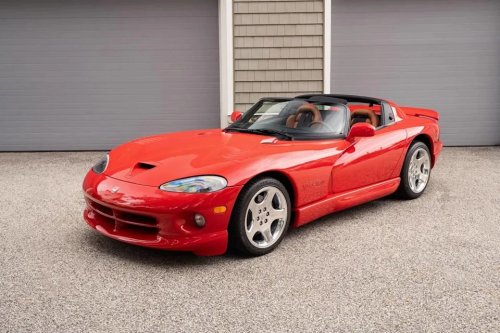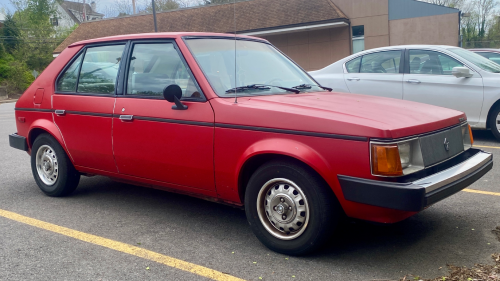
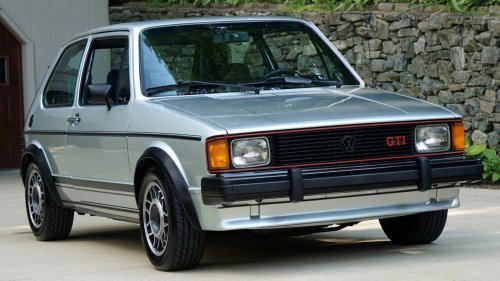
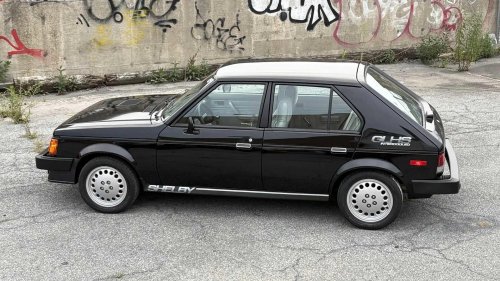
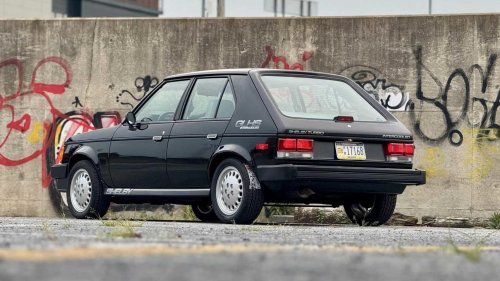
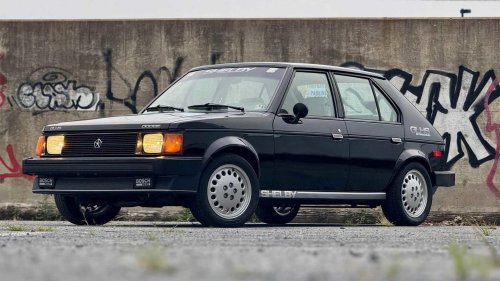
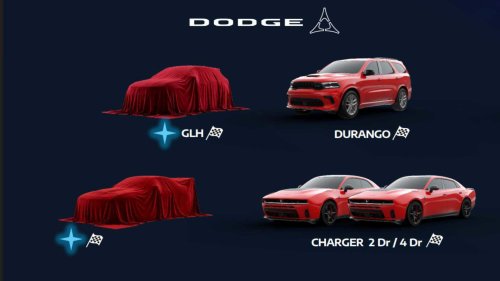



















Dodge has a reputation for producing some of the finest muscle cars the American auto industry has ever seen. It only takes a look through the back catalog of the Challenger and Charger to prove it knows how to pack big performance into big cars, and of course, the Viper proved it could apply that expertise to a dedicated sports car.What about a hot hatch, though? The brand has never been widely associated with high-performance compacts, even though it has a few on its resume. Most memorable in recent history is the Dodge Neon SRT-4, but that had nothing on the car that is almost certainly the weirdest to come from the manufacturer. It Was Based On The Car That Helped Save Chrysler Wikicommons The 1970s were an incredibly difficult time for US automakers. The oil and gas crisis had sent shock waves through the industry, with consumer trends shifting towards more compact and fuel-efficient models in response to soaring prices. That gave Japanese and European car manufacturers a leg-up on domestic competition in the States, with Honda, Nissan, Toyota, and Volkswagen in particular taking the market by storm. US manufacturers were slow to respond to a rapid shift in consumer demands, leading to what would become the malaise era.One of the defining cars of the era was the Volkswagen Rabbit, introduced in 1974, trading on its fuel economy without compromising on practicality and affordability. The front-driven hatchback was something no US automaker had a direct rival to, and it put them all on the back foot. It took Chrysler another four years to respond, by which stage, it was in dire circumstances. Bankruptcy loomed, and it needed its compact vehicles to be a success. The Dodge Omni would launch for the 1978 model year, directly taking on the VW Rabbit. As the first front-driven compact built by a US manufacturer, the Dodge Omni proved a relative success and holds a place in history as one of the cars that helped Chrysler survive the rough malaise era. There Was A New Target In Sight Fast forward to 1983, and a new genre of performance car has just landed on US shores, the hot hatch. Based on the European market Golf GTI introduced much earlier, the Volkswagen Rabbit GTI proved to American enthusiasts that you could put impressive performance into a compact package.Powered by a 1.8-liter naturally-aspirated four-cylinder engine, the hatch had 110 horsepower and 100lb-ft of torque available. Although not huge figures on paper, those were delivered in a car weighing around 1,800 lbs, resulting in one of the most enthralling little packages.It wasn’t just about the engine, either, with a stiffer suspension setup and quicker steering rack contributing to a more driver-focused car. Though one that could still easily carry four passengers. That gave Chrysler a new target to aim for now that it had a little more financial breathing space following brushes with bankruptcy. The Shelby-Tuned Omni Went Like Hell BaTIt decided to use the successful Dodge Omni as the basis for a domestic rival to the Volkswagen Golf GTI, and turned to none other than Carroll Shelby for help with the project. The result came in 1984 as the Dodge Omni GLH. With that acronym standing for Goes Like Hell, you get an idea of the kind of performance this version of the Omni had to offer relative to the car it was based on. Under the hood was a 2.2-liter naturally-aspirated four-cylinder engine lifted from the Dodge Shelby Charger, producing 110 hp and 129 lb-ft of torque. That would allow the Omni GLH to out-accelerate the Rabbit GTI.Like the Rabbit, the GLH also had stiffer springs and a quicker steering rack to make it feel more responsive, and the car only weighed around 2,200 lbs. Heavier than the VW, sure, but the result was a real hoot to drive. Each example was also marked out with a racier body kit, and subtle but rad decals that screamed 1980s. This was truly the first all-American hot hatch, but neither Dodge nor Shelby was finished there. The GLH-S Had More To Give BaTFor 1985, you could have the Dodge Omni GLH-T, with that T hinting at its newfound turbocharger. That lifted power to a mighty 146hp, notably cutting the 0-60mph time of the hot hatch. Yet, it wasn't enough in the eyes of Carroll Shelby. He opted to buy around 500 examples of the GLH-T from Chrysler, and then shipped them all to his California facility for a very special, incredibly weird version.That was the GLH-S, standing for Goes Like Hell, S’More. With a new intercooler, increased boost pressure to 12 psi (3 psi more than the T), and a larger throttle body, power stood at 175 hp and 175 lb-ft of torque. That cut 0-60 mph to just 6.5 seconds, giving it almost sports car-rivaling performance. In an Omni. An even more aggressive, track-focused suspension setup was fitted to help take advantage of that extra power. You’d be able to spot an S passing you in your Porsche 911 Carrera by its new decals and its cast aluminum Shelby Centurion wheels. Now, it does make us wonder why the badge-engineered Plymouth Horizon never had the Shelby treatment, but that's a question for a different day. How Is The Omni Worth Today? BaTDespite holding a unique place in American automotive history, the Dodge Omni GLH and its variants have remained something of a niche interest, and values haven’t hit totally stratospheric prices, provided you’re not looking for a museum-grade example. According to Hagerty, good condition examples of the GLH can be had for around $6,600, with concours-ready versions at $20,000. You can get project cars for much cheaper, too.For the GLH-T, those rise to around $9,400 and $28,700, respectively, while the GLH-S naturally commands the highest. You can get a good one for around $17,500, although the very best come right up to around $48,500. Compare that to a Volkswagen Rabbit GTI, though, and it seems a relative bargain. Hagerty values the VW at $15,700 for a good one and $57,700 for a concours-grade car, though it's worth noting those are on a significant downtrend year-on-year at the time of writing. The GLH Is Making A Comeback Stellantis Although the Dodge Omni GLH never had a direct replacement, a comeback of the nameplate is finally on the cards. During an Investor Day 2026 presentation in May 2026, Stellantis confirmed that a new Dodge GLH model is scheduled, and with an SRT variant to follow, too. Worth noting that this was confirmed alongside a separate new performance model, suggesting it's about to become a very exciting time to be a Dodge fan.Technical details, a final model name or even a release window have not yet been confirmed by Stellantis, leaving us all to guess what form it could eventually take. Early speculation suggests the model will utilize a 2.0-liter turbocharged four-cylinder engine, with over 300 hp widely touted for the hotter SRT version.