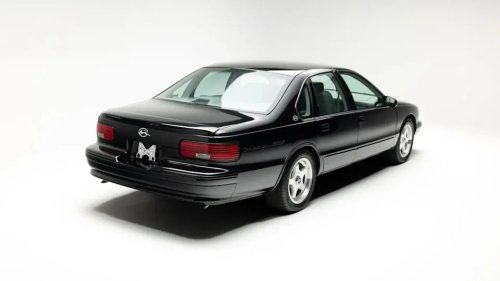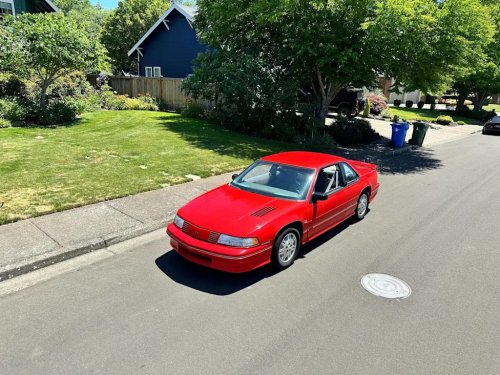
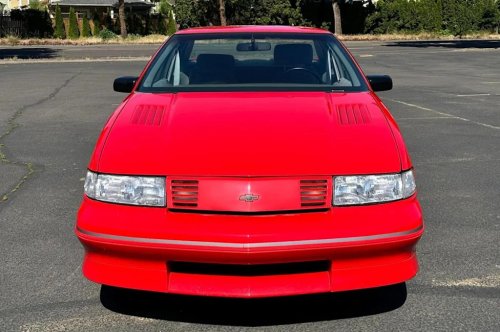
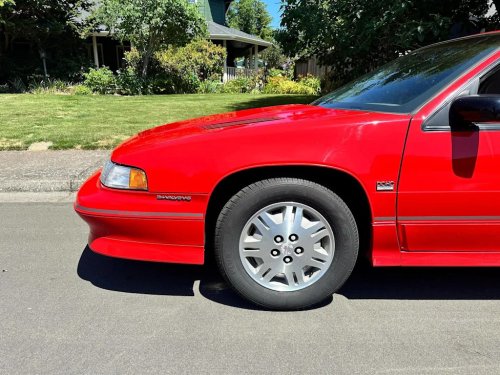
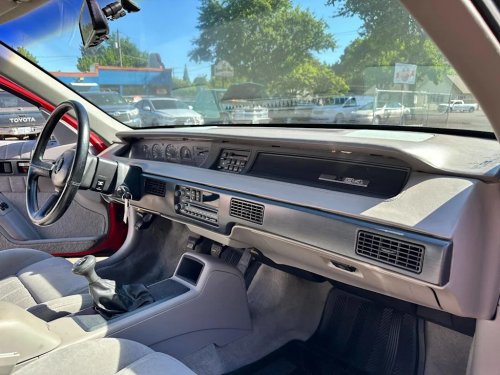
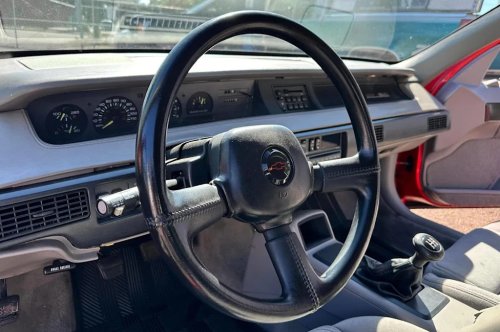
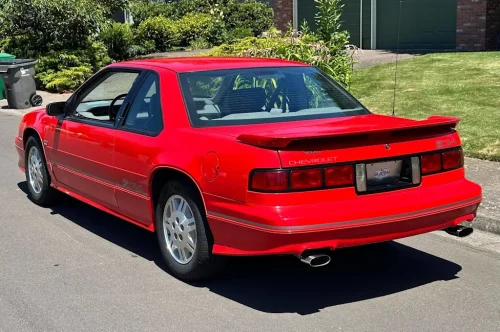
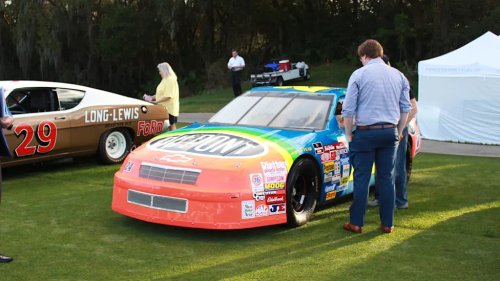
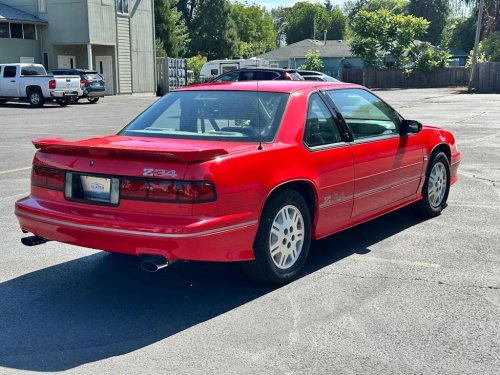



















Autoblog and Yahoo may earn commission from links in this article.Transitionary models typically see great success before they fall into obscurity or sell in small numbers and gain a cult following after production ends. The Chevrolet Lumina falls into the former category, selling upwards of two million units over its two-generation run. Like many General Motors models of the 1990s and 2000s, the Lumina was similar in design to its cousins, sharing some commonality with the Pontiac Grand Prix and Buick Regal, among others. While the Lumina saw two generations and millions of models leave dealer lots, there aren't that many left on the road.Cars & BidsTransitioning to front-wheel driveThe Chevrolet Lumina raced into the spotlight for the 1990 model year. It shared the GM10 platform with other General Motors models. The first-generation Lumina replaced the aging Chevrolet Celebrity as the marque's midsize sedan. It also came in two-door coupe form, effectively taking the place of the Monte Carlo as well. Chevrolet also introduced a performance-oriented Z34 coupe in 1991, a nod to the Monte Carlo SS.Cars & BidsWhile the Lumina was a transitional model as Chevrolet made the shift from rear- to front-wheel drive, the model's styling was a direct response to the Ford Taurus. Ford's sedan featured a slick design that redefined expectations for midsize models. As a result, the Lumina boasted a similar aerodynamic style.AdvertisementAdvertisementDuring its five-year production run, the first-generation Lumina was available with a handful of engine options. The base Lumina came powered by a 2.5-liter four-cylinder engine that produced 110 horsepower and 135 lb-ft of torque. The more potent 3.1-liter V6 engine produced 135 horsepower and 180 lb-ft of torque. Both engines came mated to a three-speed automatic transmission.Cars & BidsWhile the standard Lumina came exclusively with an automatic transmission, Chevrolet offered a five-speed manual transmission in the sportier Lumina Z34 coupe for the 1991 through 1994 model years. It came paired with a 3.4-liter V6 engine that offered 210 horsepower and 215 lb-ft of torque. Unfortunately, the Lumina Z34 exited stage left as Chevrolet redesigned the midsize model for the 1995 model year. In total, the American manufacturer produced just 38,753 examples of the Z34 over its four-year run.Throughout the first generation, Chevrolet sold just over 900,000 Lumina sedans and 154,000 coupes, bringing the total to roughly 1.05 million. While the Lumina was the automaker's response to the Taurus, it fell short in several arenas. Not only did Ford's sedan have the advantage of several years on the market uncontested by Chevrolet, but the Lumina arrived with an outdated interior as well. Notably, it also lacked airbags, a feature that was standard by 1993 in not only the Taurus, but other midsize contenders as well, including the Toyota Camry.Cars & BidsThinking about selling your car? Get an instant cash offer online now. Click here to get started.Into the second generationThe 1995 model year marked the launch of the second-generation Lumina. This time around, it featured more rounded styling and an improved 3.1-liter V6 engine. Chevrolet revived the Monte Carlo in coupe form that same year. As a result, the Lumina was exclusively available in a sedan bodystyle. It was initially available in Base and LS trim levels, priced from $15,460 and $17,495 respectively. The LTZ was added at the top of the range in 1997, bringing with it a $19,445 price tag.Cars & BidsIn 1998, just three years into the second generation, Chevrolet shifted gears. The Lumina became more of a fleet vehicle that targeted government bodies and rental fleets. As a result, the sedan fell off with retail buyers, with production ending in 2000, although Chevrolet would exclusively produce the Lumina for rental fleets into the 2001 model year. AdvertisementAdvertisementThroughout the model's seven-year run, Chevrolet sold just over 1.15 million examples of the sedan. The Lumina was replaced by the Chevrolet Impala, which would go on to become the brand's primary front-wheel drive sedan from 2001 until it was discontinued in 2020.Cars & BidsShopping for a new car? Click here to get a great deal on your next vehicle. Powered by Carvana, no haggle pricing, 100% online.Chevy Lumina, a racing championIn 1989, Chevrolet retired the Monte Carlo as the brand's NASCAR body and replaced it with the Lumina. At the time, stock cars had to resemble production versions of their respective bodies. By this time, however, those similarities were largely limited to the nose, roof, and rear fascia. While some doubted the Lumina would perform as well as the Monte Carlo, the stock car quickly proved them wrong.Zac PalmerThe Lumina served as the brand's NASCAR body from 1989 to 1994. In that time, it saw several drivers that became household names take the wheel, including Jeff Gordon, who saw breakout success in 1994, and Dale Earnhardt. It was in the Lumina that Earnhardt won the 1990, 1991, 1993, and 1994 NASCAR Cup Series championships. He also was responsible for 29 of the Lumina's 61 Cup victories. Chevy swapped back to the Monte Carlo in 1995, ending the Lumina's run as the brand's NASCAR body.Final thoughtsWhile Chevrolet sold more than two million examples of the Lumina, there aren't that many left. A reduction in the model's population can largely be attributed to time. At the youngest, the Lumina is at least 25 years old, with older models pushing 36. As of the time of writing, there are just 17 Lumina models for sale nationwide. While the standard trims can be had for cheap, expect to pay a premium for the rarer Z34 model.Cars & BidsToday, the Lumina is a largely forgotten nameplate outside of veteran NASCAR fans. While the first-generation Z34 model has developed a cult following, which includes yours truly, the rest of the Lumina trims are fairly standard family cars that simply failed to stand out. If not for the Lumina's NASCAR prominence, it may not have seen as many sales as it did, especially in the first generation when Earnhardt was dominating on the track. After all, it was largely through success in racing that the Lumina became a household name.AdvertisementAdvertisementDisclaimer: Autoblog aims to feature only the best products and services. If you buy something via one of our links, we may earn a commission.This story was originally published by Autoblog on Jul 8, 2026, where it first appeared in the Features section. Add Autoblog as a Preferred Source by clicking here.