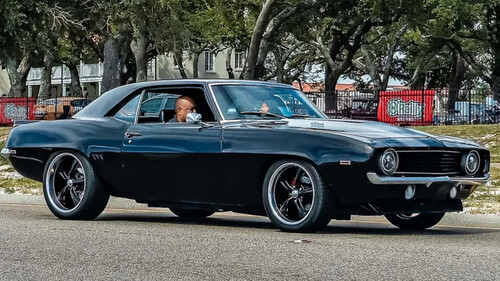
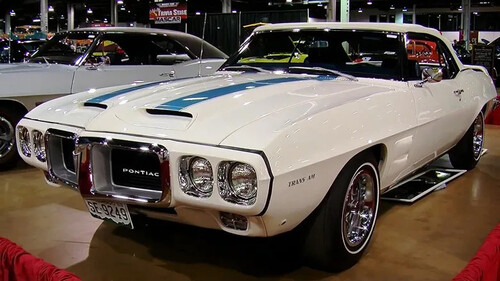
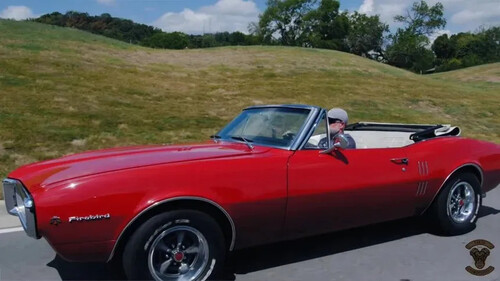
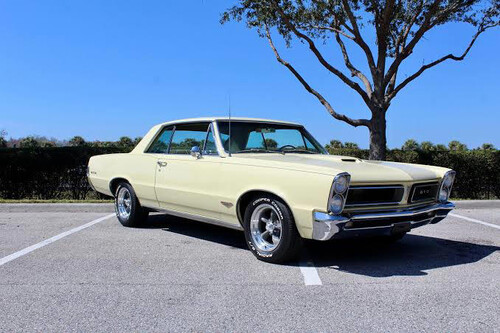
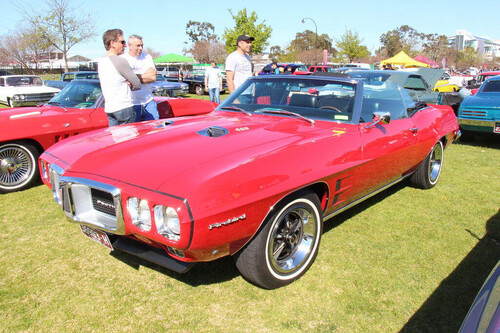
This 1969 Firebird carries a different kind of muscle car energyThe 1969 Pontiac Firebird arrived at the end of the first generation with the swagger of a traditional muscle car and the attitude of something more personal and expressive. Its wide stance, intricate options list, and split identity between Firebird and Trans Am meant drivers could tune the car as much for character as for quarter-mile times. That mix of style, engineering and rarity is what gives a well-kept 1969 Firebird a different kind of muscle car energy today. The last, bold year of the first generation By 1969, Pontiac had already proven it could build a compact performance car to rival the Chevrolet Camaro. The final first-generation Firebird arrived with broader fenders and a wider appearance that gave the car a more muscular look and helped distinguish it from its corporate cousin. Pontiac designers paired those flared arches with sleek, curved bodylines that made the car look lower and more planted than earlier versions, which is why enthusiasts still single out the 1969 shape as the most aggressive of the early Firebirds. The first generation Firebird could be ordered with a range of engines, from a straight-six to serious V8s, but the visual message was consistent. The long hood and short deck telegraphed power, while the new front fascia and revised rear treatment sharpened what had been a softer, more rounded pony car. That evolution from tidy coupe to broad-shouldered bruiser is central to the Firebird mythos, and it set the stage for Pontiac to push harder into high-performance territory with the Trans Am package. Pontiac’s answer to the Camaro Pontiac had a clear mission for the Firebird. The division wanted a compact muscle car positioned as Pontiac’s answer to the Chevrolet Camaro, but with a more upscale and technical feel. The 1969 Pontiac Firebird 400 embodied that strategy. Equipped with a 400 cubic inch V8, it delivered the kind of torque that muscle fans expected while keeping the car relatively compact and agile. That combination of size and power is a major reason the 1969 Pontiac Firebird 400 has become a sought-after choice for collectors and muscle fans who want something slightly more refined than a bare-bones drag-strip special. The broader Firebird range still reflected Pontiac’s engineering curiosity. Earlier Firebirds had experimented with the Sprint OHC 6, and by 1969 the catalog showed how far the car had come from its straight-six roots. Buyers could climb from base engines into serious performance territory, with the 400 sitting near the top of the regular Firebird line. The car offered a bridge between the everyday pony car and the more extreme hardware that was about to wear the Trans Am name. Why 1969 Firebird had the highest punch Among the early Firebirds, 1969 stands out for sheer output. One of the earliest Firebirds was also the most powerful, and period comparisons emphasize that the 1969 Firebird had the highest horsepower rating in the nameplate’s opening run. This peak came from the combination of big-inch V8s and performance-focused induction options that Pontiac reserved for serious buyers. While some later models leaned into luxury or emissions compromises, the 1969 cars still reflected a moment when the horsepower race was in full swing and engineers were not yet dialing back. That reputation for high output helped shape how enthusiasts view the car today. For collectors, the phrase Firebird Had the Highest Horsepower has become shorthand for the 1969 model year. One of the reasons these Firebirds command attention at auctions and shows is that they represent the top of the early performance curve, before insurance costs and regulations began to reshape the muscle car formula. In a field crowded with big-block Chevrolets and Mopars, the 1969 Firebird offers a distinct blend of power and Pontiac-specific engineering. From Firebird to Trans Am The shift from Firebird to Trans Am in 1969 added yet another layer to the car’s personality. Introduced as a high-performance variant of the Pontiac Firebird, the 1969 Trans Am was the first model to carry the Trans Am name. Pontiac used the package to showcase its most focused suspension tuning, aerodynamic tweaks and engine options, turning the Firebird into a homologation-style street machine. That first-year Trans Am status, combined with very low production, has made the 1969 cars some of the rarest muscle machines of their era. The Trans Am identity has sometimes overshadowed the base Firebird, which is why it helps to understand how the two were related. The Firebird provided the platform, styling and interior, while the Trans Am layered on performance upgrades and visual cues like stripes and spoilers. Enthusiasts often debate Firebird vs. Trans Am, but the 1969 lineup shows they were two sides of the same idea. The Firebird carried the broader appeal, and the Trans Am distilled that into something more single-minded. Ram Air III, Ram Air IV and the serious hardware Under the hood, Pontiac used the Firebird and Trans Am to showcase its most advanced V8 technology. There was an additional Ram Air IV option for the 400 cu in (6.6 L) V8 engines during 1969, complementing the Ram Air III. These graduated packages allowed buyers to step up from a strong street motor to a more competition-oriented setup that favored airflow and high rpm breathing. The Ram Air IV specification in particular has become legendary among Pontiac fans for its aggressive camshaft and improved cylinder heads. In Trans Am trim, that hardware came wrapped in a more track-ready chassis. A heavy-duty suspension with a one-inch front stabilizer bar, Polyglas F70x14 tires on seven-inch rims and special high-effort variable ratio steering helped the car feel more precise than many of its contemporaries. All Trans Ams were Polar White with blue striping, which gave the Ram Air hardware a visual identity that matched its intent. Collectors now rank these early Ram Air IV cars among the rarest muscle cars ever, and they often cite the balance of engine and chassis tuning as a key reason. On-screen legends and living history The cultural life of the 1969 Firebird and Trans Am has been extended by enthusiasts who treat these cars as rolling archives. A Pontiac legend that starts with this car on Muscle Car of the Week has introduced a new audience to the 1969 Pontiac Firebird Trans Am Ram Air IV 4-speed, with video walkarounds that showcase the details of the original build. The combination of a Ram Air IV V8 and a manual gearbox captures the raw, mechanical side of the era, and the coverage highlights how much engineering Pontiac funneled into a relatively compact package. Other storytellers have taken a more conversational approach. Tom and Dana, proprietors of the channel called If This Car Could Talk, have used the 1969 Trans Am as a springboard to talk about ownership, restoration and the memories tied to these cars. Their format blends technical information with personal anecdotes, which helps explain why the Firebird and Trans Am continue to resonate beyond spec sheets. Viewers see the cars not just as artifacts but as characters with their own histories. Why this Firebird feels different from other muscle icons Compared with some of its rivals, the 1969 Pontiac Firebird carries a slightly different kind of muscle car energy. Where many period cars were blunt instruments aimed squarely at straight-line speed, the Firebird combined performance, style and open-air driving excitement in a way that felt more tailored. The 1969 Pontiac Firebird stands out as a classic American muscle car that could be ordered as a coupe or convertible, with options that ranged from comfort-focused to track-ready. That flexibility meant owners could build a car that matched their personality as much as their need for speed. The RA IV 400c. i. V8s were factory rated at 345 horsepower, but the real power was probably much higher. In that era, insurance companies kept a close eye on published numbers, so manufacturers often sandbagged their ratings. Enthusiasts who have driven or dyno-tested well sorted Ram Air IV cars report performance that feels stronger than the official figures suggest. This under-the-radar strength contributes to the Firebird’s appeal, especially for drivers who like the idea of a car that looks almost understated yet hides serious capability. Design details that still catch eyes Visually, the 1969 Firebird benefits from a design that has aged with unusual grace. The final year of the first-generation Firebird featured a bold, aggressive redesign, with a front end that looked almost European in its detailing and a rear that emphasized width. Broader fenders and a wider appearance gave the car a more muscular stance, while the sleek, curved bodylines kept it from looking bulky. Enthusiasts often point to the way the hood scoops and character lines flow into the fenders as an example of Pontiac’s attention to visual rhythm. Inside, the Firebird mixed familiar General Motors switchgear with unique Pontiac touches. Bucket seats, a center console and optional rally gauges helped the cabin feel more driver focused than some competitors. In performance trims, the view over the hood scoops and the sound of the big V8 created a sense of occasion that owners still chase today. That blend of visual drama and ergonomic clarity is part of why the 1969 Firebird still feels modern enough to drive regularly, rather than just display. From street car to showpiece The 1969 Pontiac Firebird 400 has become a favorite canvas for restorers and customizers who want to highlight the car’s core strengths. Some builds stay close to factory specifications, focusing on correct paint codes, original interior patterns and period-correct hardware. Others lean into modern upgrades while keeping the classic silhouette intact. Builders often talk about how the Firebird’s proportions and detailing make it easy to enhance without losing its identity. Events like Muscle Car And Corvette Nationals and regional Pontiac gatherings have given these cars a public stage. When a car from The Brothers Collection appears at a major show, the crowds around a well restored Firebird or Trans Am suggest that interest is not limited to brand loyalists. Younger enthusiasts, who may have discovered the car through online videos or social media, often cite the 1969 Firebird’s mix of aggression and elegance as what draws them in. Firebird vs. Trans Am, then and now Discussions of Firebird vs. Trans Am often focus on badges and spoilers, but the 1969 lineup shows a more subtle story. The Firebird provided the base structure, and the Trans Am represented a high watermark for factory performance. For some buyers in 1969, the Firebird offered enough power and style without the added cost or visual drama of the Trans Am package. Others saw the Trans Am as the purest expression of Pontiac’s racing ambitions. That split continues in the collector market. Some enthusiasts hunt for the rarest Trans Am variants, including convertibles where all 1969 Trans Am convertibles are special but this is number 69 in one well documented case. Others prefer a clean Firebird 400 or a convertible that emphasizes cruising and open-air driving. The shared platform allows both groups to appreciate the same underlying engineering, even as they chase different expressions of the car. More from Fast Lane Only Unboxing the WWII Jeep in a Crate 15 rare Chevys collectors are quietly buying 10 underrated V8s still worth hunting down Police notice this before you even roll window down