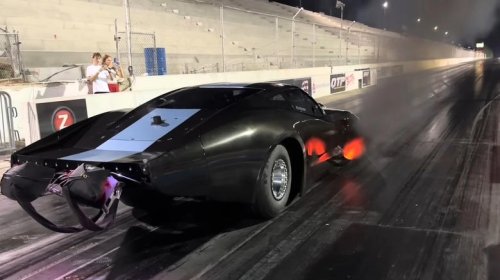
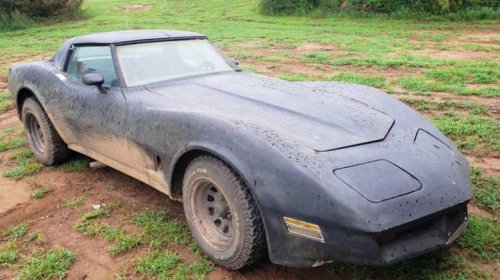
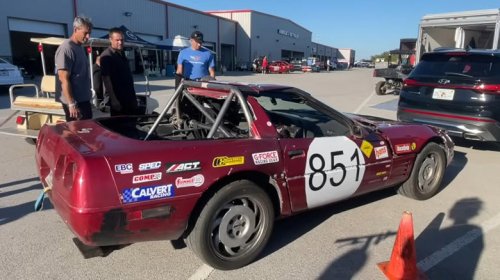
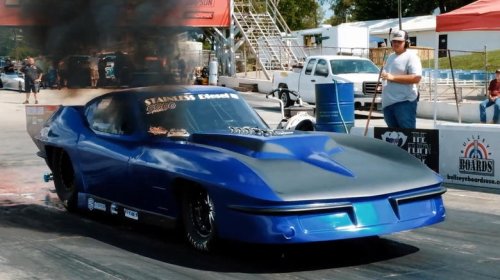

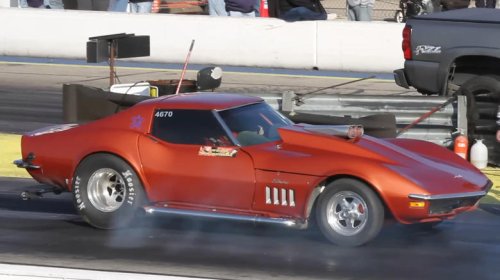



















A 3,000 horsepower diesel Corvette drag racerTo the absolute purist, the idea of dropping an oil burner into the engine bay of America's sports car is sacrilege. But if you think fun can only be extracted from high-octane gasoline at 6,500 rpm, you are missing out on the glorious smoke-filled madness of diesel engines. They come with a unique set of pros and cons, though. On one hand, diesels offer monstrous low-end torque that gas engines can only dream of — unless you drop in a massive blower. There's also the industrial-grade reliability, the ability to turn heads at car meets, and highly comical fuel efficiency when you drive it sedately. Not to mention, diesel engines also last longer than gas engines.The cons are also heavy –- literally. Dropping an iron block made for a truck into a car engineered for a lightweight small block completely wrecks the factory weight distribution, turning a precise corner carver into a nose-heavy straight-line freight train. If you're considering a diesel swap for your Corvette, you also often have to contend with a narrow powerband, potential custom fabrication to clear steering shafts and firewalls, and of course, trading a crisp V8 soundtrack for a tractor clatter at idle. It's a game of radical tradeoffs, but there are a few who have mastered it. Scott Ray's off-road diesel C3An offroad diesel C3 CorvetteIf you want to understand how deep this rabbit hole goes, look no further than a brilliant and delightfully chaotic Corvette build crafted by a 16-year-old from Kansas named Scott Ray. Back in 2007, Scott was sick of his Corvette C3's gasoline V8 dying on his way to school. Rather than dropping in another standard small block, inspired by his father's opinion about the rugged efficiency of the 6.2-liter Duramax engine found in Chevrolet Suburbans, he decided to go the diesel route. After doing some research, Scott realized the 6.2-liter block would bolt directly to the existing Corvette engine mounts. He found a beat-up donor Suburban for just $700, pulled the motor and its 4-speed transmission, replaced the Duramax's main bearings, seals, and gaskets, and stuffed the whole assembly into his 1980 C3.To handle the gravel roads around his farm, he also threw on a set of rugged all-terrain tires. The result was an unkillable, high-clearance C3 that delivered decent economy. It is a legendary example of agricultural necessity meeting sports car styling, showing that a teenager with a barn and a donor truck can build a vehicle more reliable than Detroit ever intended. Mike Spank Spangler's 350 Olds diesel 'Corvegge.'A 24 Hours of Lemons Corvette race carIf you think diesel Corvettes are only good for straight-line farm roads, you haven't seen the "Corvegge." The brainchild of legendary Lemons road racer Mike "Spank" Spangler, this budget endurance machine completely upends the idea that track cars need high RPMs and high octane fuel. Spangler, known in the 24 Hours of Lemons racing circles for building completely inappropriate vehicles like a Harley-Davidson swapped Prius, decided to construct a diesel Corvette race car. He grabbed an ugly, unloved 1984 fourth-generation C4 Corvette and shoved a universally maligned, dirt-cheap Oldsmobile 350-cubic-inch diesel V8 engine into its engine bay. These engines were notorious for blowing head bolts and collapsing injection systems back in the late 1970s and early '80s. Paired with a robust 3-speed automatic transmission, the powertrain was built to tackle grueling multi-hour track stints.The mechanical payoff was unreal. Reengineered to run almost entirely on waste vegetable oil –- french-fry grease strained right from restaurant fryers — Spangler and his crew routinely raced the Corvegge for up to 5 hours straight between fuel stops in California. Minimizing pit stops is the key to victory in endurance races, and while high-tuned gas cars are forced to put in and refuel every two hours, Spangler's comically underpowered 77-horsepower clatter box outlasted everyone on the track on french-fry oil. Johnny Gilbert's 3,500 hp Cummins Pro Mod CorvetteJohnny Gilbert's 3,500 horsepower diesel Corvette drag carLet's move away from backyard builds and into the absolute pinnacle of competitive drag racing — Johnny Gilbert's wheelhouse. When Johnny — founder of Stainless Diesel –decided to graduate to the ultra-competitive Pro Mod category, he picked up an iconic 1963 split-window Corvette rolling chassis and prepared to drop an engineering atomic bomb under the hood – a dry sump, solid billet aluminium 6.7-liter Cummins inline-6 developed in collaboration with Wagler Competition Products.The engine features a custom billet aluminum cylinder head, top fuel head studs, high-pressure Iveco-based fuel injectors, and a massive 98mm Stainless Diesel turbocharger pushing insane amounts of boost. The setup can generate a staggering 3,500 horsepower. To survive that kind of violence, it uses a low-profile aluminum oil pan for the dry sump system. Johnny won the car's debut event at the Outlaw Diesel Revenge race in Indianapolis using only around 50% of the engine's actual power. He later went on to secure a historic Pro Mod record, blasting down Rockingham Dragway in 4.14 seconds and clocking 177.58 mph at the ⅛-mile finish line. Ryan Milliken's 3,000-horsepower billet Cummins C7Ryan Milliken's 3,000 horsepower diesel Corvette drag carIf Johnny Gilbert opened the door for high-tier diesel Corvette drag racing, Ryan Milliken of Hardway Performance kicked it entirely off its hinges. Milliken took a sleek seventh-generation C7 Corvette built for Radial vs. The World ⅛-mile drag racing and stuffed it with a billet-aluminum Cummins inline-6 — creating easily one of the wildest Cummins swaps of all time.The engine is assembled by Freedom Racing Engines using a Fleece Performance Engineering block and a Wagler Competition Products cylinder head and rods, with a Harts turbocharger shoving an ungodly amount of boost down its throat, along with a heavy dose of nitrous oxide from Nitrous Outlet. Managing that raw mechanical aggression on small radial tires requires absolute wizardry. Controlled via an S&S setup, this diesel-burning C7 drag car cuts sub-one-second 60-foot times and covers the ⅛-mile in 4.18 seconds. Ryan Lusk's 12-valve Cummins 6BT C3 StingrayRyan Lusk's 1968 copper diesel Corvette on the drag stripRyan Lusk — a professional diesel mechanic and owner of Low Budget Diesel Performance in Mitchellville, Iowa — initially laughed off his father suggestion to install a Cummins engine into a Corvette. But when someone added that it couldn't be done, he simply couldn't resist the challenge. His 1968 C3 coupe had been fitted with a 396 cubic inch big block V8 when the opportunity of a diesel swap presented itself.It started with a real headache –- squeezing a massive, towering 5.9-liter turbodiesel Cummins 12-valve inline-6 into the Corvette's engine bay. Ryan cut out the floorboards entirely, fabricating custom aluminum and steel panels to fit the massive block properly. He added a heavy-duty 47RH overdrive transmission fitted with a Goerend triple-billet torque converter to handle the massive low-end twisting force. Running an S300 turbocharger and custom marine injectors, Ryan transformed the unloved, smashed-up C3 into a dedicated drag car that won NHRDA's Pro Stock Diesel championships for two consecutive years and rocketed down the track with a blistering 11.88-second pass at 129 mph, ultimately hitting a personal best of 11.32 seconds at 133 mph. Want more like this? Join the Jalopnik newsletter to get the latest auto news sent straight to your inbox, and add us as a preferred search source on Google.