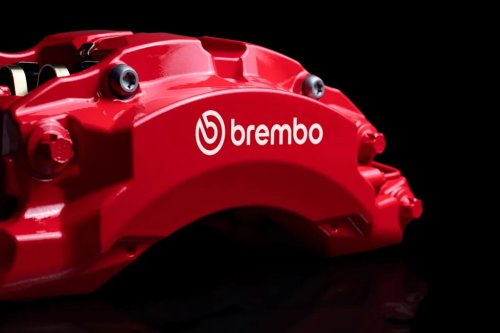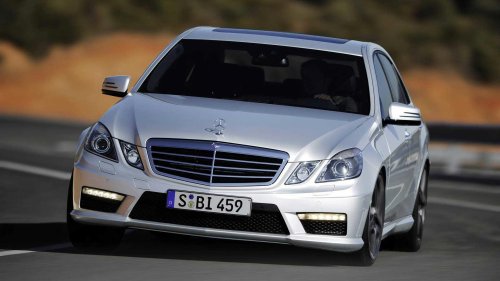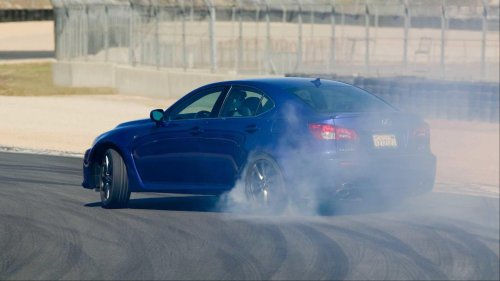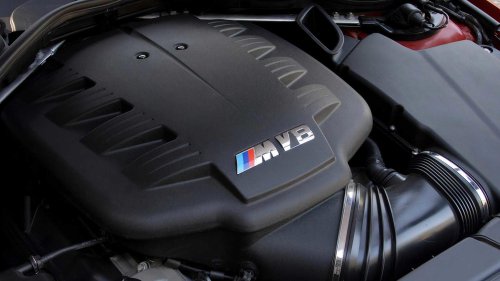
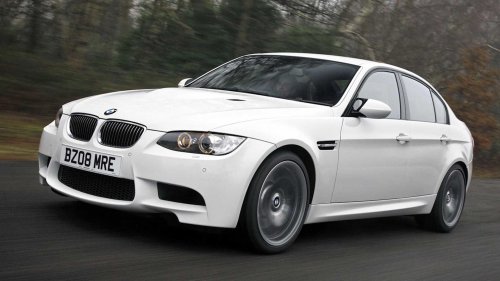
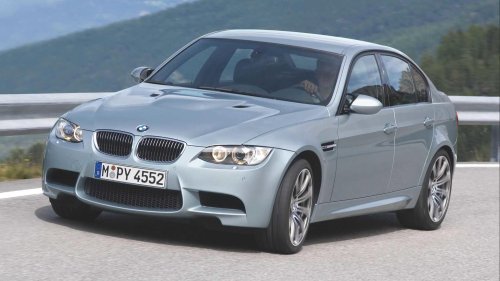
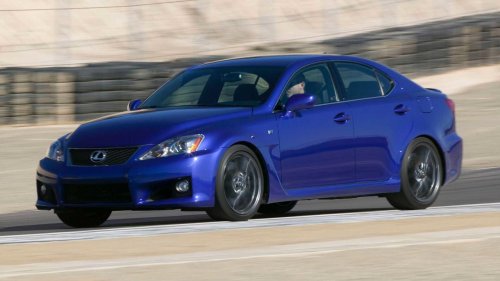
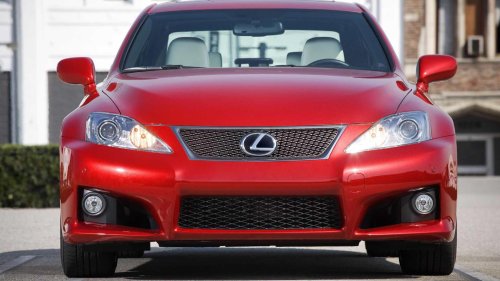
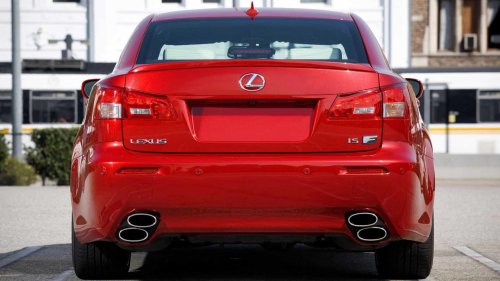
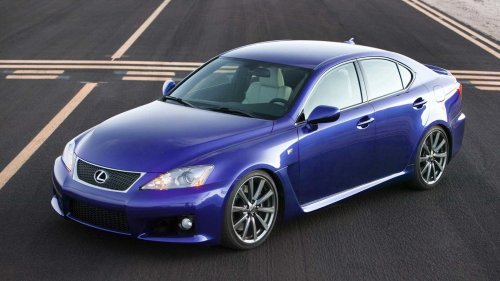
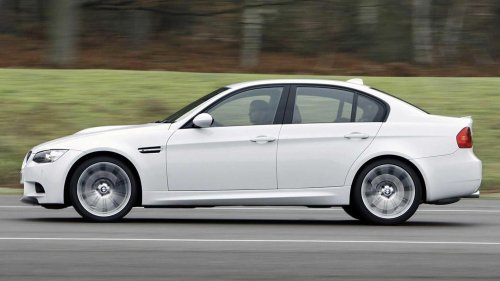
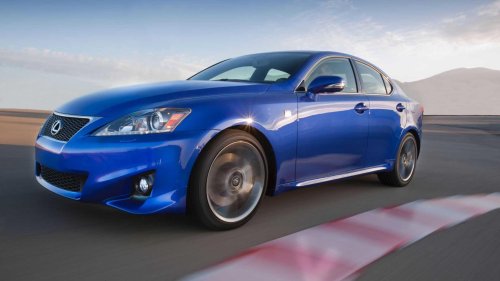
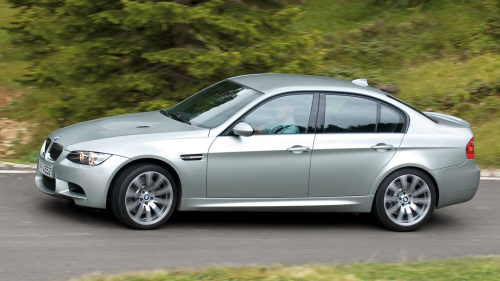
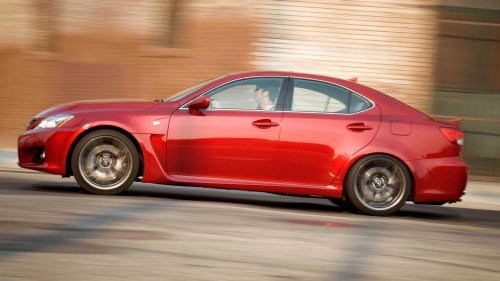



















Turbocharging used to be the purview of either single-purpose enthusiast cars (think: Ferrari F40, Porsche 911 Turbo, Mitsubishi 3000GT VR-4) or offbeat autos that avoided the mainstream (Subaru Forester XT, just about every semi-modern Saab). Almost everything else was naturally aspirated. Today, just about every car can benefit from the increased power density, reduced emissions, and improved fuel economy that comes along with modern turbo technology.2008 BMW M3 E9X 4.0L NA S65 V8 EngineWith less torque and higher consumption, nat-asp motors are empirically worse than their turbocharged counterparts, but that doesn't make car enthusiasts love them any less. Little could be more exciting than the pure exhaust roar of a set of pipes that don't exhale through a snail-shell, especially when those exhausts live on a seductively tuned V8 engine. That could be why two of the last naturally aspirated sports sedans ever – the E90 BMW M3 and Lexus IS F – are increasing in value. The V8s in these four-doors combine exotic noises and a thrilling redline for a driving experience that's almost impossible to recreate today. The M3 With Formula 1 Technology BMW's entry-level sport sedan has never been particularly devoted to one specific layout, with a variety of engines and body styles available over its lifecycle. Still, when the 2008 M3 hit the road with a 4.0-liter V8 under the hood, people took notice. No M3 had ever been offered with such an engine, and its displacement towered over its 2.3-liter four-cylinder and 3.0–3.2-liter six-cylinder ancestors. At launch – for the 2008 model year in sedan, coupe, and convertible body styles – the mill made an impressive 414 horsepower and 295 pound-feet of torque, improvements over the E46 M3's 333 hp and 262 lb-ft.2009 BMW M3 Saloon front, three-quarterHowever, numbers can't quantify the V8's distinctive feel relative to just about any engine ever offered in a 3 Series. Peak power comes at 8,300 rpm (an instant before the 8,400-rpm redline), and since torque was fully accounted for by 3,900 revs, if you wanted to hustle, you had to keep the engine spinning as fast as possible. Luckily, the M3 rewarded its enthusiastic driver with a ghostly howl from its combined intake and exhaust noises. That's partly because the V8 – referred to by Bimmer nerds as its internal S65 codename – was derived from the 5.0-liter S85 V10 found in the contemporary M5, which in turn borrowed some technology from the automaker's Formula 1 efforts.Sharing its bigger brother's 92-millimeter bore and 75.2-millimeter stroke, the undersquare V8 could practically rev to the moon. The uneven firing order produced balanced exhaust pulses, a backpressure-reducing method derived from F1 that also resulted in the S65 and S85's mountain lion shriek. Despite the cross-plane crankshaft, this V8 sang more like an F430 than a Ford Mustang.Sending power to the rear wheels through either a standard six-speed manual or a seven-speed dual-clutch transmission, the 2007 BMW M3 hits 60 miles per hour in a manufacturer-claimed 4.7 seconds, although a contemporary Car and Driver road test of a three-pedal sedan saw the benchmark pass in just 4.1 ticks and a long-term test of a DCT coupe clocked in at 4.3. The E90 M3 got even saucier with the overseas-only 2011 GTS, which received a stroker version of the S65 that displaced 4.4 liters and produced 444 hp and 325 lb-ft – BMW claimed a 60-mph sprint of 4.4 seconds, so real-world times likely approach the high threes.In addition to the added power relative to the E46 M3, the E90 benefitted from lots of engineering expertise that made the chassis and body stiffer than before, plus a standard carbon fiber roof on coupe and sedan models to lower the center of gravity a bit. Adaptive dampers were an option for the first time on an M3, while the E60 M5's tunable throttle and shift mapping made the jump to its kid brother as well. A Competition pack was also on the options list, and cars so equipped have a lower ride height and a more performance-oriented stability control mode with limited intervention. Despite the hardcore performance, however, the M3 is a lovely daily driver, offering lots of space and a surprisingly well-damped ride.2007-2010 BMW M3 Sedan E90 Silver Front Angled View Driving Taking Lexus To A New Level The US arrival of the first-generation Lexus IS for the 2001 model year showed auto enthusiasts that the Japanese luxury brand could build a compelling sports sedan – a smooth inline-six that was closely related to the one from the legendary Toyota Supra certainly helped. But it wasn't till the second-gen IS that the automaker fielded its first genuine super-sedan, something that could go toe to toe with BMW M and Mercedes-Benz AMG products thanks to a new F sub-brand that borrowed an initial from the Toyota-owned Fuji Speedway near the eponymous mountain in Japan.2010 Lexus IS F - front 3/4 angleThe division's first product was the 2008 Lexus IS F, which arrived just in time to do battle with the all-new M3 sedan and C 63 AMG, plus the soon-to-be-discontinued Audi RS 4. The arrival of the Japanese sports sedan meant that, for the first time, the compact luxury sedan class had four naturally aspirated V8s to choose from. The hunky IS was arguably the most cosmetically modified of them all, since fitting the massive 5.0-liter V8 required fitting a taller hood with a pronounced forward slope – luckily, the schnoz looked muscular instead of protruding.Although based on Toyota's UR engine platform, the V8 had a number of enhancements that wouldn't be shared with plebes like the Toyota Tundra or Lexus GS 460. For starters, the masters at Yamaha designed the high-flow cylinder heads, which were equipped with intelligent variable valve timing on both the intake and the exhaust. Forged connecting rods, a balanced rotating assembly, and selective lightweighting of engine materials made sure the Japanese five-oh revved smooth up to its redline, which in the IS F was a surprisingly low 6,800 rpm. And since Yamaha turned to its musical instrument division to tune the sound of the IS F's exhaust, the trip to that fuel cutoff is very thrilling – the music company can make anything sound good, ranging from a 1990s Ford Taurus to a V10-powered Lexus LFALexusPower output isn't a concern in the sporty Lex, which produced 416 hp and 371 lb-ft upon its debut – up 2 and 76, respectively, over the M3's S65 engine. Thanks to an eight-speed torque-converter automatic with impossibly quick shifts, the V8-powered compact Lexus hits 60 miles per hour in 4.4 seconds per Car and Driver, not quite up to the task of destroying M3s in a straight line due to heavier overall weight, but still nothing to sneeze at.LexusKeeping everything under control is the work of a non-adaptive suspension that's lower and stiffer than the one found in the IS 350, with larger roll bars and trim-exclusive six-piston front calipers squeezing down on pizza-sized 14.2-inch brakes. Forged 19-inch wheels sit within wider front and rear fenders, with a distinctive vent just ahead of the front doors proclaiming the IS F's sporty pretensions. That said, for the first few years, the IS F suffered from a bit too much starch in its stockings, with a firm ride that was notably worse than the M3.Things got better, however, in 2011, when Lexus retuned its sporty little pocket rocket with softer front and firmer rear springs, plus revised alignment geometry and a limited-slip rear differential that replaced a computer-controlled active brake system. If you're shopping for an IS F and want the best in Q-ship performance, a later model is certainly worth the added expense on the pre-owned market.2007 Lexus IS F front, three-quarter What Are The Common Problems Of The E90 BMW M3? Unfortunately for BMW fans, the only V8-powered M3 isn't immune to the intensive maintenance generally required of all M cars. The main issue that armchair mechanics point to is rod bearing failure – a problem shared with the S85 V10 – which can completely grenade the entire S65 if not addressed preventively by about 80,000 miles. If you're shopping for an M3 with more than that, ensure there's a receipt or other documentation that the rod bearings have been addressed, and luckily, aftermarket replacements tend to be more robust than the BMW originals, extending the service interval to 100,000 miles or more.BMWOther issues with the M3 include failed plastic parts, which include the variable valve timing covers that can flake and comprimise oil flow, as well as excessive carbon buildup on the idle controller that leads to hard starts and a rough idle. Fuel injectors should also be replaced before they fail, as they can dump fuel into the cylinder and cause compression damage. Otherwise, maintenance needs are common to most high-performance cars. Closely monitoring engine oil life and ensuring the engine is warm before startup are key to avoiding long-term damage like failed piston rings and scored cylinder liners. What Are The Common Problems Of The Lexus IS F? It shouldn't surprise anyone to learn that the sportiest Lexus IS is also pretty reliable. An early recall replaced a problematic high-pressure fuel pump – a necessity for the port- and direct-injected engine – with an improved component, so anyone interested in a used model should ensure that fix has been carried out.LexusSpeaking of direct injection, carbon buildup is an issue, and it's important to use high-quality fuel and ensure the engine is fully warmed up regularly, as short trips can exacerbate the problem. Furthermore, a good, hard acceleration run up to freeway speeds can ensure any deposits get burned off, although we doubt many owners will complain about that maintenance task. Which V8-Powered Four-Door Super Sedan Is Right For You? Choosing between a BMW E90 M3 or a Lexus IS F comes down to priorities. The Lexus is rarer, with more overtly muscular looks that might appeal to some more than the lithe, balanced Bimmer. Interior quality between the two is very similar, with excellent soft-grain materials, plenty of aluminum, and lots of leather, although that said, your author finds the IS F's nicely stuffed, well-bolstered front seats to be as close to perfect as anything on the planet.BMWThe aural thrill of each can't be overstated, but the M3's lusty, Formula 1–esque V8 is probably marginally more fun to wind out to redline than the IS F. It also offers a manual transmission, which for Luddites like yours truly could be a dealbreaker for the autobox-equipped Lexus. The M3 sedan is also lighter and arguably handles better, while still offering a ride that's at least as smooth as even the revised 2011 model. Making Cents Of These Two V8s And then there's the budgetary decision. When searching for an unmodified, well-kept example with 120,000 miles or less, the BMW M3 is significantly cheaper on the secondhand market than the Lexus IS F. Average prices for the Bimmer hover around $30,000, while the Lexus is around 10 grand more expensive for a car in similar condition – especially if you opt for the later model with the improved suspension setup. The IS F's impressive reliability for a car of its caliber is one reason for the higher price. Buy a cheaper M3 and replace the rod bearings once, and you're already close to the price of an IS F in similar condition.LexusWhichever you pick, keep it maintained and hang onto it. Since 2019, prices for both sedans have risen by about 10 percent. As more and more sedans – internal combustion and otherwise – get discontinued, expect both the Lexus IS F and BMW M3 to continue to appreciate in value. Although buying a car for investment purposes is almost always a bad idea, if you're going to have some fun behind the wheel anyway, it'd be nice to have something to show for it when it comes time to trade in.Sources: Car and Driver