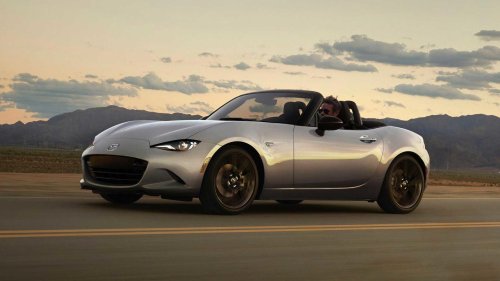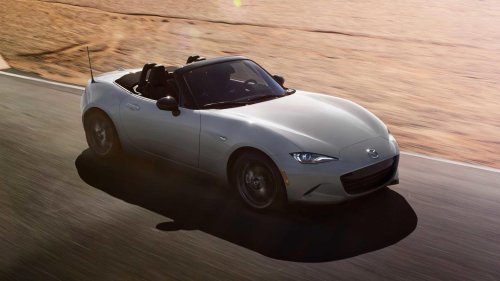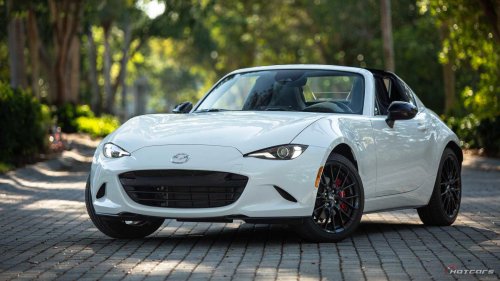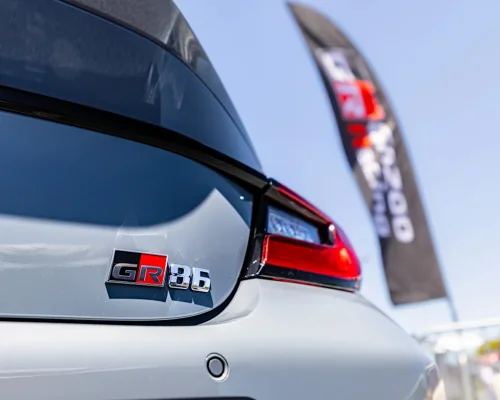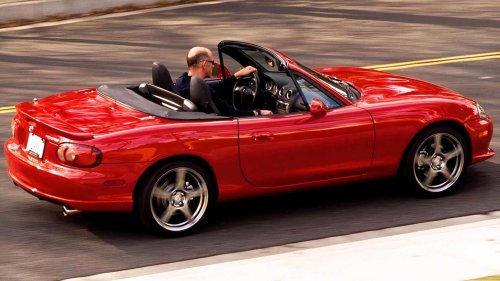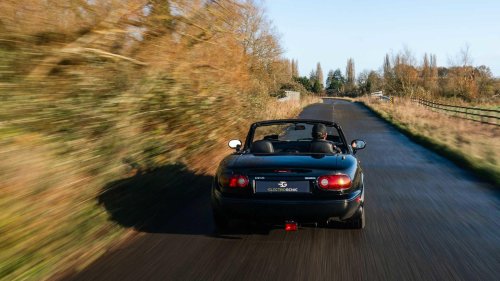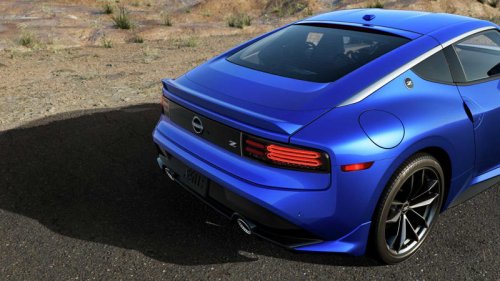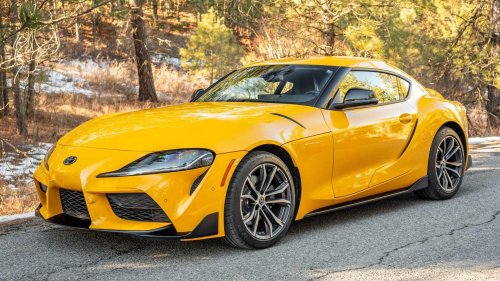
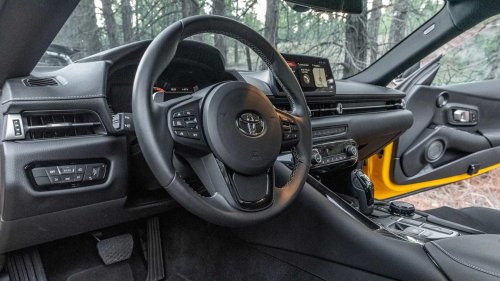
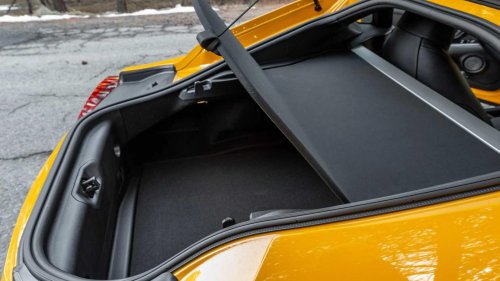
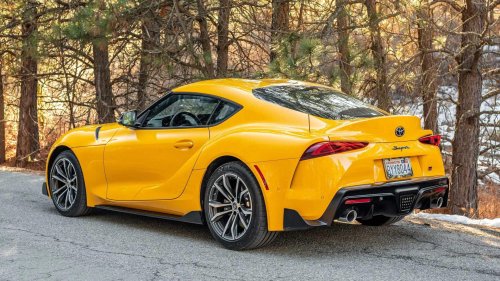
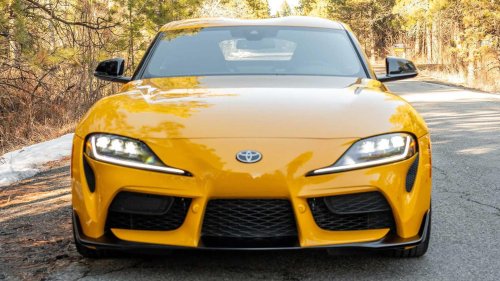
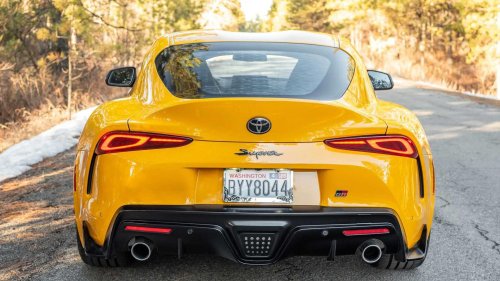
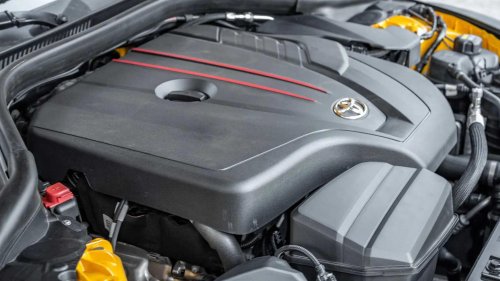
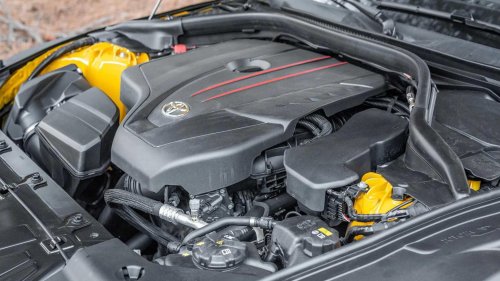
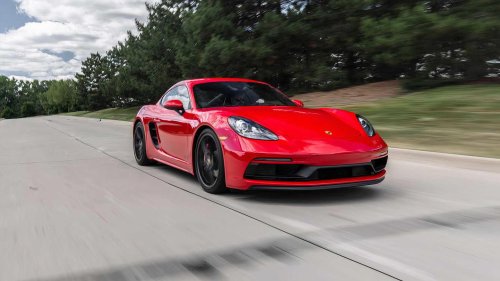
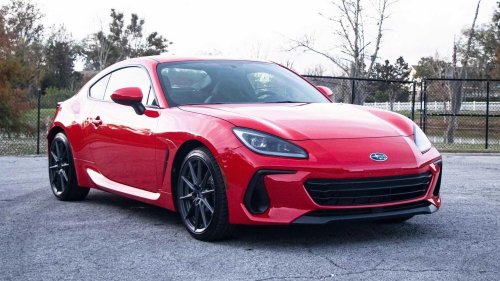
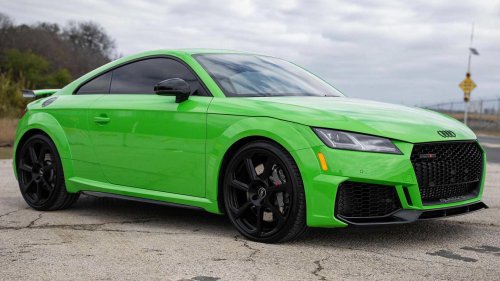


















Modern sports cars have solved speed, but most of them trade practicality to use as a daily driver. It's either the firm ride, the poorly insulated cabin, the spartan interior, or it costs an arm and leg to maintain and run. This makes them difficult to use on a regular basis.Sitting slightly outside that conversation is a sports car that runs premium hardware, is one of the cheapest sports cars to maintain, returns great gas mileage, and is practical enough with daily use firmly in mind. While the Miata is the obvious answer, this Japanese sports car is overlooked, underrated, and costs nearly the same as a Toyota Camry to maintain. The Toyota Supra 2.0 Is The Perfect Daily Driver Sports Car Via: Bring a Trailer The MkV A90 Toyota Supra is a phenomenal sports car built in collaboration with BMW. The 3.0-liter Supra grabs attention for obvious reasons, but the Supra 2.0 is a severely underrated sports car you can daily. It keeps the same premium platform while removing much of the stress that comes with owning a high-output sports car.At its heart is the BMW-sourced B48 2.0-liter turbocharged engine. This powertrain has a long track record across multiple models and helped BMW rank fifth overall in reliability by Consumer Reports, based largely on vehicles like the 2 Series and X3. Being a smaller four-cylinder, it is also incredibly efficient for a sports car. EPA ratings stand at 25 mpg city, 32 mpg highway, and 28 mpg combined, with annual fuel costs estimated at $2,100. The 13.7-gallon fuel tank delivers a usable range of roughly 384 miles, reducing the need for frequent stops. Well Equipped, Practical Interior Via: Bring a Trailer Unlike most sports cars that prefer to shed weight, the Supra's interior is fairly well-equipped and practical. The eight-way manually adjustable sport seats with four-way lumbar support come trimmed in black Alcántara and leather, which are supportive and comfortable for long-distance driving, helped by its decently tuned (but non-adjustable) suspension.Via: Bring a TrailerInterior space remains tight, but still practical for a two-seat coupe, with 50.9 cu-ft of passenger volume, 38.3 inches of headroom, and 42.2 inches of legroom. Cargo capacity measures 10.2 cu-ft, fairly small, but enough for a routine grocery run or a short trip. Ground clearance sits at 4.7 inches, and the short 97.2-inch wheelbase helps in tight urban environments and bumpy roads.Via: Bring a Trailer Toyota's Warranty coverage strengthens the case further, with a 3-year or 36,000-mile comprehensive warranty, a 5-year or 60,000-mile powertrain warranty, corrosion coverage with no mileage limit, and ToyotaCare providing complimentary maintenance and roadside assistance for two years or 25,000 miles. Ownership Costs Are Closer To A Toyota Camry Than A Sports Car Via: Bring a Trailer Sports car ownership usually comes with an expectation of higher running costs, but not with the Toyota Supra 2.0. Data from RepairPal estimates an average annual maintenance and repair cost of $561 for a 2020 GR Supra. CarEdge places total maintenance and repair spending at about $4,950 to $5,107 over the first 10 years, or roughly $495 per year. Those numbers sit far below what most buyers associate with a modern sports car.Astonishingly, a Toyota Camry also averages about $4,581 in maintenance and repairs over the same 10-year span. The gap between the two is narrow enough that the Supra 2.0’s ownership profile aligns more closely with a family sedan than a traditional sports car. Industry-wide, the Supra undercuts the average maintenance cost for comparable coupes by $2,473.Via: Bring a Trailer Annual Maintenance Costs Of Rivals (CarEdge) Against direct rivals, the difference widens further. A Nissan Z averages $6,157 over 10 years, while the BMW Z4 climbs to $13,999. A Porsche Boxster reaches $15,670 in the same period. Despite sharing a platform with the BMW Z4, the Supra ends up costing roughly $9,000 less to maintain over a decade, according to CarEdge.The probability of a major repair exceeding $500 sits at 12.57 percent, lower than most competitors. Common fixes remain inexpensive, with items like throttle position sensors, thermostats, and AC pressure switches staying within a few hundred dollars. Toyota’s broad parts availability and reliability record keep both repair frequency and severity low, placing the Supra closer to daily driven practical automobiles, than a high-performance sports car in terms of maintenance. Repairs And Pricing Thermostat replacement: $426 to $468 Throttle position sensor replacement: $186 to $224 Air conditioning refrigerant pressure switch replacement: $215 to $252 The Supra's 2.0-Liter Turbo-4 Has More Than Enough Grunt For The Daily Via: Bring a TrailerThe Toyota Supra lineup uses two BMW-sourced engines, the turbocharged BMW B48 and the turbocharged BMW B58. While the 3.0-liter earns attention for output, the 2.0-liter benefits from the same underlying platform and much of the same hardware. The four-cylinder arrived in the United States for the 2021 model year after proving itself in other markets, and it remains a solid choice for a daily. Output stands at 255 hp with peak 295 lb-ft of torque available from 1,550 to 4,400 rpm, routed through the same 8-speed automatic transmission used in the 3.0. The Supra 2.0 Is Still Plenty Fast Via: Bring a TrailerThanks to this BMW turbocharged power that many enthusiasts claim is factory underrated (just like in the 3.0 B58 variant), performance for the 2.0 Supra stays firmly in sports car territory. Toyota claims a 0-60 mph time of 5 seconds flat, but real-world tests consistently show acceleration times closer to 4.8 seconds. The lighter and smaller-engined Supra will also cover the 1/4 mile in the mid-13s – faster than more powerful 4-cylinder cars like the Honda Civic Type R or Ford Mustang EcoBoost – with the top speed electronically governed at 155 mph. Another caveat is that power flows exclusively to the rear wheels through a mechanical limited-slip differential rather than an electronically actuated unit you'd find in the more powerful 3.0 Supra."While the Supra 2.0 might be down on power by a considerable margin, it more than makes up for it in some other aspects. Namely, the 2.0 beats out the 3.0 in front-end feel, steering, and available grip...as a nice added bonus, the Supra 2.0 is a whole 219 pounds less than the 3.0, thanks to smaller brakes, smaller wheels, and having two fewer cylinders up front...this makes for a more fun and engaging driving experience. Turn-in is sharp and more precise than the 3.0, the front-end feels so light, and front-end grip is very good."Hardware similarities between the Supra 2.0 and 3.0 make the smaller-engined sports car a solid bargain. Both versions share the same transmission, rear brakes, and Michelin Pilot Super Sport tires. The 2.0 uses passive dampers, slightly smaller front brakes, and cast 18-inch wheels, but still runs a 275-section rear tire. That width remains uncommon for a four-cylinder sports car and provides ample grip for the less powerful 2.0 Supra. Alternatives To The Supra 2.0 PorscheThe Toyota GR Supra 2.0 no longer on sale, with the last model year being 2024. On the used market, however, a clean 2021 Supra 2.0 costs around $36,852. That puts it in direct competition with several well-known sports cars, each offering great driving experience, usability as a practical daily driver, but cannot match the Camry-like maintenance of the Supra 2.0The most obvious comparison is the base Porsche 718 Cayman, which also uses a four-cylinder engine, albeit a more powerful one at 300 hp. The Cayman also delivers sharper steering and a purer mid-engine balance, but ownership costs climb quickly, and comparable used examples sell for an average of $46,396 on classic.com, making the 2.0 Supra a much cheaper alternative both in the short and long run, while sacrificing some of the precision and performance of the 718. The Porsche also demands more from the driver in everyday use, particularly on rough roads or in traffic.Then there's the Ford Mustang EcoBoost, which offers straight-line performance and interior space at a similar price point, but it's not quite as light or nimble, and its cabin is not nearly as refined as the Supra's. It works well as a daily driver, but its size, weight, and chassis place it closer to a grand tourer than a compact sports car.Subaru Lighter options include the Toyota GR86 and Subaru BRZ. Both prioritize balance and simplicity, but they give up power (228 hp), refinement, and long-distance comfort compared with the Supra in exchange for naturally aspirated manual transmission fun. The Mazda MX-5 Miata (181 hp) is always the answer, but while it's affordable like the Supra, it trades practicality, as it is only available as a convertible, which is another part to maintain.Via: Bring a Trailer Finally, The highly-underrated Audi TT sits at the opposite end of the spectrum, emphasizing interior quality and all-weather traction, but it lacks the rear-wheel-drive balance and mechanical feel that define the Supra. Why The Supra 2.0 Is Great Value Against these alternatives, the Supra 2.0 occupies a narrow but valuable middle ground. It combines real performance, premium hardware, and manageable ownership costs in a way few rivals match at this price.Splurging over 30 grand on a four-cylinder sports car may seem like much, but for those who look more closely, the Supra 2.0 is actually a bargain. It's a more daily-drivable and manageable alternative to the heavier 3.0 model, with the interior refinement and ride quality built to stand up to Porsche 718s. Its real-world performance is nothing short of impressive, given its specs sheet, while the long-term reliability and low maintenance costs make the lighter 2.0 Supra a more sensible buy than most other 2-door sports cars with more power.Sources: Toyota, Consumer Reports, CarEdge, Classic, Repair Pal, EPA