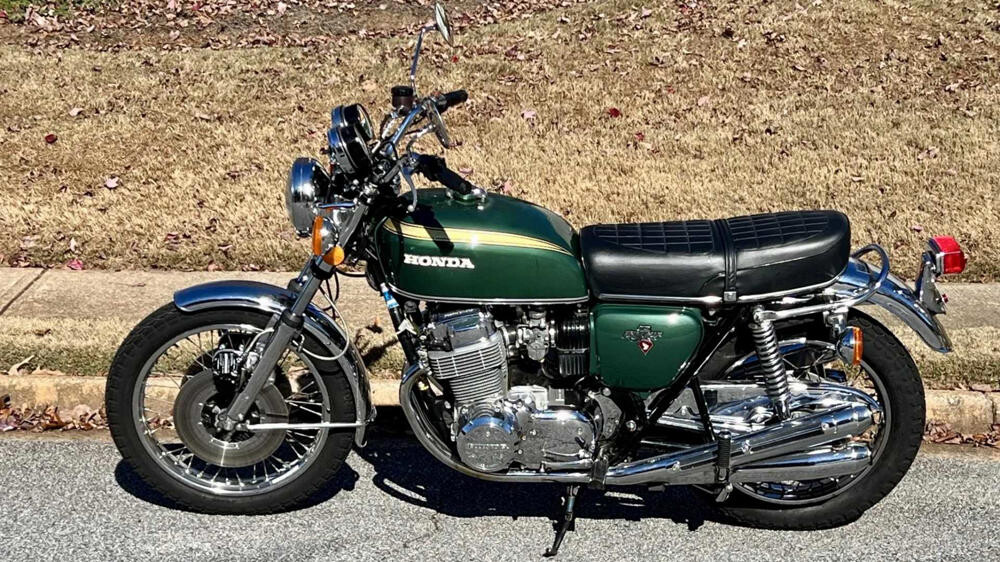
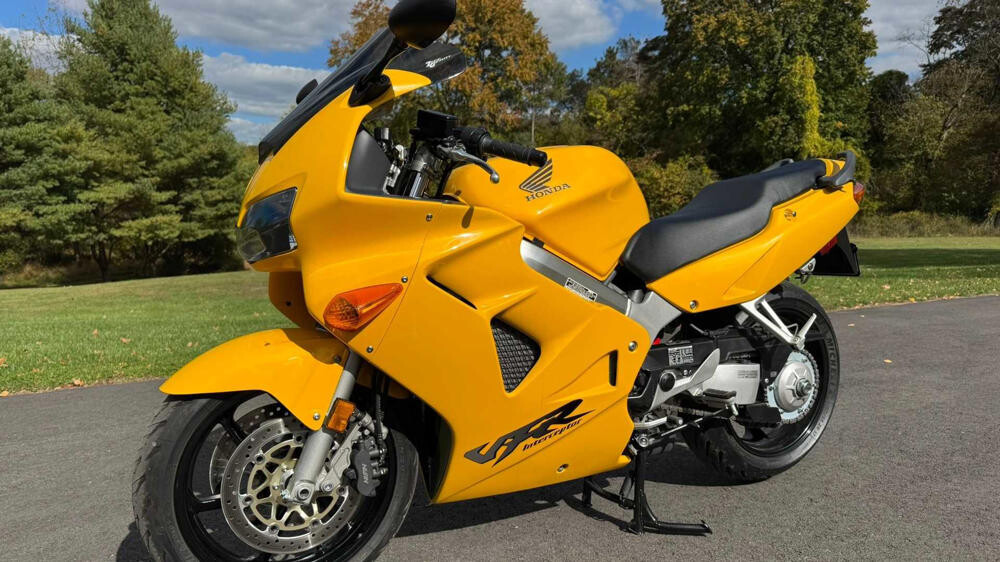
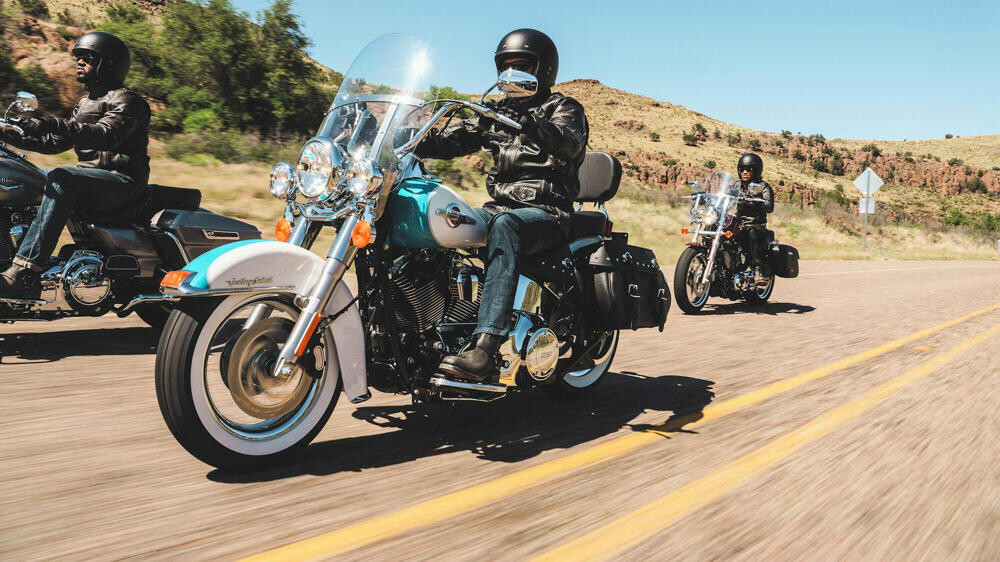
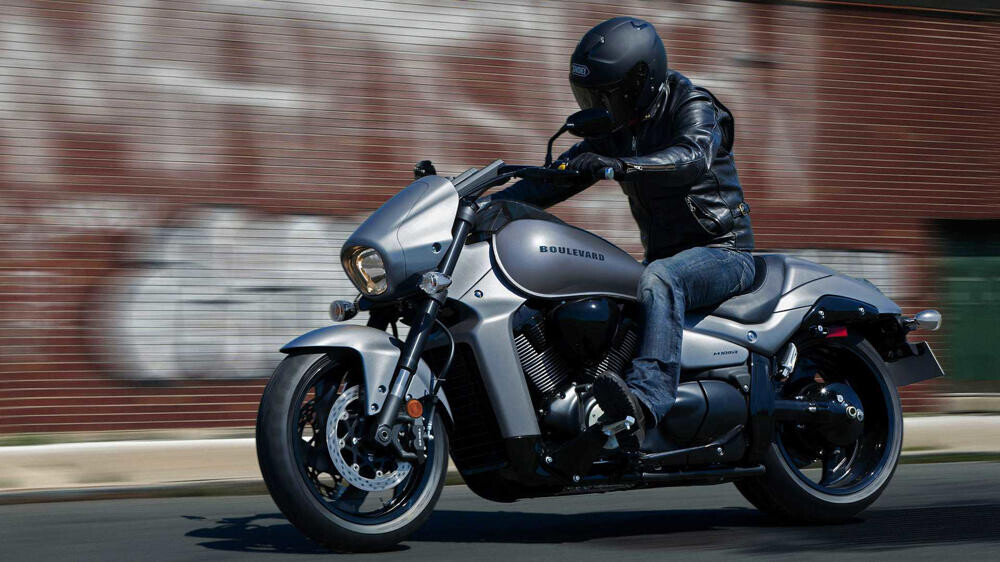
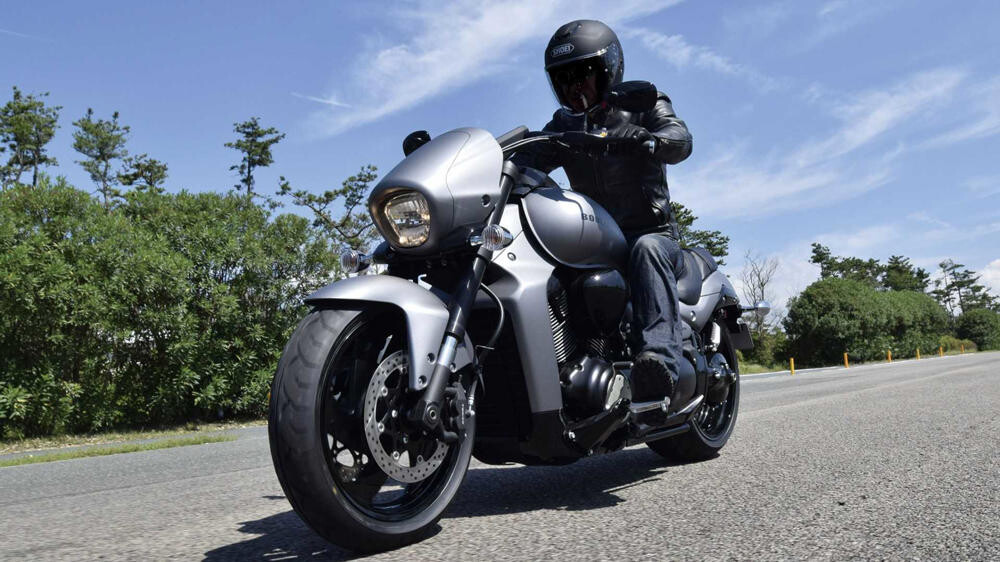
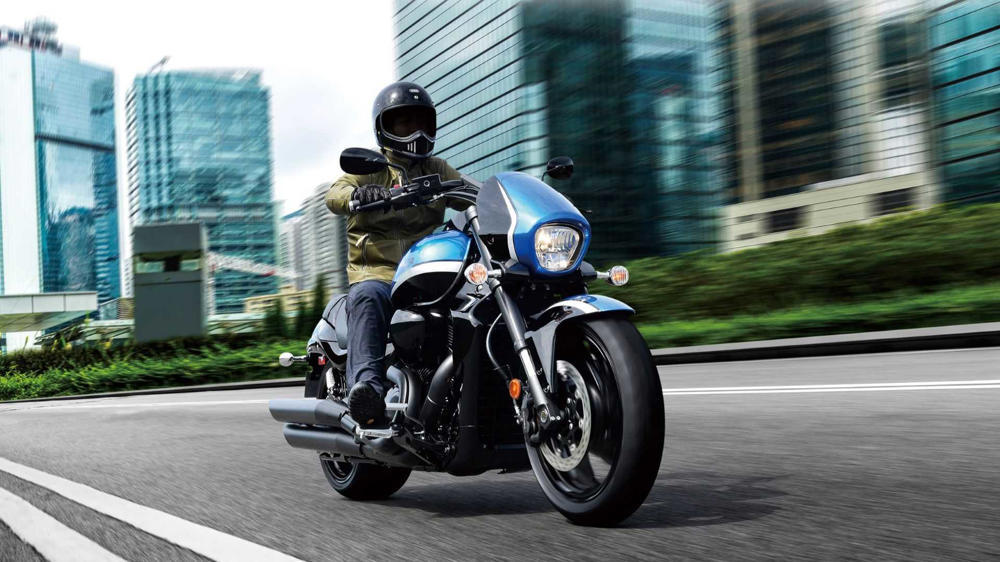
Few categories in motorcycling manage to pull off a genuine split personality, but the power cruiser does exactly that. Twist the throttle gently and you're wafting along in relaxed, upright comfort; pin it and you're dealing with supercar-rivaling acceleration from something that looks like it rolled off a custom shop floor. It's a formula that has attracted riders for decades — those who want real performance without sacrificing the laid-back soul of a cruiser. The best of these machines don't ask you to choose between speed and comfort. They simply deliver both. Power Cruisers Combine The Best Of Two Worlds The concept of the power cruiser can be traced back to the 1983 Honda V65 Magna, a motorcycle with a good claim to starting it all. On the outside, this was a relaxed cruiser with a hint of Easy Rider to it, but the 1,098cc liquid-cooled DOHC 90-degree V4 was a monster. Packing 116 hp, the unit was enough to make this the fastest bike of its time, clocking an astonishing 160 mph. Then came the 1985 Yamaha V-Max, a bike that laughed in the face of aerodynamics, its 1,200cc unit pushing it to 140 mph and beyond. Suddenly you had ultra-fast bikes for those of us who didn't want to be hunched over like a poised velociraptor every time we went out for a Sunday ride. Essentially, your average modern power cruiser has a large engine with strong power and torque, coupled to advanced braking and suspension systems that can handle a hard twist of the throttle when needed — think of it as a muscle car with two wheels. They are beefy to look at but feature a more upright riding position than more sporting bikes. For many, they represent the perfect blend of speed and comfort. The Suzuki Boulevard M109R Proves If It Ain't Broke Don't Fix It Suzuki unveiled its flagship Boulevard M109R back in 2006 — a year when Facebook first opened to the public, the Motorola Razr was the cell phone to have, and the second Pirates of the Caribbean movie had just launched. The M109R redefined the power cruiser category, combining cruiser style with a 1,783cc, 4-stroke, liquid-cooled V-twin that borrowed technology — including Suzuki's Composite Electrochemical Material (SCEM) cylinder coating — from the iconic GSX-R sportbikes. The transmission is a 5-speed constant-mesh system paired with a wet multi-plate clutch and a shaft final drive. The M109R, with its retro-futurist looks straight out of a Stallone sci-fi film, proved that power cruisers didn't need to be just for the more mature generation; they could be true rebels too. What makes the M109R even more impressive is that you can still buy one new, the bike having been only slowly evolved while remaining essentially the same machine at heart. The M109R Has American-Style Muscle At Its Core Over the years, the M109R shed much of its chrome and ornamentation in line with changing tastes (the M109R B.O.S.S. stood for Blacked Out Special Suzuki), but when it launched, this bike looked unmistakably American. Lashings of chrome and a sinuous aesthetic that made its body and mechanicals appear to be melting at speed gave it the look of a high-end custom American motorcycle, likely influenced by shows such as American Chopper, which were huge hits at the time. The powerplant of the M109R stacks up well against the mighty Harley-Davidson Milwaukee-Eight 121 V-Twin. The Suzuki produces 123 hp and 118 lb-ft of torque. The Harley M-8 121 makes 115 to 127 hp (depending on the spec), with 139 to 145 lb-ft of torque. A Harley-Davidson Milwaukee-Eight 114 unit has approximately 93 to 100 hp and roughly 118 to 124 lb-ft. The M109R will hit a top speed of 128 mph and reach 60 mph in 3.65 seconds. The M109R Has Evolved Into Pure Class The M109R has always been a fairly high-tech bike wrapped in retro looks. Suzuki's attention to detail comes as standard, with deep, rich paint and a low, supremely cushioned seat. Borrowed from the GSX-R1000R, the M109R's radial-mounted dual front brakes help bring this 764-pound machine to a stop. The large-diameter inverted fork — with race-proven cartridge internals — and the 240mm wide rear tire (the widest rear tire ever fitted to a Suzuki motorcycle) also help to keep the power in check. The instrument cluster includes a digital tachometer, gear position indicator, and LED indicator lights, with a tank-mounted analog speedometer that incorporates an LCD odometer, dual trip meters, a fuel gauge, and a clock. The attractive streamlined chassis features slash-cut mufflers, drag-style bars, and a supplied solo seat cowl for a sportier look when riding alone. The M109R Remains Remarkably Analog In A Digital Motorcycle Era The Suzuki M109R is a genuinely analog machine by today's standards, with no ABS, traction control, riding modes, cruise control, or quickshifter. On a 764-pound motorcycle with a 1,783cc V-twin delivering roughly 118 lb-ft of torque, there are no electronic systems stepping in when grip disappears or the rider wants to soften the engine's response. That absence of technology can feel like an oversight, especially when Suzuki equips newer models with far more sophisticated rider aids. The Hayabusa, for instance, comes loaded with advanced electronic controls that make the M109R's stripped-back approach stand out all the more. For experienced riders, that simplicity can be part of the appeal, lending the bike a direct, mechanical character. But what feels authentic to traditionalists can feel seriously dated to riders accustomed to modern electronic safety nets. This analog nature comes with fantastic reliability. A Consumer Reports survey put Suzuki as the second most reliable motorcycle company, with a predicted failure rate of 12% for four-year-old motorcycles. Owners report covering enormous mileage — with one owner claiming 150,000 miles in a forum discussion — and often note that nothing serious was required beyond routine maintenance. The M109R's Reliability Doesn't Make Maintenance Simple The M109R may have a reputation for going the distance, but keeping this 1,783cc DOHC V-twin healthy isn't always straightforward. Its semi-dry-sump lubrication system makes checking the oil less intuitive than on a conventional wet-sump motorcycle — the engine needs to be at operating temperature and the bike held upright for an accurate reading. Valve service is another reality check. Every 14,500 miles or 48 months, the DOHC heads need their clearances inspected, a process that requires substantial disassembly before the tappets can even be reached. If adjustment is necessary, changing the shim can mean pulling the camshafts. Add in a 764-pound motorcycle and tightly packaged bodywork, and routine workshop jobs can become surprisingly labor-intensive. That's why mileage shouldn't be the first thing a used buyer studies. A well-documented high-mileage M109R can be a safer bet than a low-mileage bike with neglected servicing. Buyers of older M109Rs should also check the VIN and service records to confirm that applicable recalls — including the early fuel-delivery and accessory backrest campaigns — were completed. An M109R Is Cheaper Than You Might Think Even after two decades, the M109R Boulevard remains on sale at Suzuki dealerships. That's impressive in itself, but what makes it even more compelling is that when you buy one secondhand, it still shares the same basic shape and specification as a new model — meaning used examples represent outstanding value. Browsing the classifieds, we found a 2006 model with 83,000 miles that needed some attention and was selling for just $1,900. The seller was candid enough to note: "This is an aggressive motorcycle and not a good choice for first time riders." Around $5,000 appears to be a reasonable ask for a decent early model, while many dealers are offering newer examples at a meaningful discount off the official retail price. The M109R, with its old-school styling and formidable power, won't be to everyone's taste. But if you can handle it and want a mix of relaxed riding style and brute force, it stands out as one of the best bargains on the motorcycle market today. Sources: Consumer Reports, Cycle Trader, Suzuki, Harley-Davidson, Honda

 Liked by Mia Smith, Jacob Bouchard











 Liked by Mia Smith, Jacob Bouchard