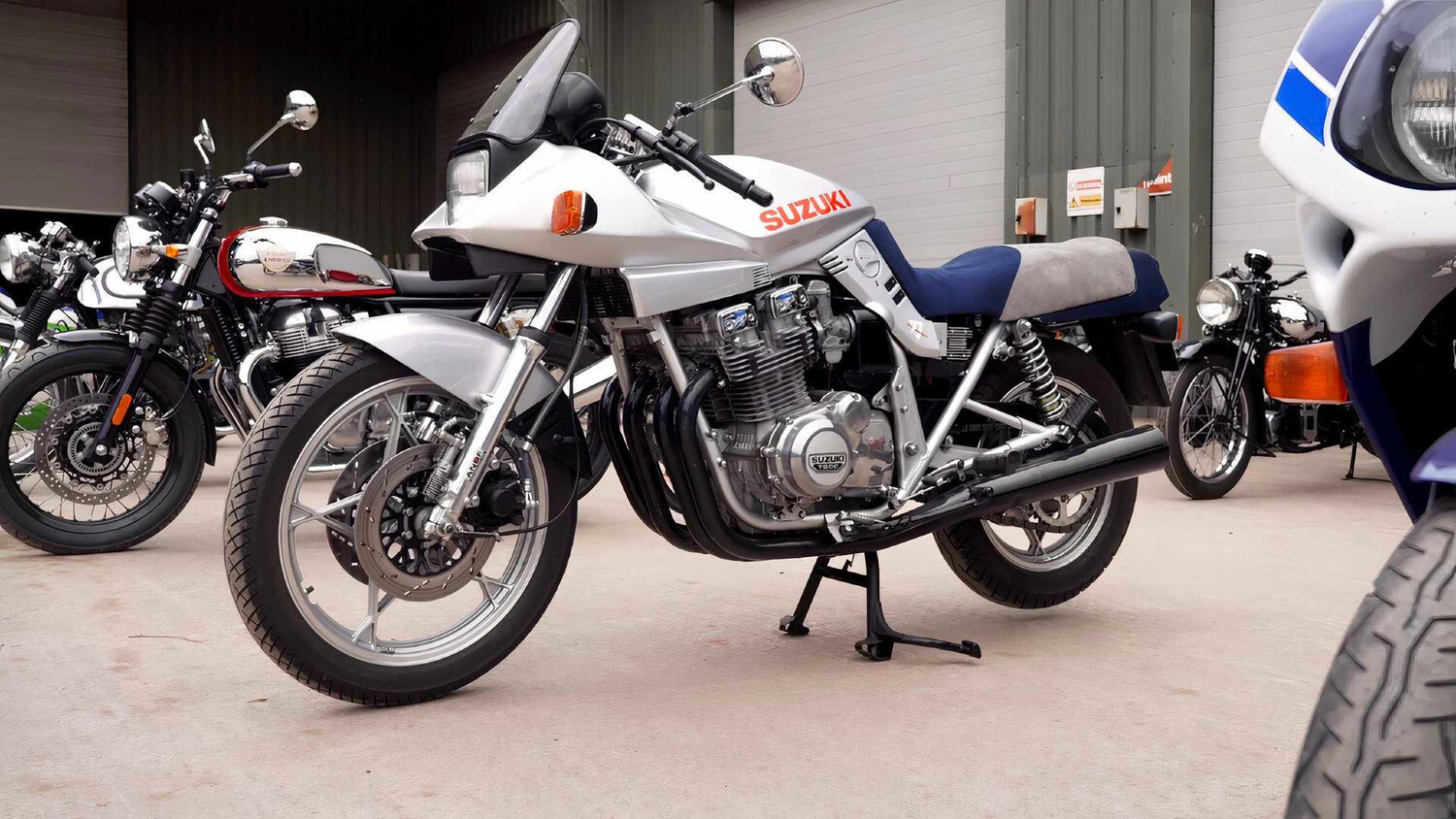
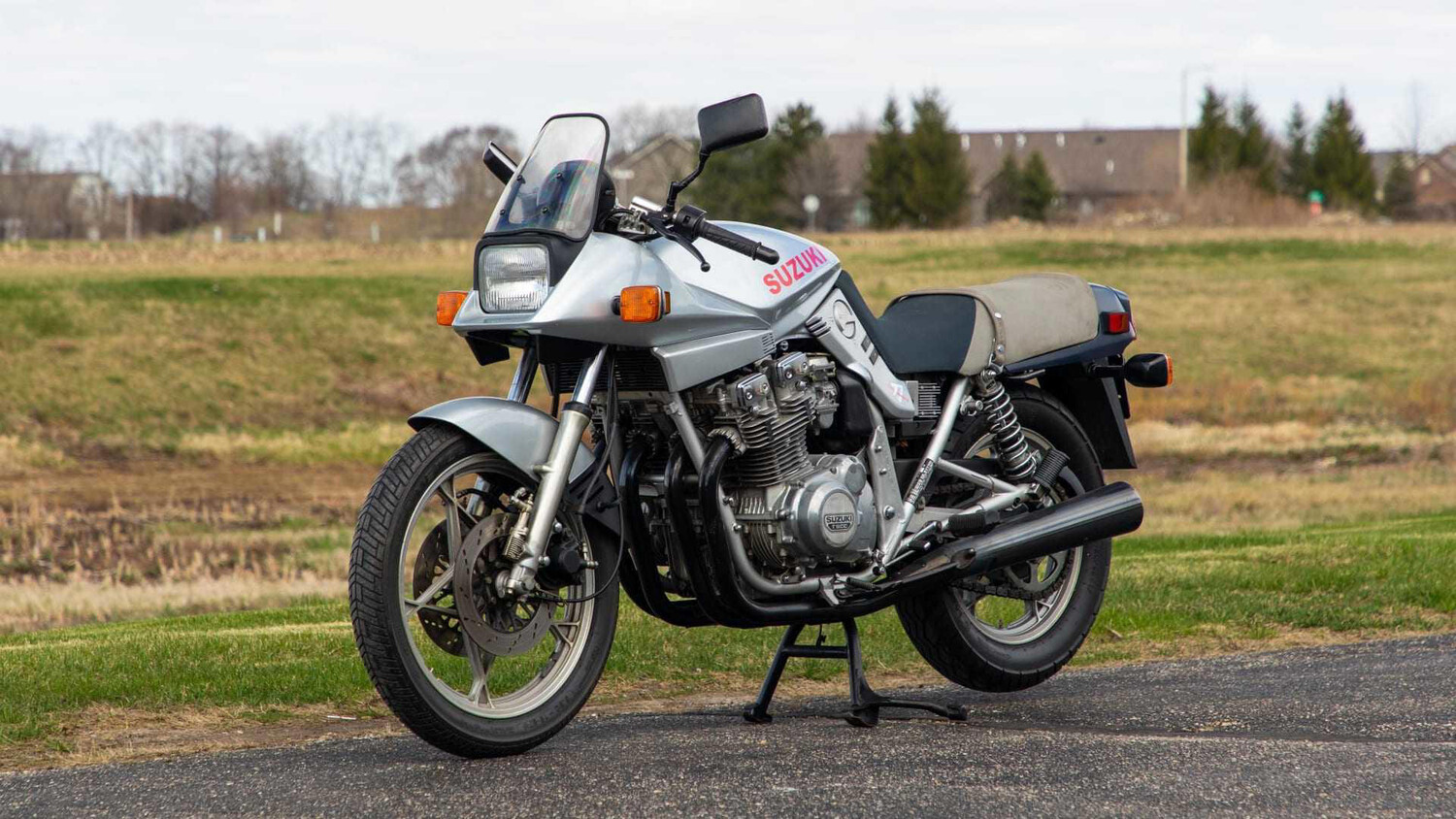
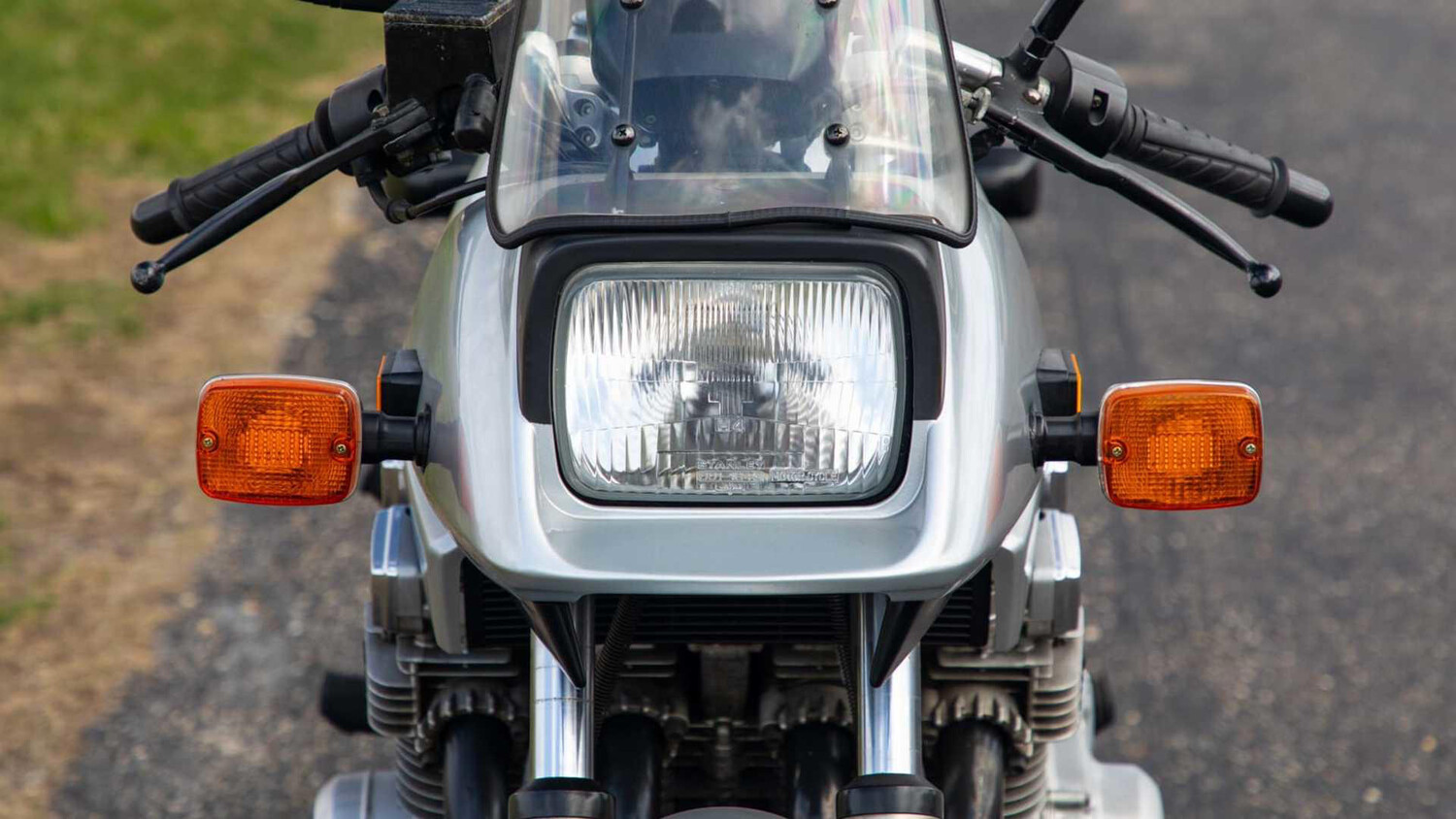
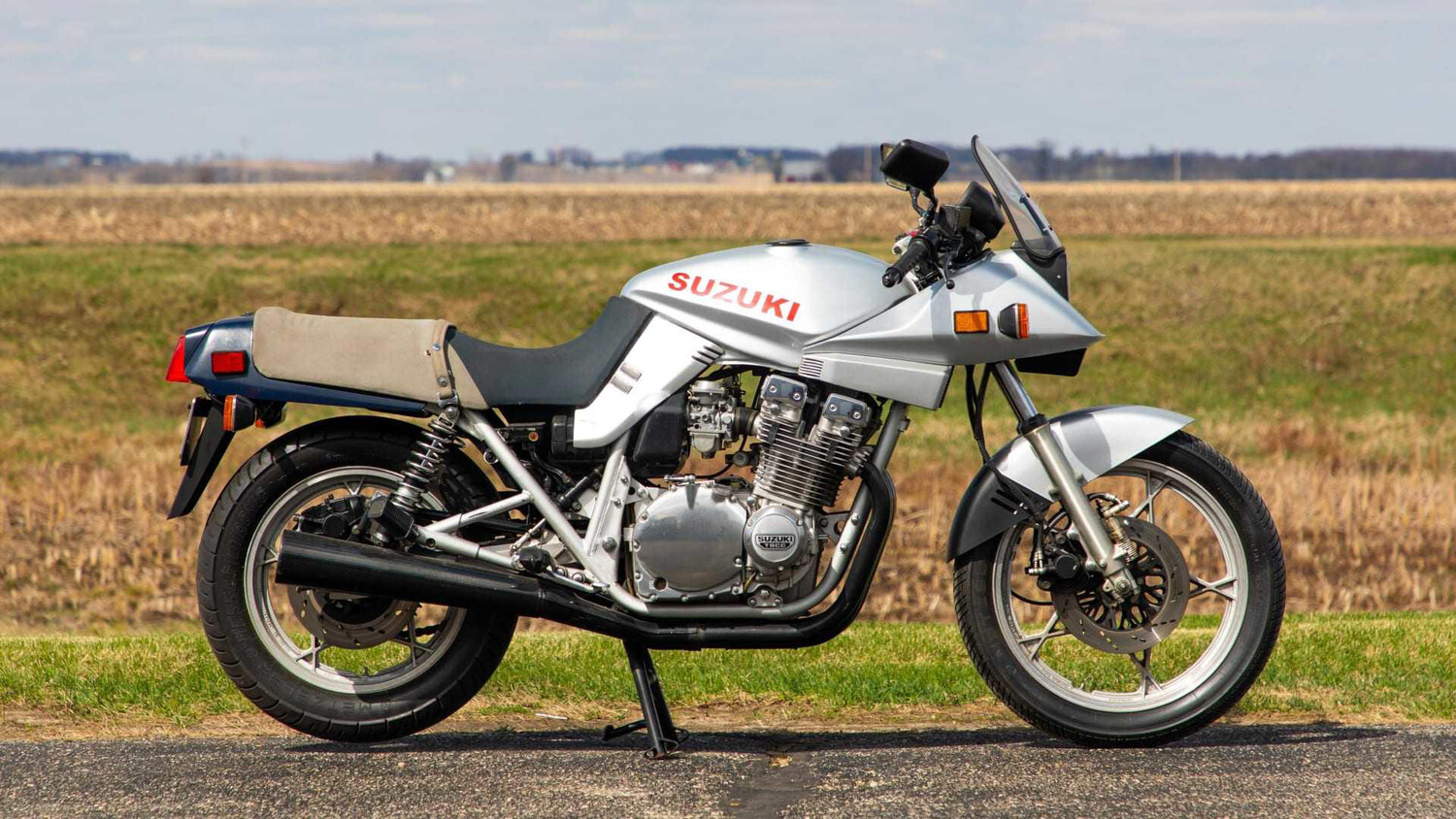
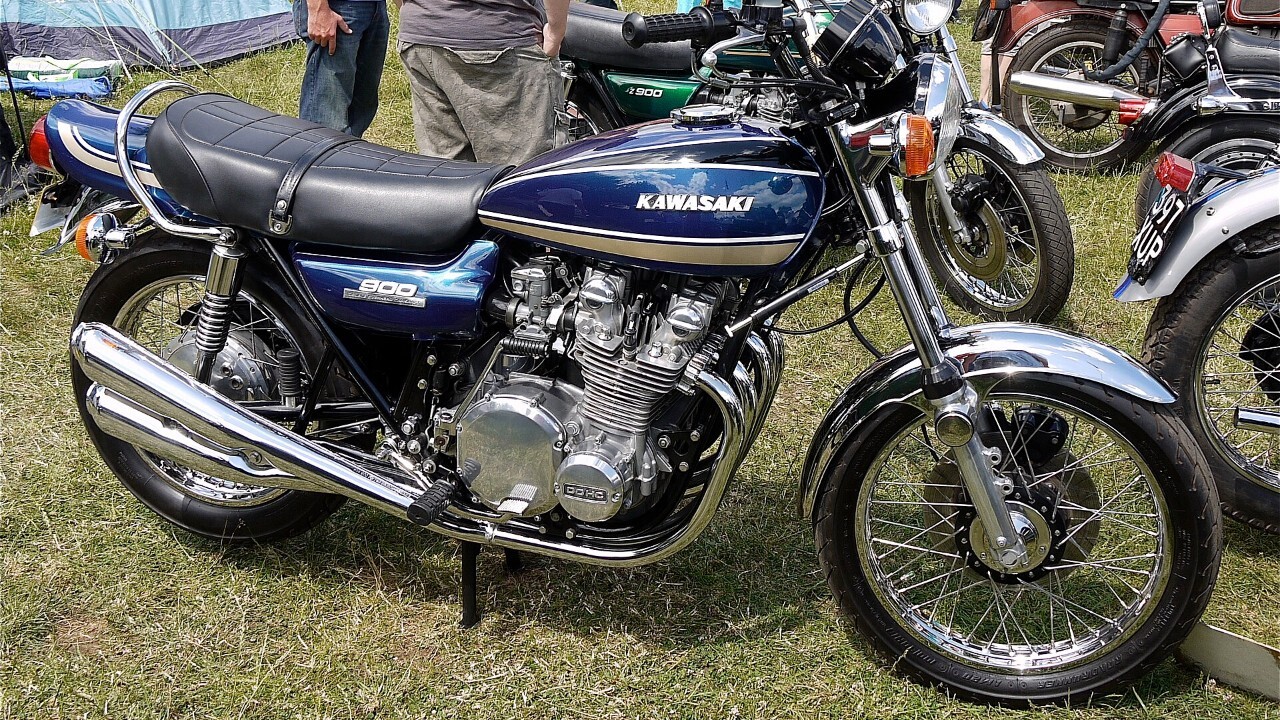
Belgium’s FN had a four-cylinder FN Four motorcycle on sale in 1905, decades before most riders had heard the word “superbike.” Since then, four cylinders have meant smoothness, speed and a sound no twin can copy. American makers built luxury fours in the 1920s, and Japanese makers built their big 1970s road bikes around the same layout. Some of those bikes made history, and some simply made their owners grin every time they hit the starter. However, not every four earns a forever spot in the garage. These seven are our picks, and the verdict is our opinion: if one of these were ours, no offer would be big enough. The years, engines and test figures come from period road tests and marque histories. So the facts are on the record, even if the stubbornness is all ours. 1. 1912 FN Four The FN Four came out of Fabrique Nationale in Liège, the Belgian arms maker. Its four-cylinder engine was the work of engineer Paul Kelecom. By 1912, the engine displaced 498cc and made 5 horsepower, according to Motorcycle Classics. Top speed was an estimated 40 mph. What makes it special is how modern the layout looks for its age. Instead of a leather belt or chain, a shaft carried the power to the rear wheel. Yet the 1912 bike in that test had a single speed and no clutch, so the engine was locked to the rear wheel. Riders started it by pedaling, because a kickstarter did not arrive until 1913. A two-speed transmission became optional around the same time. The design also proved itself in competition. An FN Four placed third at the 1908 Isle of Man TT. Another won a gold medal in that year’s London–Edinburgh–London endurance run. Our take: this is a moving piece of engineering history, and every shaft-drive four that followed owes it something. We would ride it gently on sunny days and never let it leave the family. 2. 1928 Indian Ace The Ace began as the work of William Henderson, who left Schwinn’s company in 1919 and announced the Ace soon after. Henderson died in 1922, struck by a car while testing a new model. Engineer Arthur Lemon then took over. Even so, the company struggled, partly because it sold the bike for less than it cost to build. In the spring of 1927, Indian bought the rights to the Ace and moved production to Springfield, Massachusetts. The bike kept its 77-cubic-inch, or 1,265cc, inline four. Motorcycle Classics lists it at a claimed 16 horsepower in its Ace Four profile. Indian added lower-end rigidity and a stronger frame for police work. It also swapped the Ace’s leading-link fork for its own trailing-link design. The Indian Ace name lasted only a short time. By mid-1928, the bike had become the Indian Four, which stayed in production until 1942. That makes the Indian Ace a short bridge between two great American brands. In our view, it is the most interesting four Indian ever sold, and we would keep one for that story alone. 3. 1929 Henderson KJ Streamline By 1929, Henderson belonged to Ignaz Schwinn, the bicycle magnate, who had bought the company in 1917. That year it launched the KJ Streamline, designed under chief engineer Arthur Constantine, hired from Harley-Davidson. Advertising claimed “57 New Features,” including an illuminated speedometer set into the fuel tank. The engine was an air-cooled inline four of 79.4 cubic inches, or 1,301cc. It used a five-bearing crankshaft and overhead inlet valves. Henderson claimed 40 horsepower at 4,000 rpm and a top speed of 100 mph. It sold for $435 when new, according to Motorcycle Classics. That was serious speed for a road bike of the period. Then the Depression hit. In the summer of 1931, Schwinn told his department heads, “Gentlemen, today we stop,” even though the order book was full. By September, the factory had shut down. Our take: the KJ was the peak of American four-cylinder design, cut off in its prime. We would never part with one, because nothing like it came after. 4. 1974 Honda CB550 Four Honda’s CB550 arrived for 1974 as a smarter version of the CB500. Engineers bored the four out to 544cc, kept a single overhead camshaft and fed it through four 22mm Keihin carburetors. The result was about 50 horsepower. Because the engine was much lighter than the CB750’s, the bike felt lively and easy to ride. Cycle World tested one in 1974 at a suggested retail price of $1,600. It ran the quarter mile in 14.02 seconds at 91.83 mph, quicker than the CB500 the magazine had tested earlier. The Cycle World road test also called it “still one of the smoothest bikes on the road,” even with a bit more mid-range vibration. First-year K0 bikes came in Flake Sunrise Orange, Boss Maroon Metallic or Freedom Green Metallic. The CB550 never had the CB750’s fame, which is part of its charm. In our view, it is the sweet spot of Honda’s 1970s fours: quick enough, light enough and pleasant every day. We would keep a K0 in one of those original colors and ride it everywhere. 5. 1976 Kawasaki Z900 Kawasaki’s Z1 landed in 1972 with a 903cc air-cooled, double-overhead-cam four. In 1976 it gave way to the KZ900 in the United States and the Z900 in other markets. The engine kept its 903cc and a claimed 82 horsepower at 8,500 rpm, according to Motorcycle Classics. The changes were small but telling. First, the Mikuni carburetors shrank from 28mm to 26mm, and the frame used thicker-walled tubing. Kawasaki also added a locking fuel cap, and a square taillight replaced the earlier tail section. Importantly, Australian and European Z900s used dual front discs, while the American KZ900 made do with a single disc. In the U.S., the KZ900 listed at $2,475. Kawasaki already had the KZ1000 planned for 1977, so the 1976 bike became a transitional model. Our take: the Z900 is the Z1’s engine with a few years of refinement, and the dual-disc version is the one to have. We would never let a clean one in Diamond Dark Green or Diamond Brown go. 6. Suzuki GS1000S Fans call the GS1000S the “Wes Cooley Replica.” Cooley won the AMA Superbike Championship in 1979 and 1980 on a Yoshimura Suzuki. Before that, a Yoshimura-tuned GS1000 won the 1978 Daytona Superbike race. Cooley also won the Suzuka 8 Hours twice, in 1978 with Mike Baldwin and in 1980 with Graeme Crosby. The road bike borrowed the look. It came in blue and white or red and white. Its bikini fairing was the first fitted to a production Suzuki, according to Old Bike Australasia. The fairing held a clock and an oil temperature gauge. Its 997cc engine came from lengthening the GS750’s stroke. Meanwhile, output was quoted at 90 to 100 horsepower depending on the market, according to Old Bike Australasia’s profile. Even the turn signals were clever, switching off by themselves after ten seconds. Suzuki needed something to shake off its staid image, and this was the answer. In our view, the GS1000S is the best-looking Japanese superbike of its decade. If you ever find an original one, keep the stock fairing and paint, because that is the whole point. 7. 1980 Yamaha XJ650 Maxim The XJ650 Maxim was Yamaha’s bet that riders wanted a four-cylinder cruiser. Its 653cc double-overhead-cam engine was just 17.6 inches wide, because Yamaha moved the alternator behind the cylinders. Final drive was by shaft, which added about 11 pounds and about $150 to the price. Cycle World tested a 1980 Maxim I at $2,799. It ran the quarter mile in 12.91 seconds at 103.09 mph, and it returned 57 mpg on the magazine’s test loop. In fact, the Cycle World test noted a 29.5-inch seat height, pull-back bars and a “bulbous” 16-inch rear wheel. Those were cruiser touches on a bike that ran a 12-second quarter mile. Cycle magazine later called the 650 “wildly successful in showrooms.” Our take: the Maxim proved a four could be stylish, quick and easy to live with at once. We would keep a first-year Maxim I, with its low seat and teardrop tank, and ride it on Sunday mornings for years.

 Liked by Sophie White, Kaitlyn Roy














 Liked by Sophie White, Kaitlyn Roy