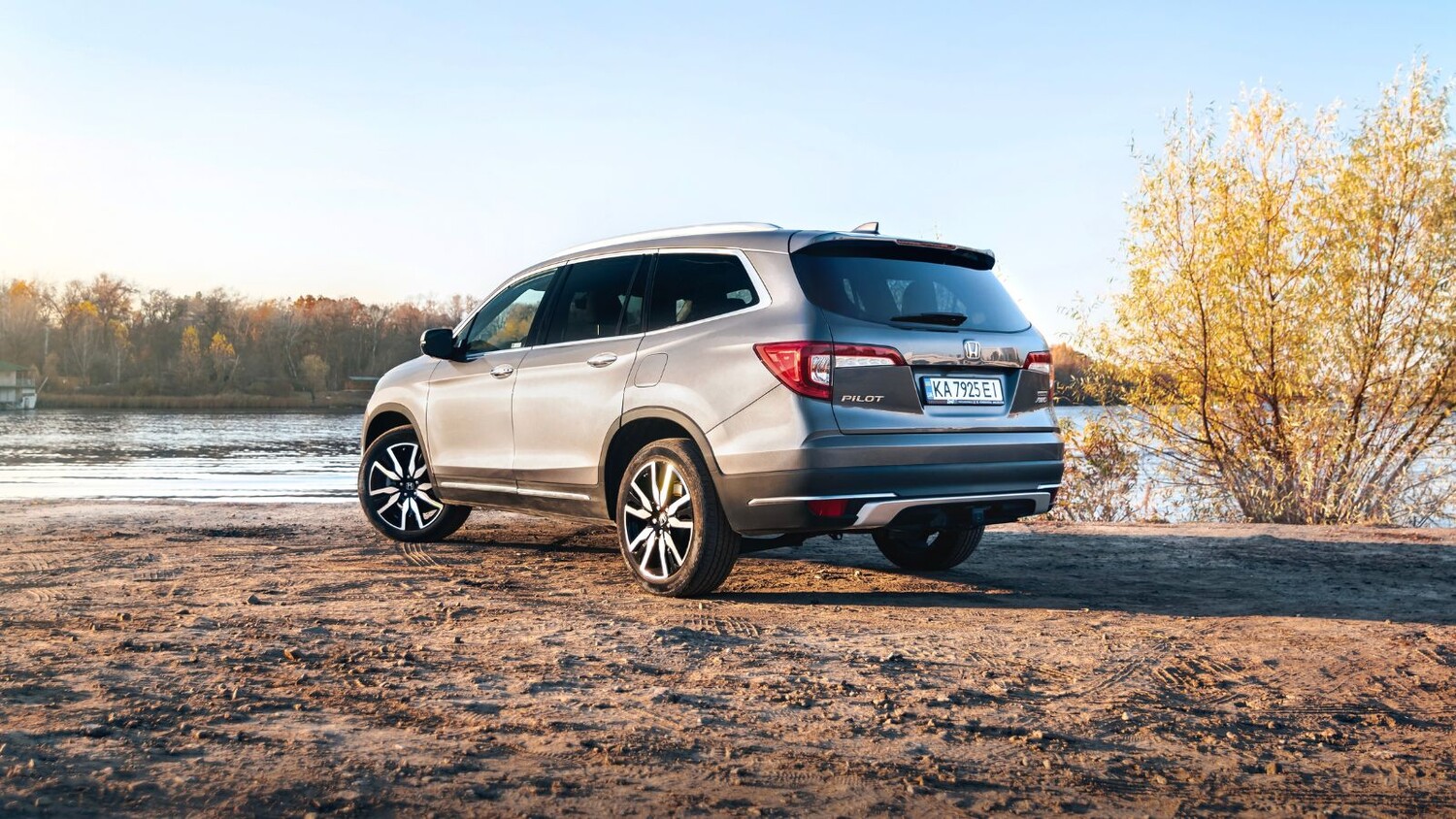
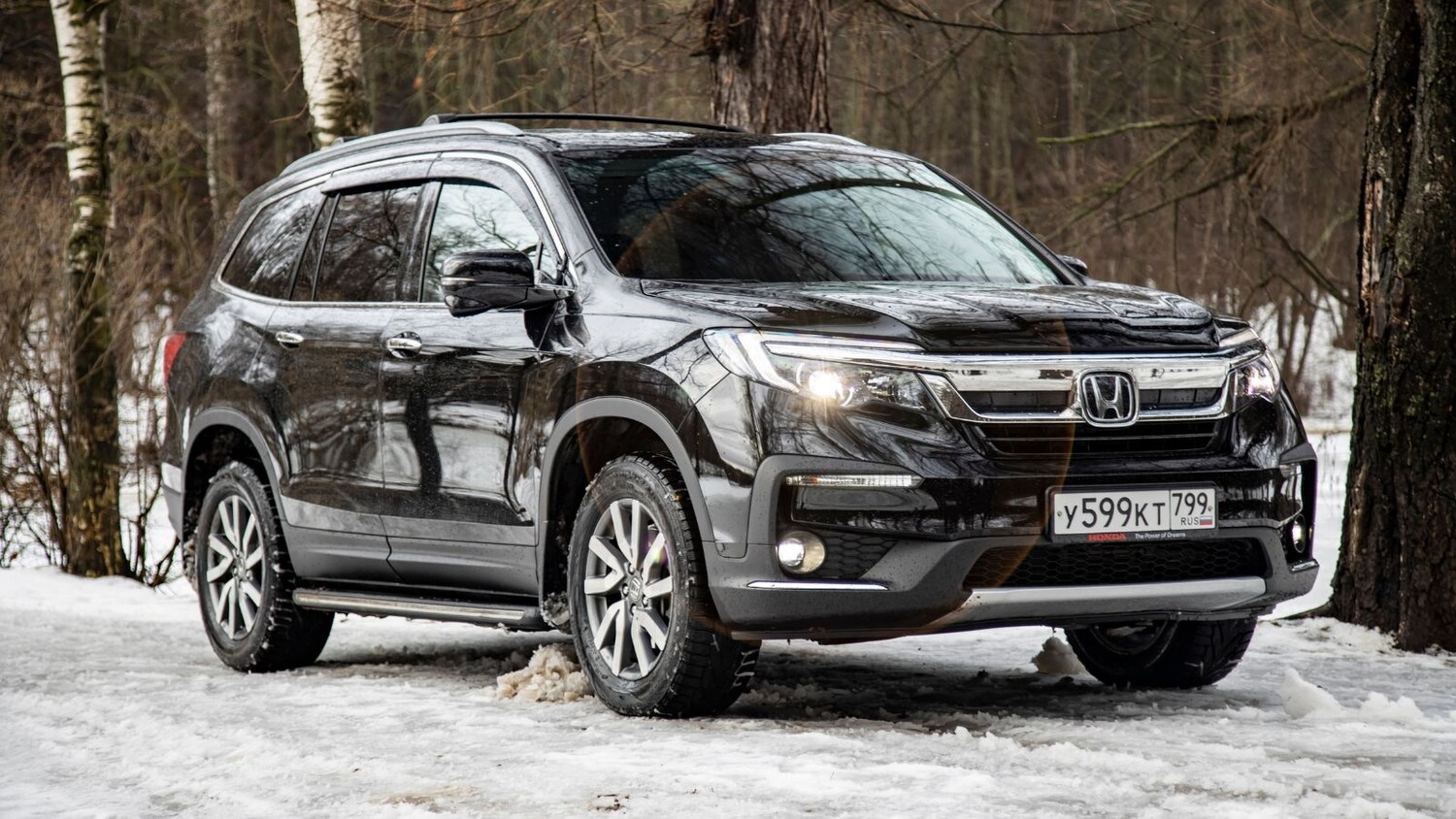
The Honda Pilot makes a compelling case for itself as a dependable family SUV. It has all the ingredients to make for a satisfying ownership proposition, with three rows of seating, available all-wheel drive, and – a rarity in this day and age – a naturally aspirated V6 engine. Importantly, it also carries Honda's reputation for building reliable vehicles, making it an appealing choice for buyers who need something practical but don't want to spend Lexus TX or Volvo XC90 money. But buying any three-row SUV is a considerably bigger financial commitment than purchasing a family sedan. With prices starting at $40,200 for the Sport FWD (it's as much as $54,580 for the Black Edition AWD), one still has to take into account the running costs. Over five years, owners have to think about depreciation, fuel, insurance, financing, maintenance, and repairs. These expenses can add tens of thousands of dollars to the bottom line, and the difference between an entry-level trim and the range-topper can be substantial. Honda A note on the model year: Even though the 2026 Pilot is on sale, this analysis uses the 2025 model because it provides a more complete and consistent set of five-year ownership-cost data. Using the newer car would mean combining current 2026 pricing with ownership estimates that are still less established, making a like-for-like five-year comparison less reliable. Kelley Blue Book's (KBB) 2025 Pilot Sport page showed an estimated five-year ownership cost of $70,166. This included $23,473 in depreciation and another $46,693 in out-of-pocket expenses, insurance assumptions, and financing costs. Neither figure represents a guaranteed bill for every Pilot owner, though. Pilot's Purchase Price Is Only Part Of The Story Honda's 2025 Pilot lineup includes several configurations, with front-wheel drive available on the Sport, EX-L, and Touring trims. All-wheel drive is available, however, and also comes as standard on the TrailSport, Elite, and Black Edition variants. The figures below come from Honda's MY2025 pricing announcement. 2025 Honda Pilot Starting MSRP Incl. destination Sport FWD $40,200 $41,650 Sport AWD $42,300 $43,750 EX-L FWD $43,500 $44,950 EX-L AWD $45,600 $47,050 Touring FWD $47,500 $48,950 Touring AWD $49,600 $51,050 TrailSport AWD $49,400 $50,850 Elite AWD $53,080 $54,530 Black Edition AWD $54,580 $56,030 The difference between the least and most expensive versions is $14,380 before destination charges. While the EX-L adds more convenience and comfort features over and above what the Sport offers, and the Touring, Elite, and TrailSport models add premium features, it's worth remembering that a higher purchase price does not translate into proportionally higher resale value. A more expensive trim can (and often does) lose more money in absolute terms as it depreciates, even if it retains a similar percentage of its original value. Honda Pilot Depreciation Takes A Significant Bite Out Of Its Value KBB puts the Honda Pilot's residual value at $18,177 for the Sport after five years, with estimated depreciation totaling $23,473. That loss accounts for roughly a third of its $70,166 ownership estimate. Using a model-level analysis, iSeeCars notes that the Pilot loses 44.8% of its value after five years, which is lower than the 46.4% average for the midsize SUV category. Honda The V6 Engine Makes You Pay A Price At The Pumps Rather unusually for a modern SUV, the Pilot gains motivation from a naturally aspirated 3.5-liter V6, not a turbocharged inline-four, and it does without electrical assistance of any kind. With 285 horsepower and 262 lb-ft of torque, it certainly isn't the last word in performance, but it is, at least, refined and blessed with a pleasant exhaust note. It may be paired with a modern ten-speed automatic, but the EPA estimates are slightly disappointing. The front-wheel drive Sport, EX-L, and Touring achieve 19 MPG in the city, 27 MPG on the highway, and 22 MPG combined. Unsurprisingly, AWD models fare even worse, returning 19/25/21 MPG on the same cycles, with the TrailSport proving the thirstiest, at 18/23/20 MPG. At 15,000 miles annually, those combined ratings produce the following estimated consumption: Configuration Combined MPG Gallons used annually Gallons used over five years FWD 3,409 AWD (excl. TrailSport) 3,571 TrailSport AWD 3,750 Calculated using the EPA combined MPG figure and 15,000 miles per year. Figures are rounded to the nearest US gallon; actual consumption will vary. A TrailSport owner would therefore consume approximately 341 more gallons than a front-wheel drive Pilot owner over five years, assuming both achieved their EPA combined ratings and covered identical mileage. Edmunds estimates five-year fuel costs of $13,071 for front-wheel-drive Pilot models, $13,686 for AWD versions excluding the TrailSport, and $14,375 for the TrailSport. It's worth noting that the publication bases fuel costs on EPA ratings, a mix of city and highway driving, and a one-year moving average of fuel prices in the selected state. Honda What The Five-Year Figures Reveal About Different Trims Pilot Trim & Configuration Five-year ownership estimate Sport FWD $51,826 Sport AWD $53,375 EX-L FWD $52,520 EX-L AWD $55,039 Touring FWD $55,772 Touring AWD $58,157 TrailSport AWD $59,063 Elite AWD $61,352 Black Edition AWD $61,527 Edmunds' breakdown allows comparisons between configurations within its own calculation. The EX-L FWD is projected to cost just $694 more than the Sport FWD over five years, despite its $3,300 higher MSRP. For a buyer wanting additional luxuries over the base model, that relatively small projected difference is worth considering. However, the gap becomes more noticeable at the top of the lineup. The Elite AWD and Black Edition AWD estimates exceed the Sport FWD figure by a whopping $9,526 and $9,701, respectively. The TrailSport also carries a higher projected cost than the Sport and EX-L configurations. Its additional off-road equipment can be justified by those who will actually make use of it, but those who require a road-biased family SUV may find lower trims to be sufficient. Honda Insurance, Financing, And Maintenance Costs Add Up Quickly Edmunds' estimate for Honda Pilot maintenance (for the EX-L AWD) is $5,486. But the total ownership costs are considerably more, with $3,840 for insurance, $9,180 in financing costs, and $854 in repairs. With taxes and fees ($2,045), and the aforementioned amounts for depreciation ($19,948) and fuel ($13,686), those amounts total $55,039. The financing calculation assumes a traditional 60-month loan, a 10% down payment, and an above-average credit profile. The financing expenses represent interest, rather than the full amount of the loan repayments. Is The Pilot Worth The Money? The Pilot's appeal is easy to understand: plenty of space for the family, a refined V6, and the reassurance of buying a Honda. For households that regularly need three rows, it makes a convincing case for itself. Buyers moving up from a sedan, however, should expect a sizeable increase in running costs. Even the more affordable versions demand a budget that extends well beyond the monthly repayment. Considering the Honda Pilot's true cost to own, the more affordable versions are the easier purchases to justify. Much of what makes it a desirable family SUV is already present further down the range, where the value is more convincing. The higher trims are tempting, but a few extra luxuries won't make ownership more enjoyable if paying for them leaves you worrying about the next fuel stop or insurance renewal. Honda

 Liked by Annabelle Campbell, Nicole Brown














 Liked by Annabelle Campbell, Nicole Brown