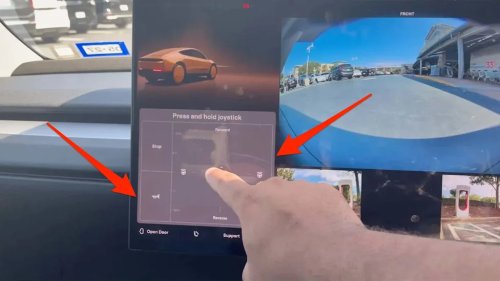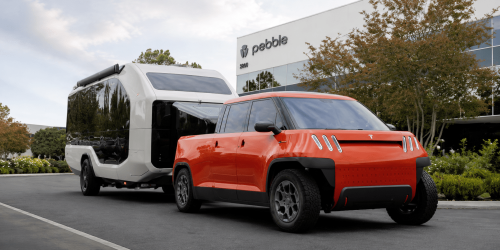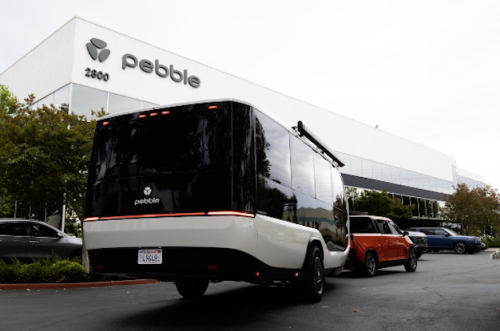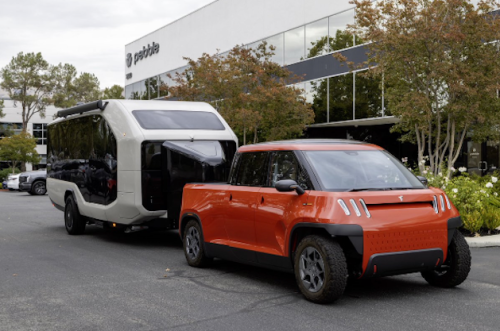





















The RV industry has spent decades making campers bigger, lighter, and more luxurious. Startup Pebble decided to ask a different question: what if your travel trailer behaved more like a smartphone than a box on wheels?California-based Pebble has officially started customer deliveries of the Pebble Flow equipped with the Magic Pack, marking a major milestone for one of the most talked-about RV startups in recent years. With a starting price of $132,500, the all-electric travel trailer isn't trying to compete with entry-level campers. Instead, it's targeting buyers who want technology to do far more than simply keep the lights on.The Magic Pack bundles together several of Pebble's headline features, including an electric propulsion system that can assist while towing, automatic hitching assistance, and the company's signature Remote Control function. Using the Pebble mobile app, owners can slowly maneuver the trailer into a campsite or tight parking space without sitting behind the wheel of the tow vehicle.AdvertisementAdvertisementIn other words, backing a trailer into that impossibly narrow campsite suddenly becomes far less stressful. Just try not to confuse the Pebble app with your kid's RC car controller… or the other way around.Pebble has also introduced Scout, its new AI-powered assistant designed to help owners manage many of the trailer's systems from a smartphone. Users can monitor battery status, control onboard functions, receive maintenance information, and interact with the trailer through the app, adding another layer to the company's software-first approach.That software focus is what separates Pebble from many traditional RV manufacturers. While most companies still compete over floorplans and cabinet finishes, Pebble is betting that buyers are just as interested in automation, connected features, and over-the-air software updates.The Flow itself is equally ambitious. Its electric drivetrain can help reduce the load on the tow vehicle, while its large battery pack powers the living quarters without immediately relying on campground hookups. It's a vision of camping where technology quietly handles many of the tedious tasks, leaving owners to enjoy the destination instead of wrestling with the trailer.AdvertisementAdvertisementPebble isn't the only company trying to reinvent camping. Other startups have begun experimenting with electric trailers and new approaches to off-grid travel, showing that innovation in the RV world is no longer limited to bigger kitchens or another television mounted on the bedroom wall.If generating your own electricity while exploring remote destinations sounds appealing, you may also want to check out the Evotrex PG5, another newcomer taking a very different approach to self-sufficient camping.And, of course, every smart trailer still needs something capable of towing it. If you're shopping for a vehicle to pull your home away from home, Jeep's decision to revive a classic Wrangler name proves that old-school adventure isn't disappearing anytime soon, even as the camping experience becomes increasingly high-tech.Watching a travel trailer worth well over $100,000 quietly park itself with nothing more than a smartphone feels a little like controlling the world's most expensive RC toy. The only difference is that this one comes with a bed, a kitchen, and a spectacular view waiting outside.This story was originally published by Men's Journal on Jul 16, 2026, where it first appeared in the Gear section. Add Men's Journal as a Preferred Source by clicking here.