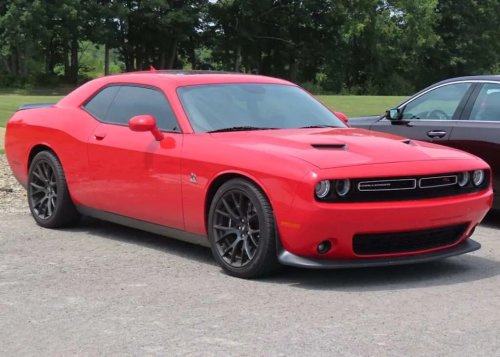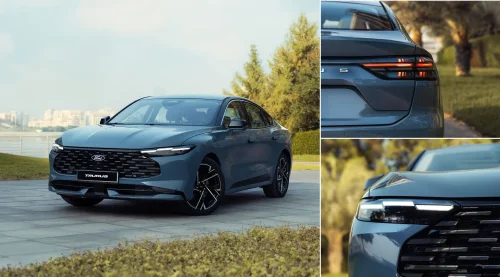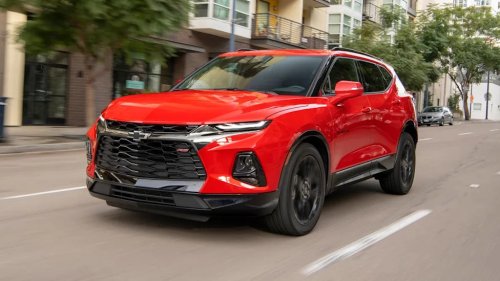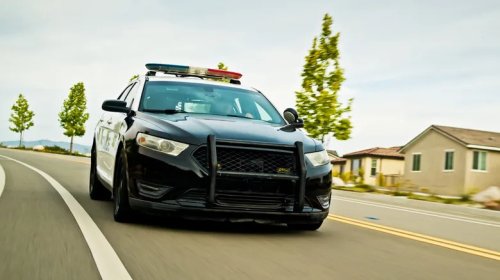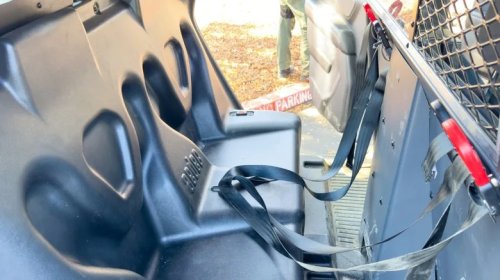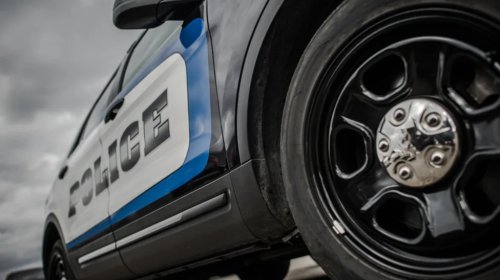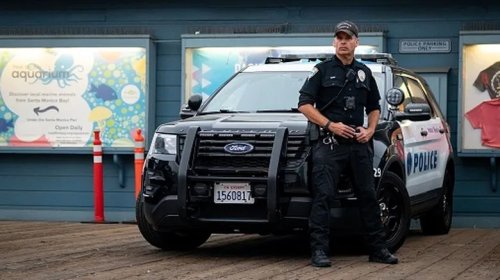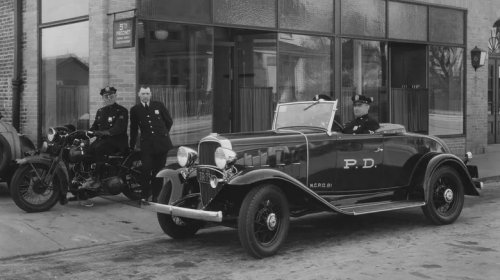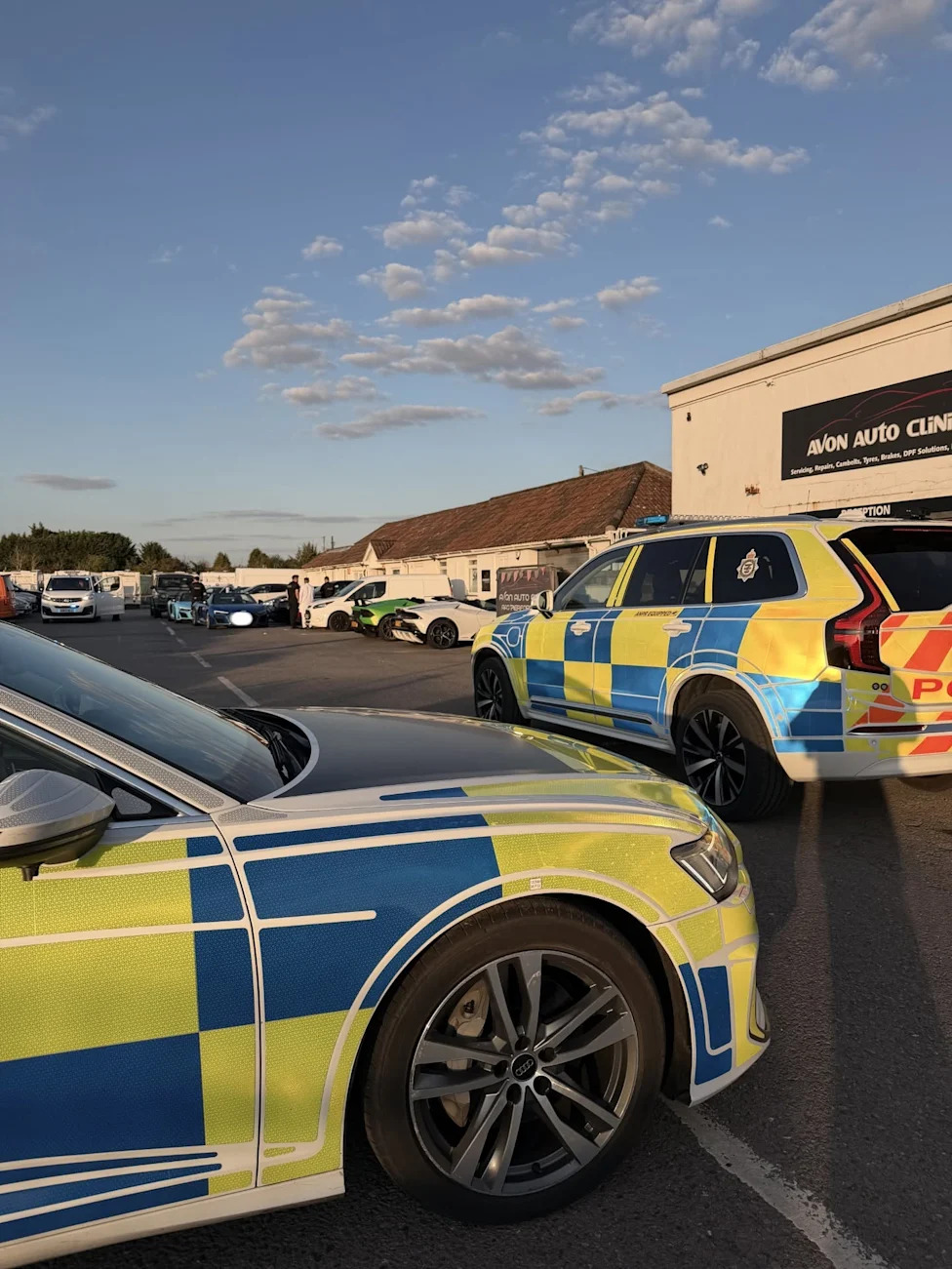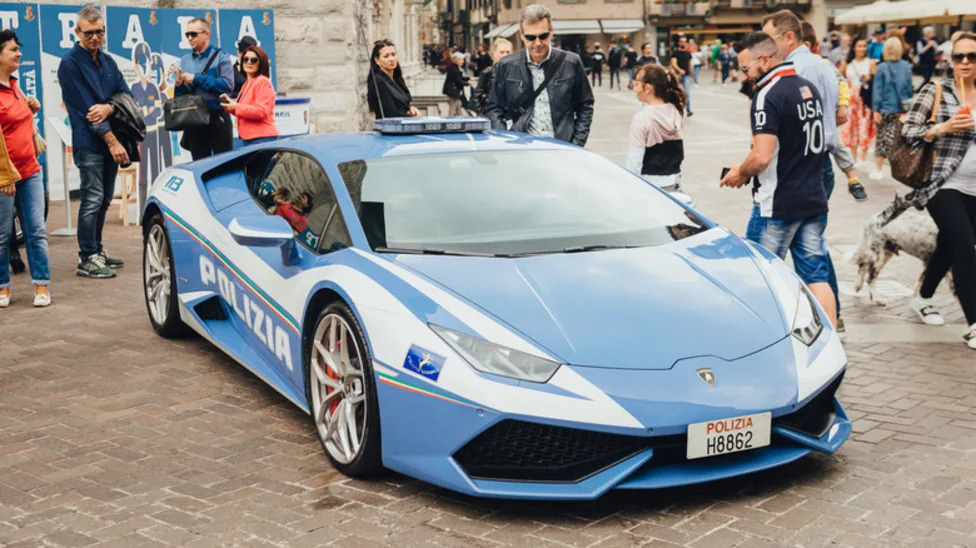
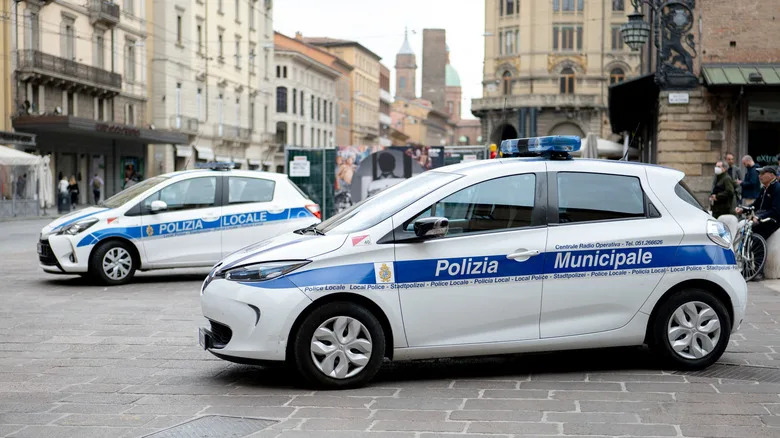
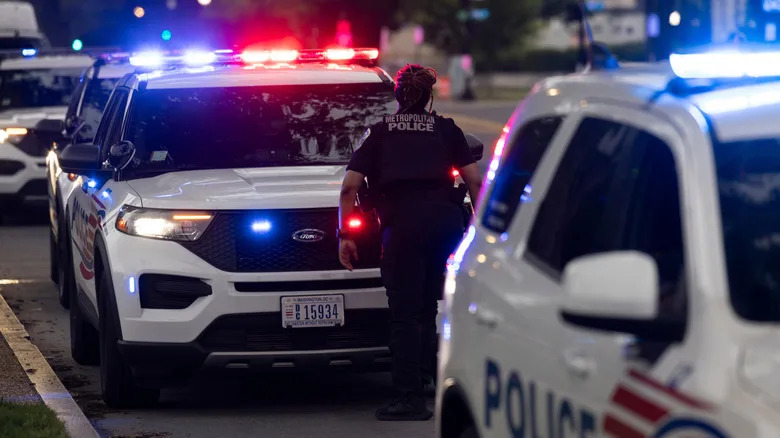



















Denys Poliakov/ShutterstockIn the U.S., seeing diesel-powered hatchbacks is about as rare as seeing a unicorn, while in Europe, the same could be said for full-size pickup trucks. Roads in the U.S. are typically wider, and many cities were built with cars in mind. In Europe, however, massive urban centers existed long before cars became part of everyday life, and in many cases, the infrastructure simply never embraced them in quite the same way. That contrast also extends to American and European police forces. Flip through dashcam footage from a Los Angeles freeway chase and then a German Autobahn pursuit, and the difference is immediately obvious. America's patrol fleet leans heavily on larger SUVs and powerful sedans, often wrapped in familiar black-and-white liveries.European police forces, meanwhile, typically rely on smaller wagons, hatchbacks, sedans, and compact crossovers, many of which have traditionally been diesel-powered and wear highly visible color markings. Italy, of course, is something of an exception, with the country boasting some of the coolest cop cars in the world. The differences between American and European police cars go well beyond paint schemes and body styles, though, touching everything from mechanics and vehicle size to equipment, sirens, and the features a car must have before it can be considered suitable for pursuit duty. Here are the key differences between American and European police cars.Read more: These Are The Deadliest Cars On The RoadVehicles of choice for American and European police forcesMino Surkala/ShutterstockMost modern pursuit vehicles share the same engine specs as their civilian counterparts, with the real differences showing up in suspension, brakes, and electronics instead. American departments have largely standardized the SUVs and sedans used specifically for police duty, and cars like the Ford Crown Victoria, Dodge Charger Pursuit, Ford Taurus, and Chevrolet Caprice are all familiar U.S. police cars. For example, Ford's Police Interceptor Utility is built on an Explorer SUV platform with all-wheel drive standard across every version. Chevrolet takes a similar approach with the Tahoe PPV, and in 2022, the brand extended that same underpinnings to its first pursuit-rated pickup, the Silverado PPV.AdvertisementAdvertisementMeanwhile, European fleets skew toward mid-size sedans, wagons, and compact crossovers. In 2010, BMW signed a four-year deal to become a key supplier to all 52 police forces across the United Kingdom, headlined by the diesel-powered 330d and 530d Interceptors. A year later, Vauxhall won contracts covering 37 of those same 52 authorities, a deal Fleet News reported would supply roughly 7,000 cars and vans over four years.Germany's relationship with BMW runs deeper still: The E39 5 Series Touring became a fixture of Autobahn patrol work, and the current 5 Series Touring and X3 SUV continue that role today. In tight European cities where space is limited, you can also see subcompact police cars like the Renault Twizy and the BMW i3, while in Italy, Lamborghini has been supplying the state police with the Gallardo, and more recently the Huracán, and the Urus for 20+ years now.Equipment and color differences between American and European police forcesMatt Gush/ShutterstockAmerican police vehicles have one dominant look: that classic black and white livery that LAPD patrol vehicles have worn since the late 1930s. Nowadays, this scheme is associated with police cars nationwide. The UK developed the Battenburg pattern in the 1990s — blocks of fluorescent and reflective blue and yellow designed to be identifiable from up to 1,640 feet away. In Germany, police cars used to be colored in green and white, but switched completely to silver and blue in 2018.Bull bars on U.S. patrol cars date to 1988, when the Arizona Highway Patrol fitted push bars to 20 Ford Mustang SSPs. Europe went the other way: EU Directive 2005/66/EC from 2006 restricted rigid bull bars for pedestrian safety. As far as lights are concerned, Europeans adopted blue lights for police cars predominantly because blue was harder for enemy fighter planes to spot during WW2, with easier identification against other emergency services becoming a factor only later.AdvertisementAdvertisementIn U.S. police cars, having dedicated shotgun and patrol rifle storage racks mounted in the cabin is common, while in places like the U.K., many police officers patrol completely unarmed. There are many other features that make a police car different from a civilian one, and these can differ between countries, too. Steel partitions separating the front seats from the rear are standard practice in the U.S., while in Europe, detainee transport typically has its own type of vehicle. And while American sirens default to a "wail" — one tone sweeping up and down, per the SAE J1849 standard — European sirens use a fixed two-tone "nee-naw" pattern instead. It's most recognizable as Germany's Martinshorn – a set of air horns developed with the German government in the 1930s.Want more like this? Join the Jalopnik newsletter to get the latest auto news sent straight to your inbox, and follow us or add us as a preferred search source on Google.Read the original article on Jalopnik.