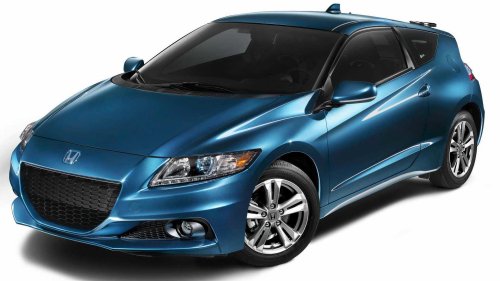
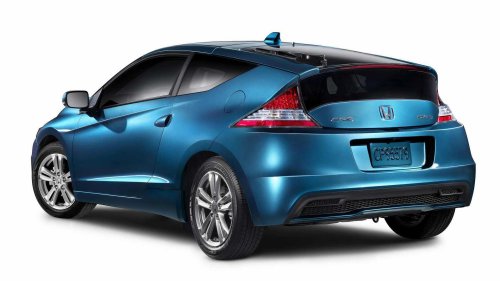
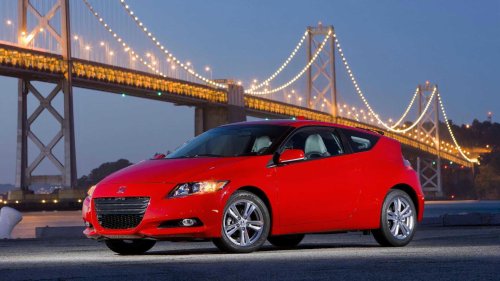
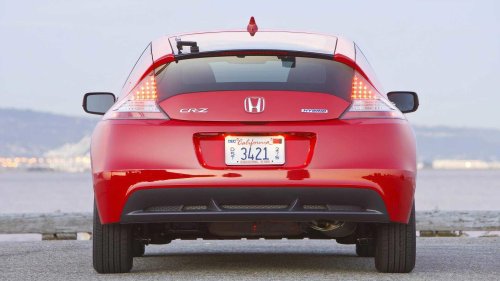
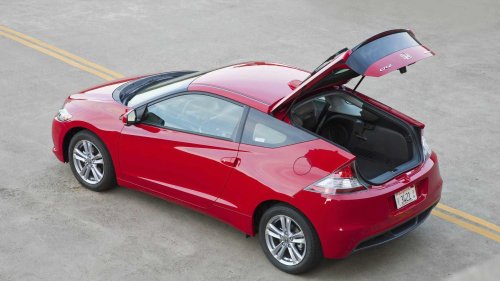
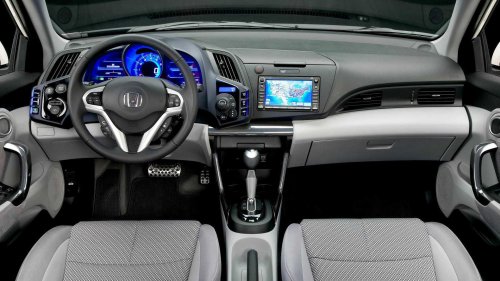
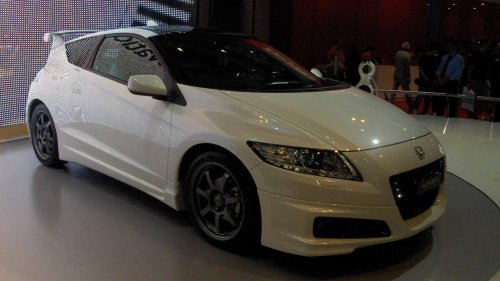
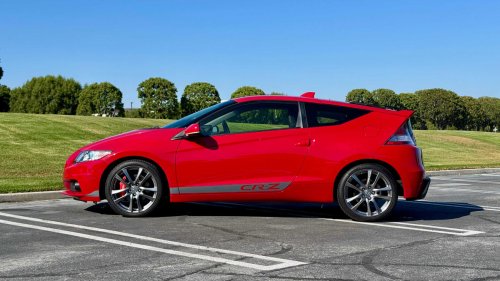



















Jump LinksThe idea of hybrid cars being fun is a relatively recent one. In the era of hybrid hypercars and hybrid powertrains as a way to enhance performance, rather than simply increase efficiency, car enthusiasts have warmed up to the idea that a hybrid car can provide an enjoyable, engaging driving experience. However, this was not the case for many years when hybrids first arrived on the market.One car that did its part, however small, to change the perception of hybrids was the Honda CR-Z. This curious model blended daily driver and sports car traits, creating a product that was quite unlike anything else on the roads. The CR-Z had a production run of just six model years, and has depreciated sharply in the used car world of today, but it still has plenty to offer: reliability, fun, and a unique style.If you’re looking for something a little left field to add to your garage, something that won’t cost the earth to run and maintain and will add a little more character to your daily commute, a CR-Z might just be the right choice for you. Let’s take a closer look at this interesting model, its rarer variants, and what you can expect when shopping for one on the used market. An Overview HondaThe Honda CR-Z is a sporty compact car with a quirky personality, which combines the design and styling features of a sports car with the efficient, sensible hybrid powertrain of a city-dwelling compact car. Honda created the model as a sort of spiritual successor to the CR-X, which had gone out of production nearly two decades earlier in 1991.One of the CR-Z’s unique features is one that makes it especially interesting for car enthusiasts interested in purchasing a hybrid: the CR-Z was one of the first Honda hybrid to be available with a manual transmission, the first being the original Insight. The hybrid powertrain found in the CR-Z uses the sixth generation of Honda’s Integrated Motor Assist technology.Honda The CR-Z was originally offered in three trim levels in North America: the base trim, EX, and EX with Navigation. For its last model year on the market, the CR-Z received a minor facelift which added an extra trim, the EX-L. The base trim level, meanwhile, was renamed to LX. The facelift also involved a design update to the front and rear bumpers, as well as some modifications to the interior.The CR-Z went out of production just six years after its debut, in 2016; its disappearance from the lineup, however, made room for more hybrid models, such as the Clarity and the Accord Hybrid, to join the Honda family. The company initially considered producing a second generation of the CR-Z, however this idea never became a reality. History And Development Honda The CR-Z was introduced in concept form in 2007 at the Tokyo Motor Show as a kind of successor to two other concepts that had been respectively introduced in 2006 and early 2007. One was called the Honda Remix, and explored the design possibilities for a sports car, while the other was called the Small Hybrid Sports, which began to introduce the idea of a sporty hybrid.While many concept cars are built as a way to showcase automakers’ design abilities and creativity, the CR-Z was intended to become a production model from day one, with Honda stating a production version was in the pipeline at the same time as the concept was being introduced.According to Honda, the CR-Z name stood for “Compact Renaissance Zero”. This name reflected the model’s sporty, futuristic design, which was intended to mark a “renaissance” in the world of compact cars. The CR-Z name had previously been used in the mid-1980s for a trim level of the Ballade.Honda In the US, the CR-Z made its first appearance in 2008 as a concept, while the production version was introduced in 2010 and went on sale for the 2011 model year. Honda promoted the model through unconventional channels for the time, such as a Facebook-based video game called Car Town. The CR-Z also made an appearance in a music video, for the song “Ridin’ Solo” by Jason Derulo. On The Used Market Today: Pricing, Reliability, Issues Honda If you’re interested in buying a CR-Z today, you will be pleasantly surprised by how much prices have fallen: the most affordable examples (older, with a higher mileage and likely poorer maintenance) can be had for as little as $5,000. For comparison, the 2011 model cost nearly $20,000 when new. More recent examples, with a lower mileage and a better maintenance record, sit around the $18,000 mark today.When it comes to reliability, the CR-Z has an excellent reputation: there are few complaints and recurring problems associated with it. That being said, even the youngest examples of the CR-Z are now a decade old, so you will still need to keep an eye out for mechanical issues that may arise. We have taken a look at the data about the CR-Z available on the NHTSA website and on CarComplaints, in order to get a comprehensive picture of the model’s reliability.Honda CarComplaints shows that all model years have relatively few complaints logged; there is, however, a downward trend, with the early years having more complaints (2011, the first, has 64) and the latter years having fewer complaints (the following year, the number drops to 10, and eventually to just one by the end of the production run in 2016). The most frequently mentioned issues are related to seat belts, air bags, bodywork and paint, and interior accessories.In terms of recalls, airbags are once again the most frequent problem area: the only recall that isn’t related to airbags applies exclusively to the 2011 model year, and is related to an issue with the engine stall prevention software, which may cause the car to move in an unexpected direction. A Little More Spice: The Mugen Versions And Beyond Pineapple fez/Wikimedia Commons The CR-Z already had plenty of character on its own, but Honda decided to make some even more interesting versions of it. More specifically, these CR-Zs were curated by a company that effectively acts as Honda’s motorsport division, Mugen. One Mugen version of the CR-Z was equipped with a sportier suspension, an aero package, a sports exhaust, new 17-inch wheels, and a new grille. The interior was also revamped with some cosmetic enhancements, such as a carbon fiber shift knob.The Mugen CR-Z had a hybrid powertrain like its standard counterpart, but featured a supercharged version of the 1.5-liter inline-four engine, which also had an upgraded ECU. This powertrain produced a total of 200 hp and 158 lb-ft of torque. The Mugen CR-Z could hit 60 mph in approximately six and a half seconds, an improvement of over two seconds compared to the standard model.Around the same time the CR-Z Mugen was being introduced, another Mugen variant of the model also made its debut, with a very limited production run of just 300 units. The CR-Z Mugen RZ was only offered in Japan, and added an aerodynamic body kit (which included revised side skirts, a new grille, and a front spoiler) plus several other upgrades. Some of the features on offer included a sports twin exhaust, upgraded brakes, and an adjustable suspension.Inside the car we find an individually numbered plaque and a two-tone color scheme for the seats among other aesthetic upgrades. Once again, a supercharged version of the engine is running the show as part of a hybrid powertrain. The total output is 176 hp and 194 lb-ft of torque.Jared Rosenholtz/CarBuzz/Valnet There was another high-performance version of the CR-Z which was not built by Mugen, but rather by Honda Performance Development (HPD), Honda North America’s racing division. HPD, in a similar fashion to Mugen, added a supercharger into the mix, bringing output up to 197 hp and 170 lb-ft. This modification was only available for cars fitted with the six-speed manual transmission, and resulted in a 0-60 mph time of 6.7 seconds. Last year, our very own Jared Rosenholtz got the opportunity to drive one of these rare HPD cars, more specifically car #001 from the Honda museum in California.Sources: Honda, NHTSA, CarComplaints