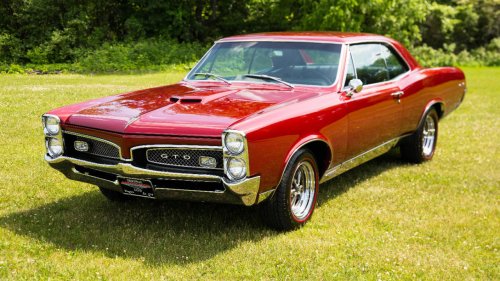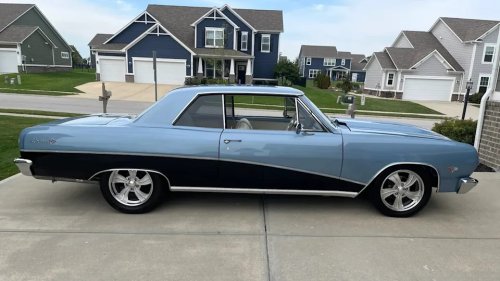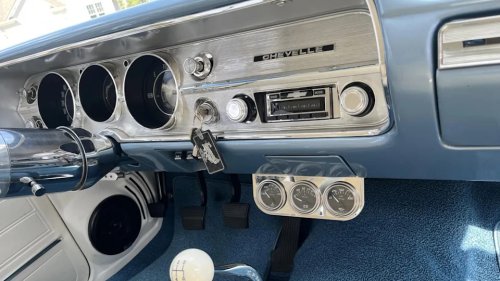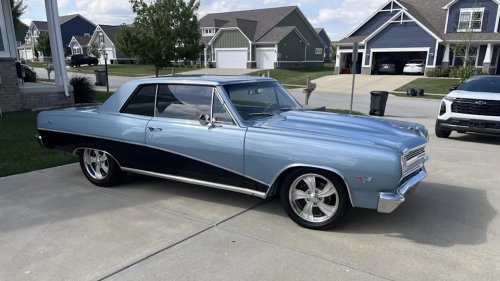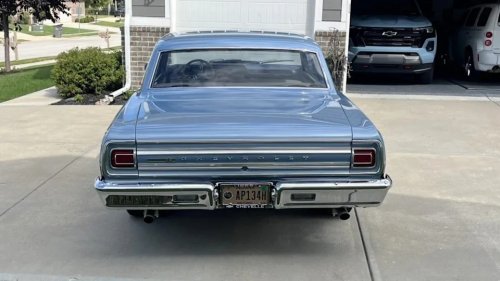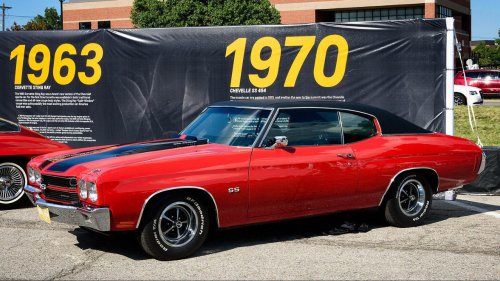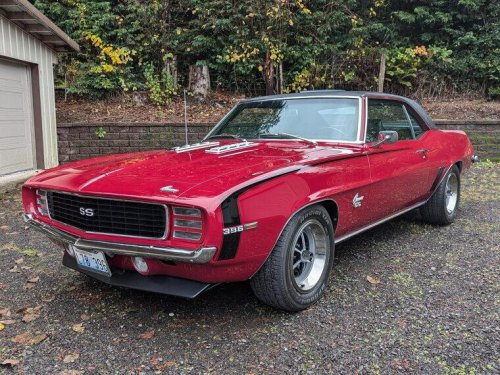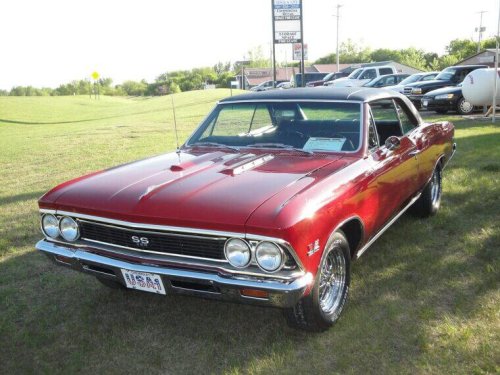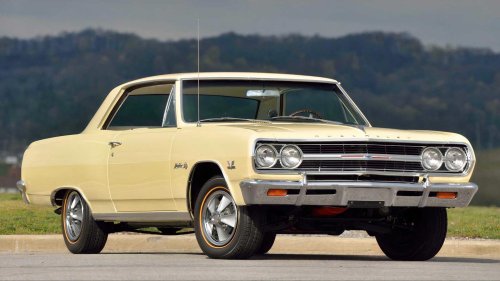
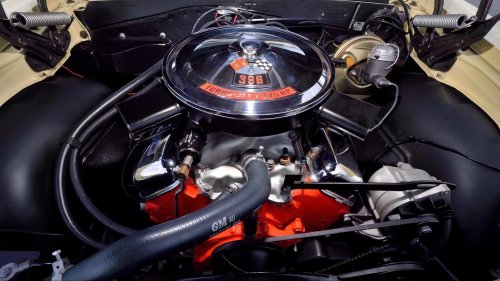
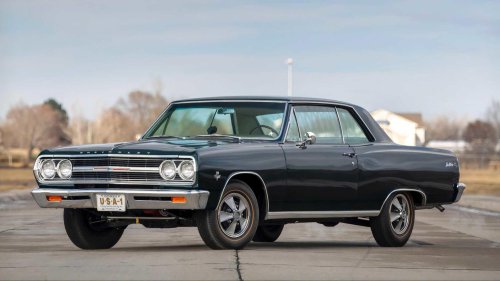
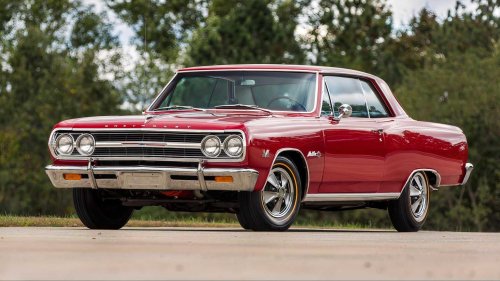
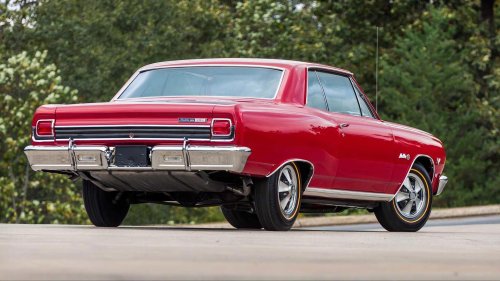
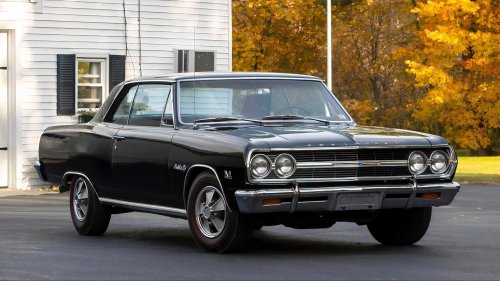
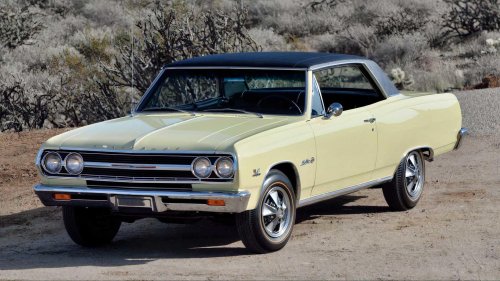
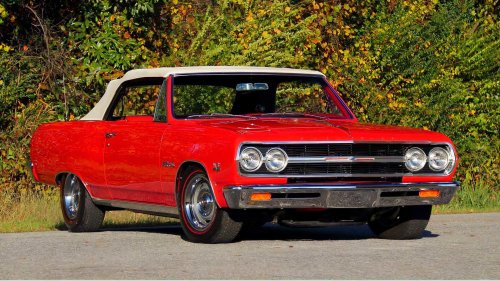
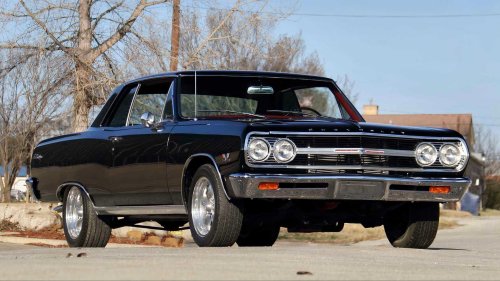



















During the golden era of American muscle, Chevy cars were hands down the most popular, which is another way of saying they sold a ton of them. Camaros, Chevelles, and Novas were definitely cool, which is why speed junkies snapped them up, but the sheer volume of their production means they aren't super collectible. Even coveted rides like the '70 Chevelle SS 454 LS6 are fairly common with 4,475 units produced, when compared to the 112 Dodge Charger Hemi R/Ts that were built that same year. There are some insanely limited and valuable Corvettes, but that's a sports car, and so a rare Chevy muscle car is the real rarity.That's not to say that classic Bowtie muscle isn't collectible, because people still love them today, but factory unicorn cars are far and few between. With just 607 units, the 1967 Camaro Z/28 certainly qualifies, but there is an honest-to-goodness Holy Grail ride from an unexpected nameplate that tops the rare Chevy muscle car list. The 1965 Malibu SS 396 was mid-model year after thought and produced in such small numbers it was basically a ghostly apparition. Even eerier is that this spectral street machine seems to have all but vanished into the spirit world, like it never existed in the first place. The 1965 Malibu SS Z16 Is Chevy's First Real Muscle Car Mecum When John DeLorean created a high-performance version of the , the classic muscle car era officially began, and all automakers scrambled to replicate its runaway success. Buick came up with the punchy Gran Sport based on the Skylark, and Oldsmobile transformed the Cutlass into the ripping 442. Chevy had the coolest of the bunch, with the Malibu Chevelle, but it was a bit confusing at first. Unlike the other GM muscle cars, the Chevelle didn't actually have any badging that identified it as such. Until the Chevelle became a standalone model in 1966, they were all marked as Malibus, so that's what most owners and collectors call them.The Chevelle was an option package, not a model or even a trim level, so technically the car is a Malibu. One thing that was crystal clear is that, despite having a bold stance and aggressive styling, the Malibu SS was a little underpowered compared to its contemporaries. Equipped with a 300-horsepower 327ci V-,8 which was upped to 350-horsepower in '65, the Malibu SS wasn't quite the bruiser that the Chevelle would come to be known as. Then, in late 1965, Chevy made the 375-horsepower 396 available to the Malibu SS, which is realistically its first true muscle car. Known by its RPO code, the '65 Malibu SS Z16 was a well-kept secret as only 201 were produced. 396 Monster Big-Block Mecum The 396ci big-block was introduced in 1965 for the Corvette, and was such a game-changer that Chevy wanted to include their new muscle car on the team, so the Malibu got a very small number of them that year. Unfortunately, the Malibu got a diluted version of the 396, as the 'Vette was gifted a big-carb 425-horsepower beast. There's nothing wrong with the 375 ponies of the Malibu's 396, but had Chevy used the Corvette variant in the SS, they would have had a car that could have competed with the Max Wedge and Hemi Mopars that dominated most of the classic era. In any case, the 1965 Malibu SS 396 Z16 was at least the most powerful GM muscle car, and it had no problem embarrassing anything Ford or AMC had to offer. Badder Than a Chevelle SS 327 MecumIn 1965, the Malibu Chevelle SS topped out with a 350-horsepower 327ci small-block V-8 that was good, but not great. Actually, according to a CARS magazine test drive, as reported by Hemmings, this car launched to 60 mph in 7.6 seconds and crawled a quarter-mile in 16.0 seconds, so it wasn't really all that good. With the added power of the 396, however, the '65 Malibu SS Z16 could sprint from 0-60 in 5.5 seconds and blaze the quarter-mile with a 14.1-second ET. That's not quite a 13-second car, which was the gold standard in the classic era, but certainly way better than the family wagon numbers the SS 327 was putting up. Holy Grail Status For The Z16 Mecum Including the 300, 300 Deluxe, and SS, Chevy sold an astounding 378,618 Malibus in 1965, making it one of the most popular vehicles ever produced. Granted, most of those were sedans or station wagons, but the two-door SS accounts for 71,984 coupes and 9,128, which is still a mass-produced ride. Had Chevy left things at that, the '65 Malibu Chevelle SS wouldn't have ever become a serious collector car, but the ultra-rare Z16 gave it a Holy Grail.Chevy built one test car, realized how truly kick-ass it was, then produced another 200 for an extremely limited run. In 1966, the 396 big-block was plentiful and became synonymous with the Chevelle SS, but in 1965, it was like a unicorn riding a rainbow, only with some unholy amounts of power. Malibu SS Z16 Pulls A Disappearing Act Mecum The '65 Malibu SS Z16 is obviously rare, but when it comes to classic muscle, cars like this are generally abundant on the collector's scene, because they are so valuable and end up getting flipped frequently. The Z16, however, has practically disappeared, with maybe a handful of them left in existence. This could be due to a couple of factors, like it wasn't immediately identified as a keeper, and the fact that by 1966, the 396 was very common in the Chevelle. Back in the day, the 1965 Malibu SS 396 was seen as just an engine option, not a potential Holy Grail car, so presumably most of them weren't coddled as future paydays, but rather driven into the ground. there's surely some barn finds out there, but the existing stock is sparse. Only Replicas Remain Mecum Doing a search for 1965 Malibu SS Z16s listed or sold at auction returns a decent number of results, but most of them are replica or tribute cars. Maybe underappreciated in its day, the '65 Z16 is starting to pick up steam as a collectible, but the problem is, there just aren't that many of them out there. To meet the demand, modders and customizers are dropping 396 big-blocks into 1965 Malibu SS cars, creating rides that only experts can tell aren't the real deal. Clearly, a replica isn't as good as the original, but they are way cheaper and much cooler than the SS 327 donor it was made from. Malibu SS Z16 Prices And Values Mecum While exceedingly rare, the '65 Malibu SS Z16 isn't completely nonexistent and occasionally pops up at an auction, commanding a premium price. One sold at Mecum Indy 2023 for 250,000, and another beat that at Mecum Kissimmee 2018, dropping the gavel at $280,500. It's hard to find one of these classics, but even harder to see one go for less than $200,000 at auction.The '65 Malibu SS Z16 is so rare that Hagerty doesn't even offer a value for it, but sets a Concours condition SS 327 coupe at $106,000 and a convertible at $121,000, so the 396 is definitely in the quarter-million-dollar range. J.D. Power actually does have a value for the Z16 and sets the high retail price at $245,000 for the coupe and $252,000 for the drop top. Beware of Fakes Mecum Because the 1965 Malibu SS Z16 is such a big-money collectible, many unscrupulous sellers try to pass off clones as the real deal. Unfortunately, there is nothing on the VIN of the '65 that positively identifies it as an SS car or Z16, which makes faking them kind of easy. The VIN does indicate if it is a Malibu V-8 car by starting off with 138, so if those are different, it ain't an SS, but there were plenty of non-SS cars with V-8s. The trim tag also identifies the car as a Malibu V-8, but again, no SS or Z16 confirmation. If a car has mismatched VIN and trim tag numbers, it's a fake, but beyond that, its hard to tell. The car should have all the equipment and badging of the SS package, but again, those are easy to duplicate. An engine with a peculiar casting date is the best way to tell, but even that could be a replacement V-8 for a legit Z16. The Chevy Muscle Car You've Never Heard Of Mecum Chevy muscle cars like the '67 Camaro Z/28 or '70 Chevelle SS 454 LS6 are rare but also legendary and widely appreciated by collectors, while the '65 Malibu SS Z16 is an arcane secret known only to the Skull and Bowtie society. It wasn't a factory drag car like the '63 Impala Z11 nor a dealer special order like the Yenko Super Camaro, but a regular production model that anyone could purchase if they wanted. The thing is, it was not really advertised and so most buyers had no idea it was on the table, and because of that, ended up being one of the most obscure rides of the Golden Age. Even now, not many are aware of it, but just enough are to ensure that on those rare occasions it comes up for auction, it goes for a price befitting its elusive awesomeness. It's also a pretty great Easter Egg for muscle fans to stumble on and revel in its inherent coolness.Sources: Hagerty, J.D. Power, and Mecum