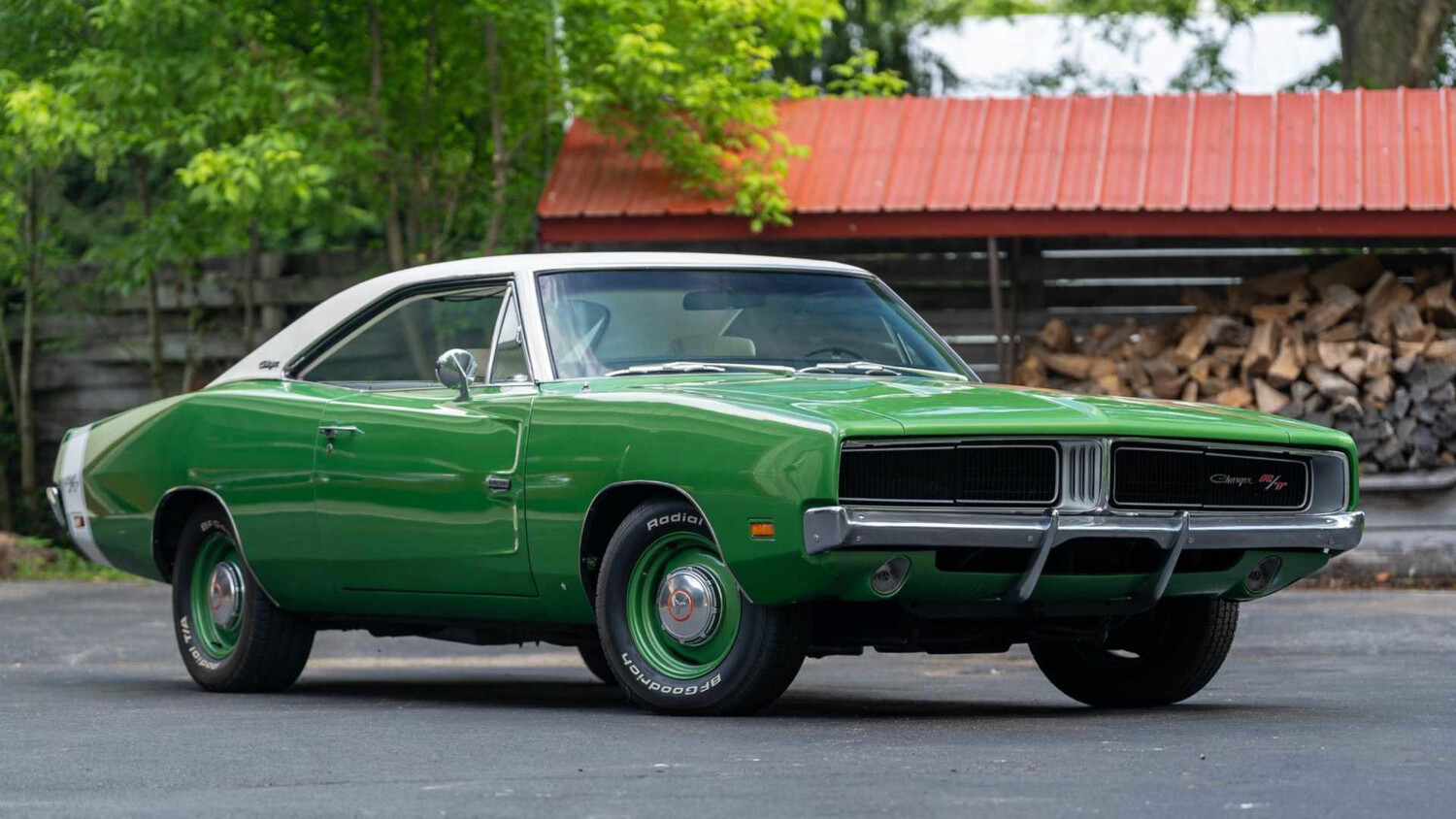
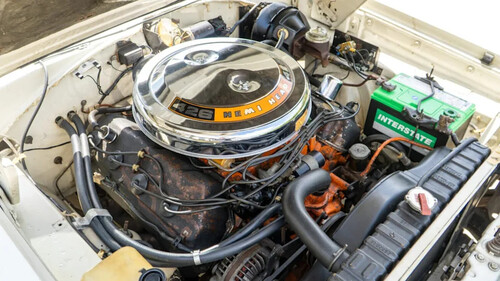
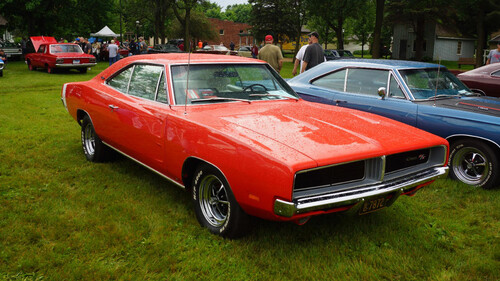
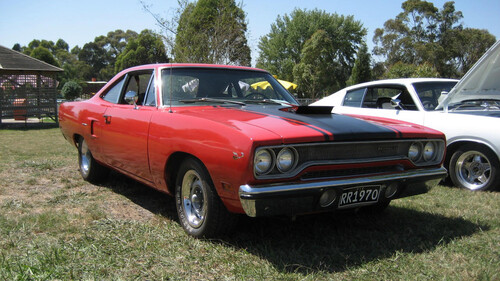
In 1967, the Dodge Coronet R/T was the Hemi car. Not the Charger, not the 'Cuda - the Coronet R/T. Dodge dropped 283 Street Hemis into Coronet R/Ts that year against just 118 in Chargers, making the B-body the factory's top Hemi carrier before most buyers had fully processed what that meant. Three years later, the whole thing had been reduced to somewhere between 13 and 15 cars, then quietly buried while the Dodge Charger walked away with all the glory.That collapse, from 283 Hemi units in 1967 down to roughly 14 by 1970, is one of the sharpest production nosedives in American muscle history. The engineering never changed. The Hemi never lost a single horsepower. What changed was a corporate decision, dressed up as market logic, that rerouted every marketing dollar and every column inch toward the flashier sibling and left the Coronet R/T to die on the vine.Across the full 1967-1970 run, Chrysler built approximately 633 Hemi Coronets in all body styles combined. That figure produces sub-variants so narrow that specific configurations were measured in single digits even when the cars were new. Today, when a documented example surfaces, collectors move fast — and they pay accordingly. The B-Body Hemi Wars Of The Late '60s Mecum The Coronet held the senior B-body position in Dodge's mid-size lineup heading into the muscle era. Longer and more traditionally styled than the Dodge Dart, it shared its platform with the Charger and launched the R/T (Road/Track) trim for 1967 with the 440 Magnum as the standard engine and the 426 Hemi as the option that turned it into something else entirely.In that first year, the Hemi broke decisively toward the Coronet R/T. The original 1966-67 Charger drew its own audience, but in 1967, it wasn't the Hemi car. The Coronet R/T was, and the production numbers backed it up without argument.That positioning mattered. The Coronet R/T carried the R/T badging and the factory credibility to stand as Dodge's mid-size performance flagship. It was always the driver's machine over the showroom piece, concrete specs over styling theater. That distinction defined everything that followed - and became its undoing - when the 1968 Charger redesign landed, and the market made up its mind almost overnight. The Coronet R/T 426 Hemi Hit Stiff Competition In 1968 Mecum For 1968, Dodge built somewhere between 219 and 230 Hemi-powered Coronet R/Ts. The modest variance across sources — 219 from build documentation, 230 from Street Muscle Magazine's production tally — likely reflects whether all Hemi convertibles are counted in the total. Either figure confirms this was already a boutique proposition inside a car that moved nearly 11,000 total R/T units that year.The Hemi itself was the 426 Street version: 425 horsepower gross, fed through dual Carter AFB four-barrel carburetors, a 50-horsepower jump over the standard 440 Magnum's 375. Of those ~219-230 Hemi units, roughly 100 left the factory behind a four-speed manual. Coronet Hemi convertibles for 1968 are believed to have been in the low double digits, a sub-configuration so narrow that documented survivors are essentially museum-grade artifacts today.The problem was already visible in the 1968 data before anyone wanted to say it out loud. Dodge moved 96,100 Chargers that year, well above the planned 35,000, because the 1968 redesign's Coke-bottle fastback body hit something the market hadn't known it was waiting for. The Hemi breakdown told the same story: 475 Hemi Charger R/Ts rolled out against the Coronet's ~219-230 units. After just a year, the Charger had already more than doubled the Coronet's output. That gap would only widen from there. The Year-by-Year Collapse: 1969 And 1970 Mecum If 1968 was the Coronet R/T Hemi's production ceiling, 1969 was the hard landing. Total Hemi Coronet R/T output dropped to 107 units; a figure backed by Govier/Chrysler Registry Certification documentation that leaves no room for interpretation. Of those 107, hardtops accounted for 97 and convertibles for 10. Break the 97 hardtops down by transmission, and you get 58 four-speed manual cars and 39 TorqueFlites. Of the 10 convertibles, only four were paired with the four-speed.Those aren't collector rarity figures invented after the fact; they're actual factory output for a car produced alongside 175,600 total Coronets that year. The Hemi was specified on 107 of them. Across town, the Charger peaked at 20,100 R/T units in 1969, with approximately 432 fitted with the Hemi. That's four times the Coronet's count in a single model year. The Coronet R/T wasn't losing the Hemi war; it had already lost it.Mecum By 1970, the numbers were catastrophic. A styling refresh introduced twin loop bumpers that Super Stock magazine reported the majority of buyers didn't care for, and total Coronet R/T production across all engines cratered from 7,200 to just 2,615 units. The Hemi option had effectively ceased to exist: just 13 to 15 Hemi Coronet R/Ts left the factory in 1970. Of those, four were four-speed hardtops. Two were convertibles. The Hemi Coronet R/T hadn't wound down — it had vanished, quietly, without announcement, without a sendoff. Why the Charger Won and the Coronet Lost Mecum The 1968 Charger's sculpted flanks and sweeping fastback roofline made the Coronet's upright, traditional styling feel a generation older the moment both cars sat on a showroom floor together. Dodge's marketing team recognized what the sales figures were already confirming: buyers were coming in asking for Chargers. Resources followed demand. The Scat Pack campaign gave the Coronet genuine brand support on paper, but it couldn't overcome what people saw when they looked at both cars parked side by side. Style won. It almost always does.The Charger didn't beat the Coronet R/T on performance. Both cars shared the same Hemi, the same transmission choices, the same B-body bones underneath. What the Charger had was a body that looked like it deserved that drivetrain.By 1969, the institutional gap had opened wide. The Charger was appearing in films, on racetracks, and in the kind of advertising that creates cultural moments. The Coronet was running identical mechanicals in a body that the market had quietly moved past. Dodge wasn't making an irrational call by prioritizing the Charger — it was responding to three straight years of data that said exactly where buyers stood and weren't going to change their minds.Mecum For 1971, Dodge made it official: the Coronet two-door was discontinued entirely; all mid-size two-door performance folded into the Charger. The sales increase that followed was, by documented account, primarily attributable to eliminating the Coronet two-door. The Coronet R/T didn't fade out on its own terms — it was absorbed, stripped of its identity, and handed over to its faster-selling sibling. Hunting The Ghosts: What Surviving Hemi Coronets Bring Today Mecum Across 1967-1970, approximately 633 Hemi Coronets were built across all body styles and configurations. That number, compressed further by more than five decades of attrition, has produced a collector market where the right documentation — Govier certification, Chrysler Registry paperwork, original broadcast sheets — carries nearly as much weight as the car itself.The auction results confirm it. A 1969 Coronet R/T 426 Hemi Convertible recently sold for $770,000, setting a new record for the nameplate and shattering a benchmark that had stood for a decade. Earlier, a 1969 Hemi Coronet R/T convertible in Bright Green cleared $687,500 at Mecum. For documented Hemi hardtops, prices consistently run north of $100,000, against the $61,300 average that non-Hemi 1969 Coronet R/Ts fetch at public auction. The Hemi premium isn't a soft number, and it's not softening.Mecum Auctions One 1968 Hemi convertible — believed to be one of only 11 built with the Hemi and automatic transmission combination and one of just five known survivors — came up at Mecum's Indy 2026 auction. The owner declined an offer of $250,000 and walked away with the car. That's what it means to hold the right Coronet in 2026: the owner's floor is higher than most buyers' ceiling.What survives isn't just rare iron — it's proof that Dodge once built a performance car that never got the credit the engineering deserved. The Charger earned its legend. But the Coronet R/T Hemi gearheads who tracked these cars down early, documented them properly, and held on through decades of obscurity knew something the broader muscle market is still catching up to. The auction results are making the argument for them now, one six-figure sale at a time.