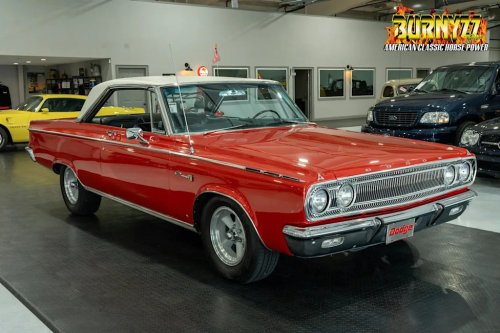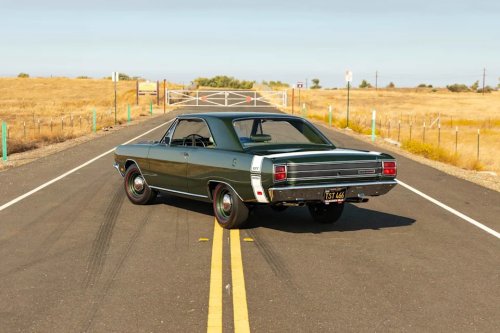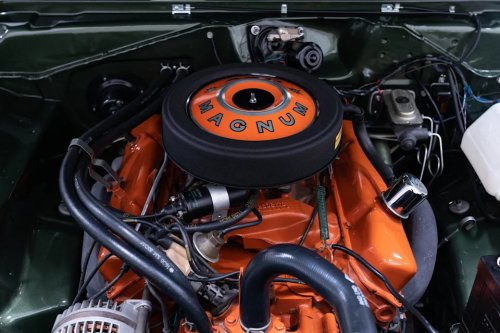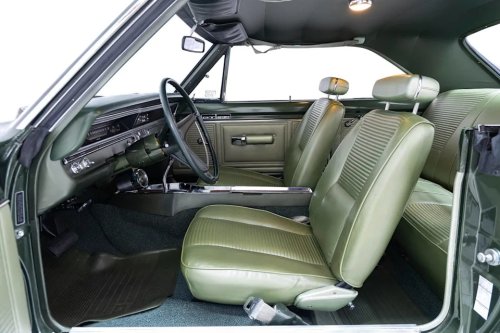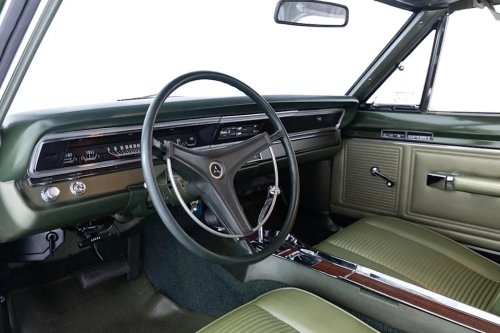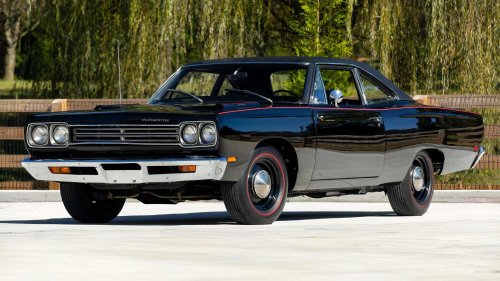
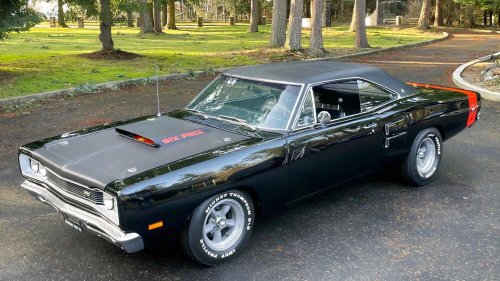
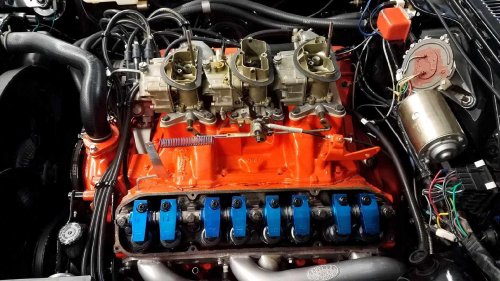
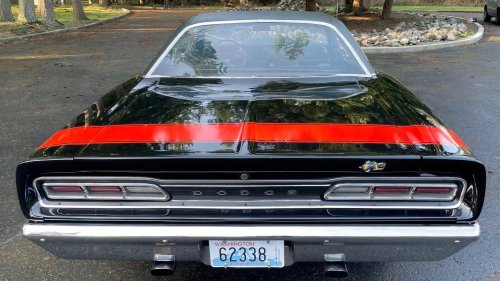
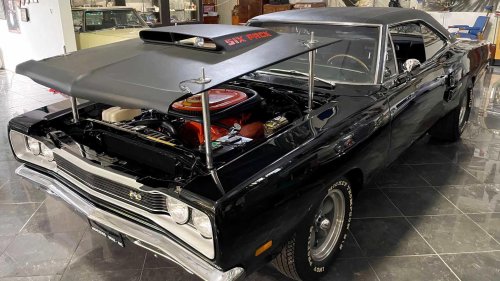
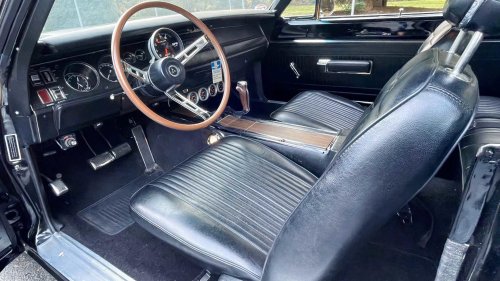
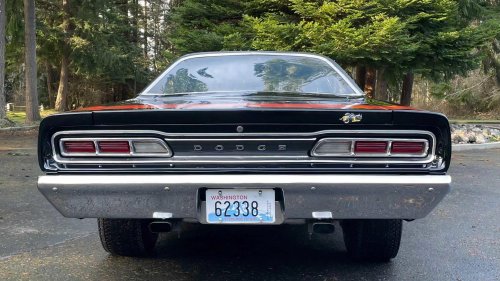
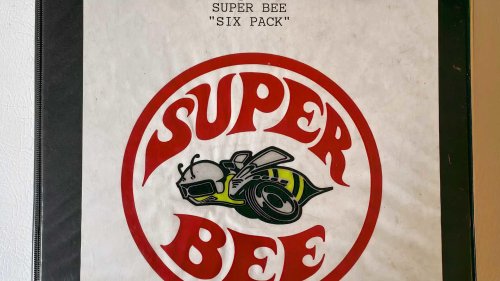



















One Mopar got the cartoon mascot, all the attention, and the kind of reputation that still starts arguments at cars and coffee before anyone’s even finished their first cup. Its Dodge sibling got nearly the same hardware, the same low-buck performance mission, and a lot less of the spotlight, weirdly. That’s funny now, because this was a proper street brawler, the sort of car that looked like it had shown up to the party already annoyed.Back in the late '60s, Chrysler had figured out something Detroit sometimes forgot after getting too comfortable with option sheets and shiny trim. Young buyers didn’t always want more chrome, more padding, or more reasons for the monthly payment to swell up like a bad fuel line. They wanted a big engine, a midsize body, and enough attitude to make the stoplight next to them feel nervous. Plymouth hit that nerve first. Dodge answered with a car that deserves a lot more love than history usually gives it. Dodge Knew Plymouth Had Already Cracked The Code Mecum By the time Dodge got serious about answering Plymouth’s budget-muscle formula, the homework had already been done in public. The Road Runner had shown there was real money in stripping a B-body down to the essentials, dropping in serious V8 power, and selling the whole thing with a grin instead of a tuxedo. The Road Runner outsold the pricier GTX 44,599 to 18,940 in its first season, then nearly doubled to 84,420 units for 1969. That was a very clear warning shot.How strong was the formula? Strong enough that the Plymouth Road Runner accounted for 35 percent of the division’s midsize-car sales, which is about as subtle as a burnout in a church parking lot. Once that happened, Dodge didn’t need a boardroom retreat to understand what came next. It needed its own low-cost muscle car, and fast.That’s what makes this rivalry so good. The Road Runner got there first and turned the budget-muscle idea into a smash. Dodge followed with the same broad mission, but wrapped it in a different body, a different personality, and a little more menace. The Forgotten Dodge Super Bee Was A Worthy Rival To The Road Runner Bring a TrailerThe car was the 1969 Dodge Super Bee, and it absolutely deserved to be mentioned in the same breath as the Road Runner. It was Dodge’s budget B-body bruiser, based on the low-line Coronet two-door body style and built around the same idea that made Plymouth’s formula work. Keep the fluff in check, keep the engine honest, and give buyers the most punch per dollar possible. That approach let Dodge fit a specific 383-cubic-inch big-block and a standard four-speed while keeping the sticker below $2,600 when the car first arrived in 1968. By 1969, the mission was still intact, just better known.The Super Bee, however, didn’t feel like Plymouth’s bird with a different badge glued on. It had Dodge roots, Dodge sheet metal, and a more hard-edged presentation. In essence, the Super Bee was a B-body intermediate available only as a two-door pillared coupe or hardtop and stripped of unnecessary frills to keep performance high and price low.It was also aimed right at buyers who might’ve looked at a Coronet R/T and decided they’d rather spend the difference on tires, fuel, and whatever was left of their self-control. The Super Bee was added because some shoppers found the R/T coupe’s $3,379 sticker too steep. Dodge’s answer was a few-frills, back-to-basics coupe with a 335-horsepower 383 that directly targeted the hot-selling Road Runner.And yet, history didn’t split the praise evenly. The Super Bee’s 1969 production totaled 27,846 cars, while the Road Runner sold 84,420 that same year. In hindsight, it's quite strange to see that big a gap. Three Engines Gave The Bee Its Sting Bring a TrailerThe core Super Bee story starts with the 383. Don't be fooled into thinking that this was some placeholder engine buyers tolerated until they could tick a more expensive box. The standard 383 in the Super Bee was rated at 335 hp, and it gave the car exactly the kind of street reputation Dodge wanted. It was the affordable version of the idea, but not the watered-down one.Then things got spicier. The 1969 model added the 390-hp 440 Six-Pack to the Super Bee lineup through the same A12 package offered on the 1969 Road Runner. That package brought the lift-off matte-black Ramcharger fiberglass hood, black steel wheels, and a Dana 60 with 4.10 gears. In other words, Dodge looked at “budget muscle” and decided it could still get a little unhinged. Bordering On Ridiculous Bring a TrailerThe 440 Six Pack option cost $463 above the $3,138 hardtop base figure. That’s one of the best parts of the whole Super Bee story. This car started life as the value choice, then casually offered an option package that could terrorize the boulevard and the strip without asking permission from anyone in the accounting department.And then there was the halo motor, the 426 Hemi. On paper, it made the Super Bee a budget car only in the same way a shark is technically just a fish. Power was rated at 425 hp, but only 166 of the 27,846 Super Bees built for 1969 got one. That rarity adds to the equation because the Hemi turned an already serious car into something that bordered on ridiculous. Why The Super Bee Felt Different From Its Famous Sibling Bring a TrailerThere was more that separated the Super Bee from the Road Runner. The Bee was based on the low-line Dodge Coronet, and its interiors were utilitarian, with basic vinyl bench seats and the Charger’s Rallye instrument panel added for some performance flavor. That gave the Dodge a slightly more serious, mechanical feel than the Plymouth, which leaned harder into its irreverent mascot and broader, more playful branding. Right From The First Shift Bring A TrailerThen, unlike a lot of entry-level muscle cars of the period, the Super Bee didn’t cheap out with a standard three-speed. Both 1968 and 1969 Super Bees came with an A833 four-speed manual as standard equipment regardless of engine choice. That’s a pretty loud statement about priorities. Dodge wanted the car to feel right from the first shift.The body helped, too. For 1969, the Super Bee lineup included both hardtop and pillared coupe forms, and the pillared coupe used flip-open rear side windows instead of roll-up glass. On top of that, the Ramcharger Air Induction System arrived for 1969, pushing colder, denser air through the carburetor and costing $73. The Market Finally Treats It Like More Than A Footnote Bring a TrailerFor a long time, the Super Bee lived in the Road Runner’s shadow, which made it seem like the cheaper cousin people settled for. That story doesn’t hold up so neatly now. The very thing that hurt the Super Bee’s legacy when new, lower volume and weaker mainstream recognition, is part of what makes it interesting today. The 1969 Super Bee production stood at 8,202 coupes and 19,644 hardtops, while the Road Runner ran away with 84,420 sales that year. Fewer people bought the Dodge, and now that scarcity has some real weight behind it.The average sale price for a '69 Super Bee sits at a very respectable $87,000, with the top sale recorded being a whopping $247,500. This, more than anything else, reflects the fact that collectors have finally caught up to what the car always was: a real-deal Mopar muscle machine with multiple engine personalities and a much smaller crowd around it than the more famous sibling. Punches Just As Hard Bring a TrailerThat doesn’t mean the Super Bee has eclipsed the Road Runner in fame, because it hasn’t. The Plymouth still owns the bigger legend, the stronger sales story, and the better-known mascot. But if you’re the kind of muscle car fan who likes the car that punches just as hard while getting talked about half as much, the '69 Super Bee makes a terrific case for itself. It was cheaper, tougher-looking, standard with a four-speed, and available with everything from a 383 to a Hemi. Forgotten? Sure. Outgunned? You'd be silly to think so.Sources: Hemmings, Hagerty, Classic.