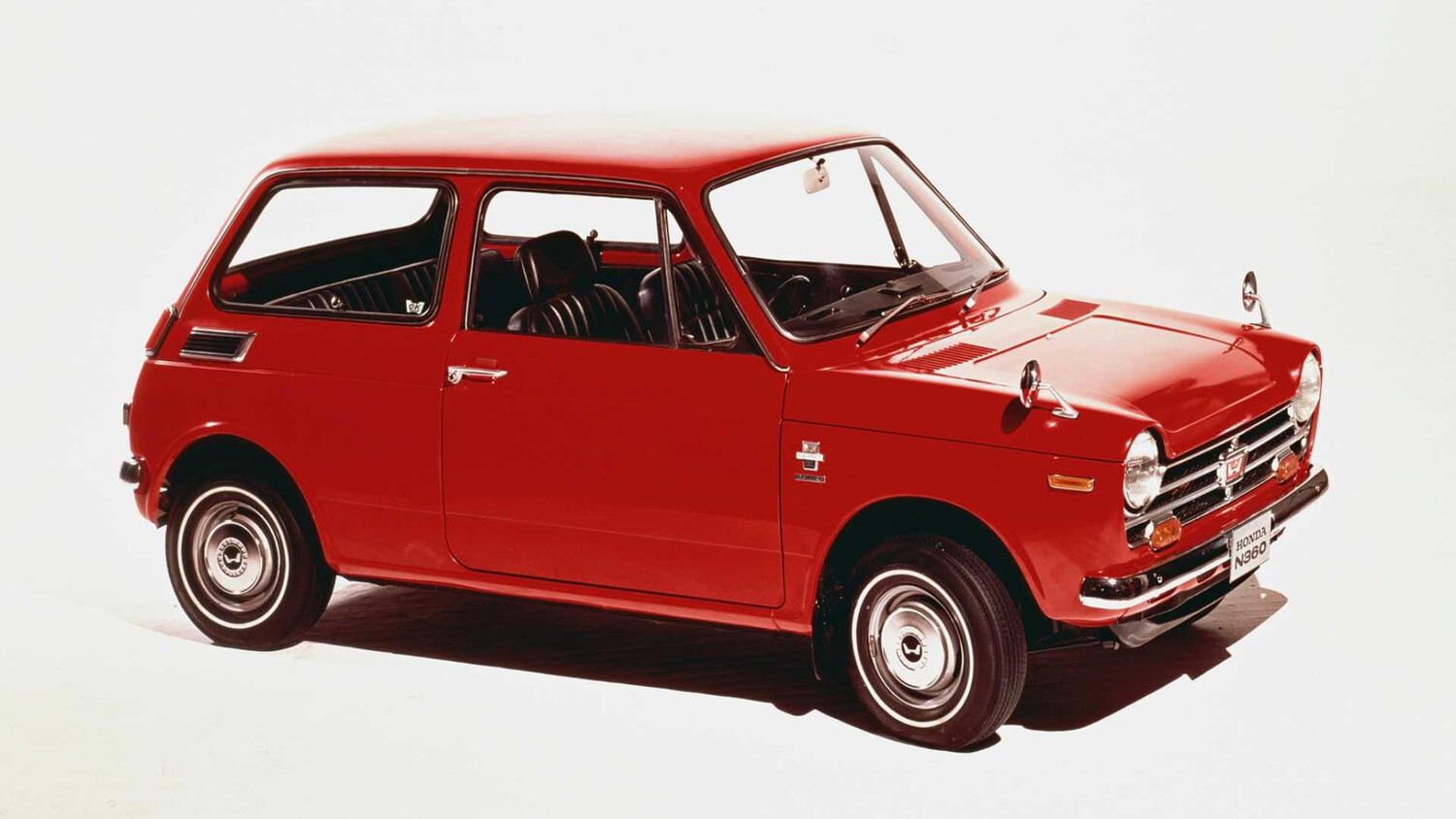
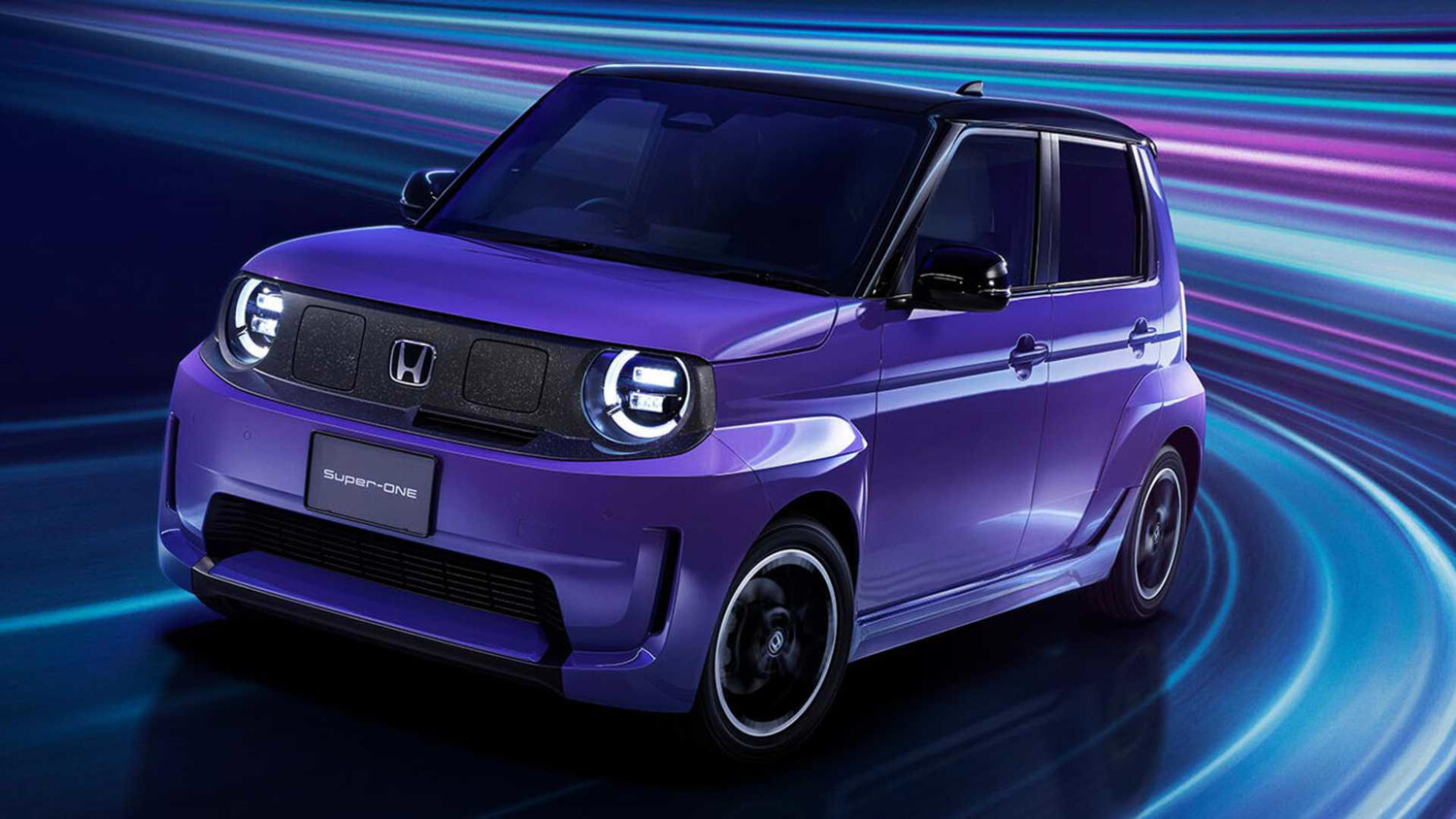
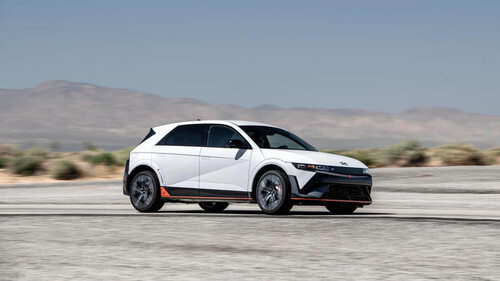
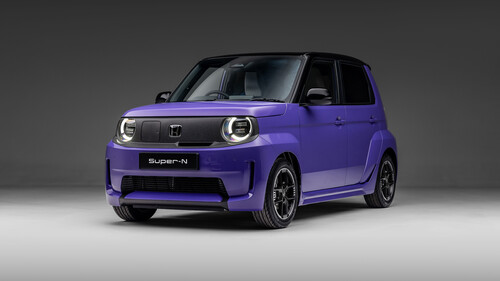
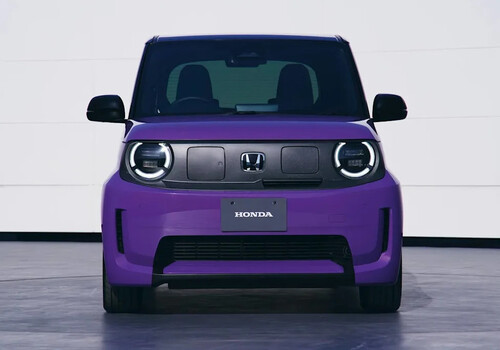
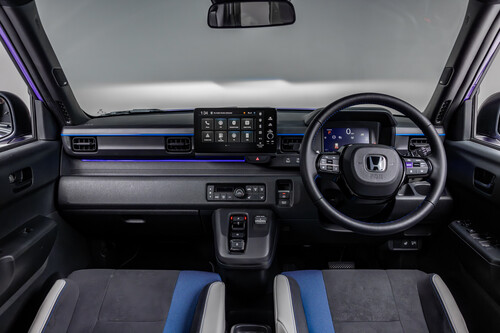
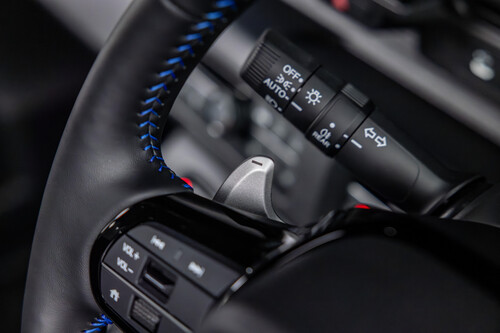
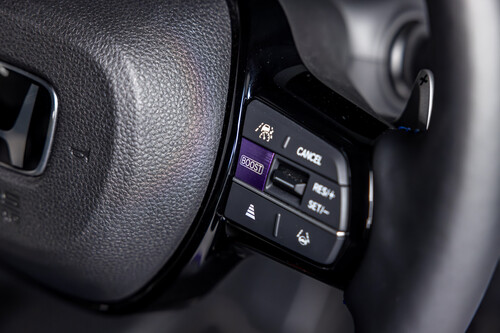
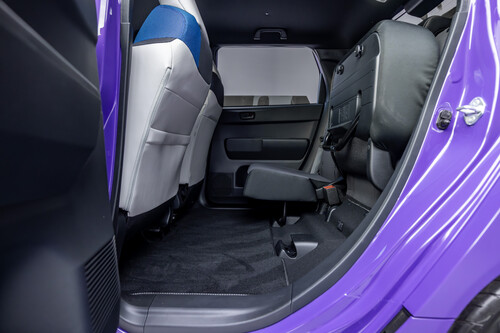
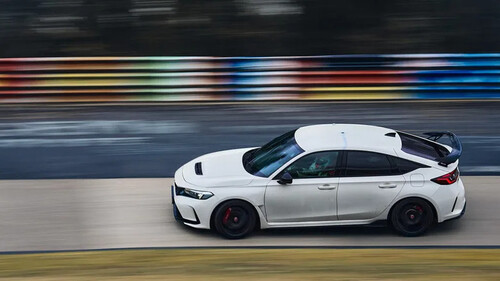
The market for electric hot hatches is basically non-existent in the US, except for the Hyundai Ioniq 5 N, and it's debatable whether that's a hatch or a sporty crossover. In Europe, though, the segment is steadily growing, with brands like Alpine, Mini, Abarth, Volkswagen, and Peugeot all currently selling or getting ready to launch small, sporty hatchbacks.One of the most intriguing, though, comes not from Europe but from Japan – the Honda Super One. Unveiled in 2025 and set to be sold in multiple Asia-Pacific markets plus the UK, it's based on one of Honda's tiny JDM kei cars called the N-One e. The model pairs electric power with the spirit of some of the best pint-sized hot hatches from over the years. It's also a model rooted in a long tradition of small, fun Honda cars. Many of them are likely to be unfamiliar to a wider American audience but are beloved in their native Japan. The N360 And N600 Honda N360 front 3:4 red Key facts Honda's first mass-produced passenger car Designed as an affordable but sophisticated "people's car" for Japan A huge success, selling over a million units in a short time on sale The styling DNA of the Super One can be traced right back to Honda's first mass-produced passenger car: the N360. Unveiled in 1966, it was built to comply with Japan's burgeoning kei car regulations, designed to usher in a new generation of affordable cars and offering buyers tax and regulatory benefits compared to larger cars.At the time, kei car rules stipulated an engine with a capacity of no more than 360cc, and the N360 complied with this with its air-cooled 354cc two-cylinder powerplant. The styling clearly drew influence from European small cars of the time, like the BMC Mini and Renault 4, but the look was distinctly its own, with a family resemblance to Honda's first line of cars, the S500, S600, and S800 roadsters.Those European "people's cars" influenced the N360 in other ways, too, as it was the product of company founder Soichiro Honda's vision for something similarly affordable yet chic and sophisticated for Japanese buyers. He didn't want to follow the rather basic cars that had previously been built under kei car regulations. The N360 went on sale in 1967 at ¥313,000 – approximately ¥1.162 million today, or about $7,500.It was quickly joined by the larger-engined 598cc N600, designed primarily for export markets, and the platform also spawned the LN360 van and TN360 truck. The N600 was even offered in the US, though it sold poorly. It was a different story in much of the world, and by September 1970, less than three years after the N360 debuted, 1 million units of the N series models had already been built. Though the N360 and N600 had relatively short lives, being discontinued in 1972, their importance to the rapidly growing Japanese car industry was vast, and their design DNA has appeared again and again in Honda's cars since. The City Turbo And Turbo II Honda City Turbo II front Key facts Honda's first turbocharged hot hatch Offered in Turbo and widebody, intercooled Turbo II forms The Turbo II's boxy, widebody stance influences the Super One Arriving in 1981, the original Honda City – sold as the Jazz in Europe – was the smallest non-kei model Honda made at the time. It was aimed specifically at young buyers and developed by a team with an average age of just 27. Featuring an upright stance that Honda called the "Tall Boy" look, it was designed first and foremost to be practical and fuel-efficient. The car is probably best remembered these days for coming with one of the strangest factory options ever offered on a car – the Motocompo, a foldable scooter that stashed in the City's rear cargo area.The young target audience, though, also craved sportiness, leading to the launch of the City Turbo in 1982. As the name suggests, it added a turbocharger to the standard City's 1.2-liter four-cylinder engine, which produced 100 hp in this guise. The output was plenty in a car that weighed just 1,521 pounds. It also featured electronic fuel injection rather than the carburetor used by lesser versions of the City.This clearly wasn't enough for Honda, though, as the Turbo was quickly followed by the City Turbo II in 1983. It introduced a revised combustion chamber and an intercooler, increasing output to 110 hp. The Turbo II also received a wider track, leading to the introduction of the boxy arch flares that the Super One directly references. The turbocharger helped the City Turbo and Turbo II punch well above their weight, and following the latter's discontinuation in 1986, Honda didn't sell another turbocharged hot hatchback until the arrival of the FK2 Civic Type R in 2015. The N-One Honda N-One RS front Key facts A modern-day kei hatchback Styling directly inspired by the original N360 Features a sporty RS trim and an electric version, which the Super One is based on The stylistic influence of the N360 on future Hondas can be most clearly seen on the modern-day N-One, a kei car with retro looks inspired directly by the ’60s original. With present-day kei car rules allowing engines of up to 660cc, the N-One uses a 658cc inline-three and has been on sale in Japan since 2012. A second generation with a very similar look to the first arrived in 2020.Crucially for the story of the Super One, there's an equivalent gas-powered sports version, the N-One RS. Unlike lower-rung versions, it's turbocharged, but kei car rules mean it can only produce 63 hp, a mere 6 hp more than the base car. However, it makes up for that with racier styling, sports seats, and, crucially, the option of a manual transmission, unlike other versions of the N-One, which are CVT-only.An electric version, the N-One e, launched in 2025, and it's this car that the Super One is based on. Since it's aimed at export markets, though, the model no longer has to comply with kei car size restrictions, meaning it can adopt those City Turbo II-inspired box arches that give it its feisty hot hatch stance. It's coming to Japan, too, but because the vehicle is no longer a kei car, buyers can't get the same economic and practical benefits they do with the gas-powered N-One RS. The Honda e Honda e front Key facts Honda's first mass-produced EV Similar retro styling to the Super One A commercial flop thanks to a high price and a poor range It's worth remembering that the Super One isn't Honda's first crack at a small electric car with styling inspired by the company's origins. The Honda e arrived in Japan and Europe in 2020 as the company's first mass-produced EV, sitting on a new rear-wheel drive platform and featuring retrofuturistic styling inspired by the original Civic.The car won plaudits for its styling, high-end interior, and fun driving experience. However, it was a commercial failure, thanks in no small part to its high asking price and poor range. For instance, when the Honda e first went on sale in Britain, the entry-level version started at £26,660 (including a £3,500 government EV grant) and featured an official range of 136 miles. At the same time, the comparable Peugeot e-208 cost £25,050 and would go a quoted 211 miles on a charge.As a result of its slow sales, the e was dropped in Europe in 2023, after just three years on sale. Production ended altogether in early 2024. The Super One, though, acts as something of a spiritual successor, even if European sales would be limited this time to the UK. The Super One vs its main rival Honda Super OneThe Super One is set to enter a fairly unique section of the market. Cars like the Alpine A290, Peugeot e-208 GTi, and upcoming Volkswagen ID Polo GTI all blend traditional hot hatch features with electric powertrains. They're all larger, and while the final specs of the Super One are still to be confirmed, they're likely much more powerful than the Honda.Currently, the closest thing to a true competitor the Super One has is the Abarth 500e (gallery below), a sports model based on the little Fiat 500e. At 144.6 inches long and 66.2 inches wide, even the tiny Abarth is larger than the Super One, which is roughly 136 inches long and 59 inches wide. It's, by some way, the next-smallest electric hot hatch currently being produced, and brings similarly retro styling to boot.Abarth 500e frontAccording to leaked info, the Super One reportedly makes 94 horsepower and 120 pound-feet of torque. It's not clear whether these are the final production figures, though. For comparison, the Abarth has 152 hp and 173 lb-ft, and the electric hot hatch can hit 62 mph in 7.0 seconds, with a maximum speed limited to 96 mph.In all likelihood, the Honda will lose out to the Abarth on pure performance, but will instead focus on handling fun thanks to its smaller dimensions, and on practicality with its boxier shape and five-door body, versus the Abarth's three doors.Both cars take different approaches to recreating some of the characteristics of a gas-powered hot hatch. The Abarth uses a controversial (and very loud) "Sound Generator" that attempts to replicate the rasp of the old 500 Abarth's 1.4-liter turbo engine. Still, the model hasn't been particularly well-received, not least because it doesn't respond to inputs in the same way a real gas engine would.The Super One will also attempt to replicate the sound of a combustion engine (only with the car in "Boost mode"), but it takes the idea further. Like the Hyundai Ioniq 5 N, it features steering wheel paddles that can be used to simulate a transmission, in this case a seven-speed dual-clutch setup. It's even calibrated to have an engine-like torque curve and features a simulated redline and fuel cutoff.It may sound gimmicky, but based on CarBuzz's first drive of a Super One prototype, it's a system that works incredibly well and imbues the car with an extra layer of fun, allowing drivers to take it by the scruff of the neck and wring it out like an old-school hot hatch. Not much else at the end of the market offers anything similar, and it should set the Super One apart in the parts of the world where it'll be sold.