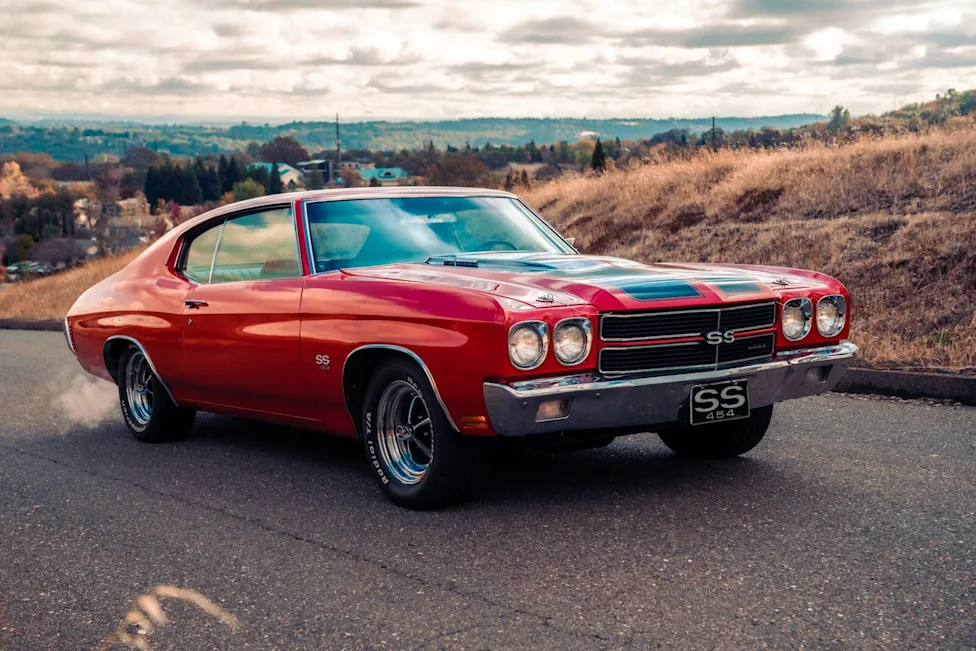



















The Art of the Restomod: When Upgrading a Classic Actually Makes SenseThe restomod has moved from the fringes of car culture into the mainstream of the collector market, and the numbers back it up. What was once dismissed by purists as a bastardization of history is now recognized by auction houses, insurers, and manufacturers alike as one of the most durable growth segments in the automotive hobby. Understanding why requires looking at where the movement started, how it matured into a legitimate craft, and where the smart money believes it is headed next.The roots of the restomod trace back to the hot rodding culture of Southern California in the 1930s through the 1950s, when returning GIs and gearheads stripped down Fords and Chevrolets to make them lighter and faster. That impulse to blend old sheet metal with new performance never went away, but it stayed a garage-level hobby for decades. The pro-touring movement of the late 1980s and 1990s pushed things further, swapping stock suspensions for modern underpinnings so muscle cars could actually turn and stop as well as they went in a straight line. The real inflection point came in 2009, when Rob Dickinson founded Singer Vehicle Design and began reimagining the air-cooled Porsche 911 with a level of engineering rigor and finish that rivaled anything coming out of a factory. Singer did not invent the restomod, but it proved that collectors would pay factory-new prices, and often far more, for cars built this way.A restomod, by definition, takes the body and identity of a classic and pairs it with contemporary engineering: fuel-injected LS or Coyote powerplants in place of tired carbureted V8s, independent front suspensions and four-wheel disc brakes in place of leaf springs and drums, modern climate control, digital instrumentation, and wiring harnesses that do not catch fire. The result is a car that looks like it rolled out of 1969 but drives like it rolled out of this year's showroom. That combination of nostalgia and usability is precisely what separates the restomod market from the traditional concours-restoration world, where originality and factory correctness are the only currency that matters.AdvertisementAdvertisementThe market data reflects this shift in taste. Hagerty, the insurer that has become the de facto index provider for the collector car world, has repeatedly flagged restomods and resto-modified trucks as some of the strongest performers in its valuation tools, often outpacing the appreciation of unmodified originals in the same model lines. Auction houses have followed the money. Barrett-Jackson, Mecum, and RM Sotheby's now run dedicated restomod categories, and it is common to see a heavily built first-generation Camaro or Bronco cross the block for well beyond what a numbers-matching original would fetch. Six-figure and even seven-figure hammer prices for restomodded trucks and muscle cars, once unthinkable, are now a routine occurrence at major sales.A handful of builders have effectively professionalized the segment. Ringbrothers, out of Spring Green, Wisconsin, turned a fabrication shop into one of the most respected names in the business, known for carbon-fiber bodywork and metalwork precise enough to eliminate panel gaps altogether. SpeedKore has built a reputation on carbon-fiber Mopar and muscle car builds that blur the line between restomod and supercar. ICON, founded by Jonathan Ward, redefined what a restomod could be with its reimagined Toyota FJ40s and Ford Broncos, built around a philosophy of using original tooling and new engineering rather than simple bolt-on upgrades. Classic Recreations and Superformance have built entire businesses around continuation and restomod versions of Shelby Mustangs and Cobras. Each of these shops charges accordingly, with builds routinely running from the low six figures into the high six figures, a price point that has not slowed demand in the least.Buyers gravitate toward restomods for reasons that have little to do with sentimentality alone. A well-executed restomod solves the core problem of classic car ownership: originals are often unreliable, underpowered by modern standards, and expensive to maintain in a way that discourages actual driving. A restomod lets an owner take a car to a cruise night, then drive it home on the interstate with air conditioning running and modern brakes ready for modern traffic. That usability, combined with the fact that these builds are frequently one-off or limited in number, has made them attractive not just to longtime collectors but to a newer generation of buyers who want a classic silhouette without classic-car headaches.That generational shift is a major reason the market is still expanding rather than plateauing. Younger buyers entering the collector space, many of whom did not grow up wrenching on carburetors, are drawn to the plug-and-play reliability of a modern drivetrain wrapped in a body style they associate with pop culture rather than personal nostalgia. Manufacturers have taken notice. General Motors and Ford have both moved to formalize and license restomod programs, pairing established builders with factory-backed reproduction parts and, in some cases, factory blessing for the finished product. That kind of manufacturer involvement, unthinkable a generation ago when automakers viewed modified cars as a liability concern, signals that the restomod has graduated from aftermarket curiosity to an accepted extension of a brand's heritage strategy.AdvertisementAdvertisementThe next frontier is electrification, and builders are already testing the water. Companies have begun offering electric powertrain conversions for classic trucks and sports cars, aimed at buyers who want the shape of a vintage icon with zero-emission running gear and instant torque. Whether EV restomods become a mainstream category or remain a niche within a niche is still an open question, but the willingness of the market to experiment is itself a sign of confidence. Combine that with continued strength in auction results, growing manufacturer participation, and a buyer base that keeps getting younger rather than older, and the trajectory becomes clear. The restomod is no longer a workaround for people who could not afford or find an original. It has become its own category, with its own economics, its own icons, and its own reasons for existing, and every indication points to that category getting larger, not smaller, in the years ahead.⚡️ Read the full article on MotoriousSign up for the Motorious Newsletter. For the latest news, follow us on Facebook, Twitter, and Instagram.