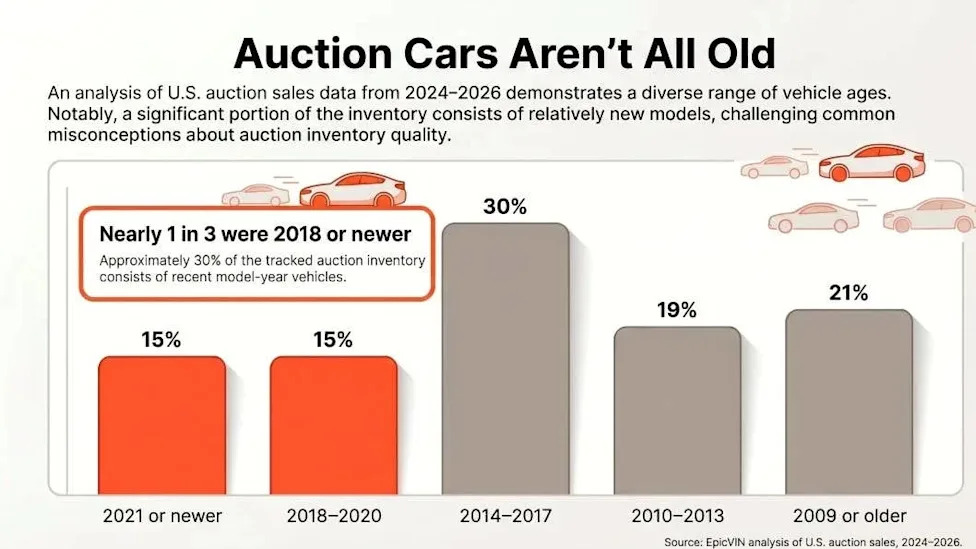

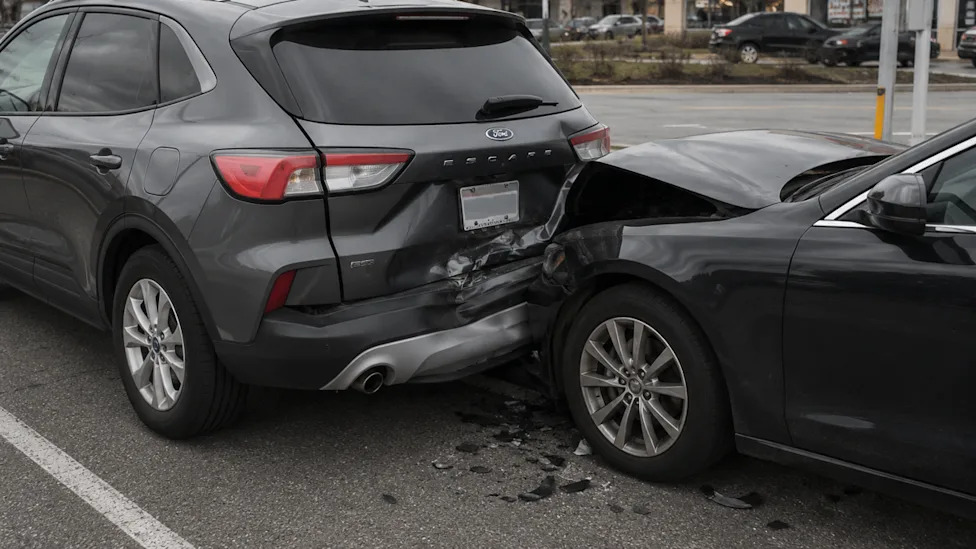


























Autoblog and Yahoo may earn commission from links in this article.Walk into any dealership today, and a $3,000 budget might barely cover the dealer fees and a set of fresh floor mats. Yet, at auto auctions across the country, vehicles are regularly changing hands for less than the price of a decent e-bike. An analysis of 20,000 auction records from 2024 to 2026 by EpicVIN revealed a staggering reality: almost half of all cars sold at auction closed for under $3,000.Analyzing The FindingsEpicVINOn paper, it looks like the ultimate buyer's market. In practice, it's a minefield. The immediate assumption is that these bargain lots are old beaters - thirty-year-old sedans with rusted floorboards and blown head gaskets. The data tells an extremely different story; nearly a third of the vehicles in the dataset are 2018 models or newer. They sit on the lot with glossy paint, intact interiors, and supposedly clean paperwork.AdvertisementAdvertisementSo, what is actually dragging the market value of a seemingly solid, new-ish car down to pocket change? The answer lies not in what you can see, but in what the auction block hides.Things To Look Out ForKlaravikFirst is the silent killer of value: extreme mileage. Government, fleet, rental, and rideshare vehicles are frequently cycled into auctions after being driven into the ground. A late-model crossover might look fresh, but its odometer could easily be pushing past 200,000 miles. More alarmingly, the National Highway Traffic Safety Administration (NHTSA) estimates that over 450,000 vehicles are sold annually with artificially rolled-back odometers.Then comes the physical trauma. According to the auction data, roughly 53 percent of these low-cost vehicles harbor prior collision damage. This is often masked by quick, cosmetic bodywork that looks passable from ten feet away. Another substantial portion of these vehicles hides flood or hail damage. Floodwater, in particular, is insidious—corroding wiring harnesses and electronic control units slowly, causing catastrophic failures long after the carpets have dried.The "Clean Title" FallacyAutoblog (AI-generated image)This brings us to the most dangerous misconception in the used car market: the clean title. A clean title is a legal document, not a mechanical clean bill of health. It simply means an insurance company hasn't formally branded the car as a total loss in a federal database. A car can suffer a major collision, undergo a shoddy repair job out-of-pocket, and retain a spotless title. This is exactly why relying on a visual inspection and trusting the title may get you burned.How To Safeguard YourselfIf you are venturing into the auction market—or buying any used vehicle from a private seller—running the vehicle identification number (VIN) through a comprehensive VIN checking app is all but mandatory. You cannot afford to skip this step. A reliable VIN report bypasses the sanitized title and pulls the raw, unedited history: actual mileage records, hidden damage photos from prior auctions, undisclosed accidents, and rapid ownership changes that usually signal a flipped lemon.AdvertisementAdvertisementA $2,500 auction price tag isn't a miraculous deal; it is a warning sign. You will either pay for it up front with a thorough background check, or you will pay for it later in the service bay. Do the research, pull the VIN, and don't buy the illusion.This story was originally published by Autoblog on Jun 29, 2026, where it first appeared in the Features section. Add Autoblog as a Preferred Source by clicking here.