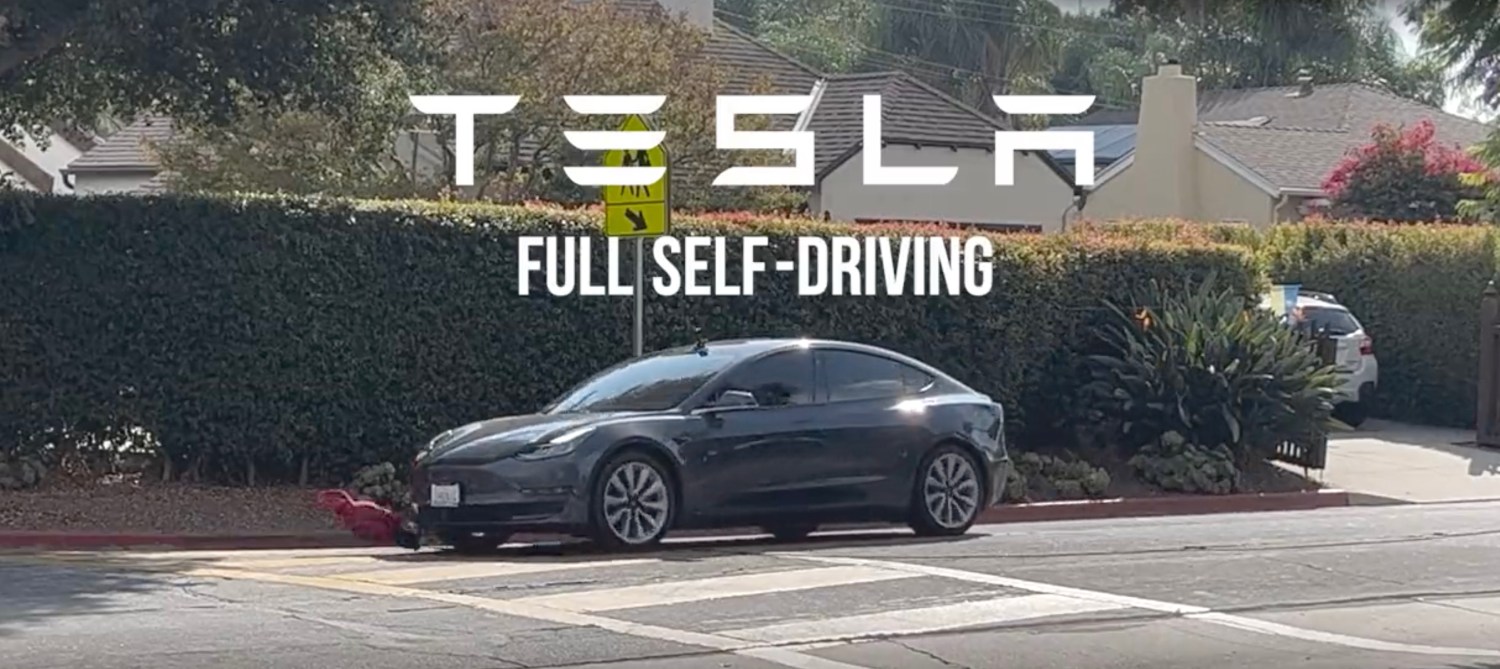
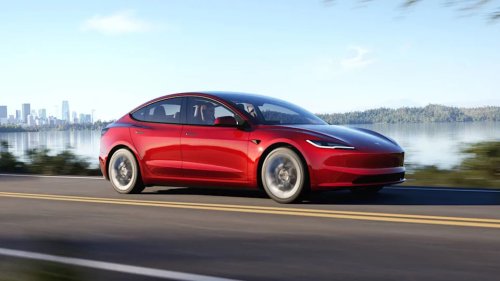
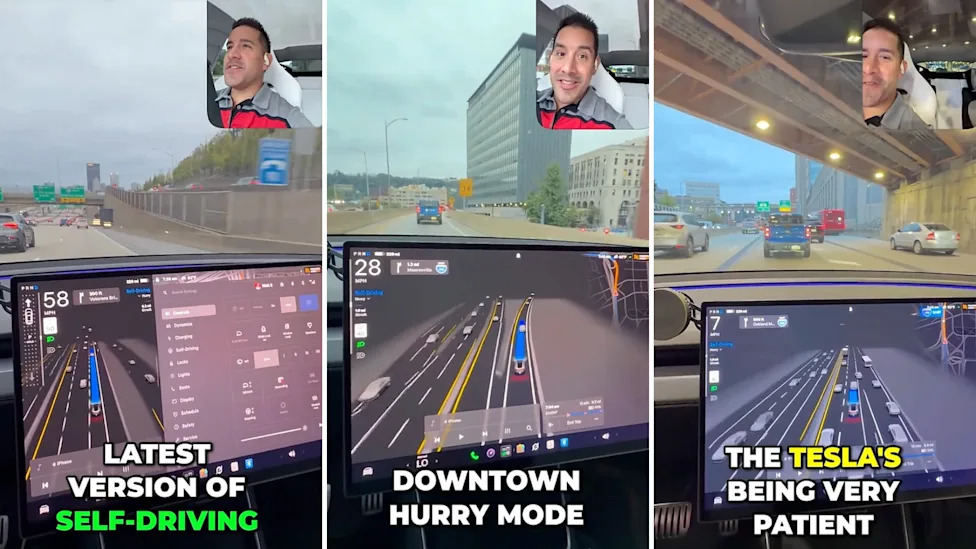
Elon Musk says Tesla’s Full Self-Driving will soon remember your parking preferences and let you talk to it through Grok, like giving directions to an Uber driver. The features sound useful, and they reflect how genuinely impressive FSD has become — but they also underscore that it remains a supervised driver-assist system, not the unsupervised self-driving Tesla has sold to owners for years. What Musk announced In a post on X on Wednesday, Musk said upcoming FSD releases “will remember your parking preferences, so that the car goes to the right location at your home, office, school drop off, etc.” He was responding to Y Combinator partner Tom Blomfield, who praised FSD and shared a screenshot showing 96% autonomous usage and a 13-day streak, noting he rarely intervenes except for a tricky garage maneuver. Advertisement - scroll for more content Musk added a telling data point: “Destination parking is by far the biggest reason people now intervene with FSD. Critical safety interventions are extremely rare.” Separately, Musk said Tesla owners could soon talk to FSD through Grok — issuing natural-language commands like “turn right here” or “drop us off here” — and estimated the feature could arrive in “about 3 months or so.” Parking has been a persistent weak spot. When FSD enters a lot, it tends to grab the first open space it detects, forcing drivers to take over when the car picks a spot too close to other cars or too far from the entrance. The new feature would have the car learn from past parking behavior instead. It builds on a string of recent parking-focused work, including Tesla’s 33% speed increase to Actually Smart Summon in the v14.3.3 update, which unified the AI models powering consumer FSD, the Robotaxi fleet, and Summon into a single architecture. The features are real — and so is the gap There’s no question FSD has gotten good. We recently described the latest builds as so smooth they create a complacency problem, where the system performs well enough that drivers risk trusting it more than they should. That’s the point worth sitting with. Remembering parking spots and taking voice commands are quality-of-life upgrades to an advanced driver-assistance system. They are not steps that turn a supervised system into an unsupervised one. Tesla has sold FSD as a car that will drive itself without human input since 2016, when it began charging for the feature on the promise of full autonomy. A decade later, the company’s own framing of Wednesday’s news — that parking is “by far the biggest reason people now intervene” — confirms that people are still intervening. That matters, because “intervene” is doing heavy lifting. A system that requires the driver to take over, for parking or anything else, is by definition still supervised. Musk’s claim that “critical safety interventions are extremely rare,” but he doesn’t share any data to show how rare we are talking about. Current crowdsource data points to a critical intervention every ~3,000 miles, which is good, but nowhere near a human or unsupervised level. The timeline problem, again Musk put the Grok voice feature at “about 3 months or so” and gave no date at all for parking preferences — though Tesla has been shipping new FSD versions every few weeks, so the parking update could land soon. The bigger promise is the one that keeps slipping. Musk said again in May that unsupervised FSD would be “widespread” in the US by year-end — a target he has now moved repeatedly. On the Q1 earnings call, Tesla pushed unsupervised FSD for personal cars to Q4 2026 “at the earliest.” Meanwhile, the unsupervised product that does exist remains tiny. Tesla’s “Robotaxi” service expanded to the entire Austin metro this month with only about 20 vehicles, a year after launch. Electrek’s Take Let’s be fair: FSD is one of the most impressive driver-assistance systems on the road, and these new features will make it nicer to use. Learning your preferred parking spot is exactly the kind of polish that comes from a mature product, and voice control through Grok could be a real convenience. But we have to measure Tesla against what it sold, not just against other driver-assist systems. Tesla has charged customers for “Full Self-Driving” for nearly a decade on the explicit promise that the car would eventually drive itself with no one behind the wheel. By Tesla’s own description this week, drivers are still intervening — the company is just working to reduce how often. That’s the whole story in one announcement. When the headline feature is “the car will remember where you like to park so you stop having to take over,” you are describing a sophisticated assistant, not an autonomous vehicle. Reducing interventions is not the same as eliminating the driver, and “extremely rare” safety interventions are still safety interventions. The features are good. The product is impressive. It’s just still not the thing it’s named after — and after ten years, the gap between “Full Self-Driving” and full self-driving is the only number that really matters. How many more features arrive before that one closes? If you’re a Tesla owner, powering your EV with home solar is one of the smartest ways to lock in low driving costs. With electricity rates climbing nearly 10% last year, home solar protects you against future rate increases. And with lease and PPA options, you can go solar with zero upfront cost and start saving immediately. If you want to find the best deal, check out EnergySage. It’s a free service with hundreds of pre-vetted installers competing for your business, so you save 20 to 30% compared to going it alone. No sales calls until you pick an installer. Get your free quotes here. Stay up to date with the latest content by subscribing to Electrek on Google News. You’re reading Electrek— experts who break news about Tesla, electric vehicles, and green energy, day after day. Be sure to check out our homepage for all the latest news, and follow Electrek on Twitter, Facebook, and LinkedIn to stay in the loop. Don’t know where to start? Check out our YouTube channel for the latest reviews.






 +33 others


![Not sold on Tesla Powerwall? There are great battery alternatives out there [update]](https://cdn.topcarnews.net/thumb/id/aHR0cHM6Ly9pMC53cC5jb20vZWxlY3Ry-ZWsuY28vd3AtY29udGVudC91cGxvYWRz-L3NpdGVzLzMvMjAyNi8wNy9ob21lLXNv-bGFyLWJhdHRlcnkucG5nP3c9MTUwMCZh-bXA7cXVhbGl0eT04MiZhbXA7c3RyaXA9-YWxsJmFtcDtzc2w9MQ/18e81f395a77dbb42269ab5e106fea41.png?t=20261006&post_id=68280)