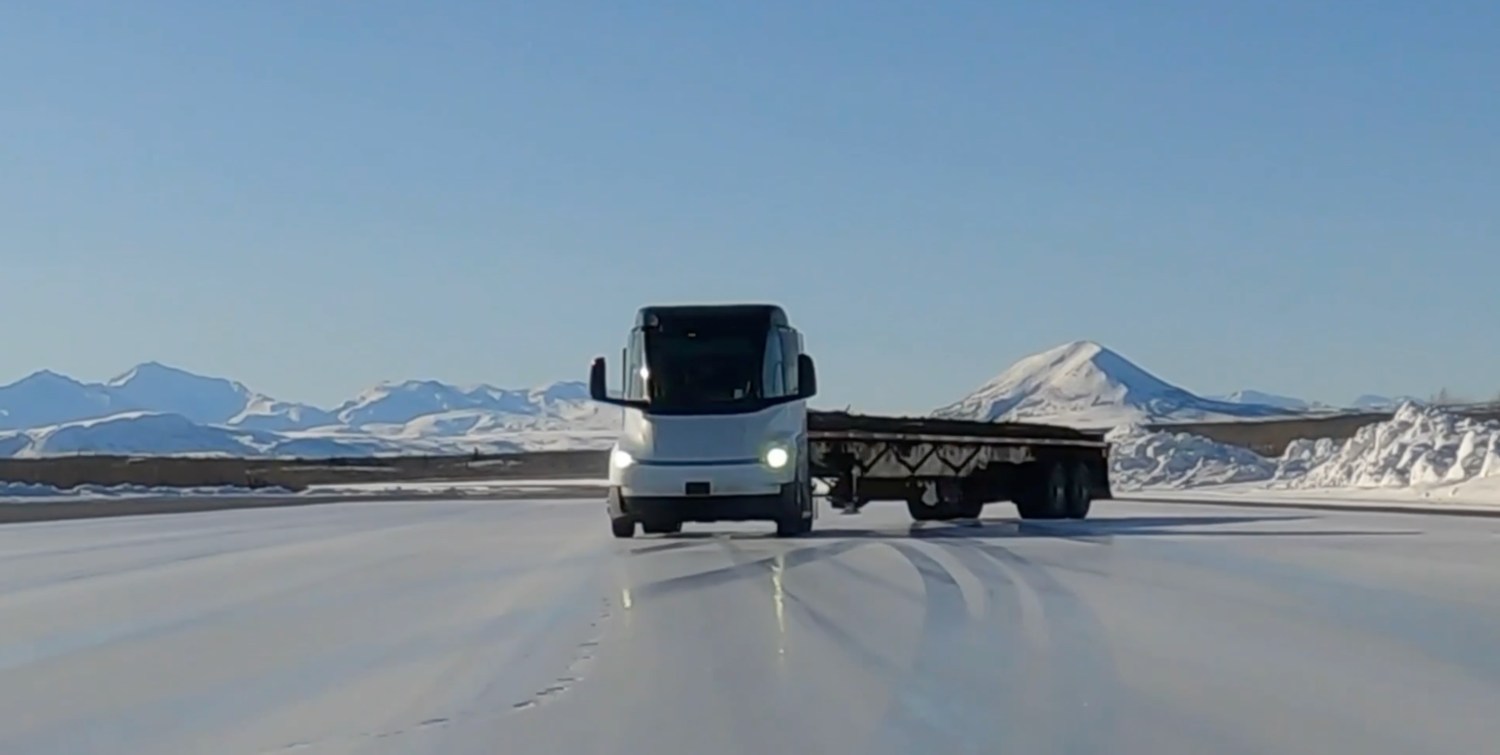
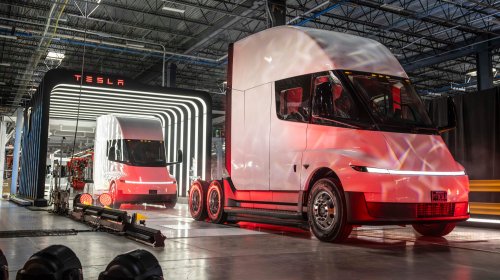
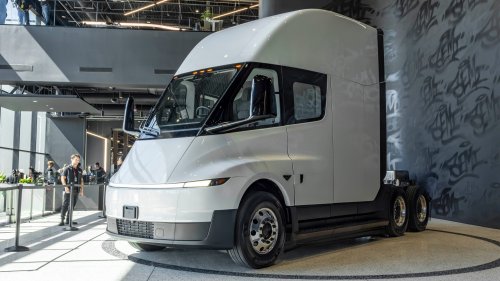
Tesla’s Semi program lead Dan Priestley shared a video of the electric truck holding its line on icy winter surfaces, sliding under control rather than skidding out of it. The clip is a rare look at the Tesla Semi’s Vehicle Dynamics Control (VDC) system doing exactly what an electric drivetrain is supposed to do better than a diesel one: catch a heavy rig before it gets away from the driver. “Let’s talk Vehicle Dynamics Control (VDC). With high resolution sensing and precise multi-motor controls developed in-house, the Tesla Semi provides torque and stability even on the trickiest of winter surfaces,” Priestley wrote. Let's talk Vehicle Dynamics Control (VDC). With high resolution sensing and precise multi-motor controls developed in-house, the Tesla Semi provides torque and stability even on the trickiest of winter surfaces. pic.twitter.com/xNvCgyQCFc— Dan Priestley (@danWpriestley) June 25, 2026 The video shows a Tesla Semi briefly losing control on the ice before regaining control impressively. Advertisement - scroll for more content In follow-up replies, Priestley clarified that the trailer was loaded during the test — “concrete block over the fifth wheel and solid steel bars on the rest of the trailer,” which he described as a “low CG load for this kind of testing.” That detail matters: an unloaded trailer is far easier to keep composed than a weighted one, and Tesla is showing the system working with mass on the deck. What Vehicle Dynamics Control actually does VDC continuously monitors wheel speed, steering angle, and lateral forces, then modulates torque to individual wheels and applies targeted braking to pull the rig back into line. On the Semi, that runs through an 800 kW tri-motor drivetrain producing 1,072 hp, with the rear motors able to be controlled independently. The advantage over a diesel truck is response time. Electric motors can change torque output almost instantly, so the system can add or cut power at a single wheel within microseconds — far faster than the hydraulic traction-control loops on a conventional Class 8 truck. Instead of just braking a spinning wheel after the fact, the Semi can meter exactly how much torque each wheel gets, moment to moment. That’s the same independent-torque principle Tesla has been refining since the Model S Plaid, now scaled up to an 82,000-lb gross combination. Why electric trucks can be meaningfully safer Jackknifing — when the trailer swings out of line with the tractor — is one of the most dangerous failure modes in trucking, and it usually starts exactly where this video was shot: on low-traction surfaces where the drive wheels lose grip. Electric architecture attacks that problem from two directions. First, the battery pack sits low in the chassis, dropping the center of gravity and cutting rollover risk compared to a diesel tractor with its mass up high. Tesla leaned on this from the start — when it first unveiled the Semi, the company claimed the truck would be “impossible to jackknife” thanks to independent motor control at each wheel. Second, instant, granular torque control means the stability system can correct a slide before it becomes a skid. A diesel truck’s anti-jackknife tools are largely reactive braking; the Semi can apply positive or negative torque to specific wheels to actively steer the rig back into stability. It’s worth keeping the skeptic’s hat on here — this is a Tesla-produced demonstration clip, not independent crash data, and “impossible to jackknife” is a marketing line, not a test result. But the underlying physics are real, and they’re the kind of advantage that’s hard for diesel to match no matter how good the software gets. The timing The video lands as Tesla finally ramps the Semi after years of delays. The first truck rolled off the high-volume production line at the company’s new Nevada plant in April, a facility designed for up to 50,000 trucks a year. Tesla has confirmed battery sizes of 822 kWh and 548 kWh for the 500-mile and shorter-range trims. Safety and stability messaging is smart positioning for that ramp. Fleet buyers care about uptime and insurance costs, and rollover and jackknife incidents drive both. Electrek’s Take This is good engineering communication, and it’s the kind of content Tesla should be putting out more of as it tries to convince conservative fleet operators to take a chance on an electric Class 8 truck. The physics check out. A battery genuinely lowers the center of gravity, and independent motor torque genuinely gives a stability system more tools than a diesel driveline. Anyone who has driven an EV in winter knows how much faster electric traction control reacts than a combustion car’s — scale that up to a loaded semi and the safety case writes itself. That said, a video of a truck sliding gracefully on a closed surface is a demonstration, not validation. “Impossible to jackknife” is a claim Tesla has made since 2017, and we still don’t have independent, third-party safety data on the production Semi to back it. The real test is millions of fleet miles in bad weather with average drivers, not a controlled run with the program lead behind the wheel. Still, if Tesla can turn the inherent advantages of electric drive into a measurable safety record, it’s one of the more durable arguments for electrifying heavy trucking — and one diesel simply can’t answer. We’ll be watching for the data to catch up to the demo. If you’re powering a fleet — or just your own EV — pairing it with home solar is one of the smartest ways to lock in low energy costs. With electricity rates climbing nearly 10% last year, home solar protects you against future rate increases. And with lease and PPA options, you can go solar with zero upfront cost and start saving immediately. If you want to find the best deal, check out EnergySage. It’s a free service with hundreds of pre-vetted installers competing for your business, so you save 20 to 30% compared to going it alone. No sales calls until you pick an installer. Get your free quotes here. Stay up to date with the latest content by subscribing to Electrek on Google News. You’re reading Electrek— experts who break news about Tesla, electric vehicles, and green energy, day after day. Be sure to check out our homepage for all the latest news, and follow Electrek on Twitter, Facebook, and LinkedIn to stay in the loop. Don’t know where to start? Check out our YouTube channel for the latest reviews.



















 +50 others







![Not sold on Tesla Powerwall? There are great battery alternatives out there [update]](https://cdn.topcarnews.net/thumb/id/aHR0cHM6Ly9pMC53cC5jb20vZWxlY3Ry-ZWsuY28vd3AtY29udGVudC91cGxvYWRz-L3NpdGVzLzMvMjAyNi8wNy9ob21lLXNv-bGFyLWJhdHRlcnkucG5nP3c9MTUwMCZh-bXA7cXVhbGl0eT04MiZhbXA7c3RyaXA9-YWxsJmFtcDtzc2w9MQ/18e81f395a77dbb42269ab5e106fea41.png?t=20261006&post_id=68280)