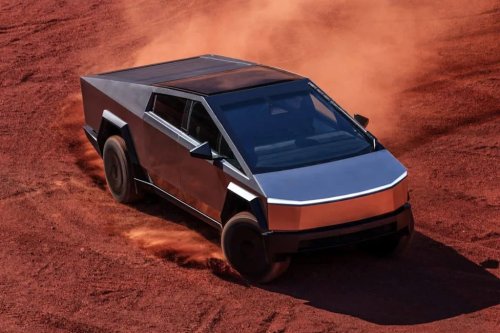
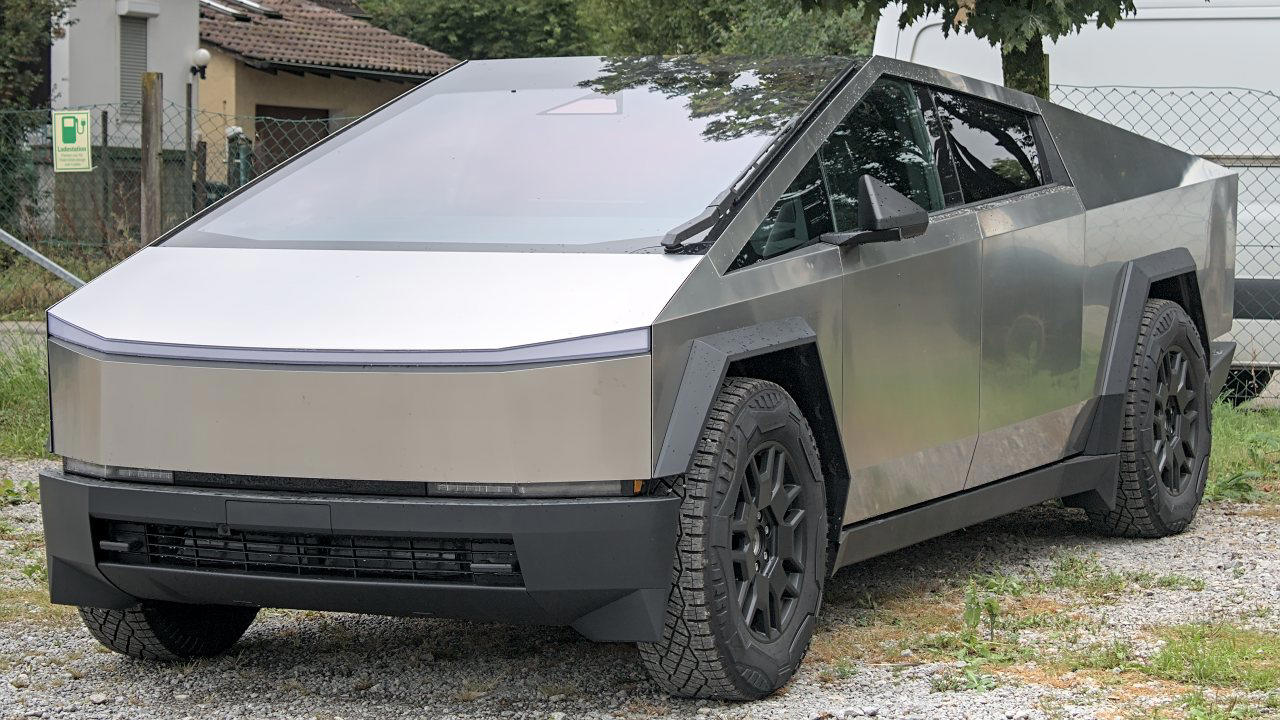
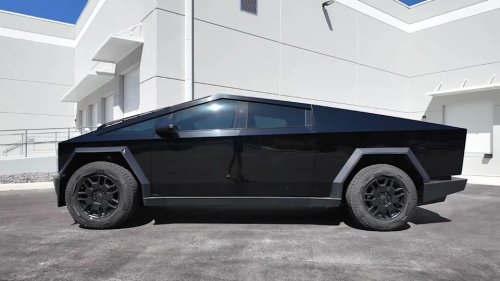
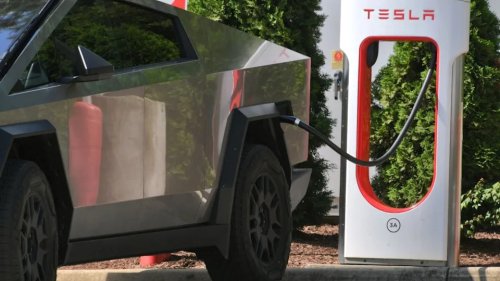
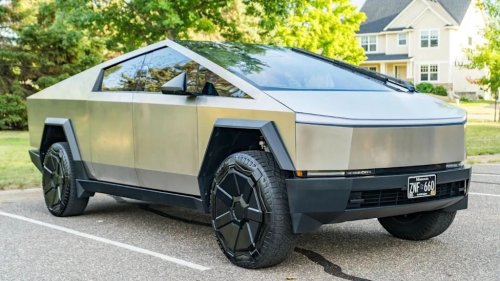
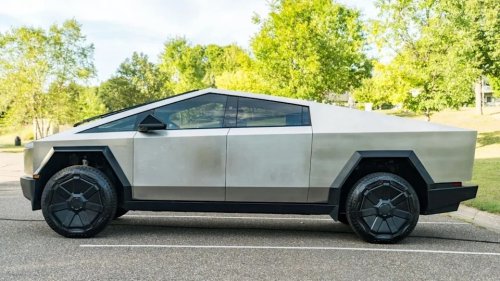
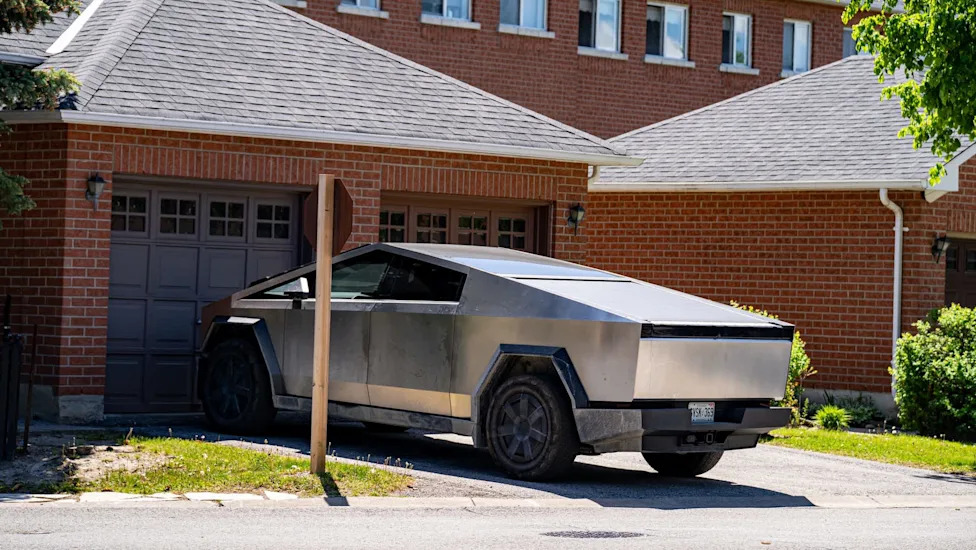
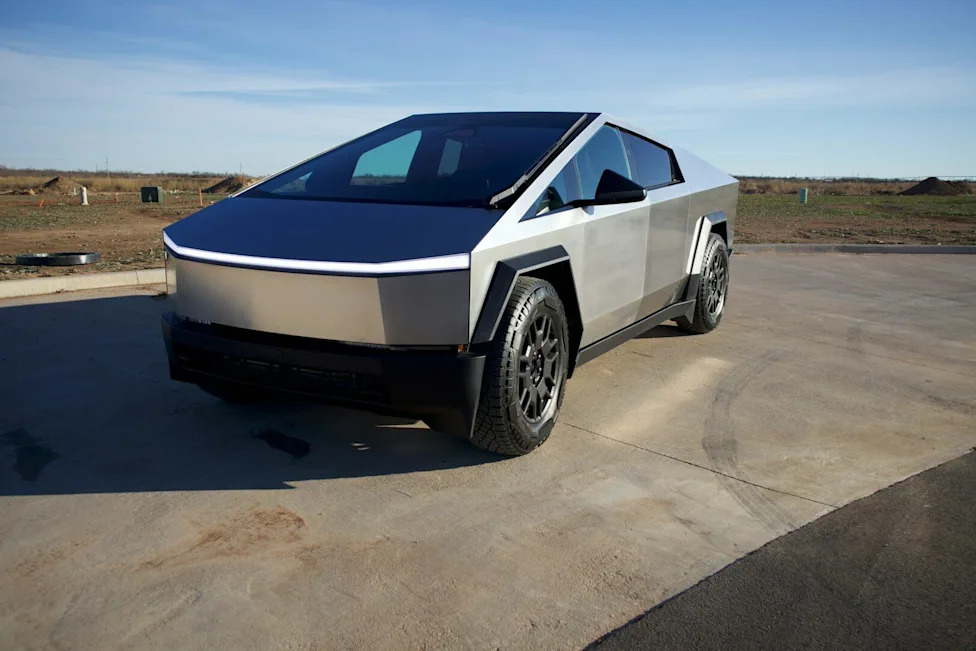
Tesla says FSD was off before Cybertruck crash, video raises doubtsYou are watching a familiar Tesla script play out again, only this time the vehicle is a Cybertruck and the stakes are captured in stark dashcam footage. Tesla says its Full Self-Driving system was not active before a dramatic crash, yet the video and a growing stack of lawsuits invite you to question how much control you really have when you trust the company’s driver-assistance features. You are left to navigate a gap between what logs reportedly show and what your own eyes tell you. What the Houston Cybertruck crash shows you on video Your starting point is the viral clip of a Tesla Cybertruck veering into a concrete barrier on Houston’s 69 Eastex Freeway. The dashcam angle from a following car shows the truck in the right lane, then tracking straight as the road curves, before it slams into the divider and spins. The clip, shared on Instagram, specifies that the crash happened on the 69 Eastex Freeway in Houston and notes that a 5 year old child in the backseat was unharmed. Another recording on YouTube presents the same moment from inside a different vehicle, reinforcing the sense that the Cybertruck simply fails to follow the bend in the road. The YouTube description states that a Tesla Cybert truck in Houston had Autopilot engaged when it struck the barrier, which matches what the driver later told local media about relying on the system at the time of impact. As you watch the Cybertruck continue straight where the freeway curves, you see the scenario safety experts worry about most: a driver who believes the technology will handle a routine maneuver, only to discover the limit of the software in a split second. What Tesla and Elon Musk say happened Against that visual evidence, Tesla tells you a different story. According to reporting that cites internal logs, Tesla says FSD was off before the Cybertruck crash and that the driver disengaged Autopilot shortly before hitting the barrier. The company’s description of the data suggests that the system was not in control at the precise moment of impact, even if it may have been active earlier in the drive. Tesla CEO Elon Musk echoed that message on X.com. In an update highlighted by an UPDATE, Musk said logs show the driver disengaged Autopilot and then pressed the accelerator, implying that human input, not code, sent the truck into the barrier. From Tesla’s perspective, you are looking at a case of driver error that occurred after the assistive system handed control back. That framing matters because it shapes how you, regulators, and juries assign responsibility. If you accept Tesla’s account, the Cybertruck behaved as a normal vehicle once Autopilot was off. If you focus on the video, you may see a driver who had been depending on automation and did not realize how quickly things could go wrong once it stopped steering. How the driver describes Autopilot and FSD The owner at the center of the Houston incident, a Texas woman named in multiple complaints, says she had trusted the technology to handle routine freeway driving. In legal filings, she describes her Cybertruck as operating on Autopilot when it tried to drive off the overpass and into the barrier. Her account, amplified through local coverage that branded the situation “The Brief,” portrays a driver who believed she was using self-driving tech that should have kept her safe. One local segment explains that the Houston woman is suing Tesla for 1 million dollars after her Cybertruck, allegedly on Autopilot, attempted to drive off the elevated section of freeway before slamming into a concrete barrier. That report, which you can see summarized through The Brief, stresses her claim that she did not override the system until it was too late. Her description sits directly at odds with Tesla’s logs narrative. You are left to reconcile a driver who says Autopilot was in charge with a manufacturer that insists the driver had already taken control. That conflict will likely become a central question in court. The lawsuit that targets Tesla and Musk personally The Houston crash is not just a viral video; it is now the centerpiece of a high stakes lawsuit. A Texas woman who owns a Tesla Cybertruck has filed a complaint that accuses Tesla of negligence over FSD and Autopilot and goes further by naming Musk himself. In the filing, she alleges negligent retention of Musk, arguing that Tesla for years has allowed him to direct Autopilot and FSD strategy despite prior safety controversies. According to one detailed summary, the Cybertruck owner sues over the FSD crash and claims that Tesla Cybertruck marketing and in car prompts encouraged her to trust FSD and Autopilot more than she should have. The complaint asserts that Tesla for failed to warn her adequately about the system’s limits and that Musk’s public comments about self driving performance created unreasonable expectations. You can see that framing in a breakdown of the Tesla Cybertruck owner’s allegations. A separate analysis notes that Tesla is facing a new and unusually personal legal challenge regarding its advanced driver assistance software. According to Elect, the lawsuit over the Cybertruck FSD crash explicitly references a fatal 2019 Autopilot crash and claims that Tesla is repeating patterns from that earlier tragedy. That summary, which you can review through According, positions Musk as a central figure whose decisions are now part of the liability debate. Why FSD’s “almost works” behavior alarms safety experts If you drive with Autopilot or FSD, you already know the technology can feel impressive right up until it suddenly is not. A former executive who once led Uber’s self driving car program recently described that pattern as the real danger. In a detailed interview, he recounted a near death Tesla experience and argued that the system’s tendency to handle 99 percent of situations lulls you into overconfidence before it fails on an edge case. That critique gained new urgency after the Cybertruck crash because the video appears to show exactly that kind of edge case: a curve that the software may have misread, or a handoff that the driver did not fully grasp. Coverage of the Houston wreck and another FSD incident frames both as warning signs that you are still a long way from Elon Musk’s autonomous dream, even if the marketing and feature names suggest otherwise. One analysis of two recent FSD crashes, which you can find in a report on Uber concerns, warns that the more you relax behind the wheel, the more catastrophic a rare failure can become. For you as a driver, that means the problem is not only whether Autopilot or FSD was technically on at the instant of a crash. The deeper risk lies in how the system shapes your behavior over thousands of miles, until you respond a fraction of a second too slowly when it hands control back. How media clips and “The Claim” shape your perception Your view of Autopilot and FSD is also filtered through viral clips and cable segments. One recent controversy centered on a Fox News segment that aired a Tesla crash video while implying that FSD was at fault. An analysis of that coverage, summarized under the label The Claim, argues that the Fox News Video Shows Tesla Crash, But Driver Was in Control. According to that breakdown, the segment left out key context that the driver had been steering manually, which made the narrative at minimum misleading by omission. You can review that critique through a write up on The Claim, which highlights how easily a short video can be framed to fit a narrative about self driving failures even when the automation was off. That same dynamic now surrounds the Houston Cybertruck crash. You are watching one clip, reading Tesla’s logs explanation, and trying to infer who or what was in control. More from Fast Lane Only Unboxing the WWII Jeep in a Crate 15 rare Chevys collectors are quietly buying 10 underrated V8s still worth hunting down Police notice this before you even roll window down










![Tesla, Battery, Not sold on Tesla Powerwall? There are great battery alternatives out there [update]](https://cdn.topcarnews.net/thumb/id/aHR0cHM6Ly9pMC53cC5jb20vZWxlY3Ry-ZWsuY28vd3AtY29udGVudC91cGxvYWRz-L3NpdGVzLzMvMjAyNi8wNy9ob21lLXNv-bGFyLWJhdHRlcnkucG5nP3c9MTUwMCZh-bXA7cXVhbGl0eT04MiZhbXA7c3RyaXA9-YWxsJmFtcDtzc2w9MQ/18e81f395a77dbb42269ab5e106fea41.png?t=20261008&post_id=68280)
![Tesla, Battery, Not sold on Tesla Powerwall? There are great battery alternatives out there [update]](https://cdn.topcarnews.net/thumb/id/aHR0cHM6Ly9lbGVjdHJlay5jby93cC1j-b250ZW50L3VwbG9hZHMvc2l0ZXMvMy8y-MDI2LzA4L3NvbGl4LXgxLWNvcHkuanBn/a9fe4985234387a08124ce5984c09772.jpg?t=20261008&post_id=68280)
![Tesla, Battery, Not sold on Tesla Powerwall? There are great battery alternatives out there [update]](https://cdn.topcarnews.net/thumb/id/aHR0cHM6Ly9lbGVjdHJlay5jby93cC1j-b250ZW50L3VwbG9hZHMvc2l0ZXMvMy8y-MDI2LzA4L2JsdWV0dGlfRVA4MDAtY29w-eS5qcGc/2d9344a919e78ef6ada1803d9a030ce2.jpg?t=20261008&post_id=68280)
![Tesla, Battery, Not sold on Tesla Powerwall? There are great battery alternatives out there [update]](https://cdn.topcarnews.net/thumb/id/aHR0cHM6Ly9lbGVjdHJlay5jby93cC1j-b250ZW50L3VwbG9hZHMvc2l0ZXMvMy8y-MDI2LzA4L0Vjb0Zsb3ctREVMVEEtUHJv-LVVsdHJhLmpwZw/eff5ecb316465dcf28dd74e9eb1b324c.jpg?t=20261008&post_id=68280)
![Tesla, Battery, Not sold on Tesla Powerwall? There are great battery alternatives out there [update]](https://cdn.topcarnews.net/thumb/id/aHR0cHM6Ly9lbGVjdHJlay5jby93cC1j-b250ZW50L3VwbG9hZHMvc2l0ZXMvMy8y-MDI1LzEwL2dhcmFnZV9iYXR0ZXJ5XzVf-c3lzdGVtX2NvbnRyb2xsZXJfM19VUy0x-LmpwZw/116b4706c7e7c77633518a677e92bdc3.jpg?t=20261008&post_id=68280)
![Tesla, Battery, Not sold on Tesla Powerwall? There are great battery alternatives out there [update]](https://cdn.topcarnews.net/thumb/id/aHR0cHM6Ly9lbGVjdHJlay5jby93cC1j-b250ZW50L3VwbG9hZHMvc2l0ZXMvMy8y-MDI2LzAyL2dtLWVuZXJneS0xLTUud2Vi-cA/f6c358bbb69cf5917e5d0d7d5cb1c03d.webp?t=20261008&post_id=68280)