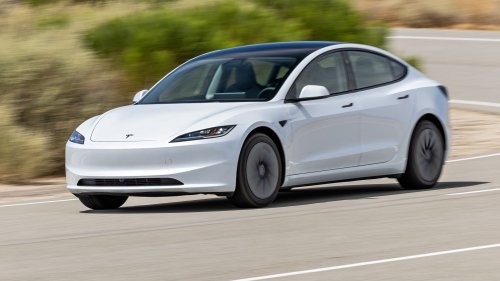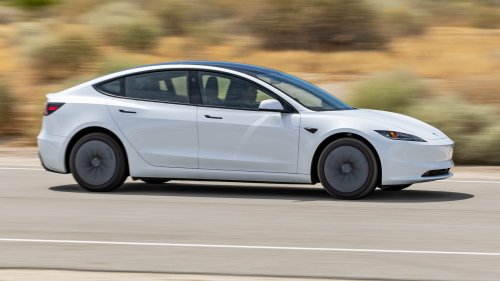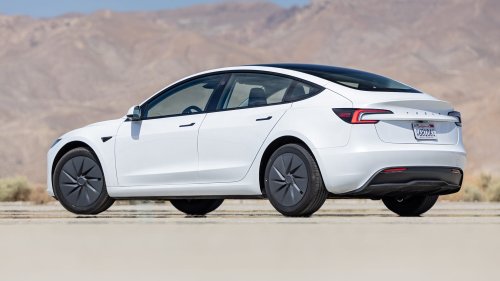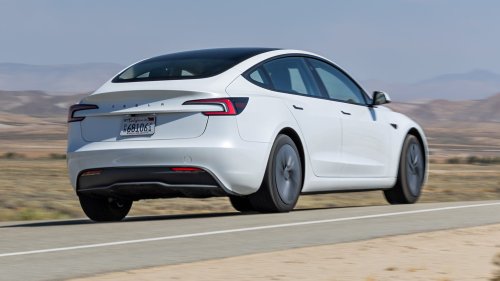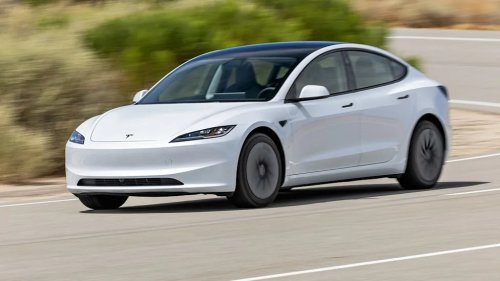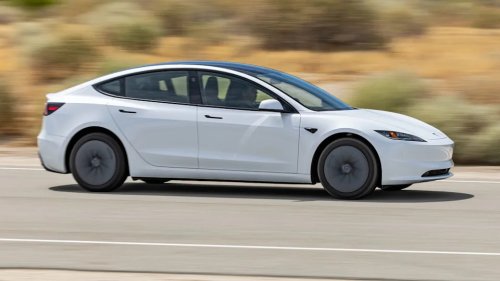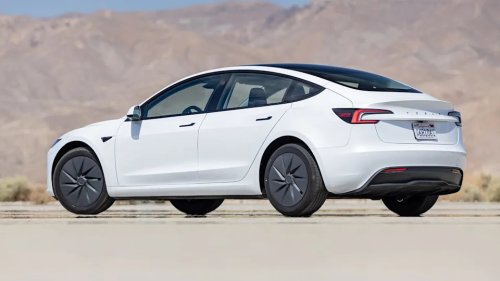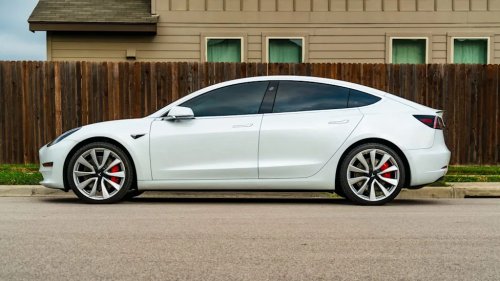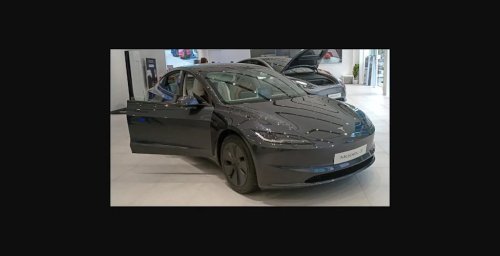














Tesla FSD Red-Light Probe: What NHTSA's 2.88 Million-Car File Actually SaysA dashcam clip out of San Diego has been doing laps around the internet this week: a white Model 3 sails into an intersection near the I-5 Genesee exit, catches a C7 Corvette on the driver's-side rear quarter, and sends the Chevy through a 180 while a wheel departs the car entirely. The clip runs about twelve seconds. It was posted by a bystander to a local subreddit. There is no police report attached to it, no statement from either driver, and nothing in the footage that establishes whether any driver-assistance software was switched on.So let's set the video aside for a moment, because there is a real, documented, federal version of this story sitting on NHTSA's servers, and it is considerably more interesting than a Reddit upload.The case fileOn October 7, 2025, NHTSA's Office of Defects Investigation opened Preliminary Evaluation PE25012, covering an estimated 2,882,566 Tesla vehicles that have been equipped with FSD (Supervised) or FSD (Beta). The stated problem is traffic safety law violations with FSD engaged, specifically proceeding through red signals and driving against the proper direction of travel.Related ArticlesA Robotaxi Can Trap a Fire Truck at a Burning House. The Firefighter's Only Weapon Is a Complaint FormDeKalb County Paid $18.9 Million for "Ethical" Car Surveillance. A Deputy Voided the Warranty in Nine MonthsAdvertisementAdvertisementThe opening tally: 58 incidents, 14 crashes, 23 injuries, zero fatalities. Forty-four of those came in as owner complaints; fourteen arrived through Standing General Order crash reports and media accounts.Two behaviors dominate. Eighteen complaints and one media report allege a Tesla failed to remain stopped at a red, failed to stop fully, or displayed the wrong signal state on the dash. Separately, ODI found six SGO reports where an FSD-engaged Tesla continued into an intersection against a red light and hit other vehicles, four of which produced injuries. The wrong-way category is its own pile: two SGO reports, eighteen complaints, and two media reports involving cars entering opposing lanes after a turn, crossing double-yellows while going straight, or attempting to turn onto a road despite wrong-way signage.The sentence that should worry engineersBuried mid-document is the line that separates this from a routine perception complaint. ODI writes that at least some of the incidents appeared to involve FSD proceeding into the intersection after coming to a complete stop.That is not a camera failing to see a red lamp. A car that stops correctly has already solved perception. Something downstream — the planner, the map layer, or the arbitration between them — then decided the intersection was clear to enter. In autonomy terms that's a behavior-planning fault, not an object-detection fault, and it is meaningfully harder to patch because there is no missing input to go find.AdvertisementAdvertisementIt's also worse for the human. A driver who watches the car stop properly at a red gets a small dose of confirmation that the system is working, and that is precisely the moment attention drifts. NHTSA said as much: the investigation will focus on whether certain driving inputs within FSD's control authority forestall the driver's supervision when they are unexpectedly performed.The agency also caught the problem repeating in one physical place. Working with the Maryland Transportation Authority and State Police, ODI found multiple subject incidents at the same intersection in Joppa, Maryland — and noted that Tesla has since taken action to address that specific location. A reproducible geographic failure that a manufacturer quietly geofences or re-maps is not a statistical artifact. It's a bug with an address.What NHTSA asked for tells you what it suspectsOn December 3, 2025, ODI sent Tesla an Information Request covering 62 complaints, 4 media reports, and 14 SGO submissions. By this point the defect definition had widened to include improper lane use — going straight from a turn-only lane, turning from a through lane — and violations at railroad crossings.The specific data fields are where the engineering suspicion shows. For every incident, NHTSA wants the map data identifier and version for the incident location at the time of the crash, alongside the system's perception of the signal and whether that perception conflicted with map data. It also asks Tesla to explain, in Request 10(b), how the system resolves conflicts between map data and live sensor perception. Regulators do not write that question by accident. That is a hypothesis about localization and prior-map disagreement, written in bureaucratic prose.Related ArticlesAdvance Auto Parts Let a Clerk Play Detective. Now a Wrongly Accused Mom Wants $15 MillionMercedes-AMG's Legendary Four-Cylinder Is Dead. What's Left Is a Speaker Playing Its GhostAdvertisementAdvertisementTwo other requests deserve attention. NHTSA wants the timestamped sequence for each incident beginning 30 seconds before the first violation, including whether a Take Over Immediately request was issued and the gap between that alert and the violation itself. And Request 9(k) asks Tesla to state whether it intends to file a safety recall under 49 U.S.C. § 30118 for any relevant software change — and if not, to furnish its technical and legal basis for declining. Non-compliance exposure runs to $27,874 per violation per day, capped at $139,356,994.Tesla asked for more time. A January 15 extension memo documents the company telling ODI it had 8,313 records left to review manually at roughly 300 per day, and that answering three concurrent information requests at once was unduly burdensome. ODI granted the extension to February 23, 2026.Three cases, three numbers, constantly conflatedPE25012 is not the only open file, and the vehicle counts are not additive. The reduced-visibility investigation — glare, fog, airborne dust — opened as PE24031 in October 2024 over 2,410,002 vehicles and was closed and upgraded to an Engineering Analysis on March 18, 2026. Different defect theory, different population. PE25012 remains a Preliminary Evaluation: the first rung, not a recall, and not yet an Engineering Analysis.What this means if you own oneTesla's own owner's manual is unambiguous — FSD (Supervised) does not make the vehicle autonomous and requires a fully attentive driver ready to take immediate action at all times. Tesla's support page repeats it. NHTSA's resume repeats it back. That consensus is the legal reality: at SAE Level 2, the human is the driver. A red-light citation goes to you. A liability claim goes to your policy. There is no jurisdiction in the United States where "the software did it" is a defense at Level 2.AdvertisementAdvertisementWhich brings up the practical wrinkle for anyone in a crash like the San Diego one. The evidence that would settle whether FSD was engaged — vehicle logs, EDR readout, center-display recording — sits largely in the manufacturer's hands. NHTSA had to formally demand exactly those artifacts. A private claimant or a body shop cannot pull them over coffee. If you're ever the Corvette in that scenario, an early attorney letter preserving vehicle data is worth more than a hundred forum posts speculating about Autopilot.Related ArticlesTesla and Hyundai Are Building Robot Armies. Building Cars Might Just Be Their Old JobTraffic Deaths Just Hit an 11-Year Low. Give the Credit to Anything but American DriversAnd the Corvette, mechanically speaking, is in trouble. A rear-quarter strike violent enough to separate wheels during the spin means the impact loaded the rear suspension past the knuckle and hub — control arms, half-shaft, hub bearing, likely the rear cradle mounting points on the C7's aluminum structure. Structural aluminum repair requires certified equipment and OEM sectioning procedures, and shops can't simply pull it straight on a frame rack the way they would a steel unibody. Against a C7's current market value, that math lands in total-loss territory fast.The thing to watchNot the next dashcam clip. Watch whether ODI upgrades PE25012 to an Engineering Analysis, and watch what Tesla says in response to Request 9(k) — the one asking the company to justify, in writing, why any of this doesn't warrant a recall. That answer will tell you more about the next twelve months than any twelve seconds of footage.AdvertisementAdvertisementJoin our Newsletter, follow our Instagram page, and connect with us on Facebook.