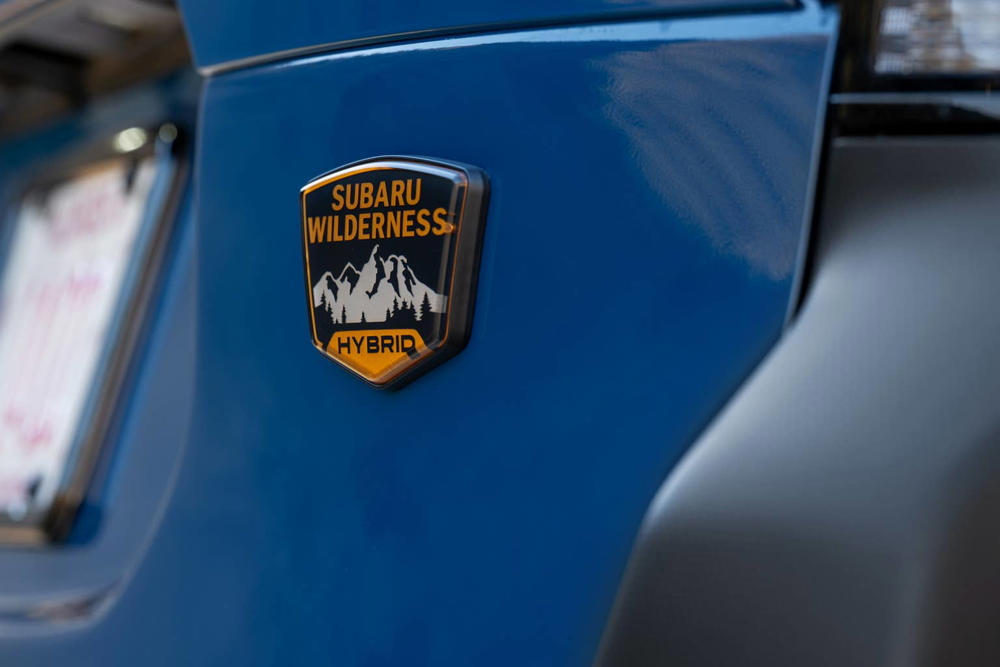
The newest SUV to get the Wilderness treatment in Subaru’s stable is the Forester Hybrid. The new Forester Wilderness Hybrid brings it all to the table: all-wheel drive, SUV practicality, hybrid efficiency, and more off-road usability. It’s not exactly a brand new idea, but the updated SUV is certainly a compelling offer, with 9.3 inches of ground clearance and better tires helping to boost capability past where the pavement ends. Still, after test driving the Forester across several hundred miles, I do have some nitpicks. That Screen, Of Course The big, obvious one is the screen. Subaru is already replacing this in other models, thankfully. Its graphics are outdated, the software is sometimes slow, and the vertical format, while a potentially good idea for displaying a map, doesn’t integrate well with the phone projection software of the day. This, coupled with some truly poor backup camera quality, makes the Forester feel noticably behind on rivals. Luckily, an update is likely on the way in a few more years. The Forester Doesn’t Handle Like A Subaru Should This is a very “I am a car journalist” complaint, but I think that the Forester should be a little more fun to drive off-road. Its traction control software is incredibly invasive, even when “off,” and the whole SUV tends to want to understeer before oversteering. For a company with a significant portion of its heritage surrounding off-road motorsports, you’d think this DNA would trickle down to even the most pedestrian of SUVs, which this is certainly not. Hopefully, some more lively tuning is in store. Pitch the SUV into a corner, and it prefers to plow straight ahead rather than tuck in its nose, or even oversteer. The problem isn’t something a majority of owners will notice, but I know Subaru could make the SUV do it if they turned down the traction control some. Subaru Asks For One Big Trade-Off Subaru pushes you to make one huge trade-off when you select it as a brand: fuel economy. Its horizonal Boxer four-cylinder engines have never been very efficient, and even the hybrid model, while a big improvement over the unassisted Forester, still lags behind rivals in efficiency. The hybrid Wilderness ends up at 31 mpg combined, lagging well behind off-road-ish rivals like the Toyota RAV4 Woodland, which nets a much healthier 38 mpg. Similarly, the CR-V Trailsport returns 35 miles per gallon combined. For a brand so focused on the outdoors, efficiency ought to be more of a priority. Here’s the trade-off: Subaru has a full-time all-wheel drive system coupled with a physical driveshaft. The brand insists its better for off-road dynamics, and after having driven a few competitors and multiple other Wilderness models, I’m inclined to agree.