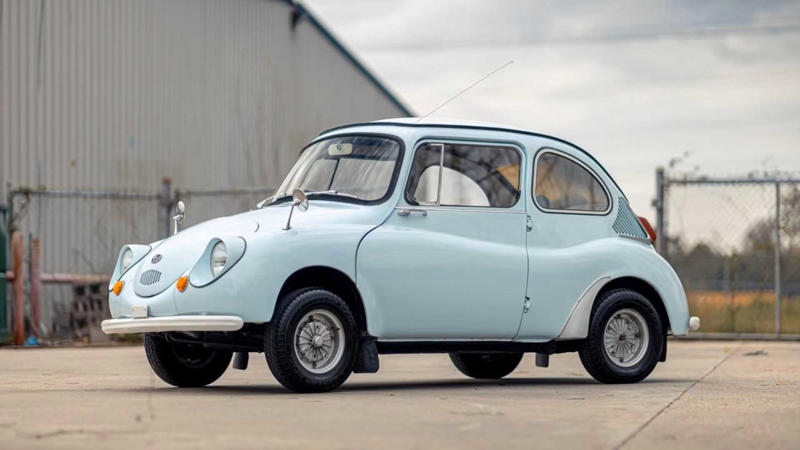
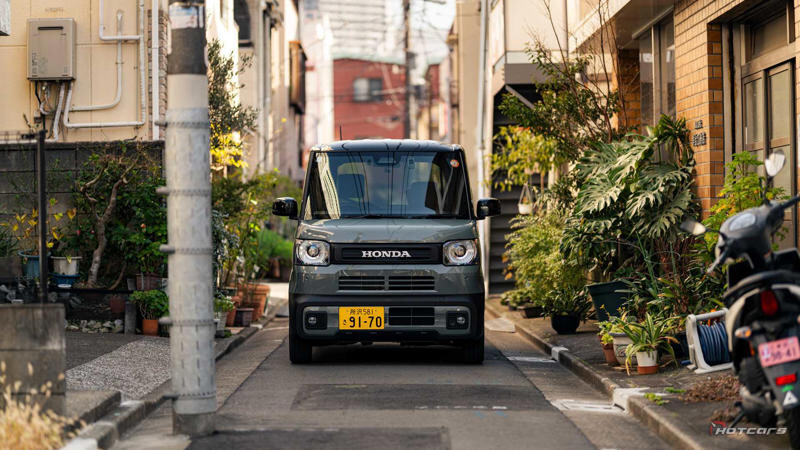
Japan’s kei rules cap a car’s size and engine, and from 1990 to 1998 they also held output to 63 hp. Even so, Honda, Suzuki and Daihatsu built some of the most cheerful open cars of their time inside those limits, from the Honda Beat to the Daihatsu Copen. Admittedly, none of them is fast in a straight line. Instead, they make 40 mph with the roof down feel like an adventure. These are our picks for the seven kei cars that did the most for open-air driving. The verdicts, of course, are ours. 1. 1991 Honda Beat The Beat puts its engine behind the seats, drives the rear wheels and has no fixed roof. Unlike most kei cars, its 656 cc three-cylinder skips the turbo. Instead, Honda gave each cylinder its own throttle body, and the engine makes its 63 hp at a heady 8,100 rpm. Pininfarina originated the design, and it was the last project Soichiro Honda approved before his death in 1991. In our view, no kei car makes the engine’s howl feel more like the point of lowering the top. 2. 1995 Suzuki Cappuccino The Cappuccino’s party trick is its roof. A three-piece hardtop lets owners run it as a coupe, a T-top, a targa or a full convertible. Better still, the removable parts stow in the back. Then, for 1995, the EA21R update brought an all-aluminum K6A turbo three with 76 lb-ft at 3,500 rpm. Suzuki also used aluminum for the hood, roof and roll bar, and the weight sits close to 50/50. In total, just over 28,000 left the factory, including 1,182 sold new in Britain. For us, it is the most versatile open car on this list. 3. Daihatsu Copen L880K The first Daihatsu Copen arrived in 2002 with an electric folding roof. As a result, going topless meant pressing a button rather than wrestling a frame. Its 659 cc four-cylinder uses a twin-scroll turbo and revs to 8,500 rpm. Buyers could choose a five-speed manual or a four-speed automatic, while some cars came with removable roof panels instead. Daihatsu also sold it in Europe, where UK cars got 4 bhp more than Japanese ones. Our guide to kei cars and their role in Japanese car culture explains why a car this small made sense. In our view, the L880K turned the kei roadster into a car you could live with all year. 4. Daihatsu Copen Robe The second-generation Daihatsu Copen went on sale on June 19, 2014, and the Robe was its first design. Under the skin sits a new D-Frame structure. Over it, Daihatsu fits 13 resin body panels it calls Dress Formation. Owners can swap them after purchase to change the car’s look. Power comes from a 658 cc turbo three with 64 PS, through a five-speed manual or a CVT. Meanwhile, the CVT version started at ¥1,798,200. We like that the Robe treats an open kei roadster as something to personalize, not just drive. 5. Subaru 360 Over Top convertible Subaru’s first car offered open-air motoring early. The 360 launched in March 1958 as a two-door sedan, and soon after, in August 1959, Subaru added a convertible. In reality, it was a roll-back fabric roof rather than a full drop-top. Power came from a rear-mounted, air-cooled two-stroke twin of 356 cc. Subaru made about 392,000 of all 360 types before production ended in 1970. In our view, that fabric roof made a basic family car feel like a holiday. 6. Suzuki Jimny LJ10 Open-air fun doesn’t have to happen on pavement. Suzuki launched the LJ10 in April 1970 with a soft canvas top and a 359 cc air-cooled two-stroke twin. It also had a two-speed transfer case for part-time four-wheel drive. The design began as the Hope Motor Company’s open-top HopeStar ON360, which Suzuki bought for 12 million yen. Kei rules limited it to three seats, so the spare wheel rode inside to keep the length under three meters. Fittingly, LJ stood for Light Jeep. For us, it is the kei car that took the open sky off-road. 7. Honda Vamos TN360 The Vamos takes open-air driving to its logical end. Honda introduced it in 1970 on the TN360 pickup’s chassis. Power came from a mid-mounted, air-cooled 354 cc twin claimed at 30 bhp. It had no fixed roof and no conventional doors, only hollow steel bars that latched across the openings. Instead, buyers could pick from several folding soft-top setups, and the spare tire sat up front between the headlights. In our view, it is the most cheerful car here. Overall, Honda made about 2,500 between 1970 and 1973.

 Liked by Ava Anderson, Logan Girard


















 Liked by Ava Anderson, Logan Girard